Work Chaps
Leather Work Chaps
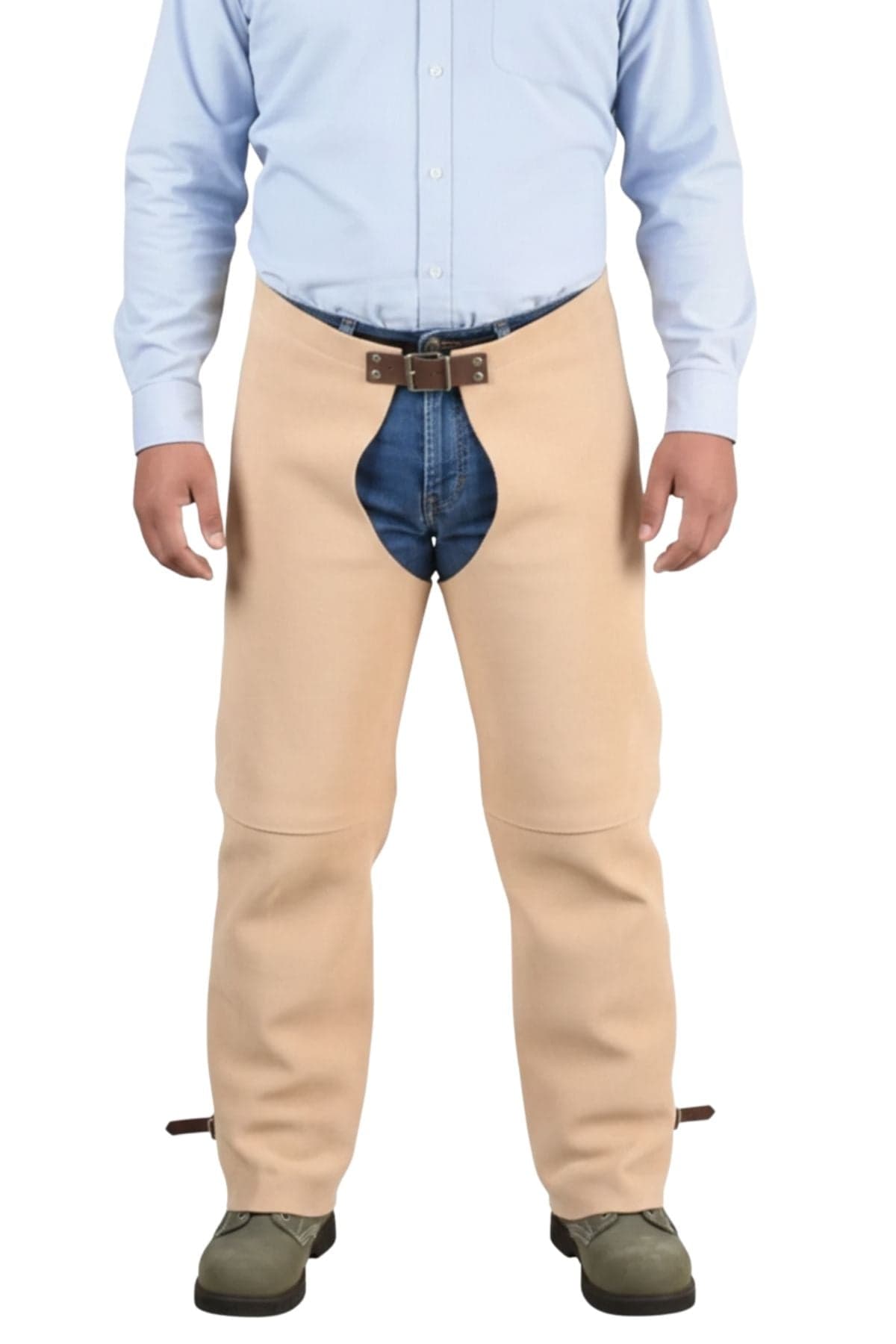
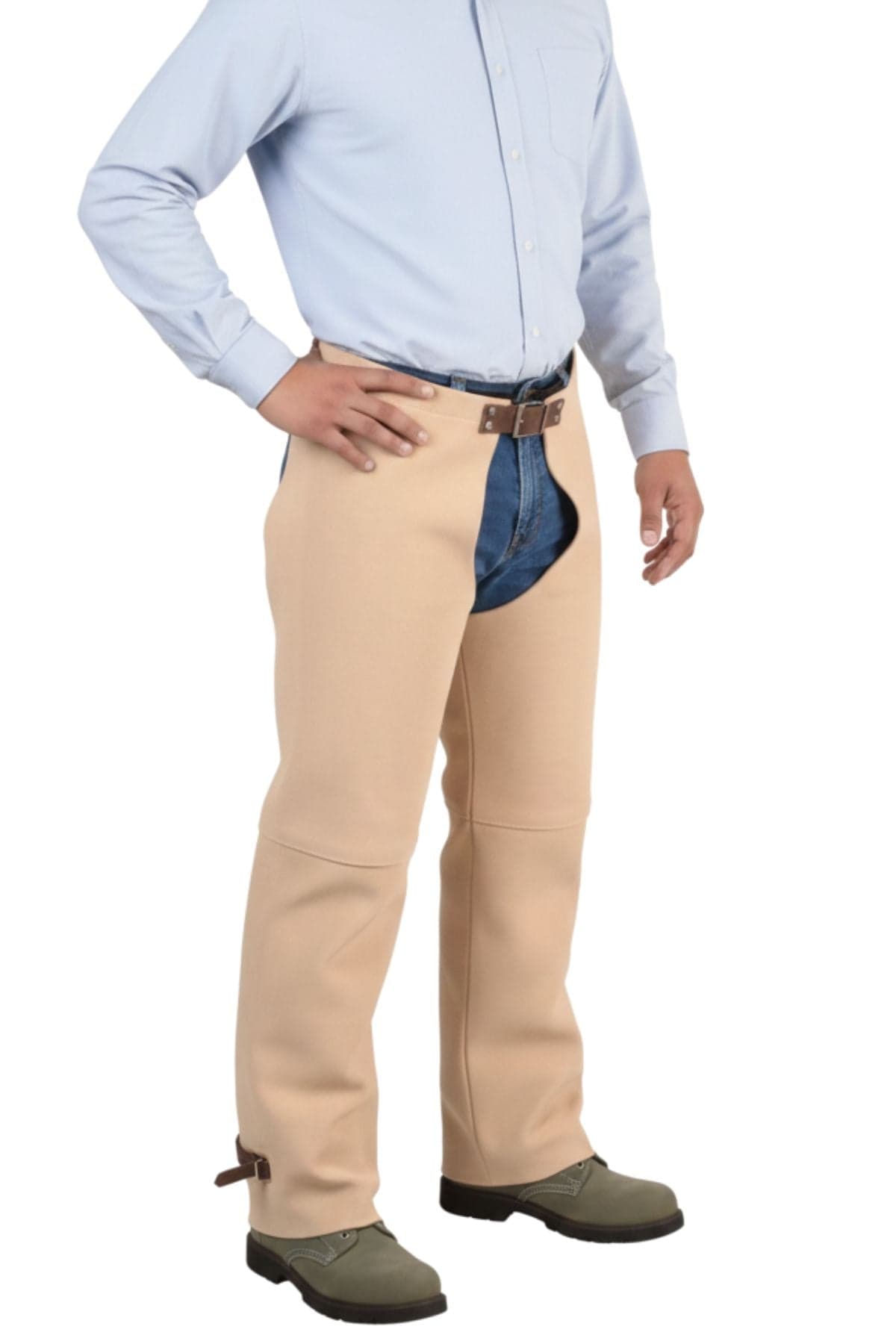
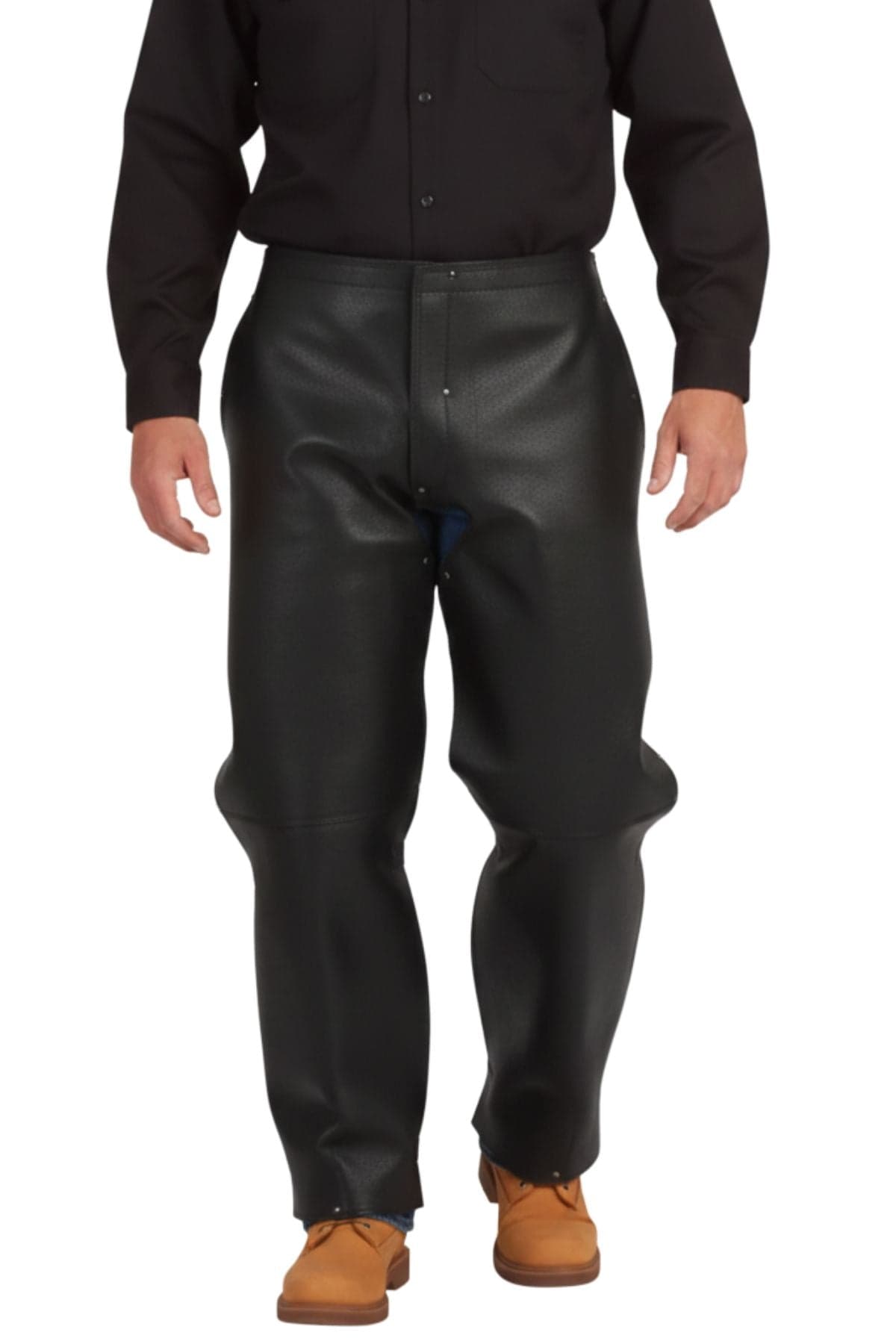
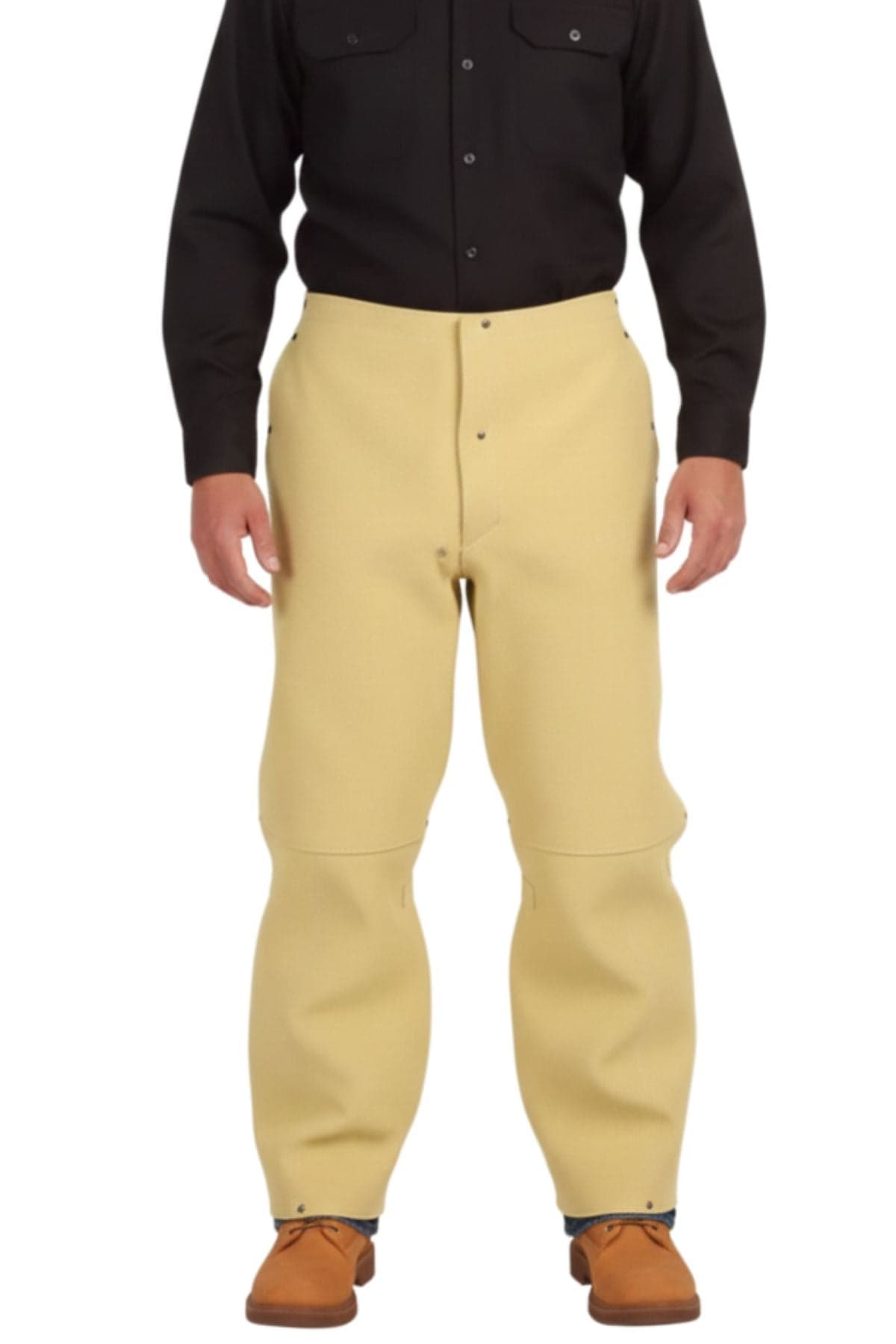
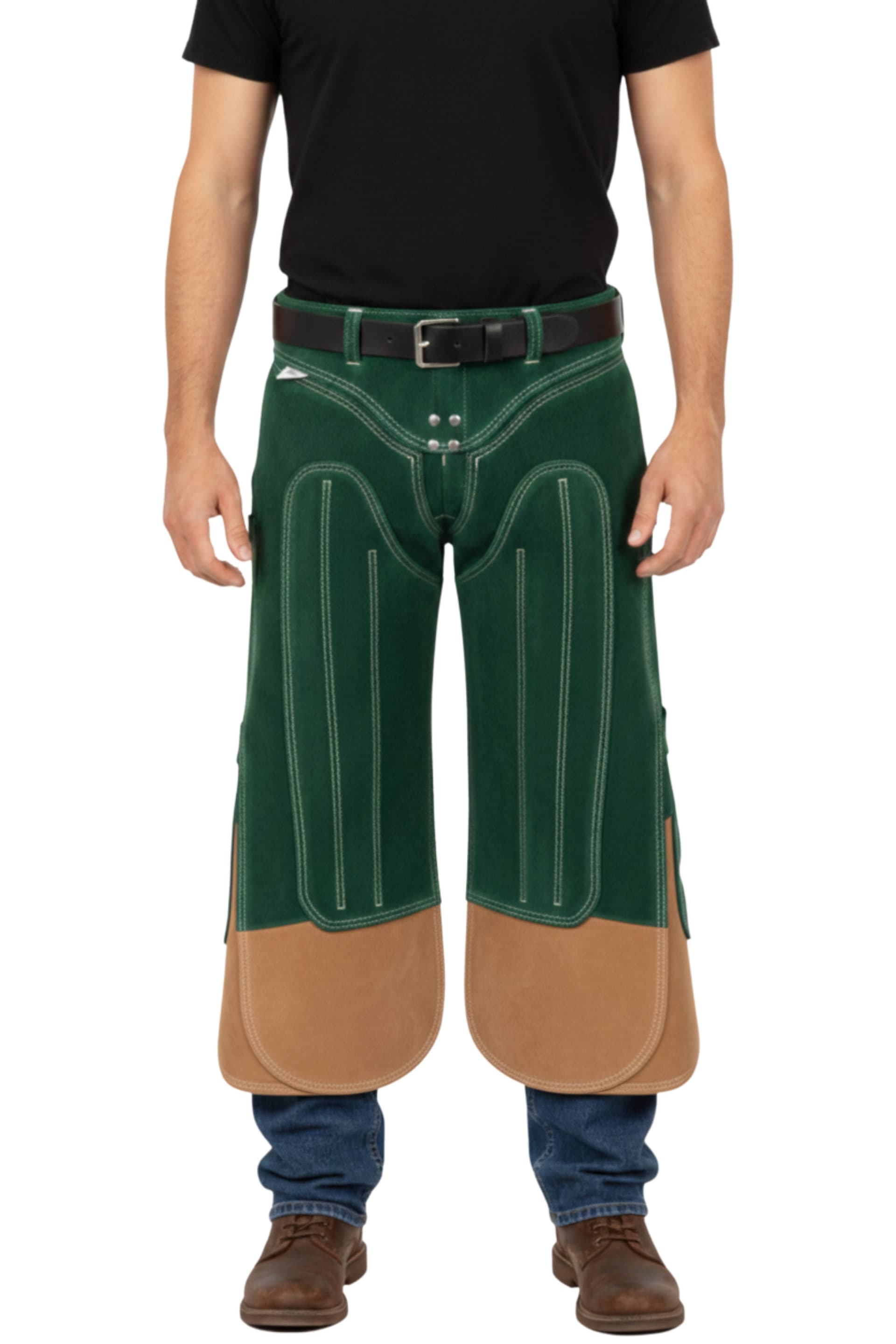
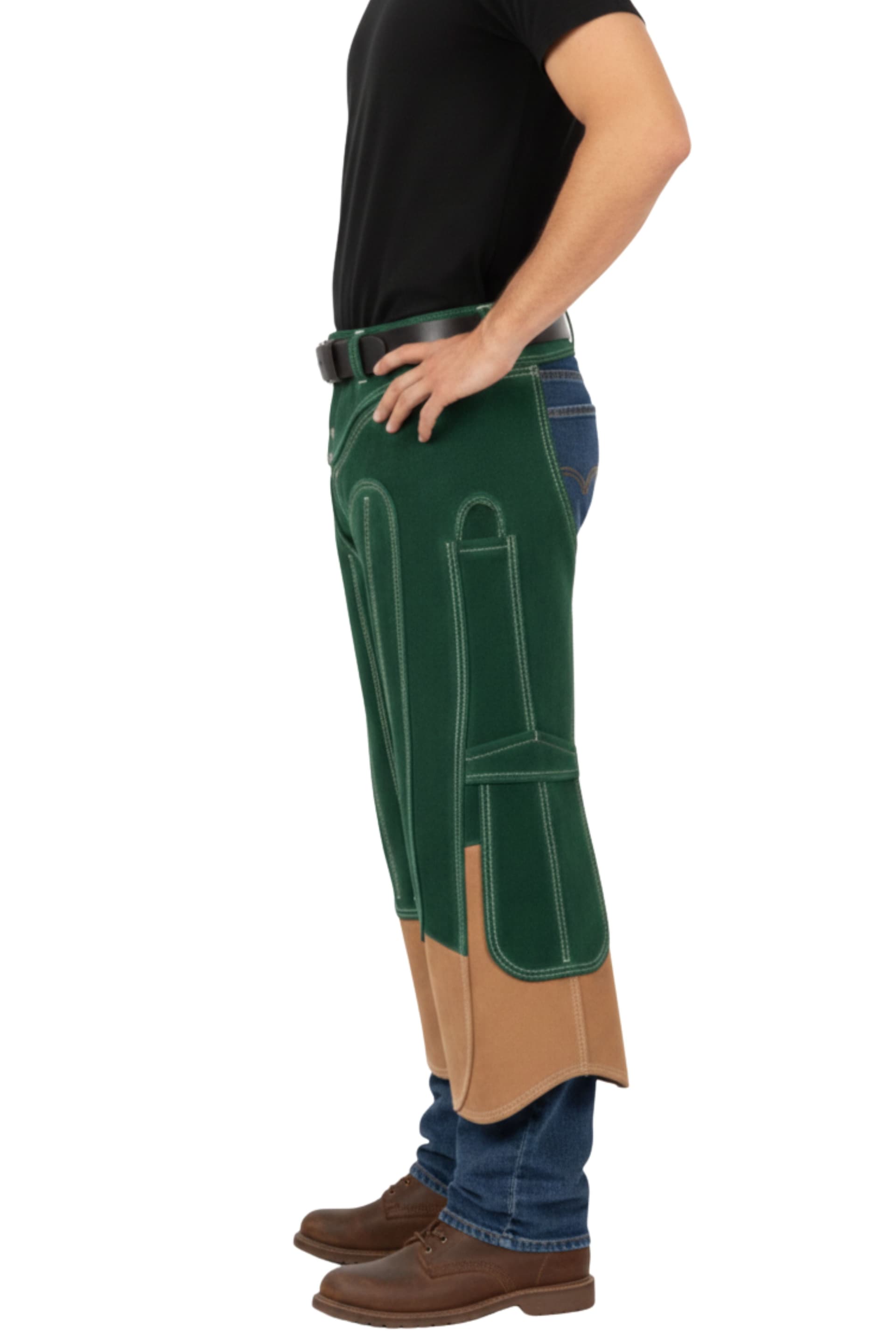
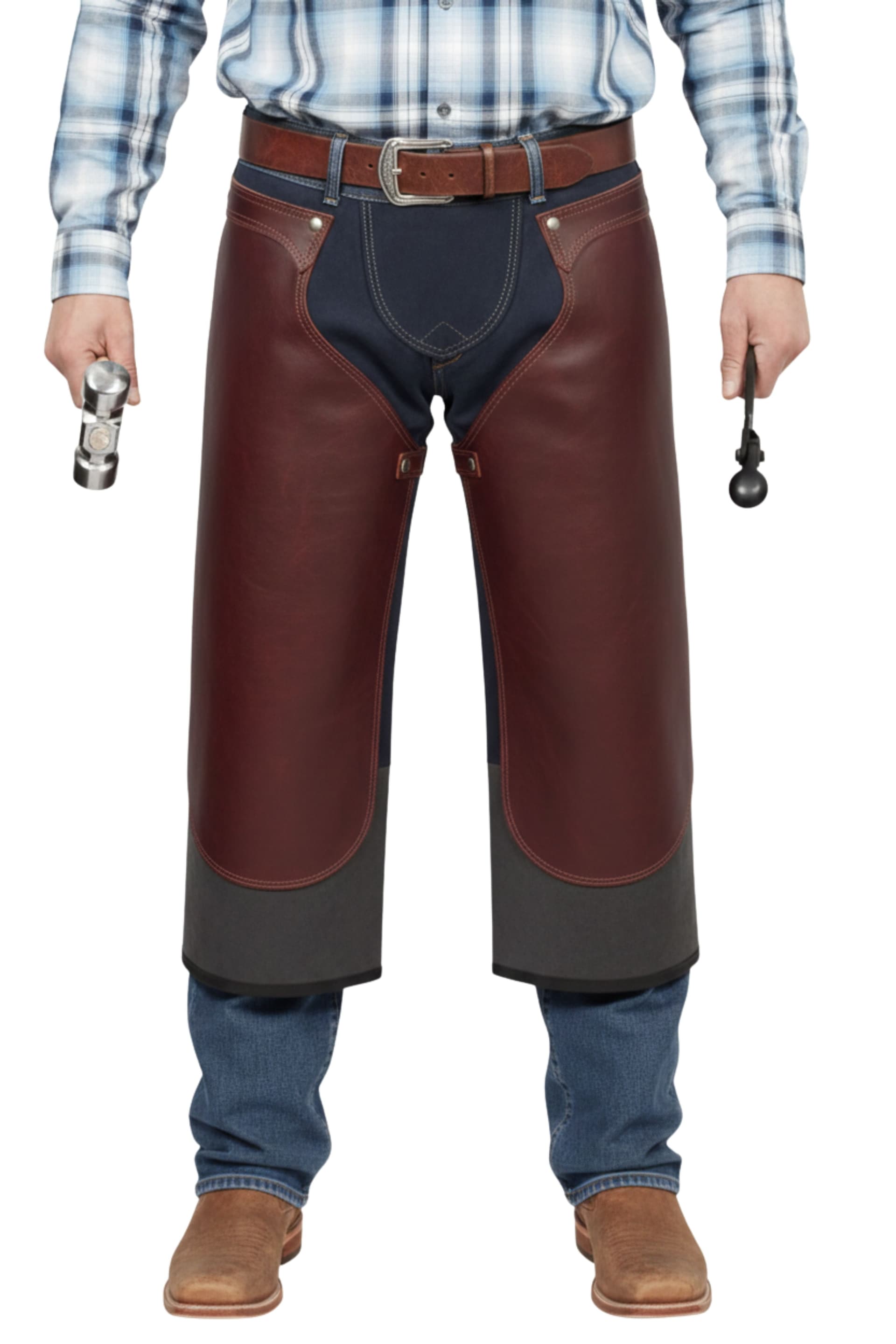
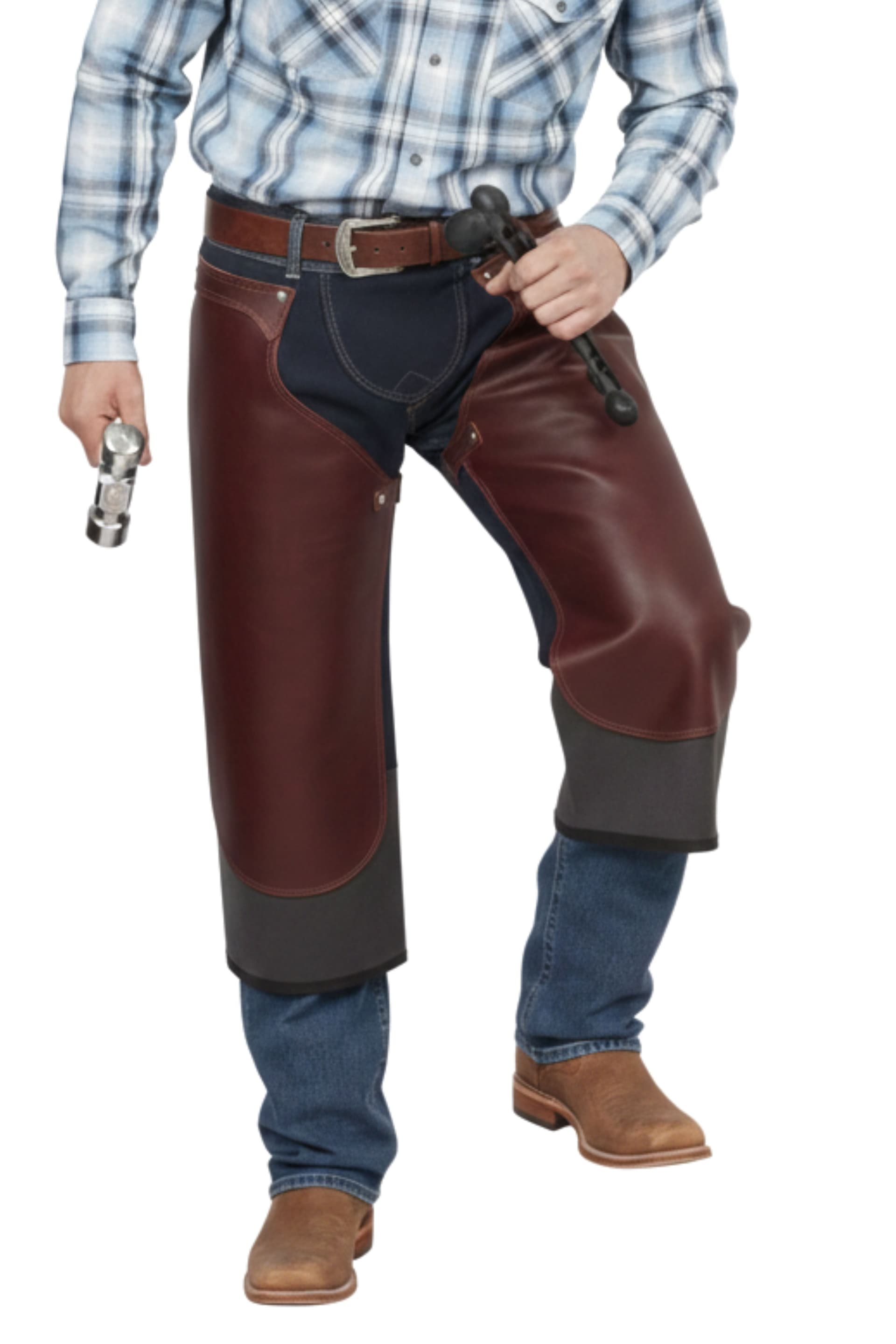
The right work chaps depend on what's coming at your legs: sparks, forge heat, brush, a slipping rasp or a sharp edge of steel. Chaps Fit makes leather work chaps for welders, fabricators, blacksmiths, farriers and ranch hands, in full-length, split-leg, apron and bib styles. Every style is sized from 2XS to 8XL.
Find Work Chaps by Trade
- Welding Chaps: split-leg, full-length and bib styles for spatter, slag and arc heat.
- Metal Shop & Fabrication Chaps: for grinding, cutting and handling stock.
- Blacksmith & Metalwork Chaps: for forge heat, hot scale and long hours at the anvil, with tool pouches and knee guards.
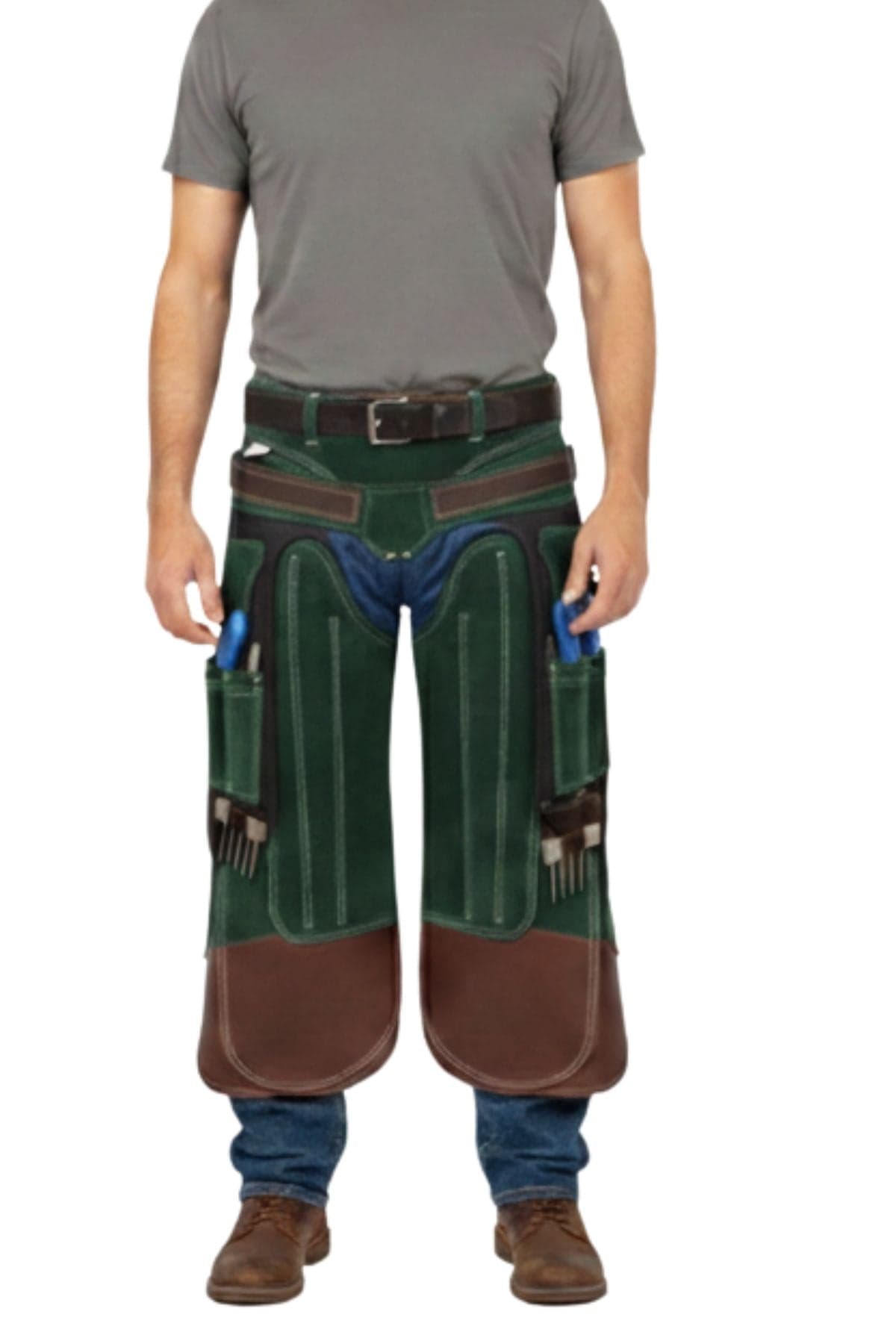
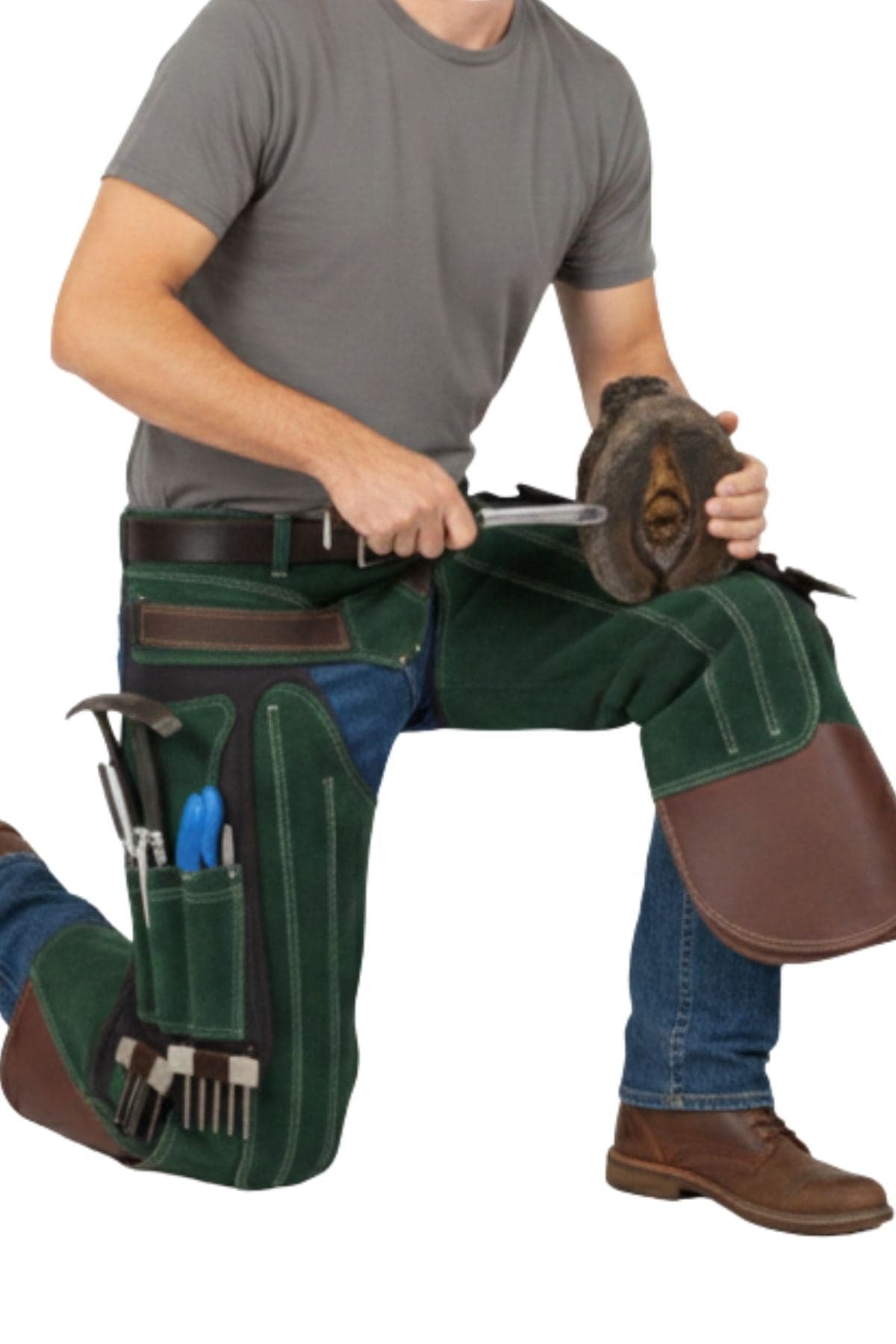
- Farrier Chaps & Aprons: reinforced knees and thighs for trimming and shoeing.
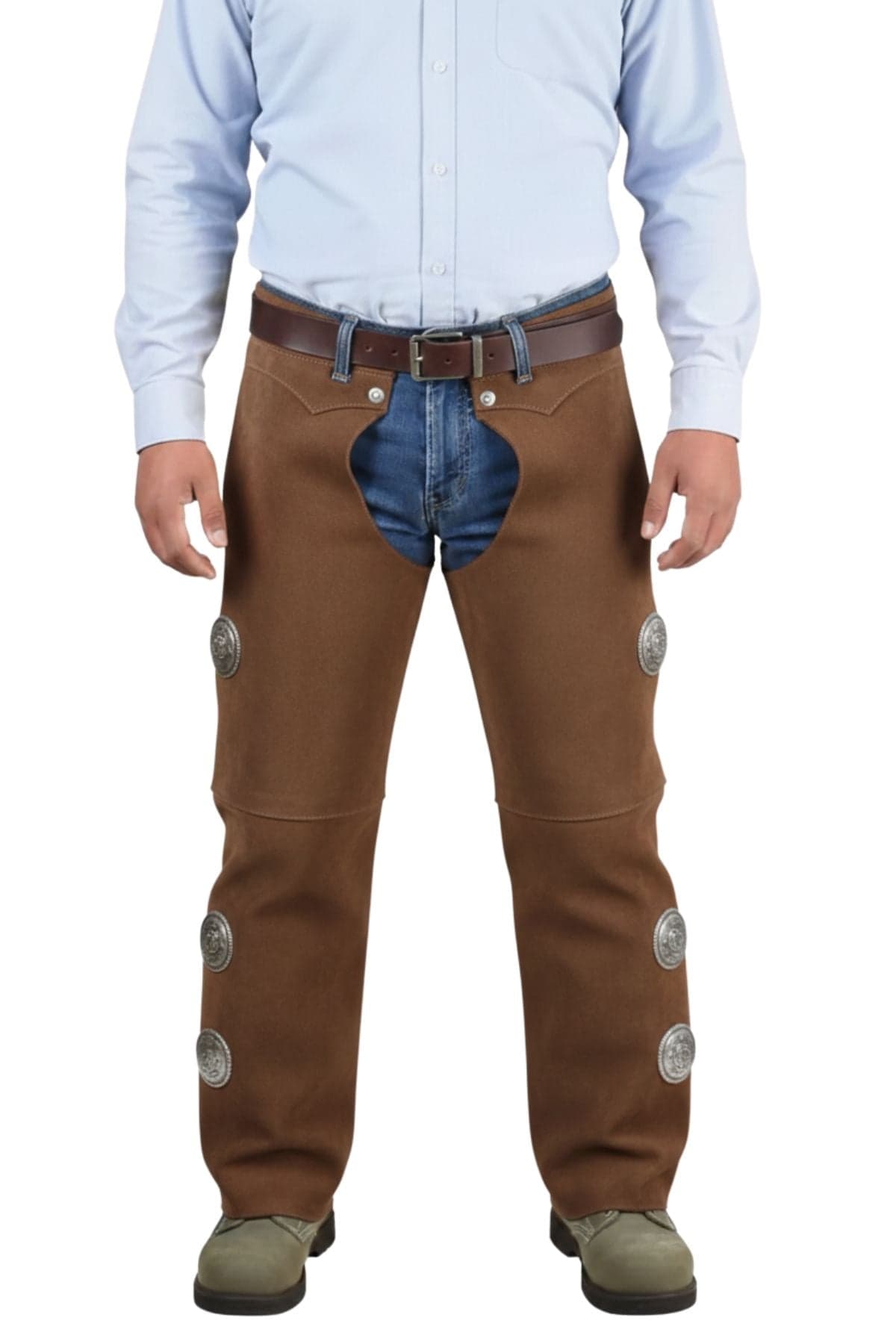
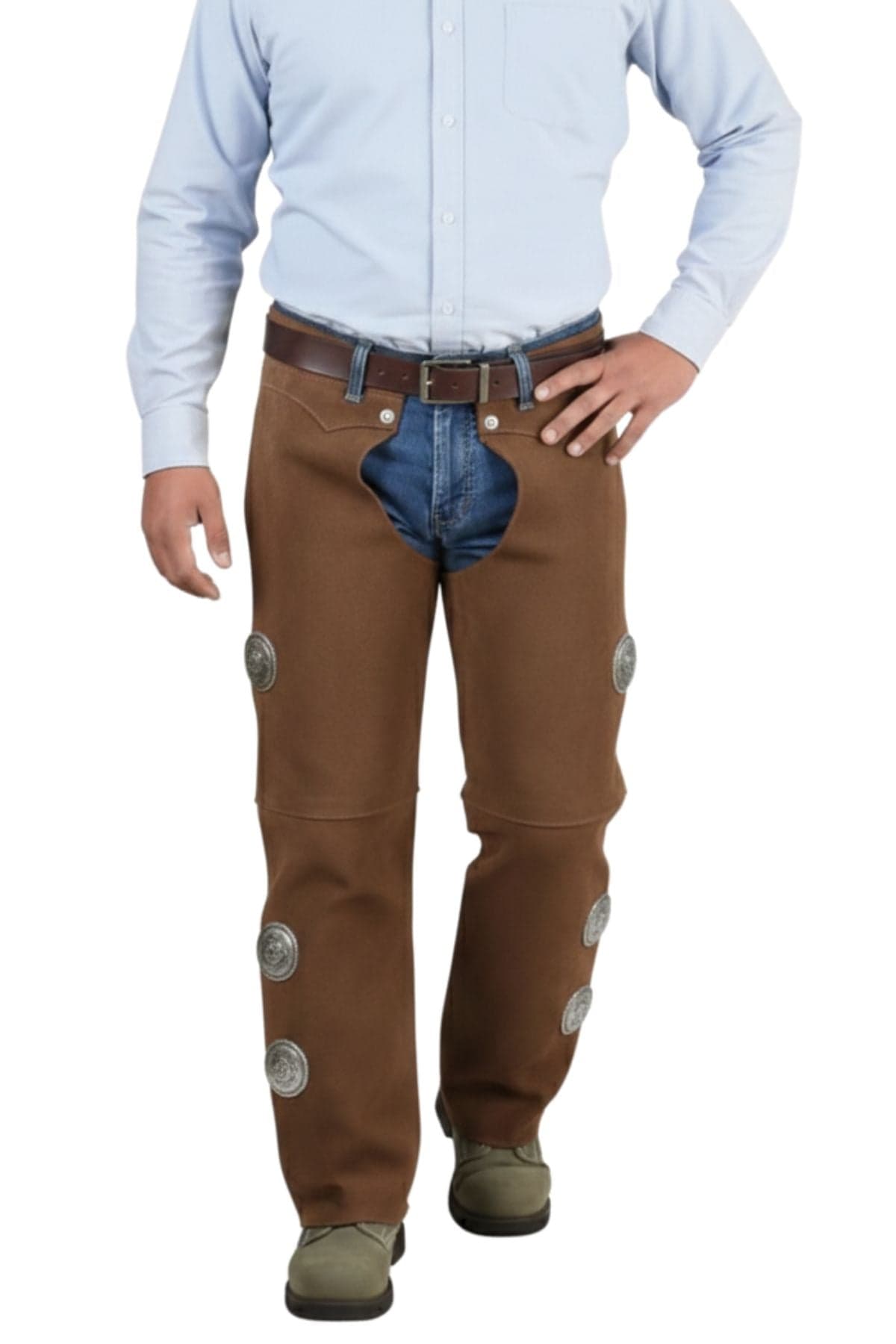
- Ranch Work Chaps: suede and leather chaps for brush, fence line and cattle work.
Match the Chaps to the Hazard
Start with the hazard you face most often:
| Main hazard | What it takes | Where to look |
|---|---|---|
| Falling sparks and spatter | Full front coverage, belt to boot | Welding chaps |
| Sideways spark streams | Full-length coverage at knee and shin height | Fabrication chaps |
| Radiant heat and hot scale | Heavy leather facing the heat source | Blacksmith chaps |
| Tool slips at the thigh | Reinforced thigh and knee panels | Farrier chaps |
| Brush, thorns and wire | Tough leather that shrugs off scuffs, full length | Ranch work chaps |
| Kneeling on hard floors | Knee padding or reinforced knee panels | Blacksmith or farrier chaps |
If you face more than one hazard, choose for the most serious one and check that the chaps cover the others too.
Coverage Styles Explained
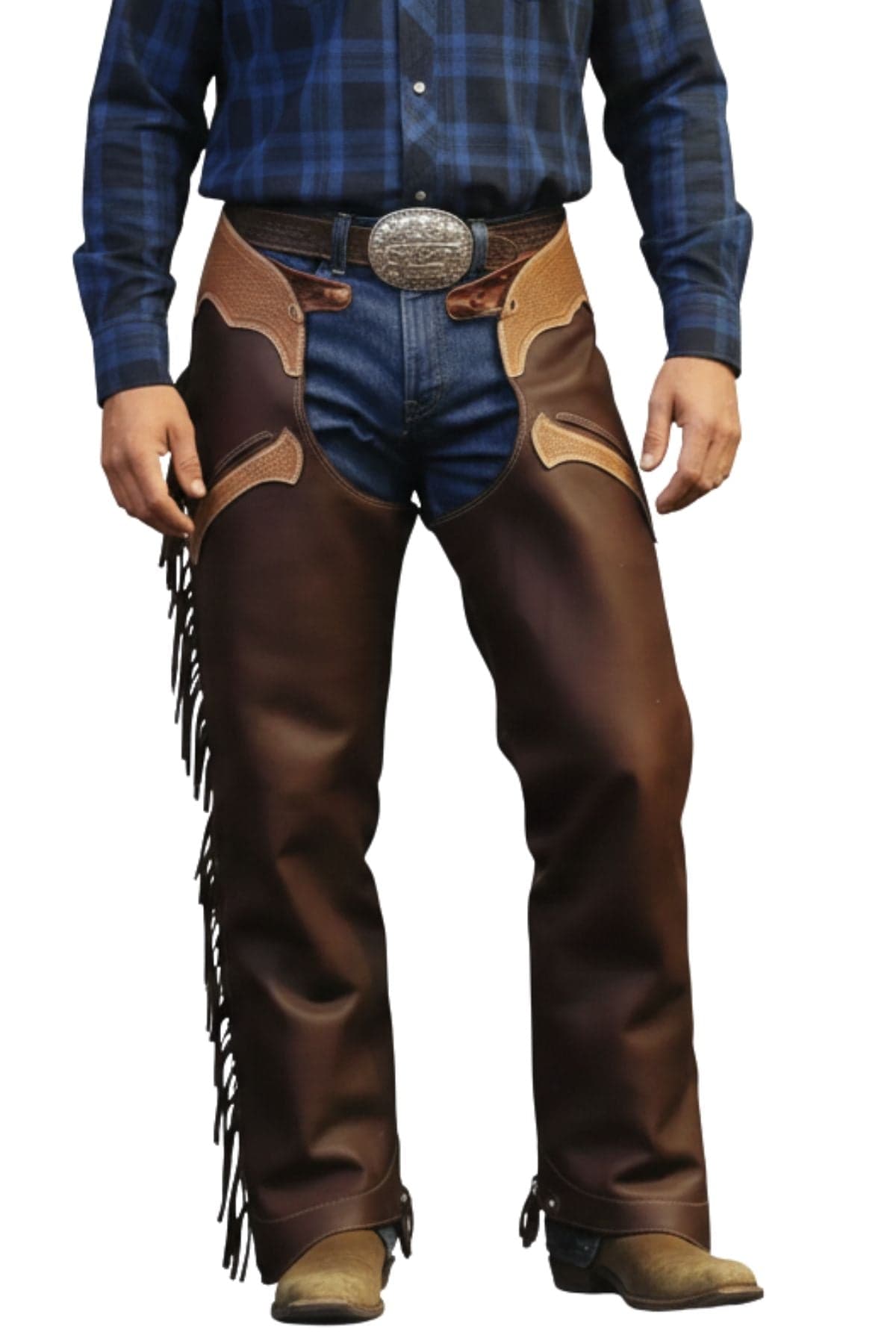
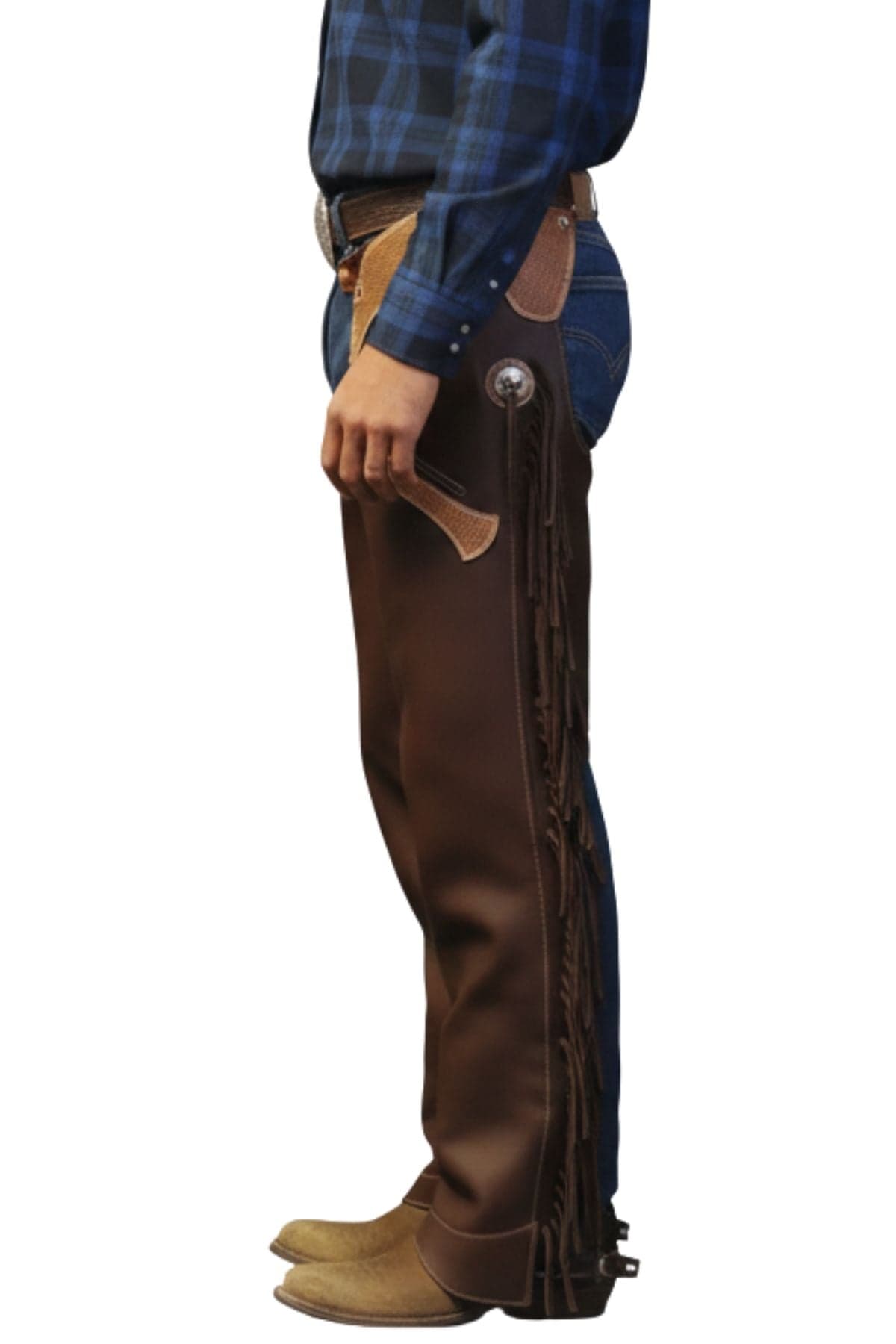
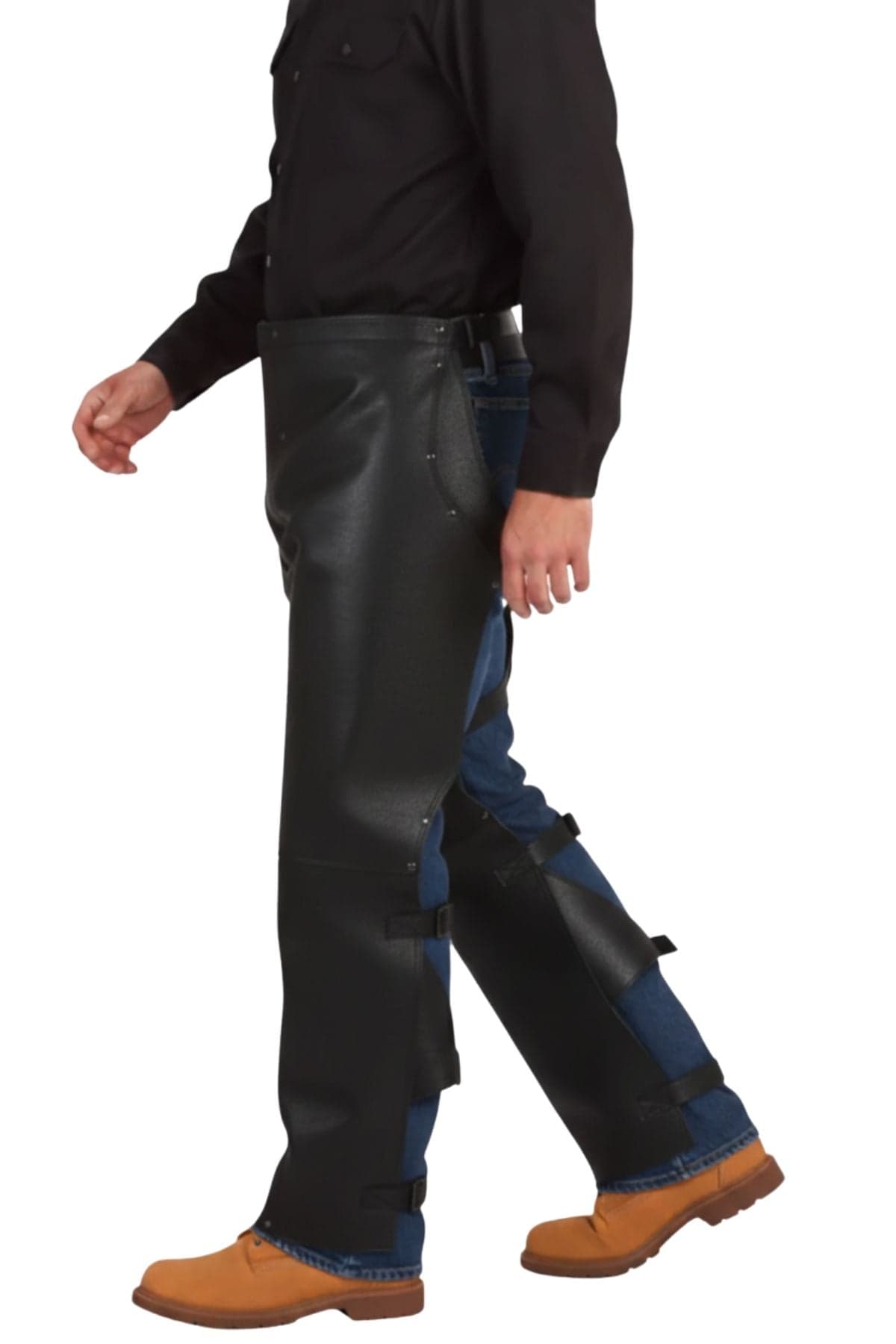
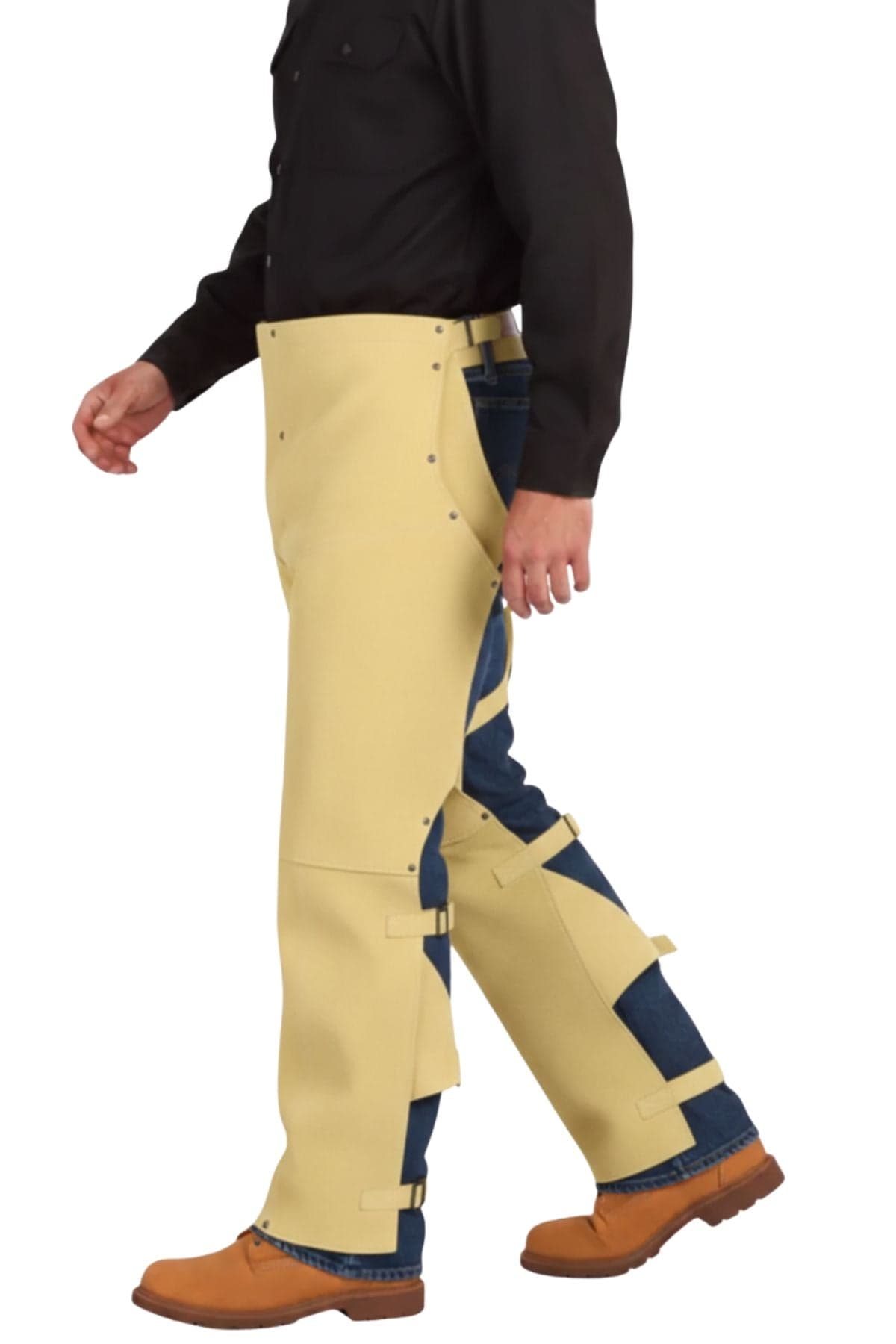
- Full-length strap chaps: separate leg panels from belt to boot, held on with leg straps. The standard for welding, fabrication and ranch work.
- Farrier aprons: shorter leg panels built around reinforced thighs and knees, for work where you hold something against your legs.
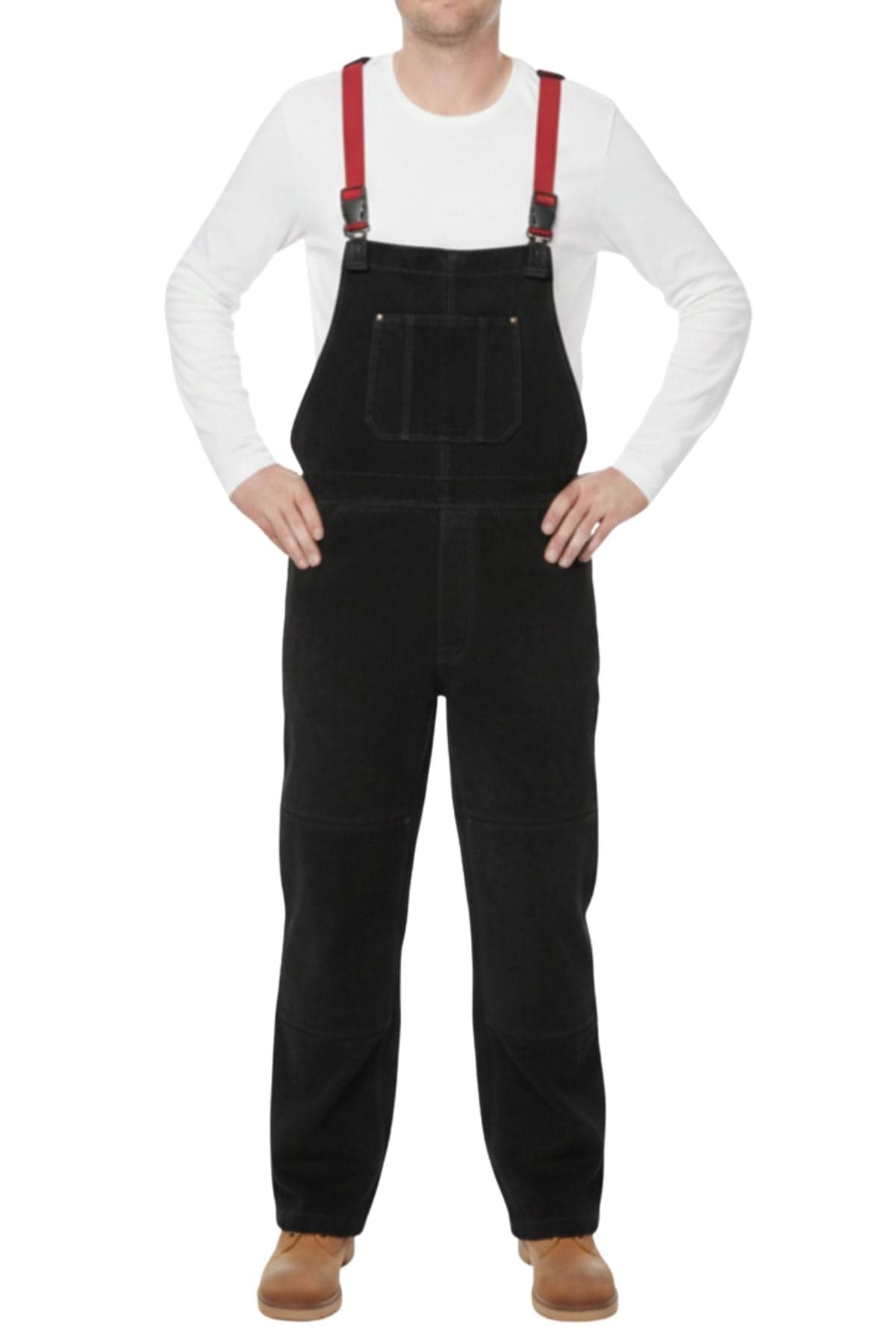
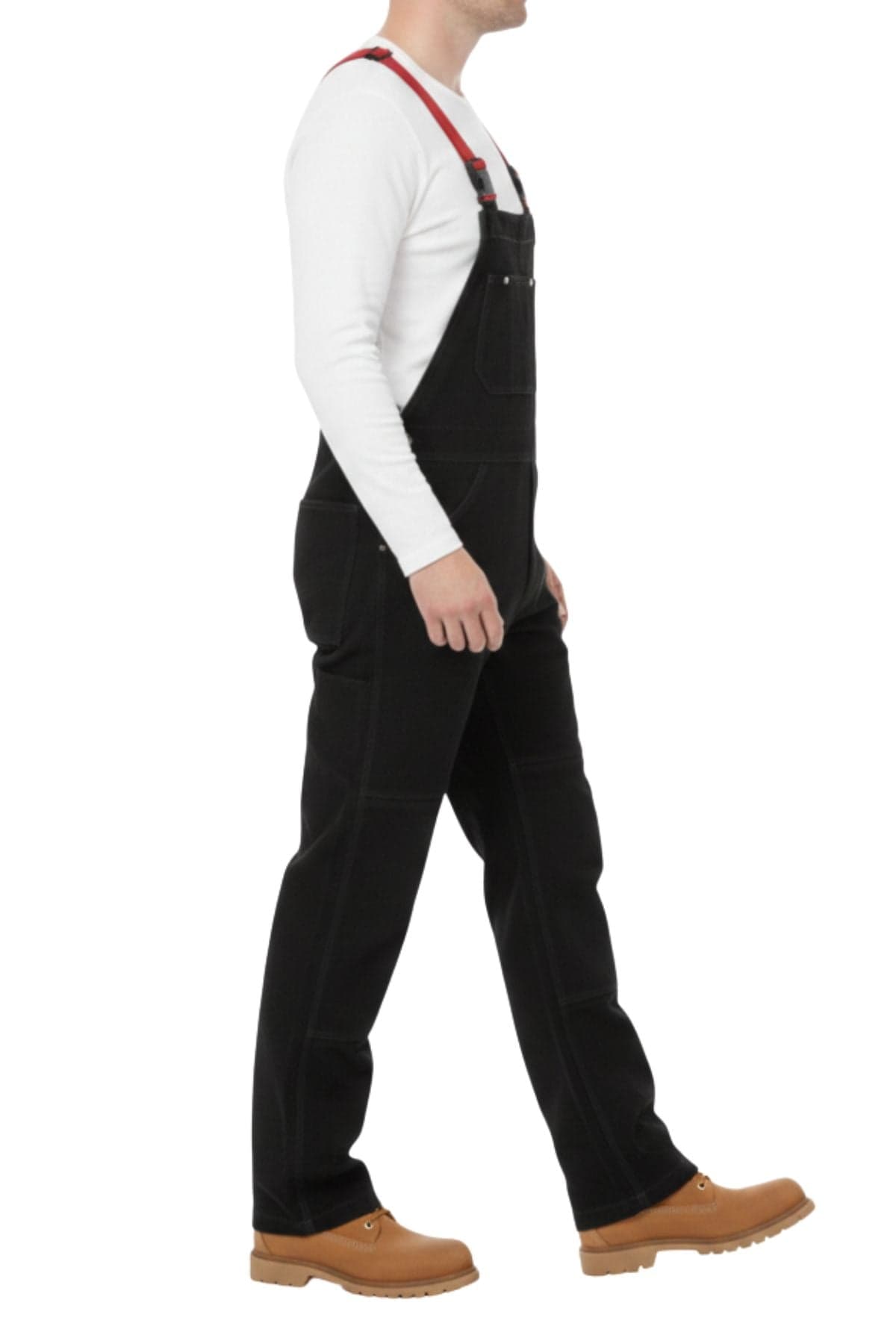
- Bib chaps: leg panels plus a chest bib on suspenders, for overhead work or anything that sends sparks toward your torso.
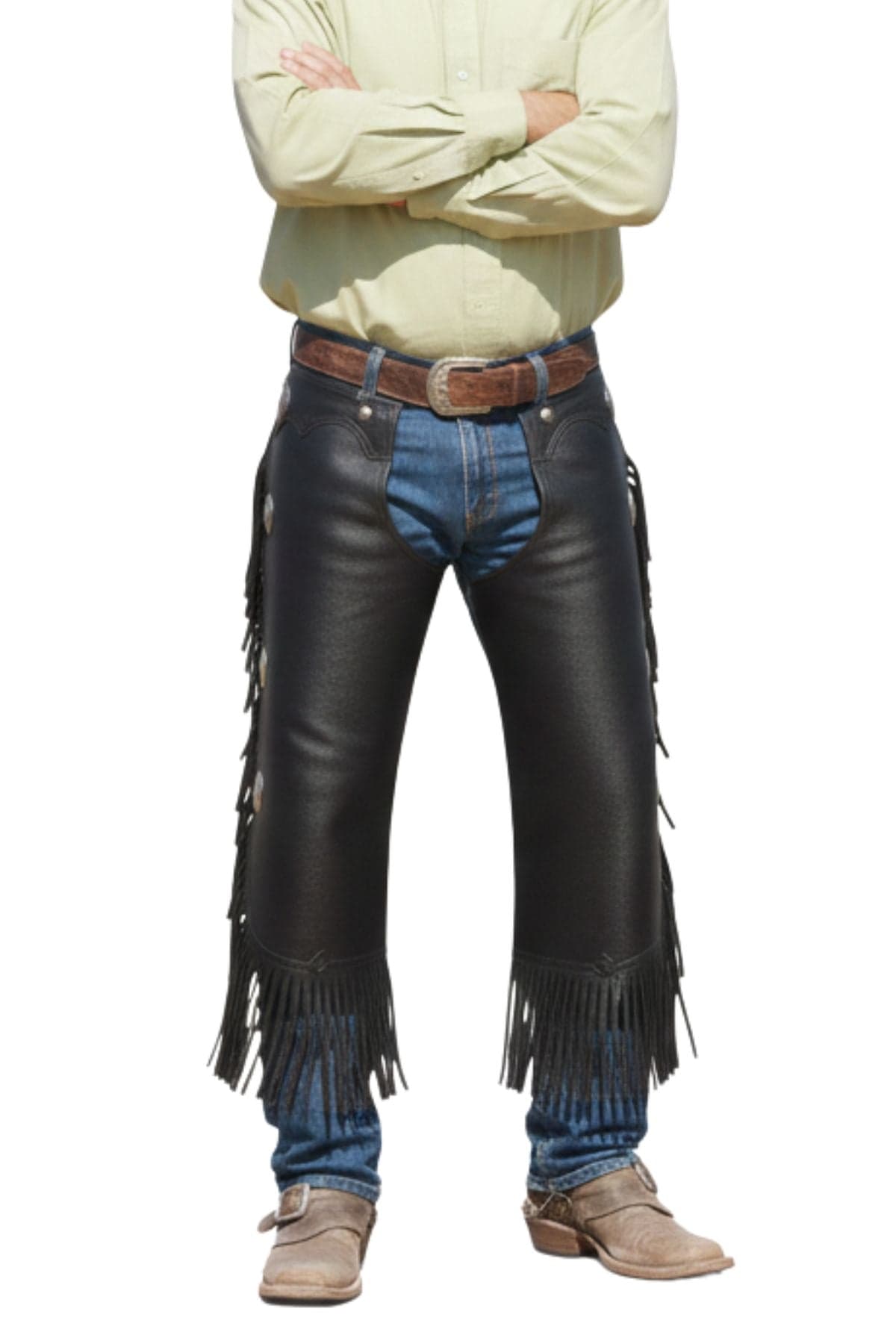
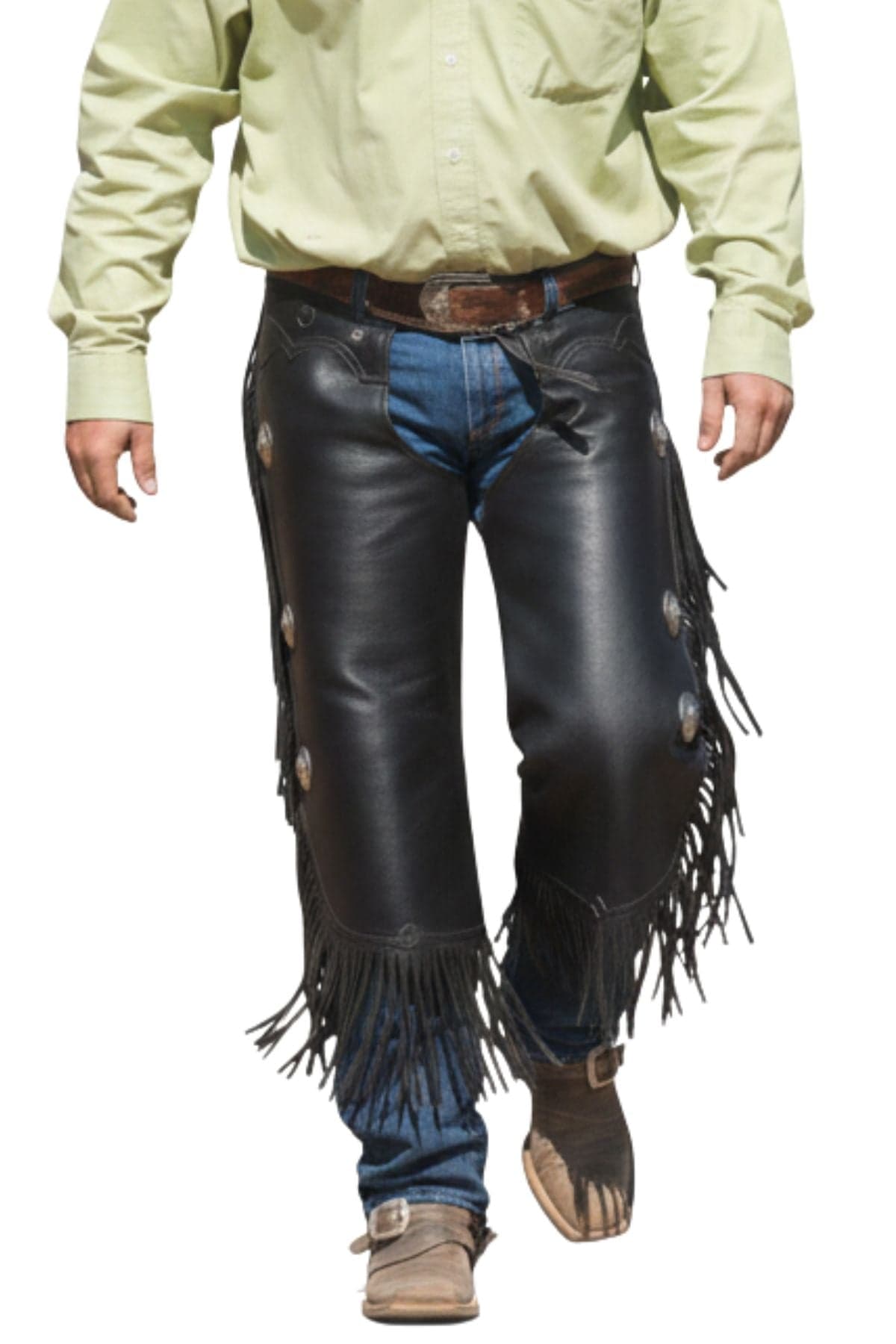
- Ranch-style chaps: belted, open-backed and full-length, often in suede with fringe or conchos, made for working on horseback and on foot.
Work Chap Features Worth Having
- Leg straps with buckles: keep the panels on your legs when you kneel, climb or bend.
- An open back: lets heat escape, which makes a big difference in a hot shop, forge or barn.
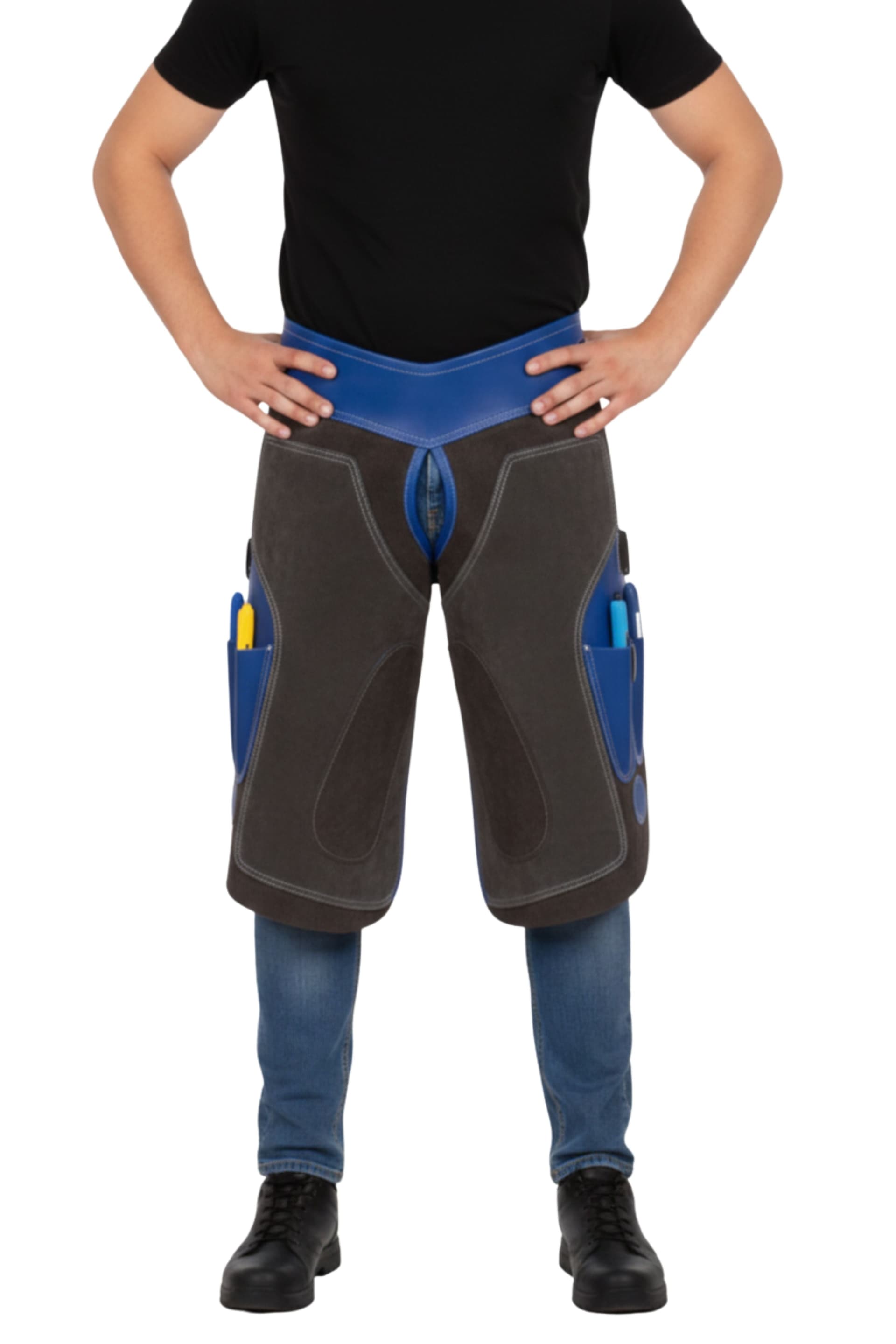
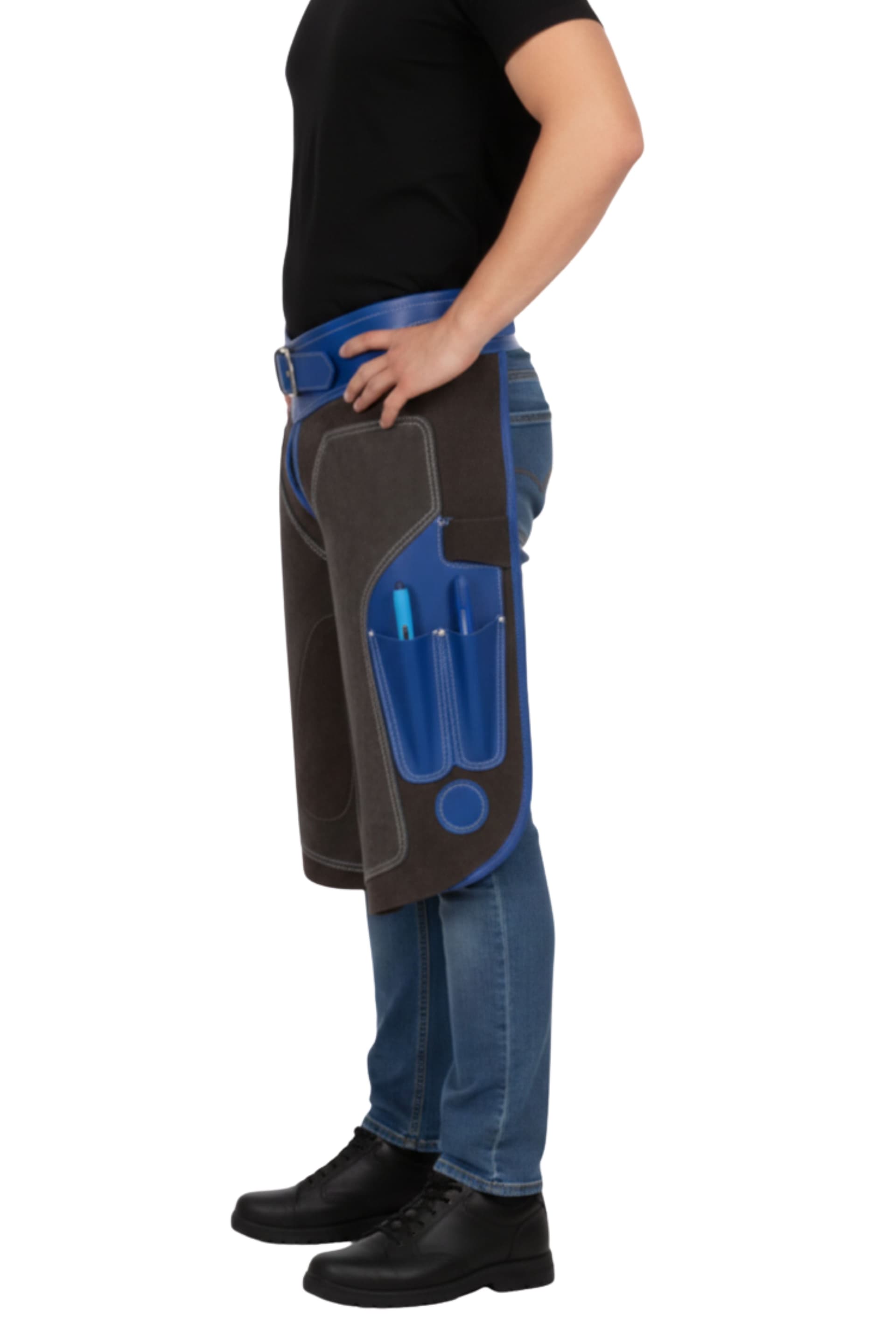
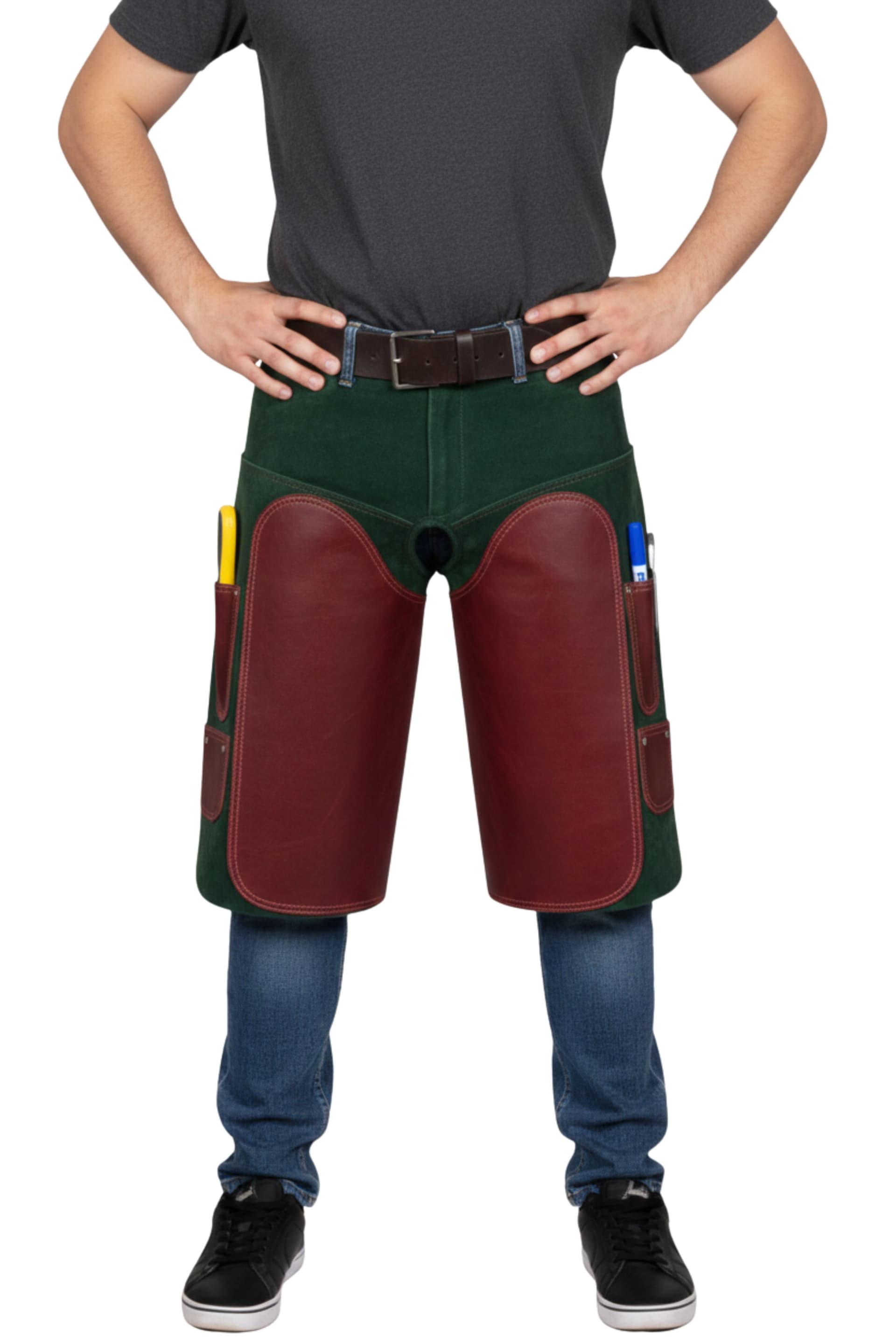
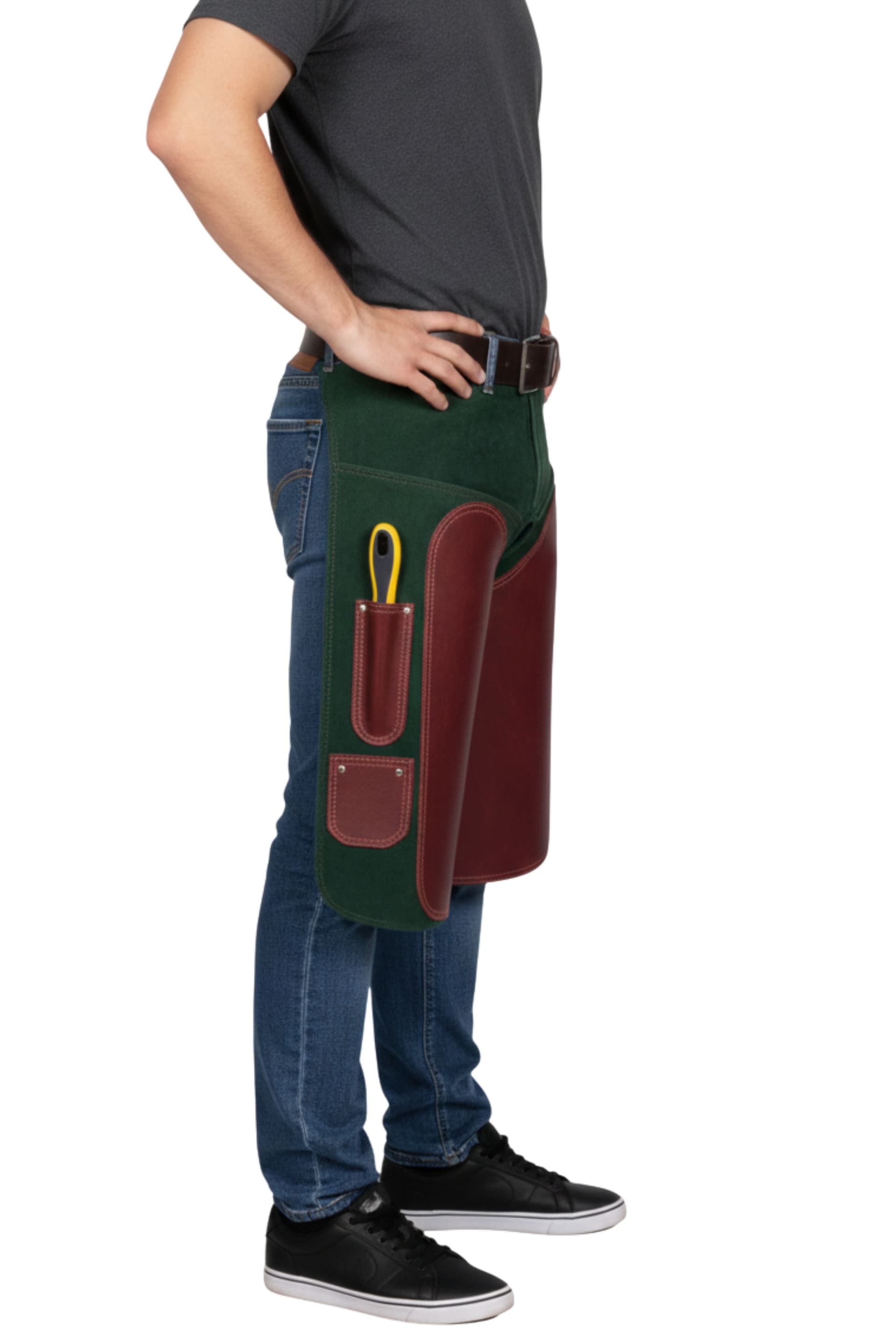
- Tool pockets and pouches: keep cold tools like chalk, scribes, knives and tapes within reach. See the Protective Leather Blacksmith Chaps with Tool Pockets or the Brown Leather Farrier Chaps with Tool Pocket Design.
- Knee reinforcement: for anyone who kneels or grips with their knees. See the Brown Leather Farrier Chaps with Knee Panels.
- Proper sizing: chaps that fit cover your legs properly. One-size gear either gaps or flaps.
What Leather Work Chaps Won't Protect Against
Leather is excellent against sparks, heat, abrasion and tool slips, but it has limits. Standard leather work chaps are not:
- Chainsaw chaps. Chainsaw work needs cut-resistant chaps made to stop a running chain.
- Arc-flash protection. Electrical work needs clothing rated for arc flash.
- Protection against impact or crushing. Chaps won't stop a horse's kick or a falling load.
- Protection for the back of your legs. Most work chaps are open at the back.
If your job involves any of these, use gear rated for that specific hazard.
Outfitting a Crew
Every Chaps Fit work chap comes in 13 sizes, from 2XS to 8XL. That means a whole crew, from your smallest apprentice to your largest welder, can wear the same style in a size that actually fits them, instead of sharing one-size-fits-most gear. If anyone's measurements fall outside the chart, see custom chaps. For larger orders, contact us before ordering.