Blacksmith / Metalwork Chaps
Blacksmith & Metalwork Chaps
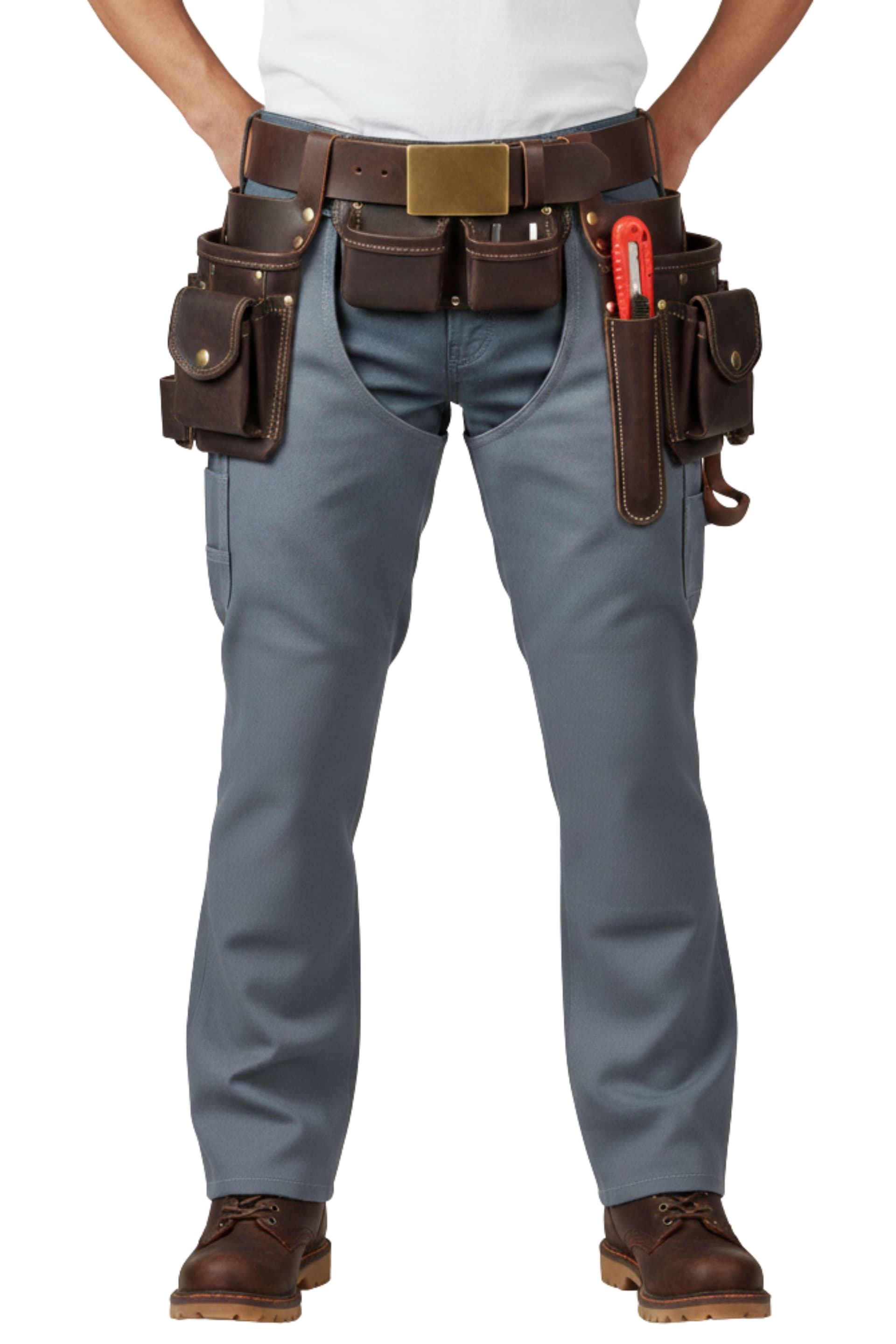
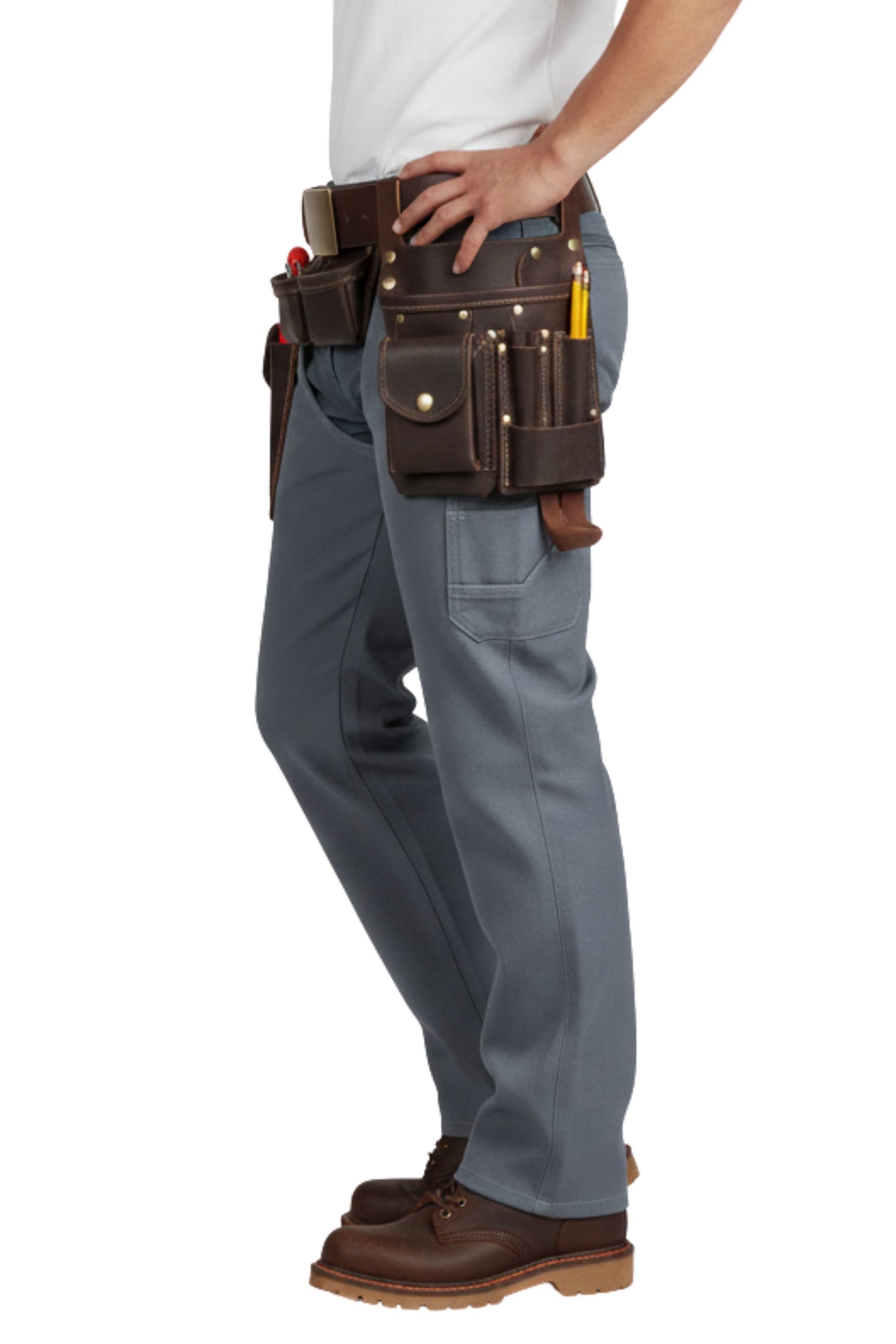
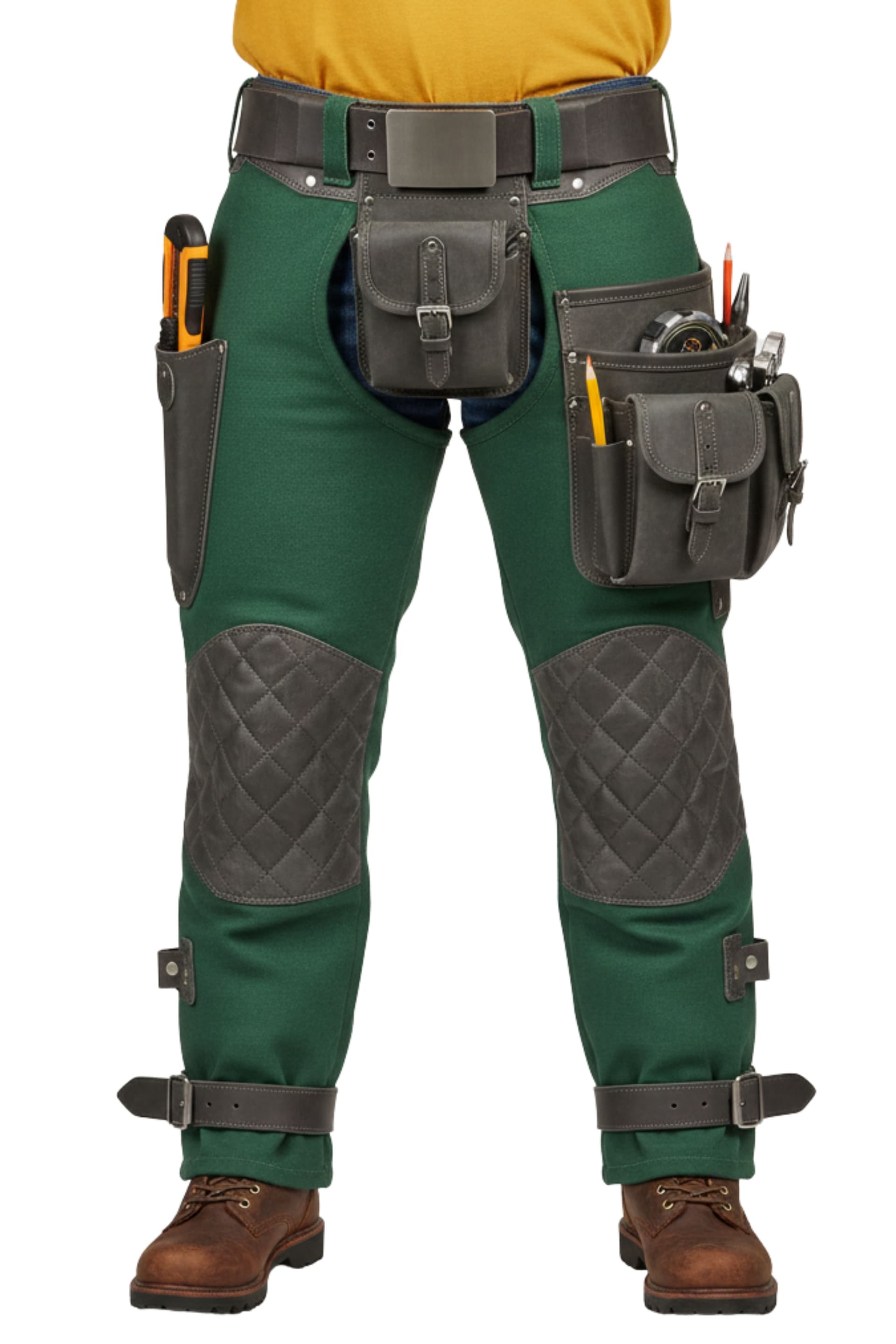
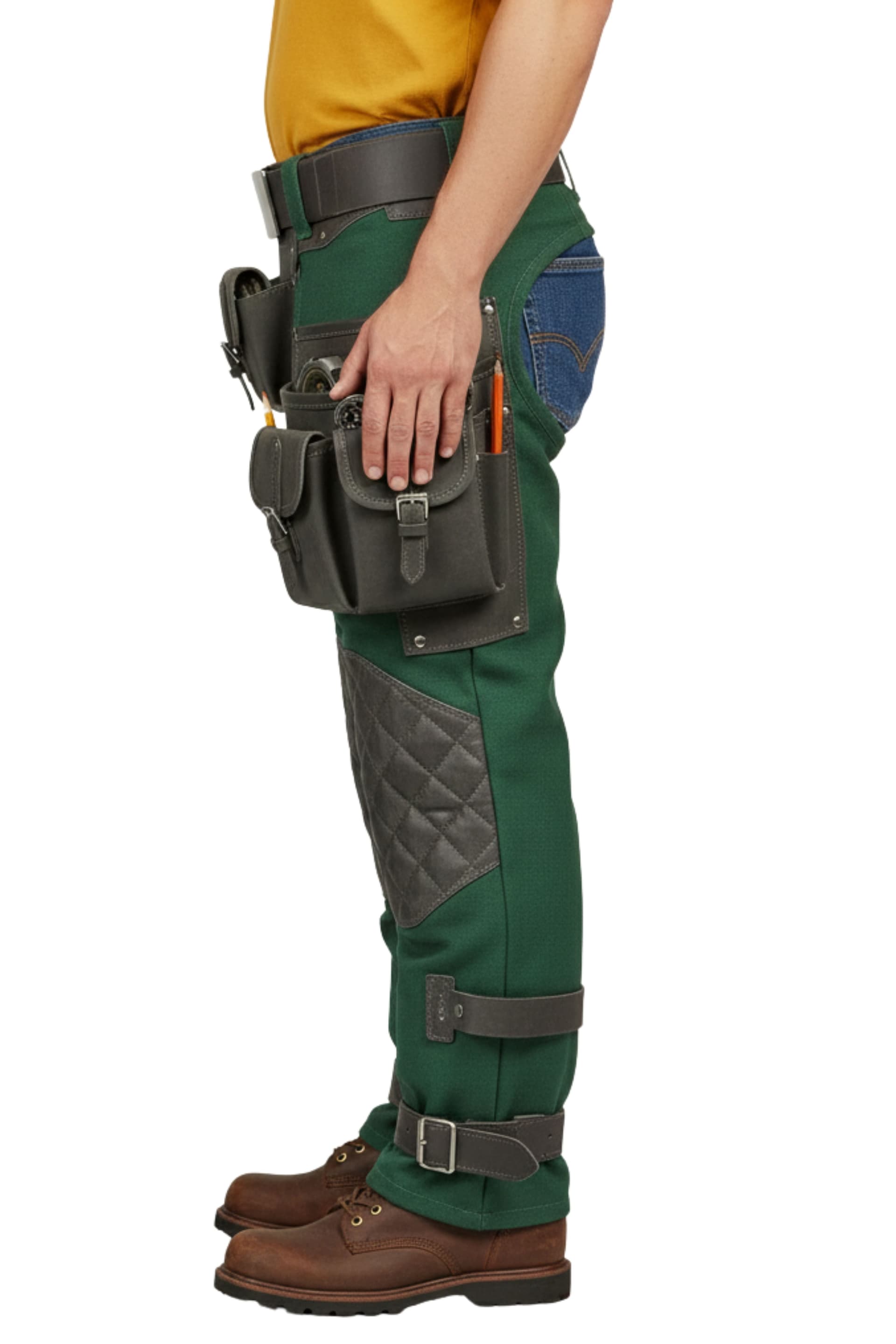
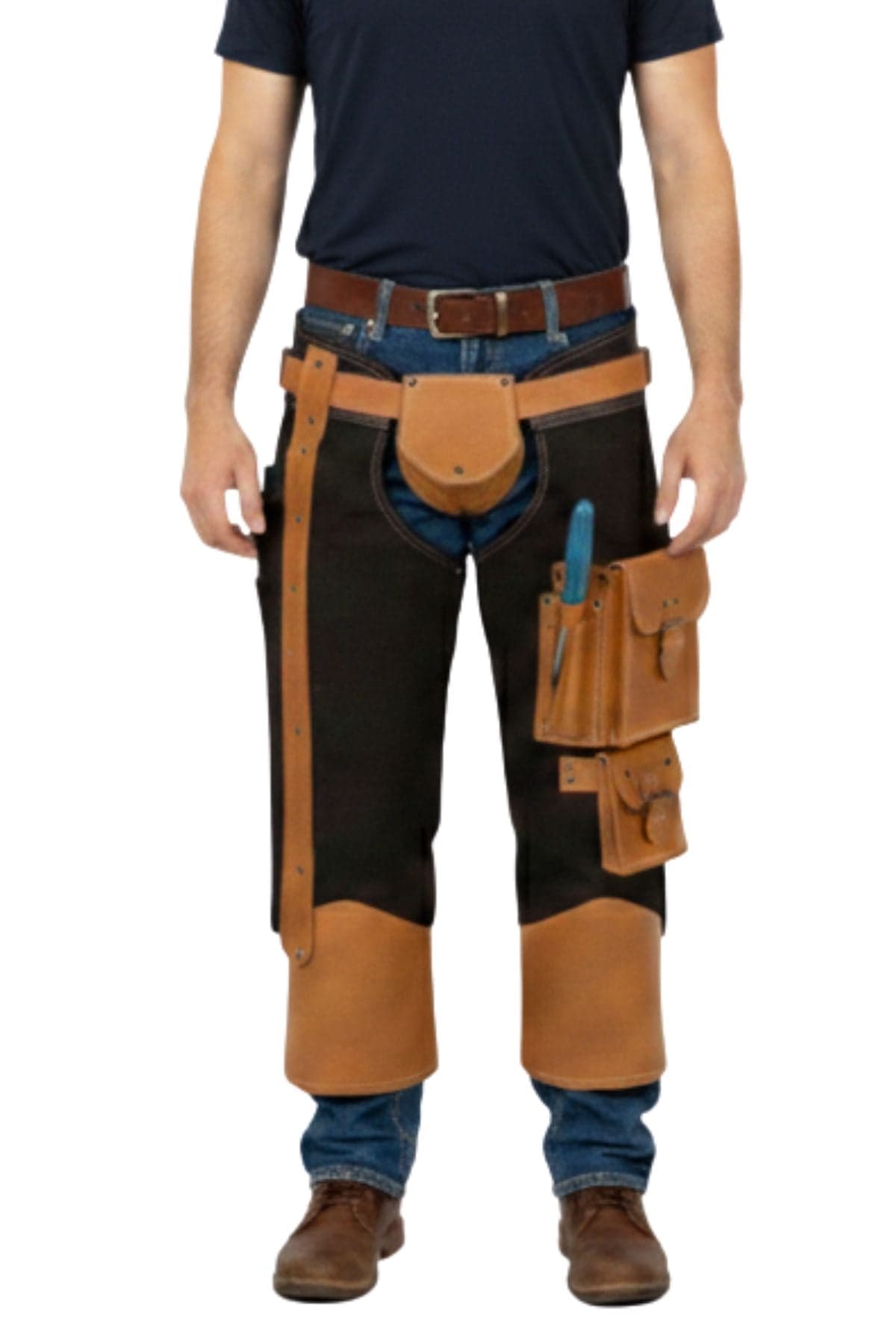
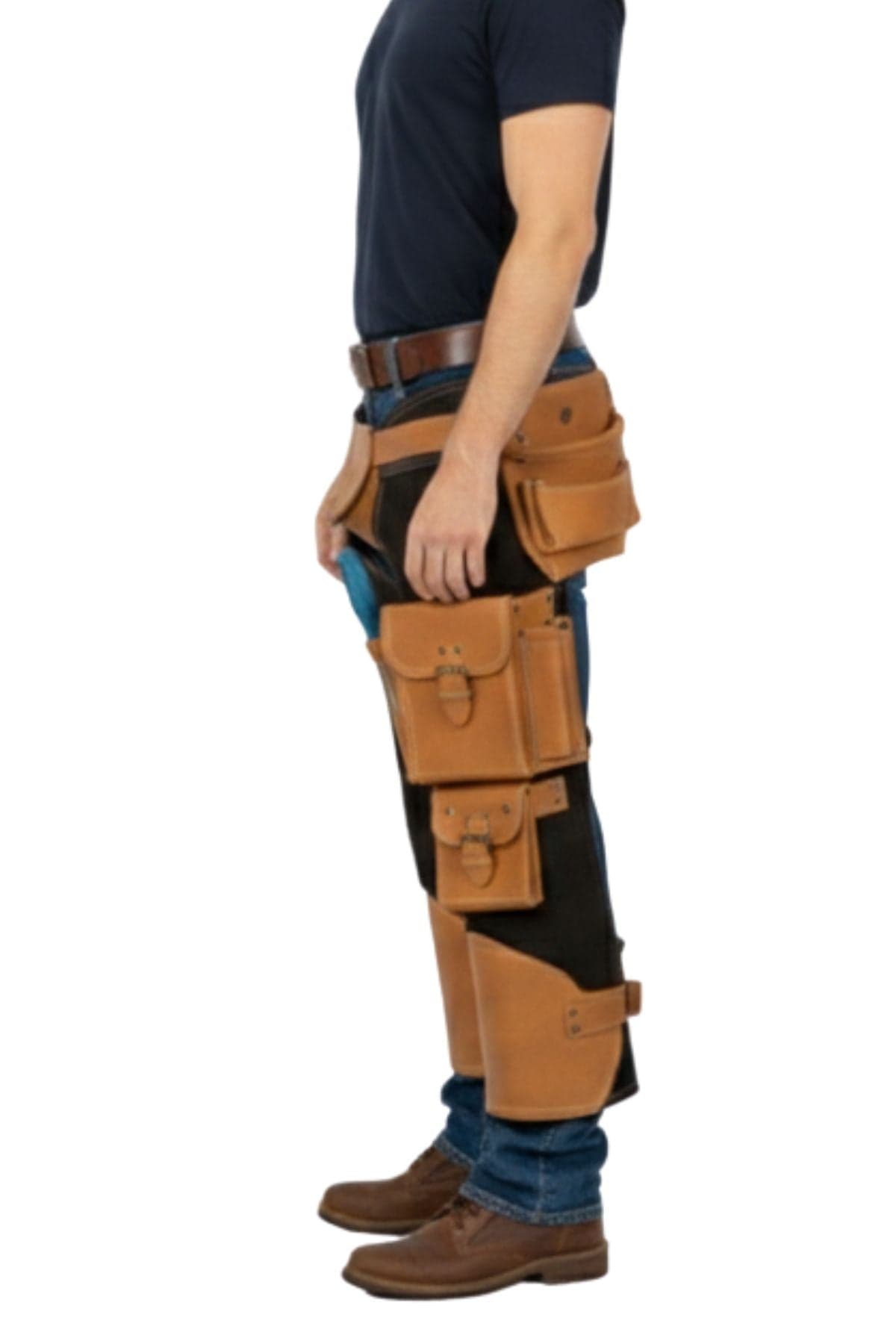
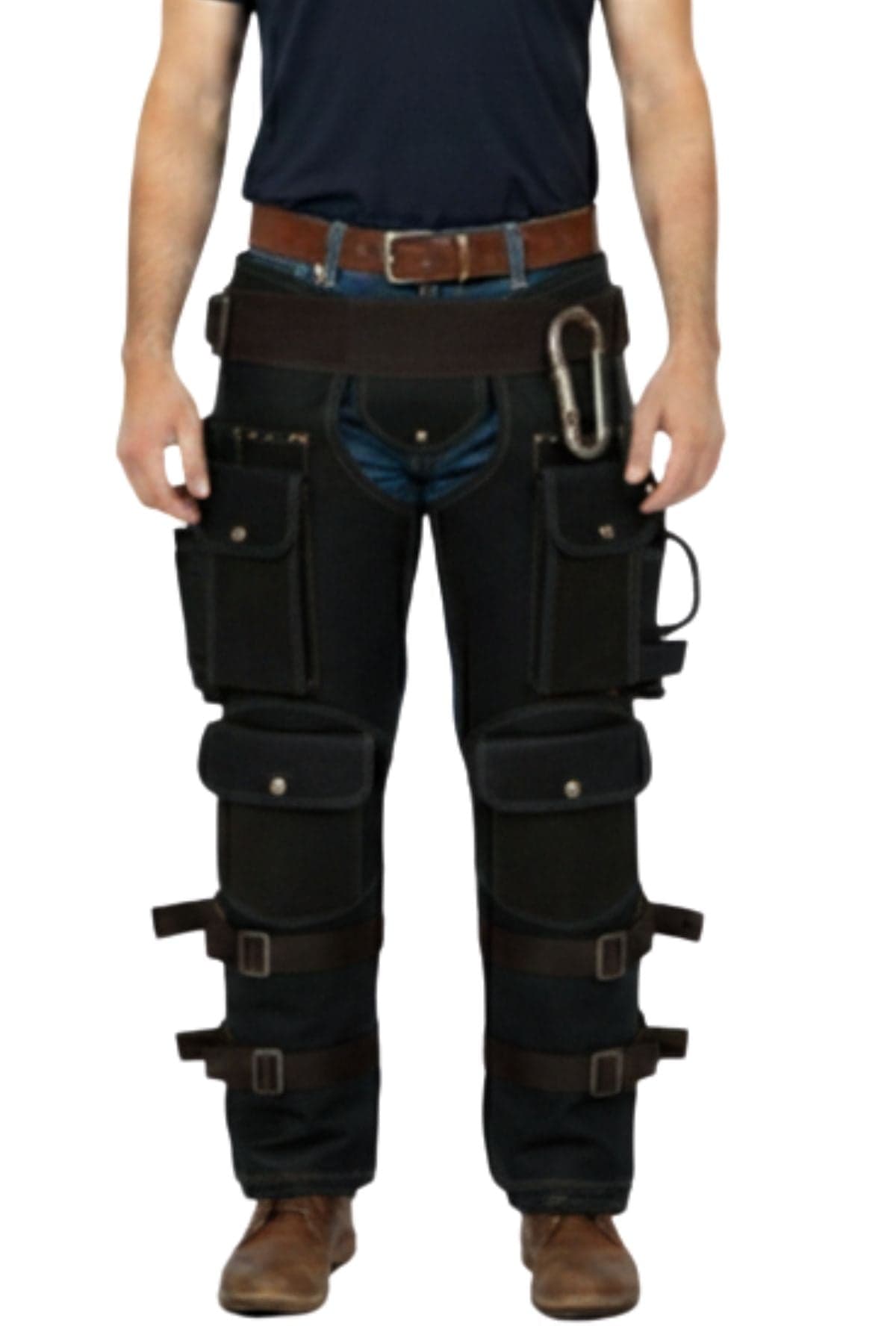
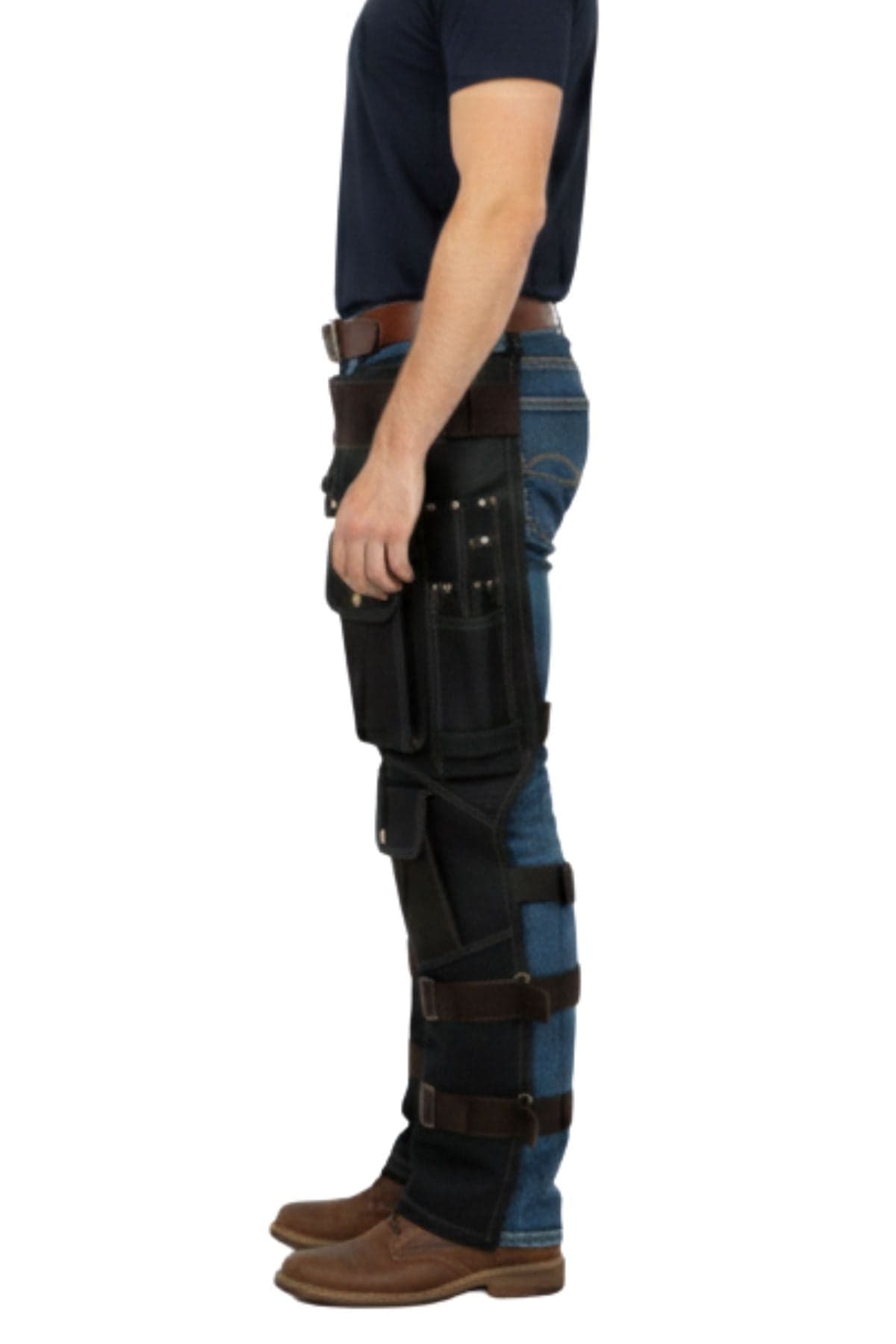
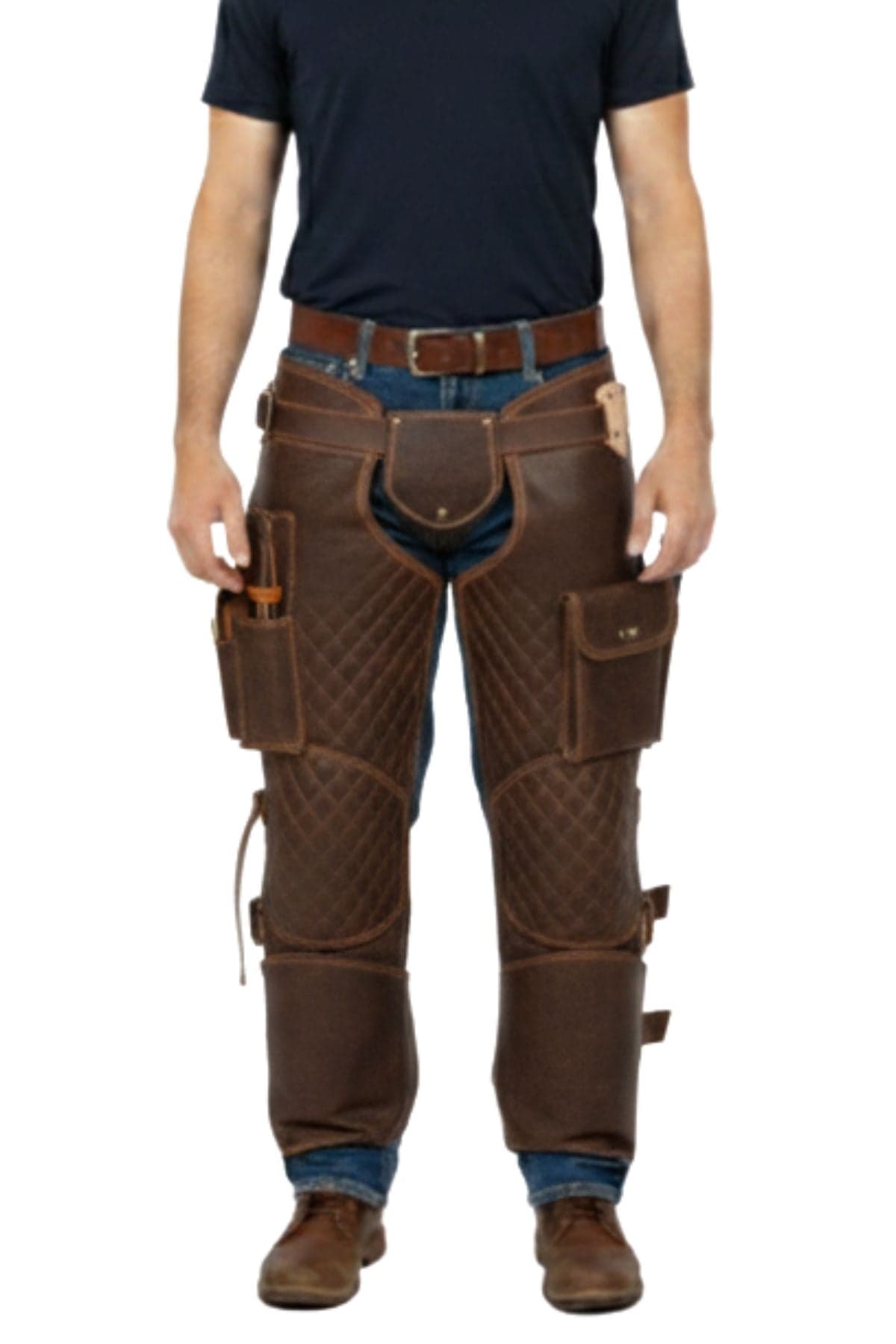
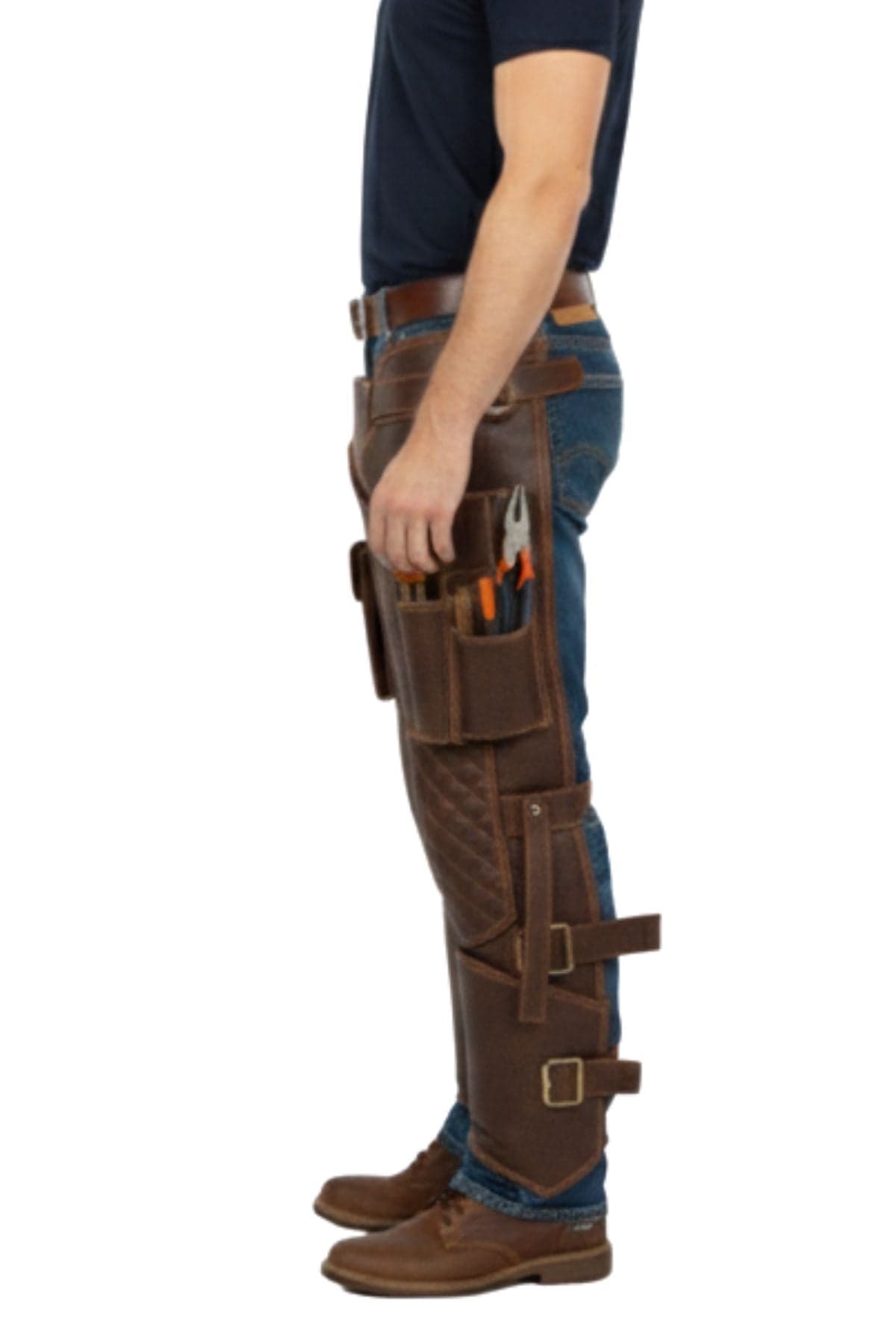
The forge is one of the hottest places you can put your legs. Radiant heat comes off the fire, hot scale drops from every heat, and fresh stock swings past your thighs on the way to the anvil. Chaps Fit blacksmith chaps are heavy leather leg protection built for smithing, with tool pouches, knee guards and adjustable leg straps, in sizes 2XS to 8XL.
Where the Heat Comes From at the Forge
A blacksmith's legs face heat from three directions:
- The forge itself. Radiant heat pours out of the forge mouth or firepot while you tend a heat. Gas forges put out steady radiant heat at the opening. Coal forges add sparks, burning clinker and embers when you rake the fire.
- The workpiece. Every heat means carrying glowing steel from the fire to the anvil, usually at waist or thigh height, several times a minute.
- The anvil. Hammering knocks off hot scale that drops around your feet and lap. Forge welding throws a shower of sparks and burning flux, the heaviest spark load in smithing.
Leather chaps put a layer between all of that and your work trousers, from belt to boot.
Features Built for the Smithy
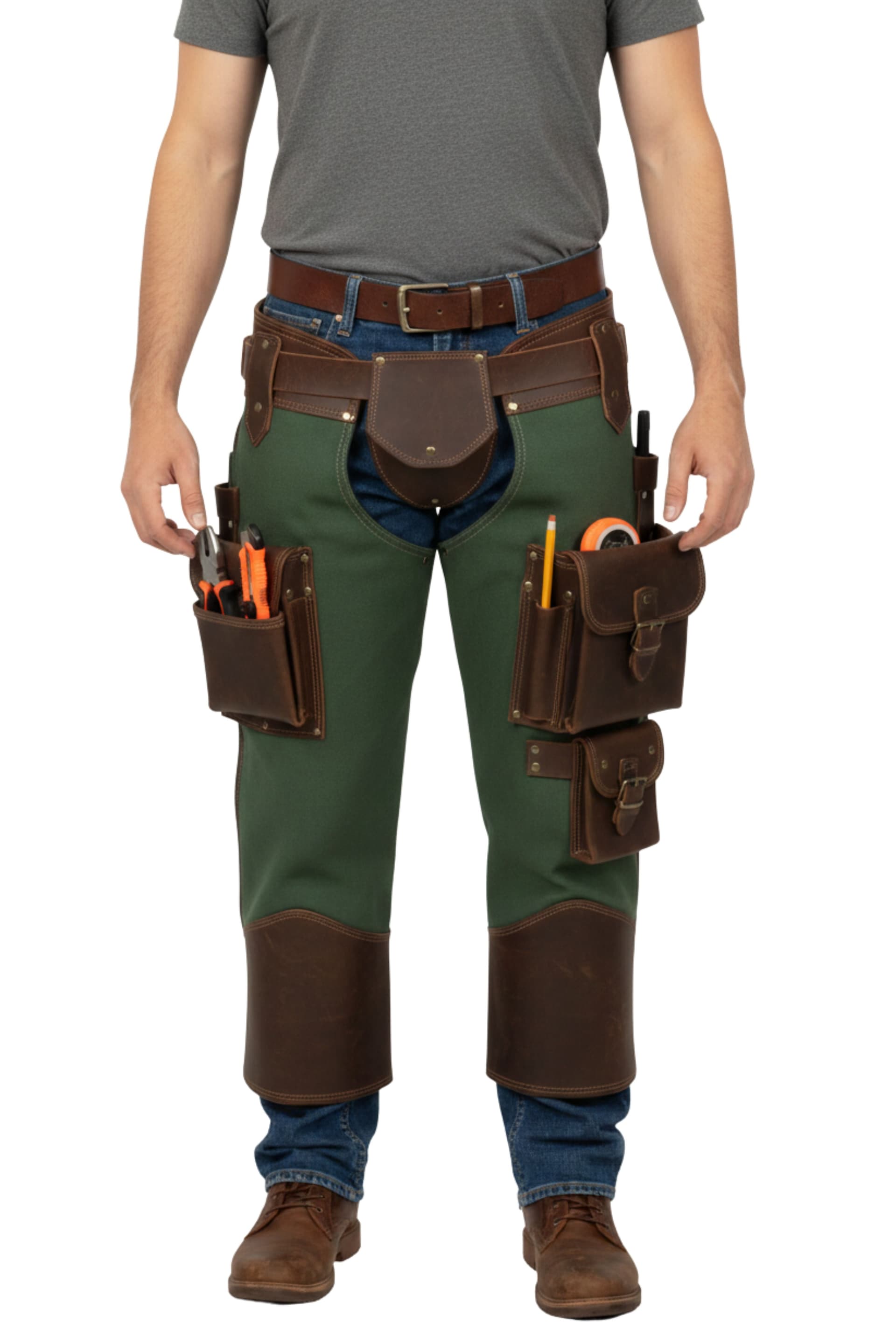
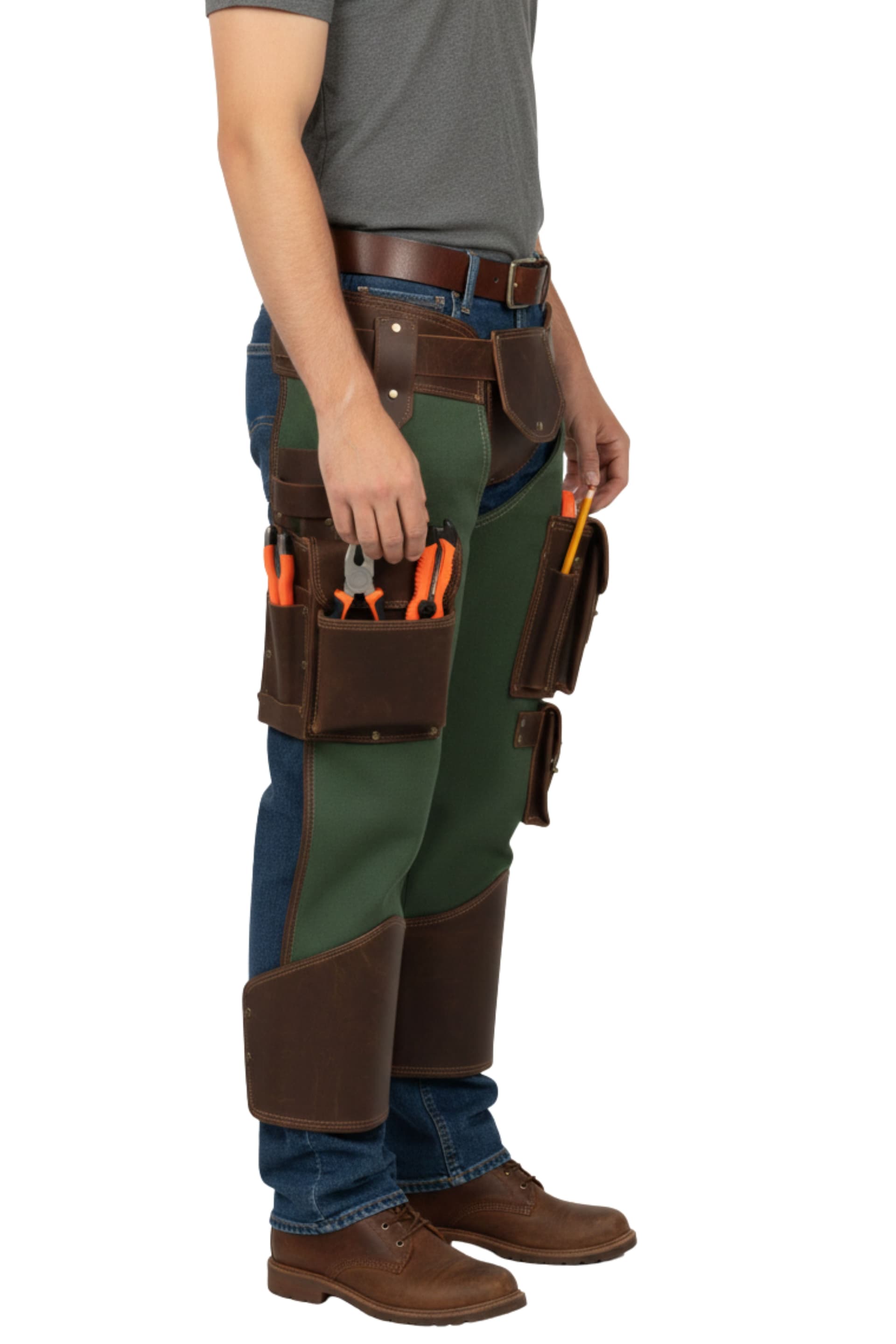
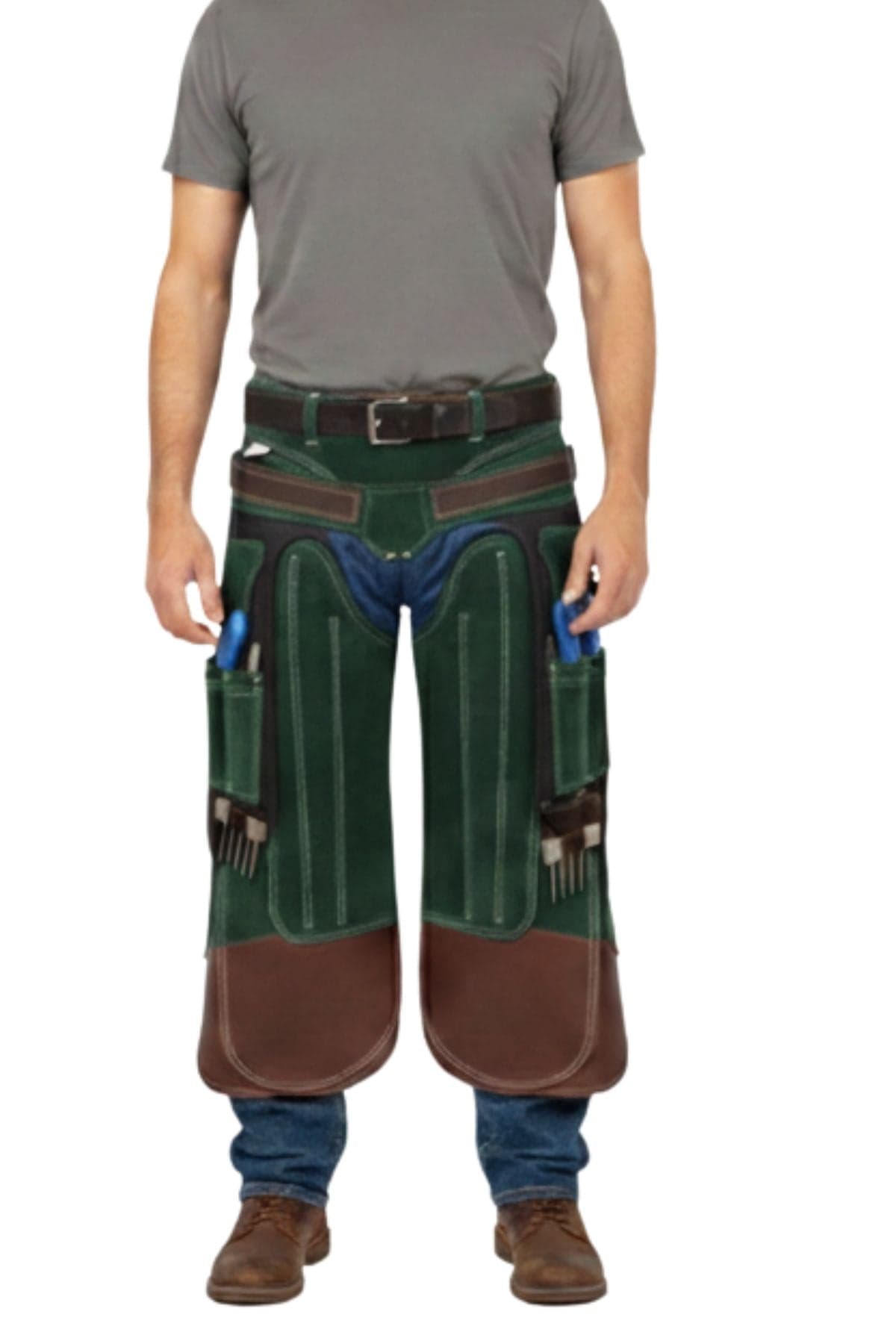
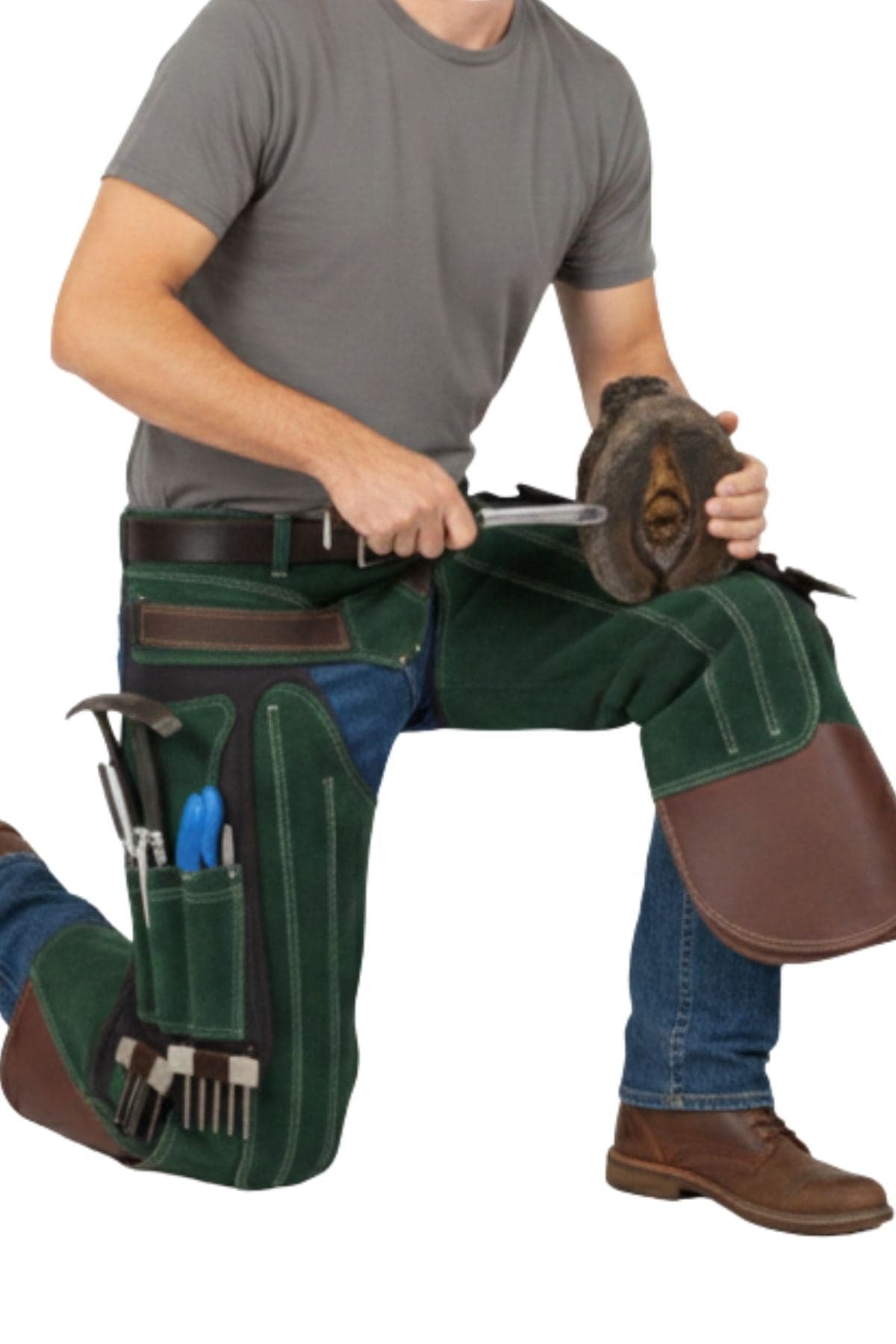
- Tool pouches for cold tools. Keep soapstone, a scribe, a tape, calipers and chalk within reach, so you're not walking away from the anvil mid-heat. The Blacksmith Leather Chaps with Tool Pouch have pouches on both sides.
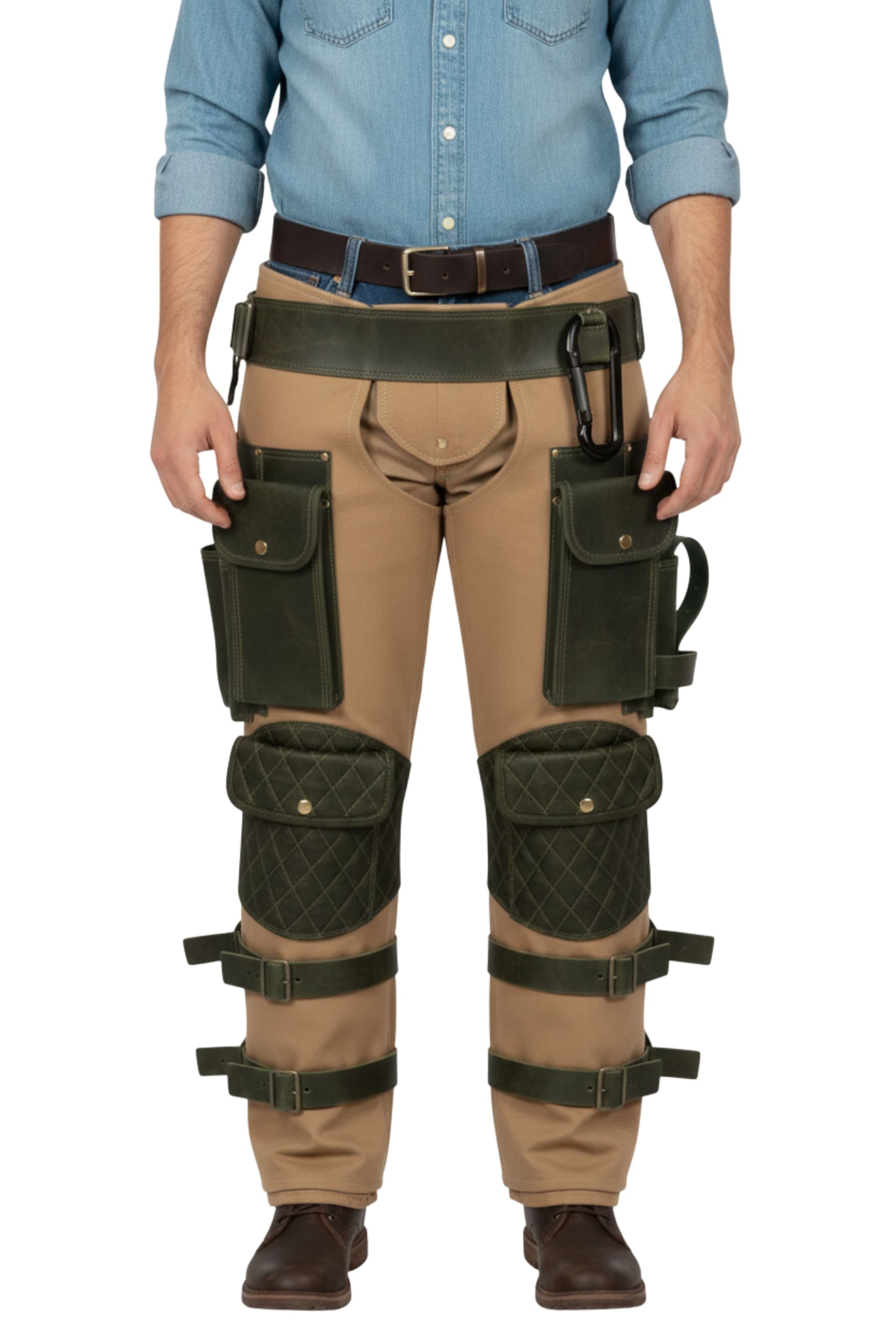
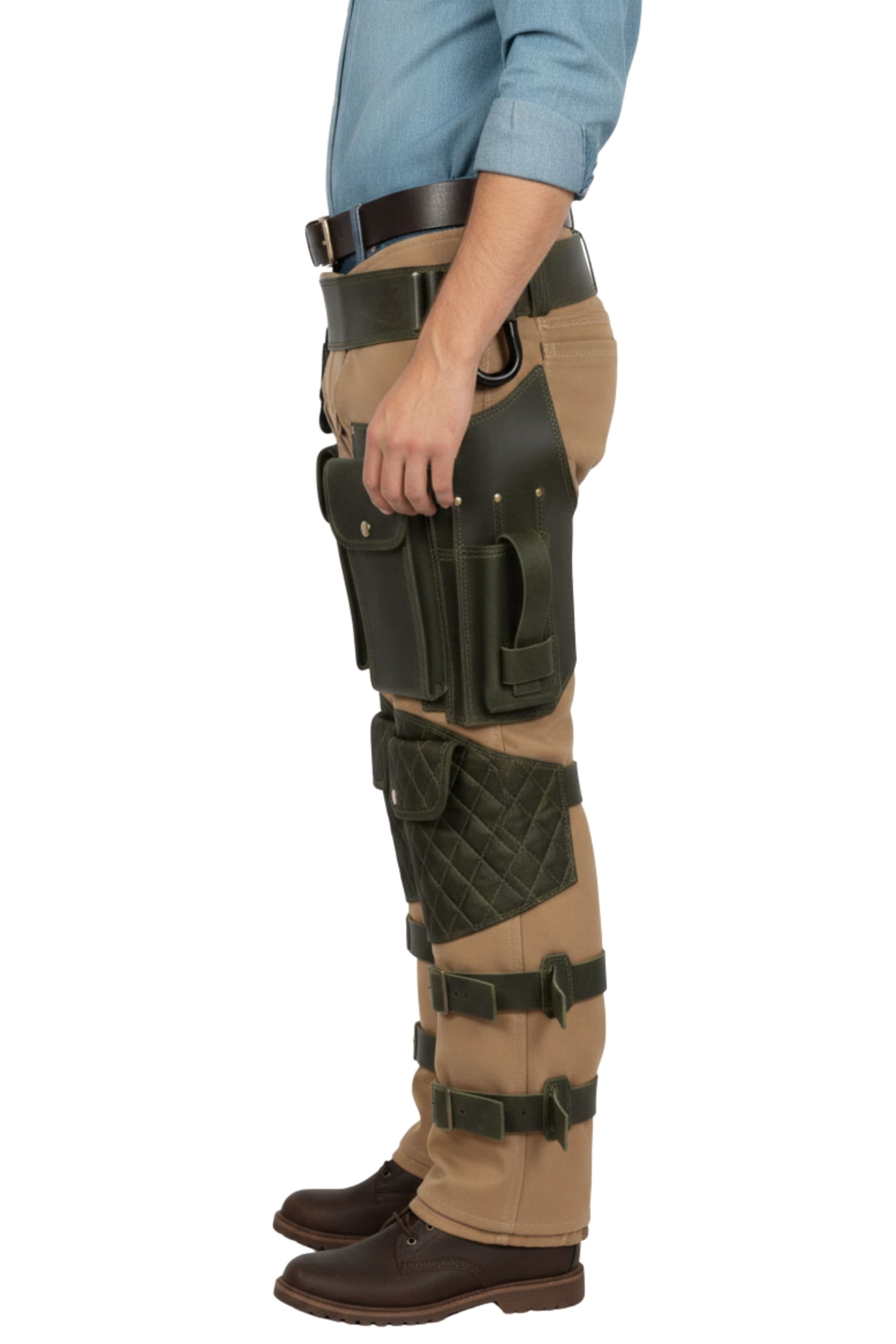
- Knee guards. Useful when you kneel at a low stump, a swage block or a floor-level vise. The Blacksmith Leather Leg Guard Work Chaps have quilted knee protection. The Protective Leather Blacksmith Chaps with Tool Pockets add reinforced knee and shin padding.
- Leg straps. They keep the leather close to your legs so it doesn't swing into the hardy hole, the power hammer or the grinder.
- Open back. Radiant heat builds up fast in front of a forge, and an open back lets it escape.
The range also includes the HammerForge, SteelSmith Pro Grade, Forge Leather, Rugged Blacksmith and Heavy Duty Blacksmith Utility chaps. Each product page lists its exact leather and pocket layout.
Leather vs Canvas Panels
Some work chaps combine leather with canvas panels to reduce weight. Canvas is lighter and cooler, but it doesn't tolerate sparks and hot scale nearly as well as leather. On mixed-material chaps, check that the leather faces the forge and the anvil and the canvas sits in lower-risk areas. If you do a lot of forge welding, choose all-leather coverage on the front of the legs.
Smithing Tasks and What They Demand
- Drawing out and general forging: steady scale and radiant heat. Full-length leather chaps are the everyday choice.
- Forge welding: the heaviest spark and flux spatter of any smithing job. Wear full-length chaps, and add a bib apron for your chest.
- Quenching: water quenches throw steam and splash, and oil quenches can flare. Stand to the side of the quench tank and keep your chaps free of oil.
- Power hammer work: stock can kick or whip. Keep straps snug and loose leather clear of the dies.
- Bladesmithing at the belt grinder: sparks fly at thigh height. Keep the chaps strapped tight so nothing gets near the belt.
Caring for Forge Chaps
- Brush off scale and coal dust after each session. Scale is abrasive and wears leather down over time.
- Air them out to clear coal smoke. Don't soak them in water.
- Keep them away from quench oil and forge fuel. Oily leather catches embers far more easily.
- Check them regularly for burn-through holes, hardened patches near the knees and weak pouch stitching. Replace worn chaps before they fail.