Farrier Chaps
Farrier Chaps
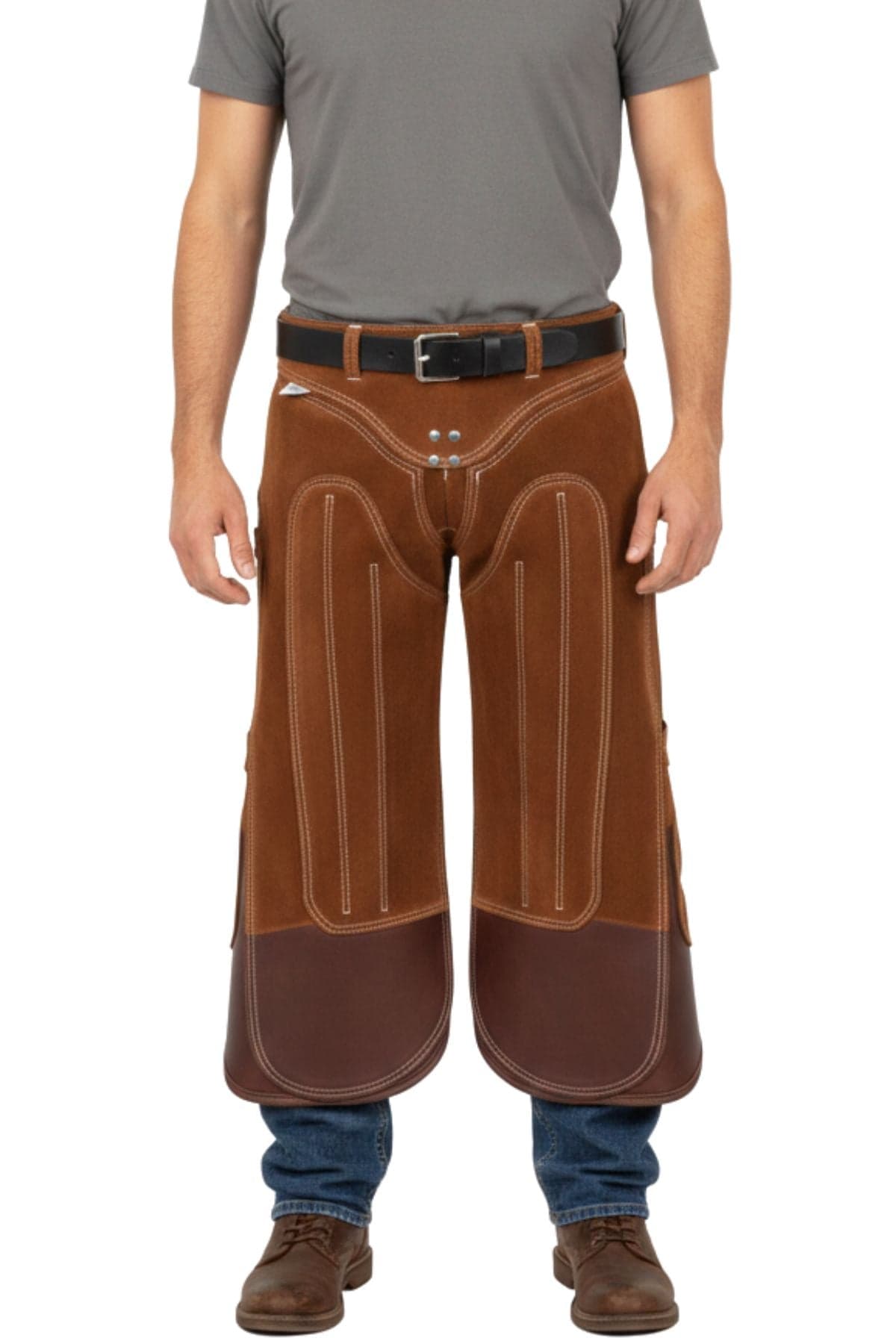
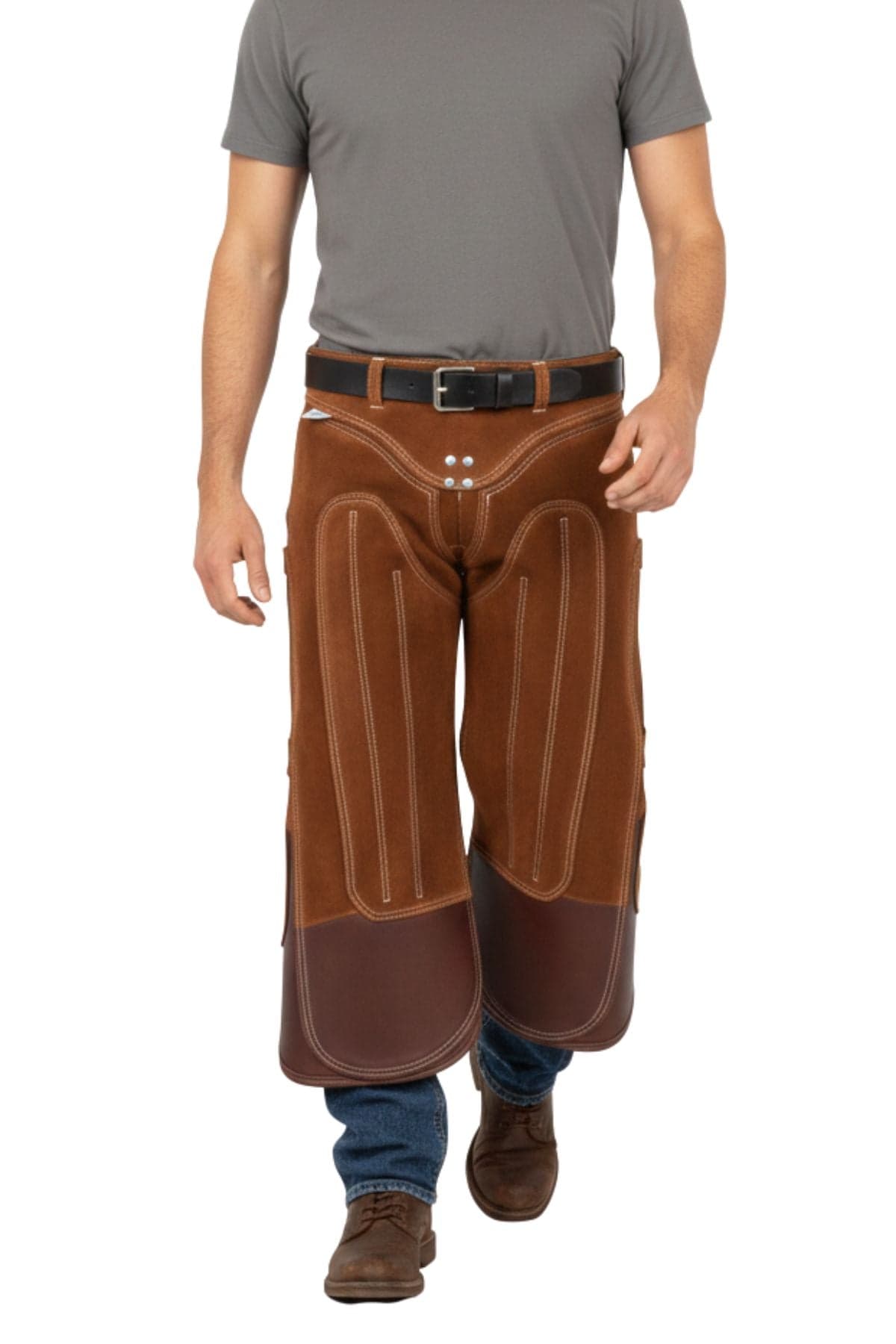
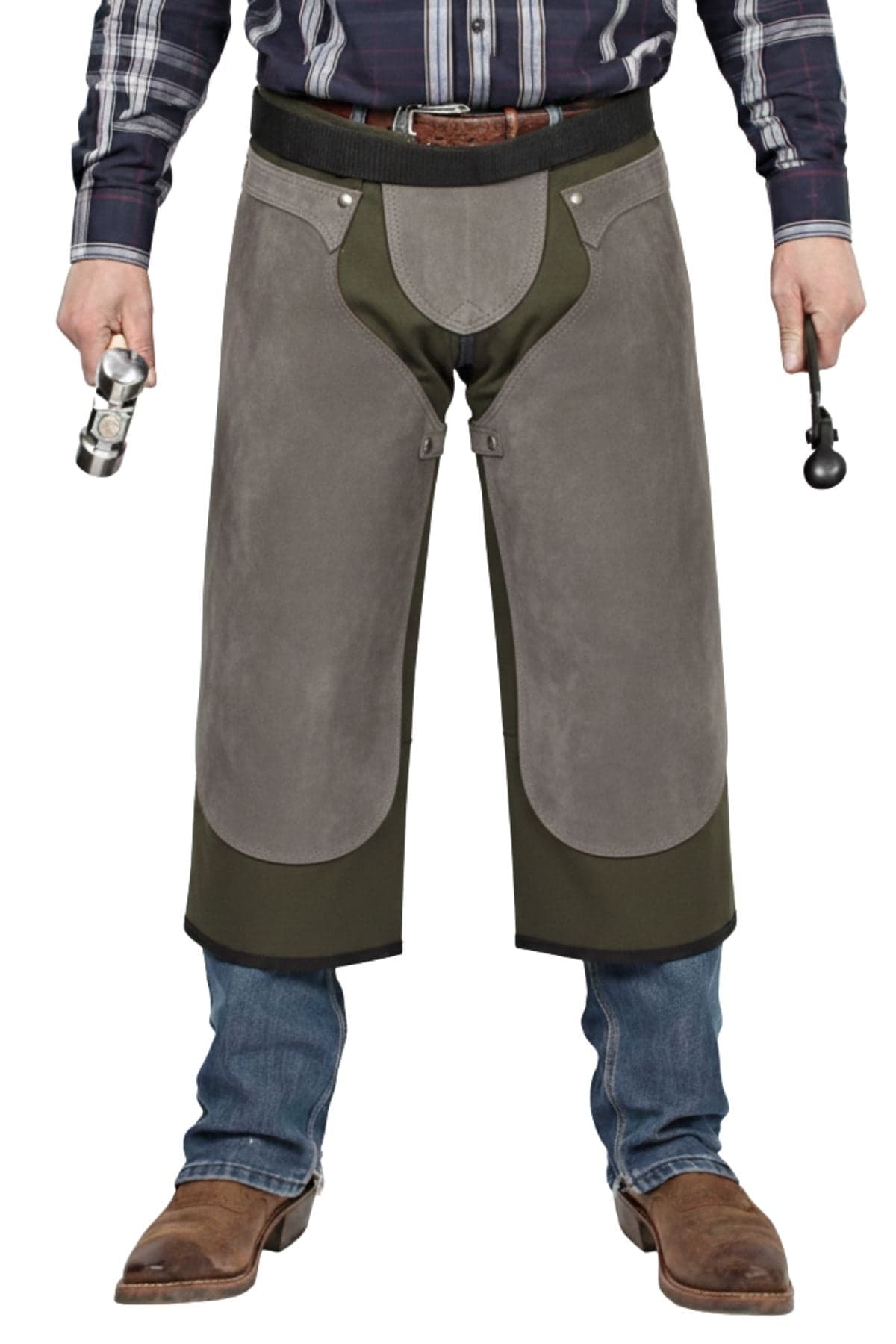
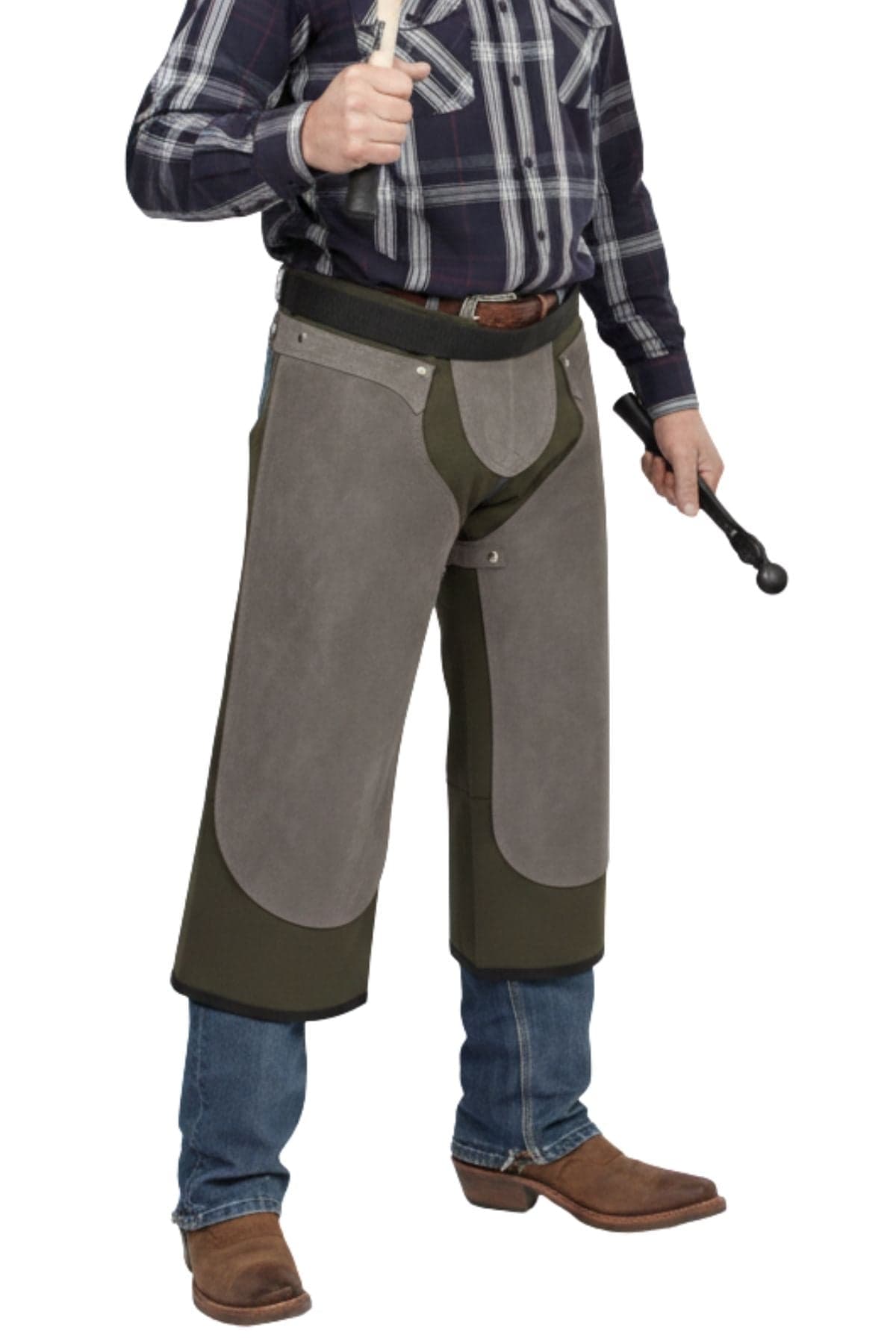
Every horse you shoe puts its weight on you. Front hooves are held between your knees, hind hooves rest on your thigh, and the rasp, knife and nippers work inches from your legs all day. Chaps Fit farrier chaps are leather shoeing aprons with reinforced knee and thigh panels, leg straps and riveted construction, in sizes 2XS to 8XL.
How Hoof Work Wears on Your Legs
The wear on farrier chaps depends on how you hold the foot:
- Front feet: you back up to the leg and hold the hoof between your knees. The inside of the knees and lower thigh take the pressure and the horse's shifting weight.
- Hind feet: you cradle the hoof on your thigh or lap for trimming and finishing. The top of the thigh carries the hoof, and grit and hoof wall wear the leather.
- Rasping: long strokes over a hoof resting on your leg. One slip and the rasp scrapes across your thigh. Leather takes that damage instead of your skin.
- Knife work: a hoof knife that slips follows through toward your leg.
- Clinching and nailing: the ends of nails sticking through the hoof wall can scratch you, and a horse pulling its foot away drags the hoof across your lap.
That's why farrier chaps are built around reinforced knees and thighs rather than full-length coverage.
Features That Matter for Shoeing
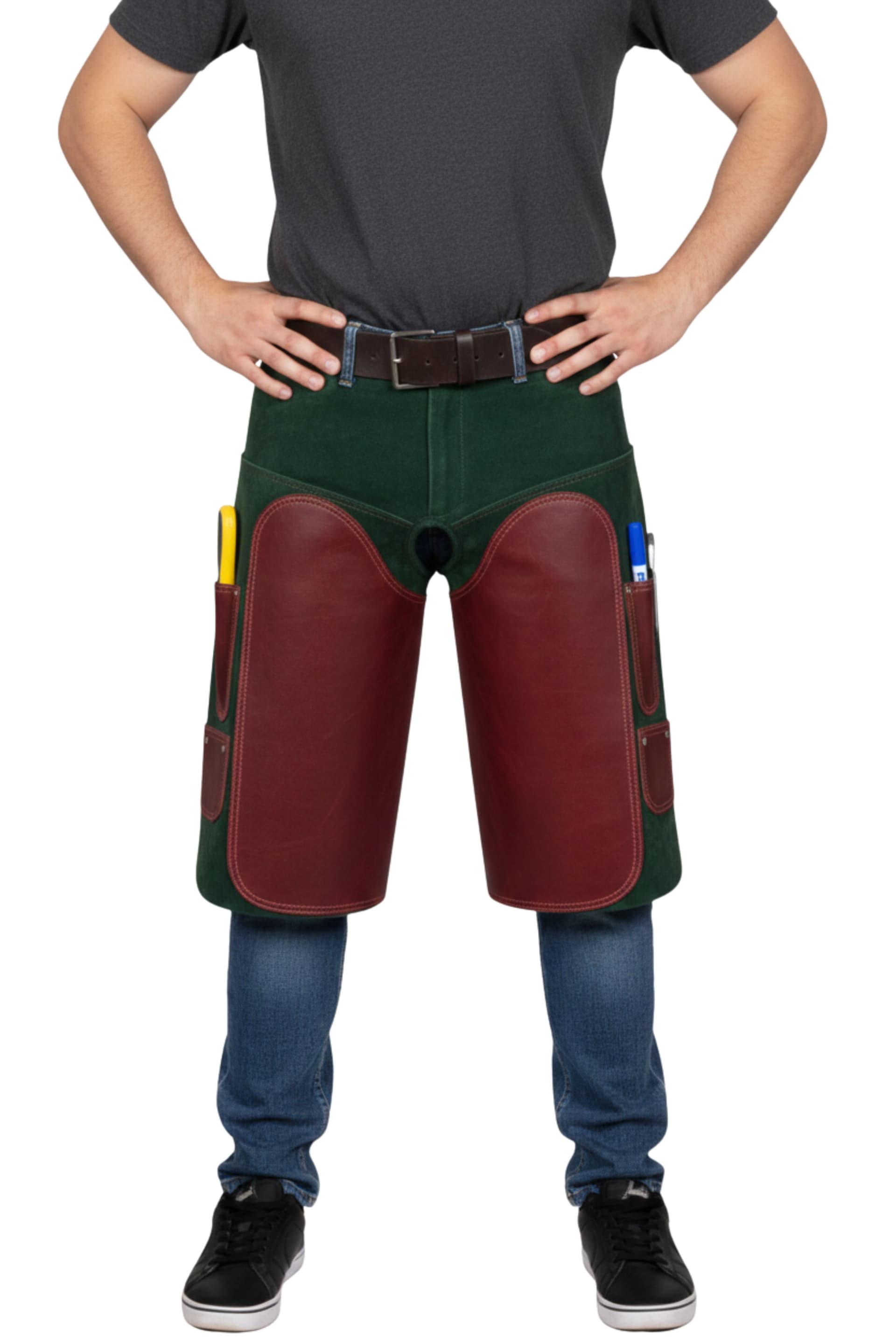
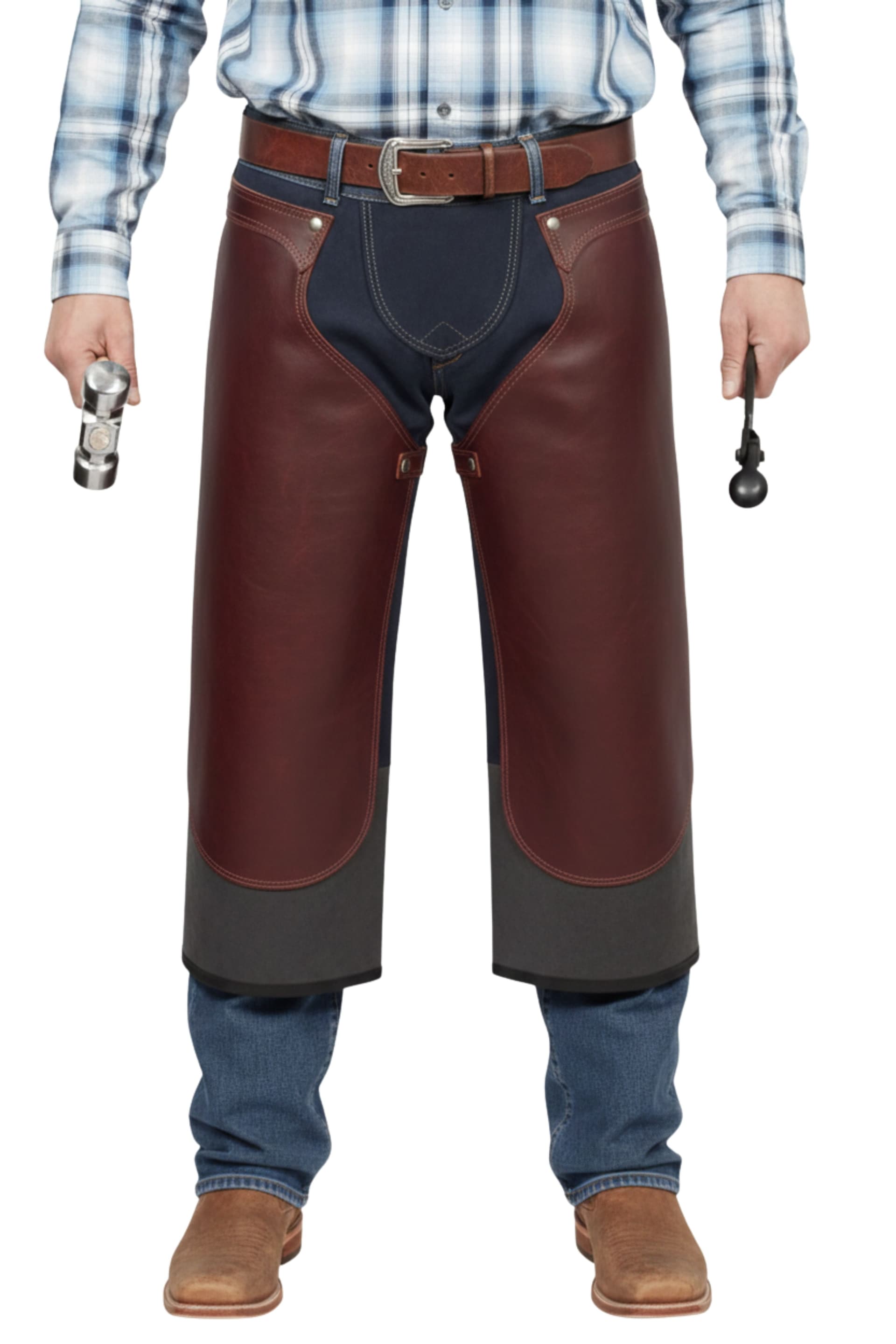
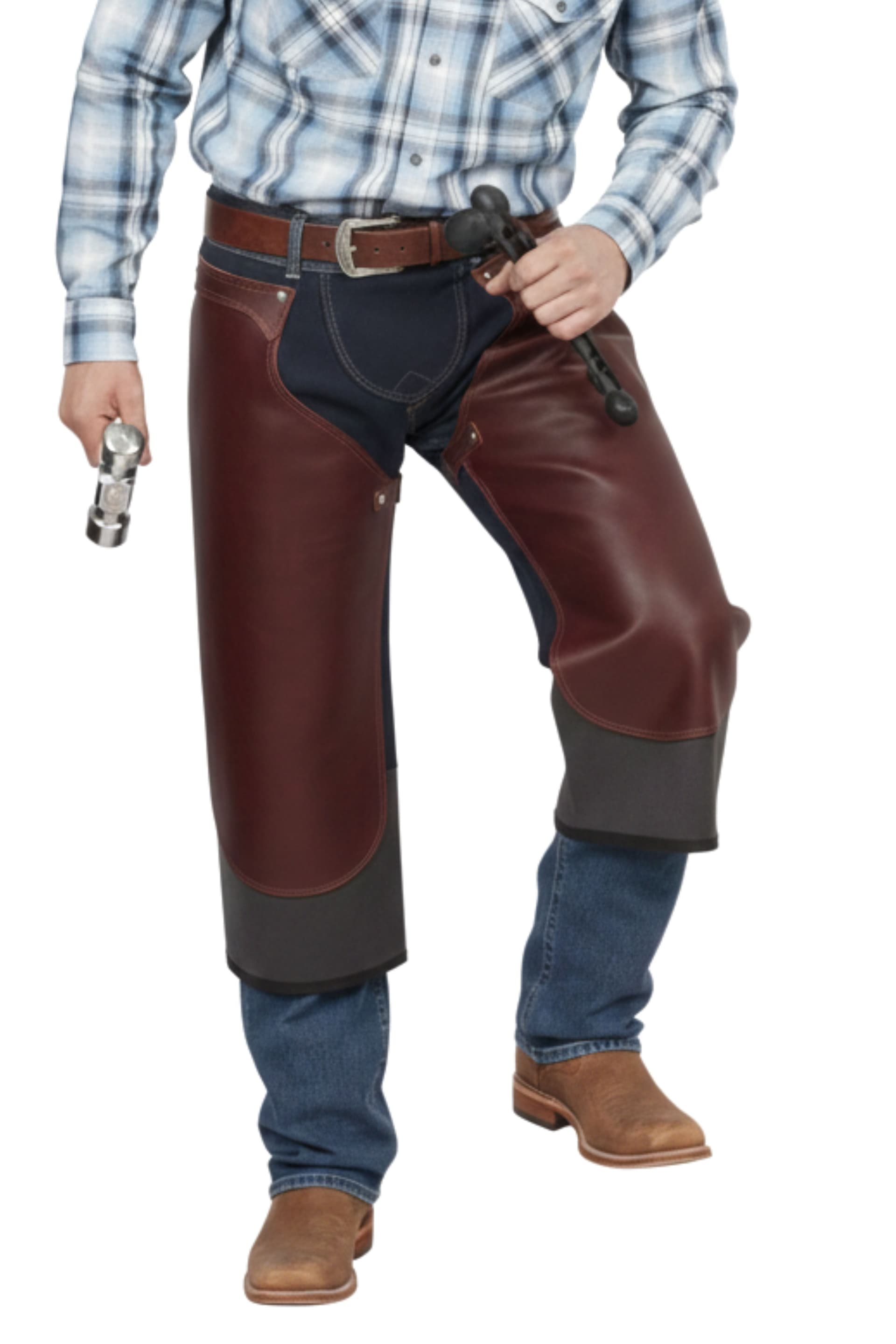
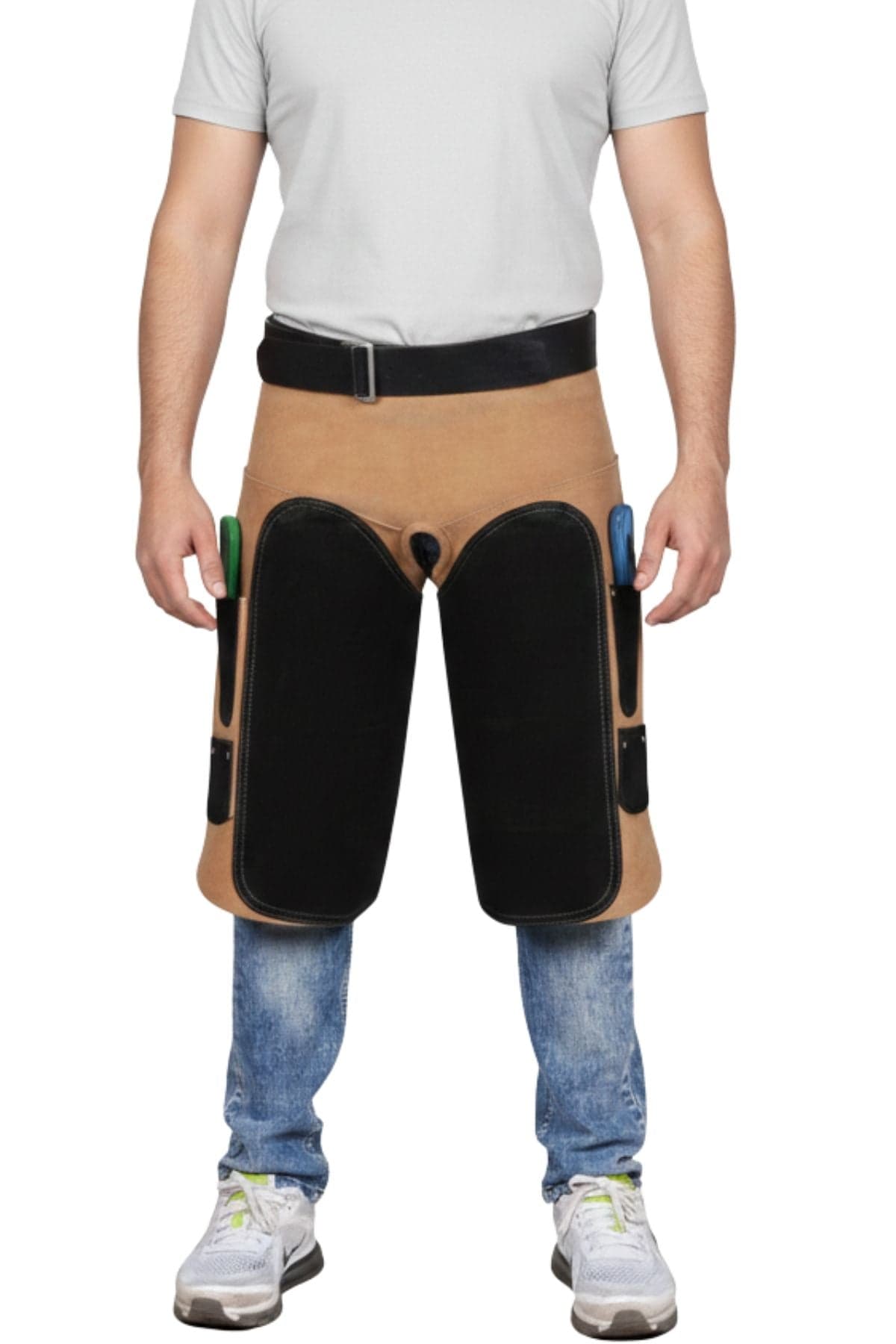
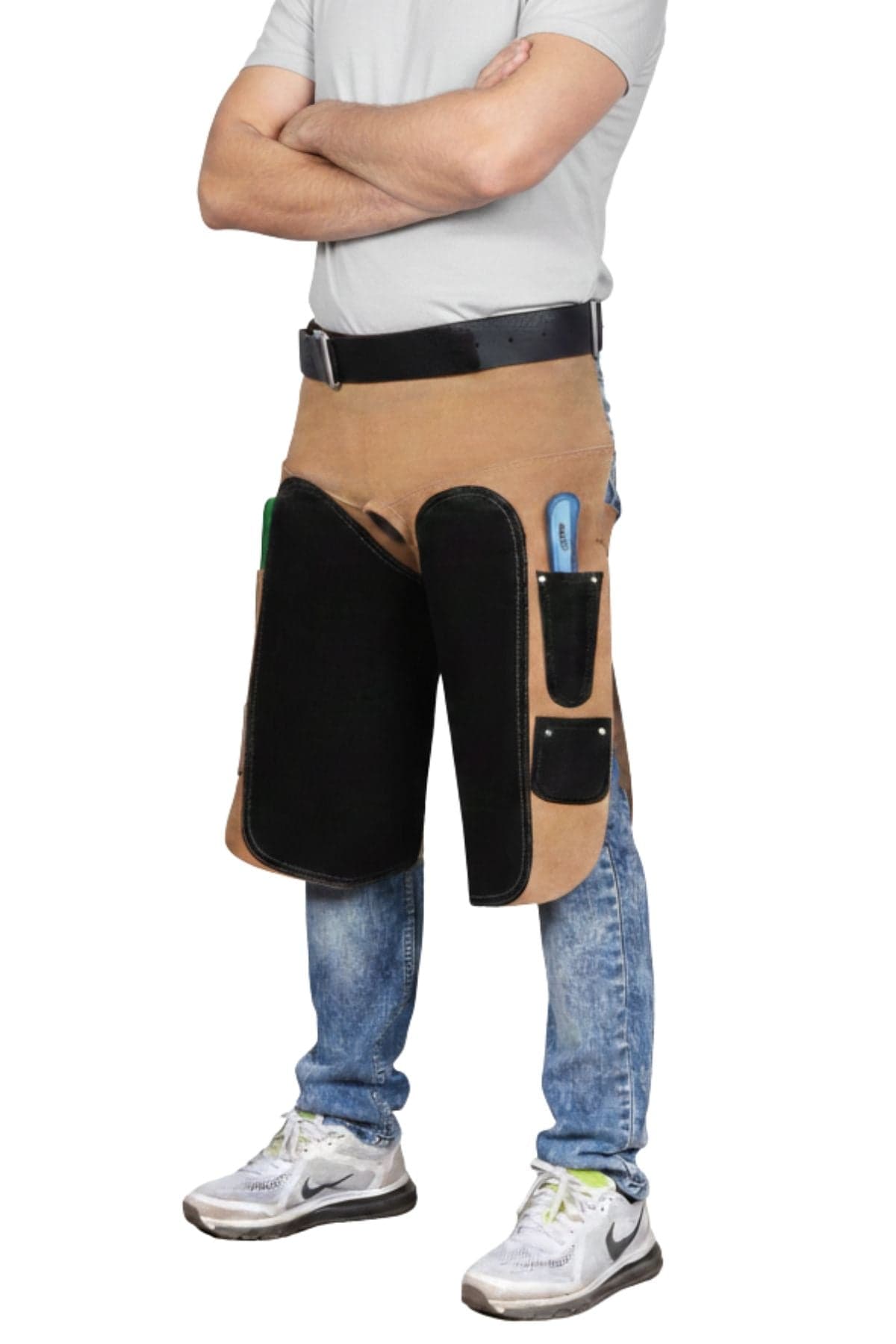
- Reinforced knee panels. Your knees grip the hoof for most of the day. See the Brown Leather Farrier Chaps with Knee Panels.
- Leg straps behind the thigh. They keep the panels in position when you bend and step under the horse, so the leather doesn't slide away from the hoof.
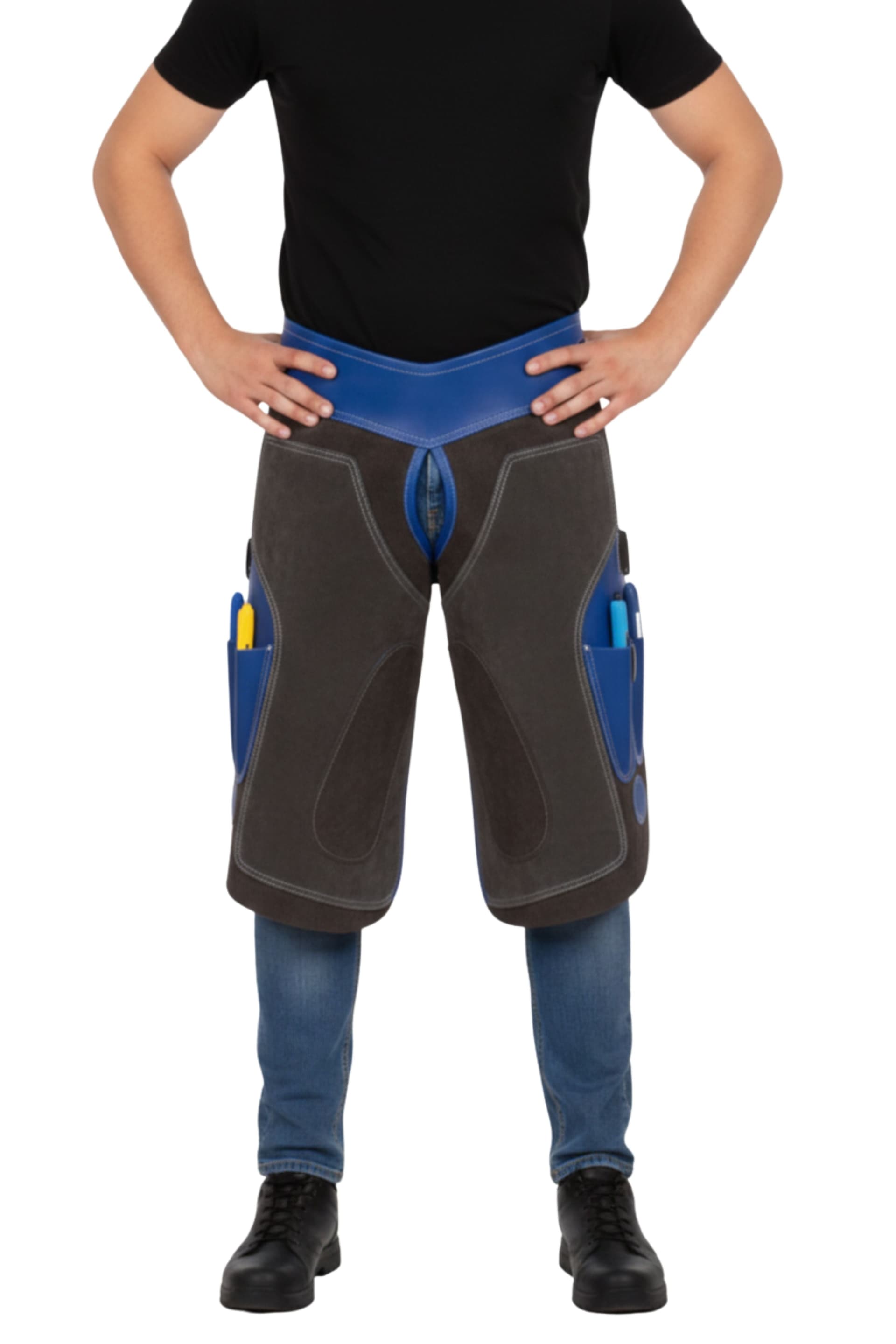
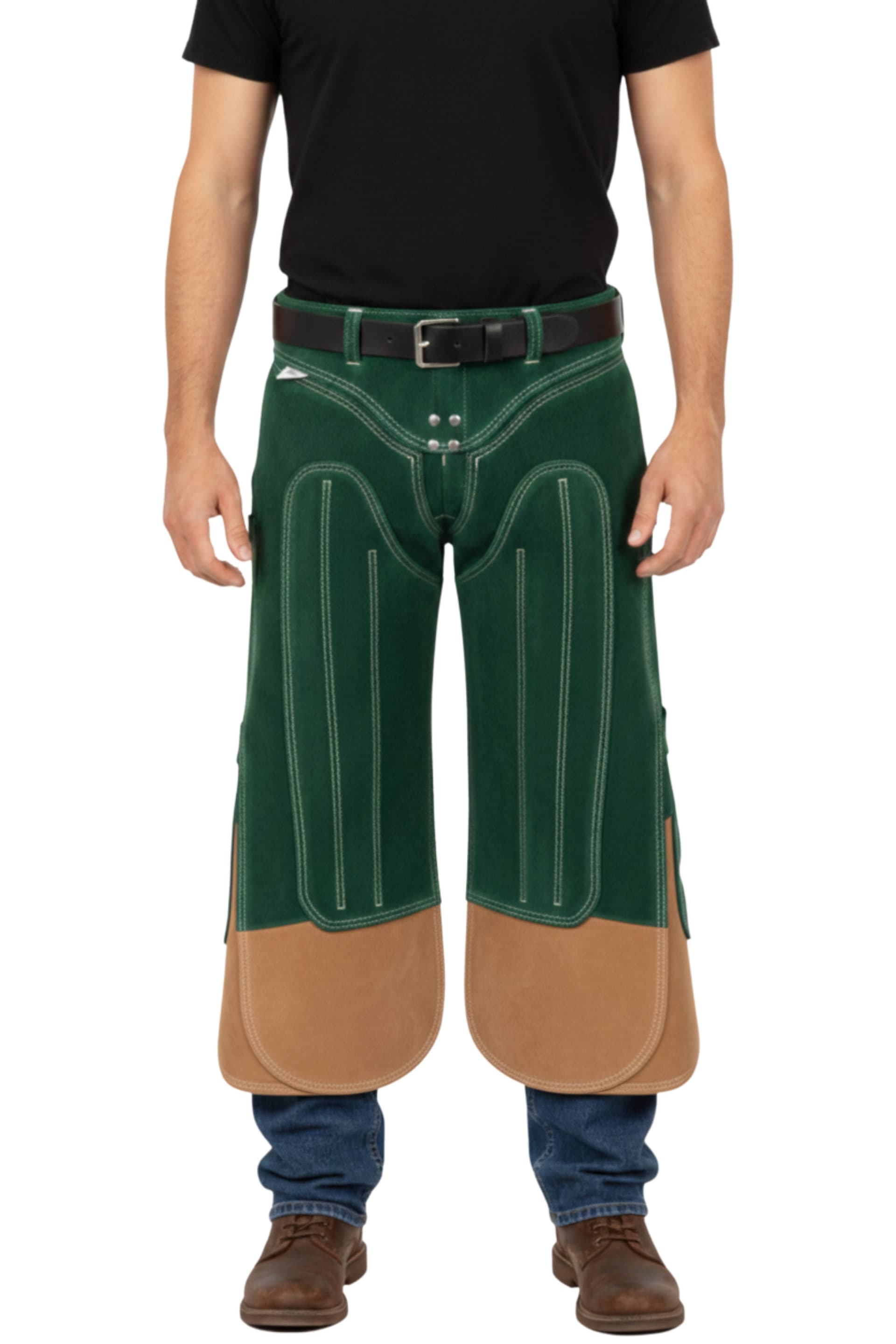
- A waist that moves with you. The Leather Farrier Chaps for Hoof Work use suede leather with a wide elastic waist, which gives as you bend dozens of times a day.
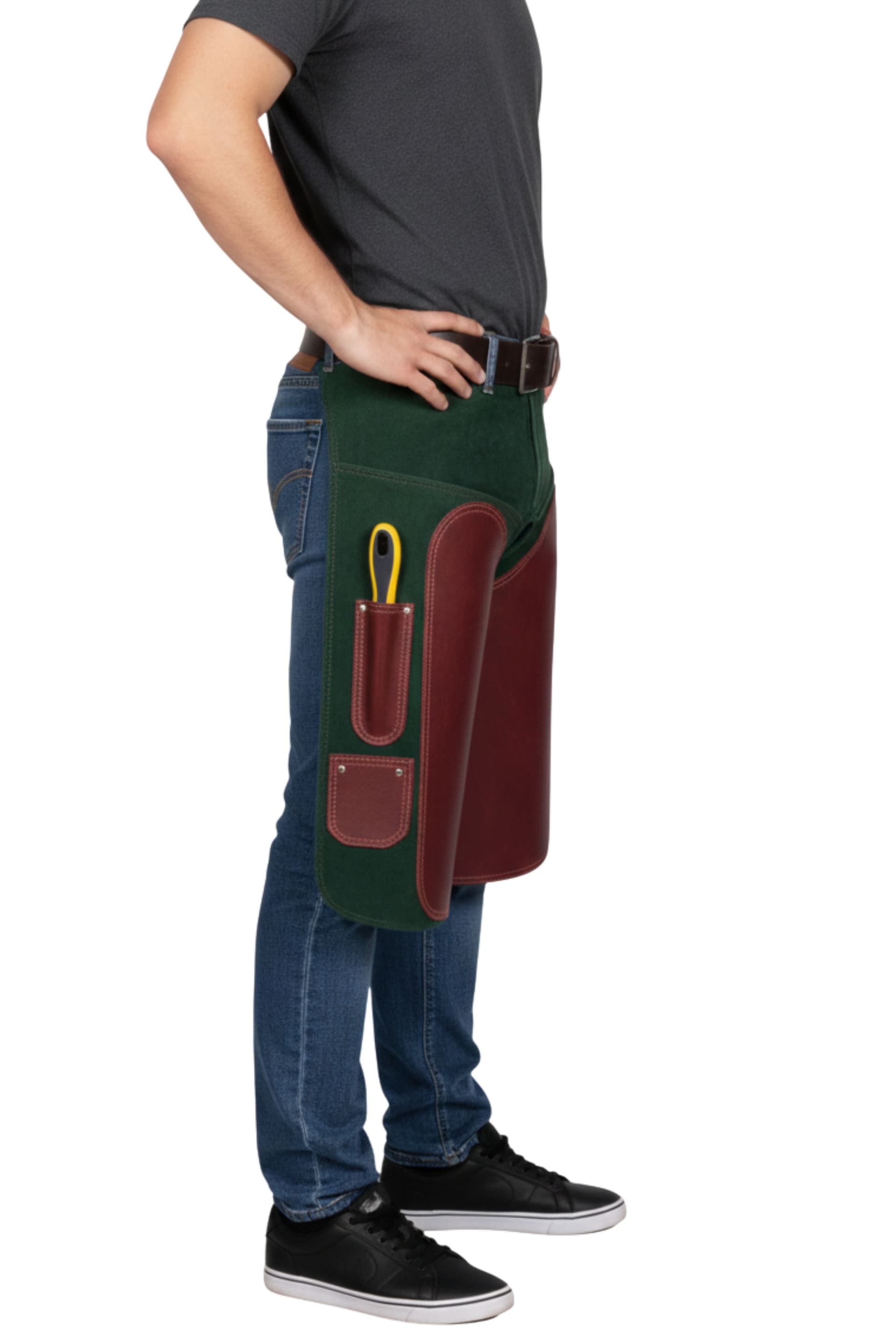
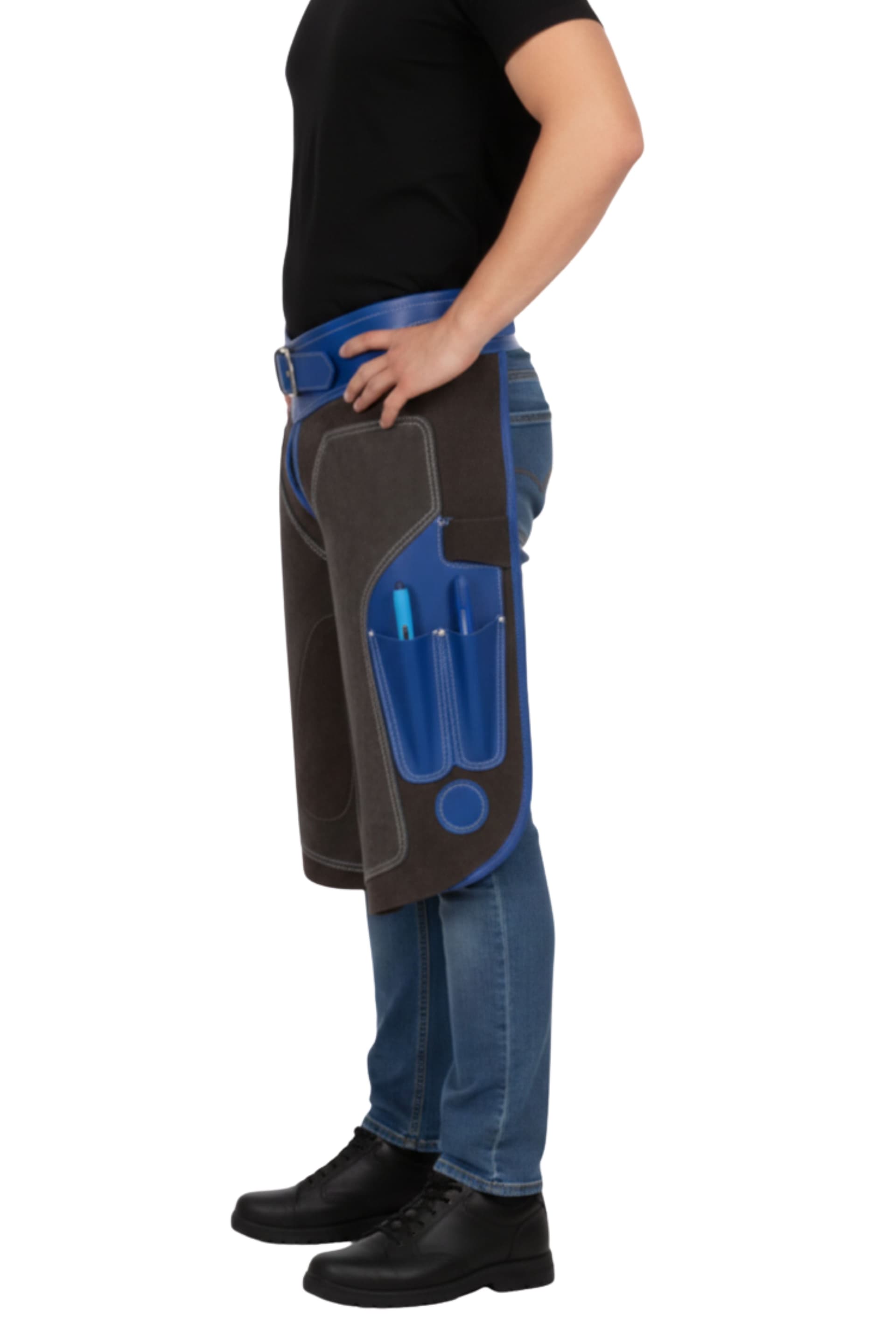
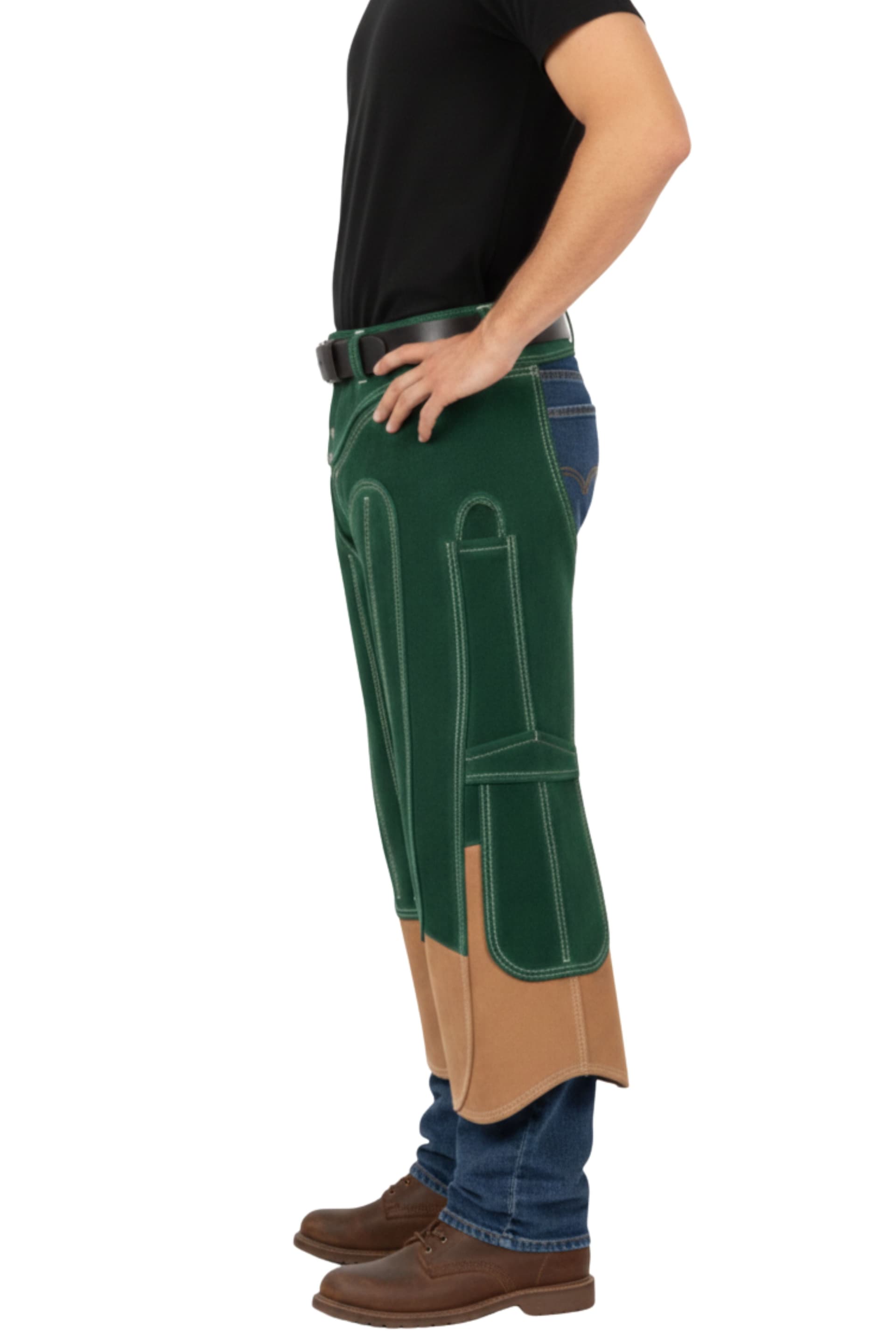
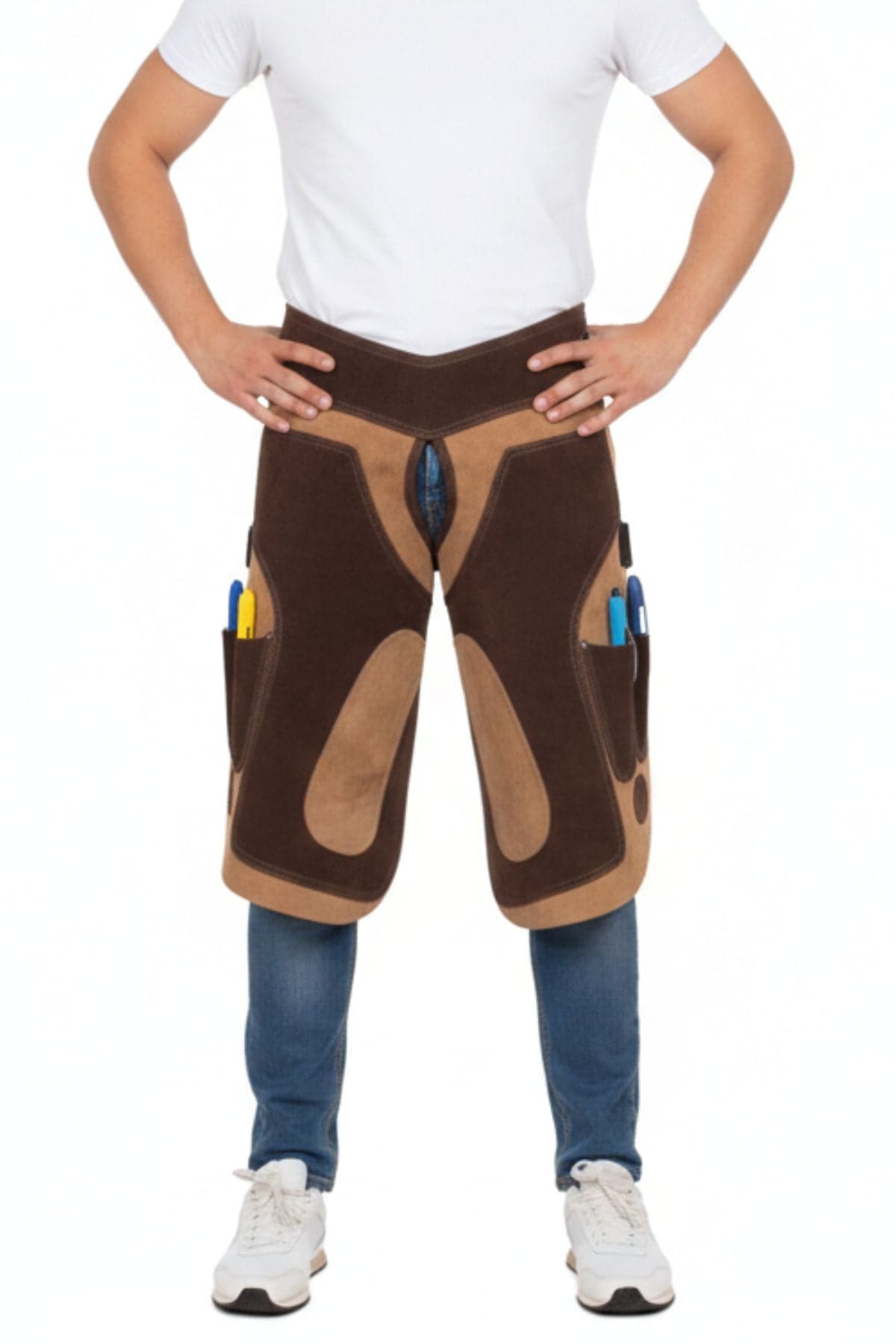
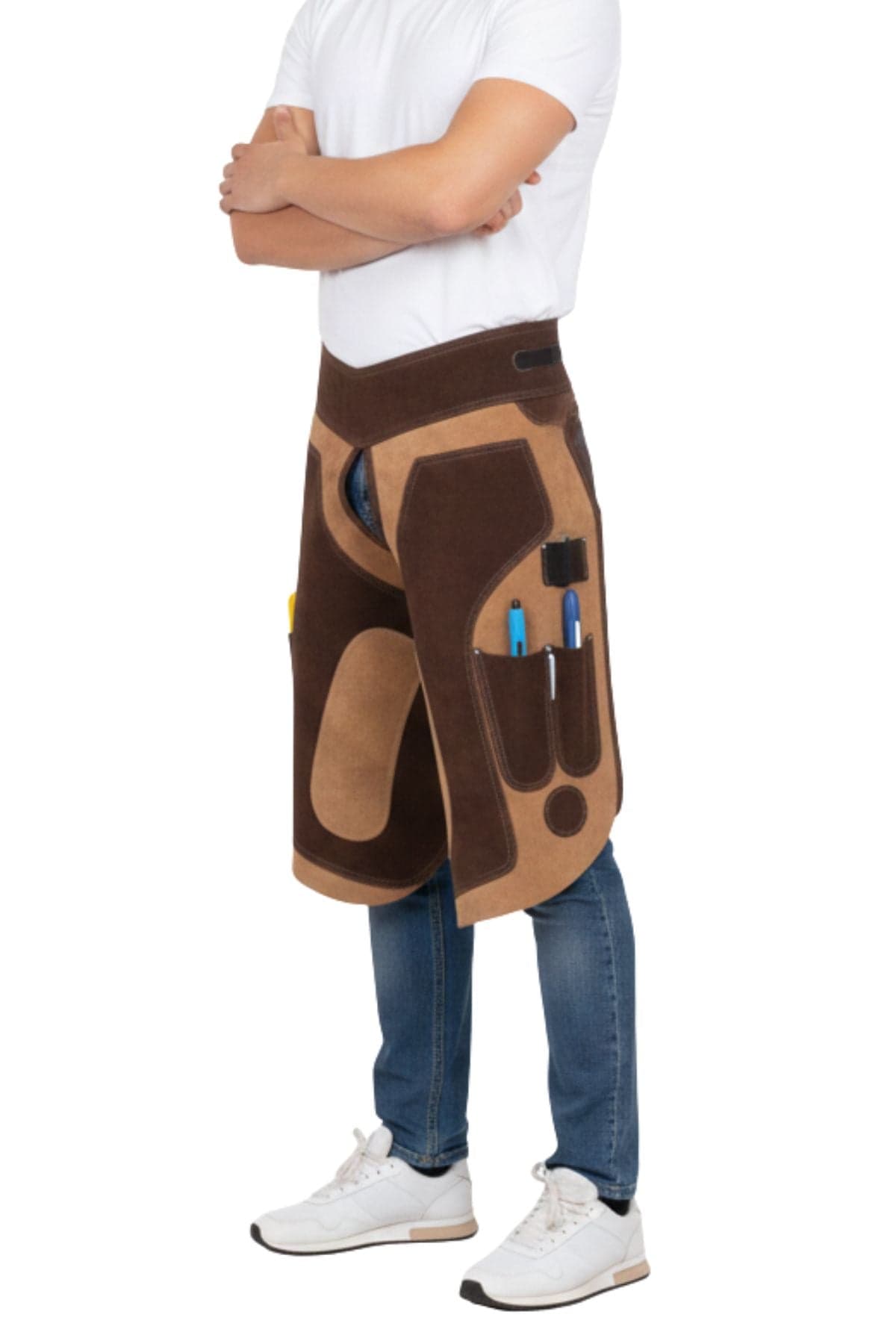
- Tool pockets. Keep your tools on your leg rather than in the box. See the Brown Leather Farrier Chaps with Tool Pocket Design.
- An open back. Barns get hot, especially while hot shoeing, and an open back lets the heat out.
Heavier-duty options in the range include the FarrierGuard, ForgeHoof, SteelHoof, HammerCraft Pro and Professional Leather Farrier Chaps. Check each product page for its exact leather and panel layout.
Trimming vs Full Shoeing
- Barefoot trimmers spend most of their time with the knife, nippers and rasp. They need strong thigh and knee panels, and many prefer a lighter apron.
- Full shoers add hot or cold fitting, nailing and clinching at the anvil and the hoof stand. A heavier, more reinforced apron holds up better to hot shoes and forge heat.
- Farriers who also forge their own shoes or tools should also look at our blacksmith chaps, which are built more for forge heat.
Fitting Farrier Chaps
- Knee panels should sit on your knees when you're bent over holding a foot, not when you're standing up straight. Check the fit in your working posture.
- Thigh straps should be snug. Loose panels slide off the hoof and let the rasp get to your trousers.
- Choose a length that clears your boots so you can step and pivot under the horse without catching the hem.
- Sizing: Chaps Fit farrier chaps come in 2XS to 8XL instead of a single adjustable size. Farriers outside the chart can order custom chaps.
Caring for Farrier Chaps
- Brush off hoof trimmings and grit after each day. Hoof dust gets into suede and wears it down.
- Keep hoof dressings and oils off the leather. They soak into suede and stain it.
- Let manure and mud dry, then brush them off rather than scrubbing wet.
- Check the knee and thigh panels regularly. That's where farrier chaps wear through first, and a worn-through panel no longer protects you from a rasp slip.