Ranch Utility Work Chaps
Ranch Work Chaps
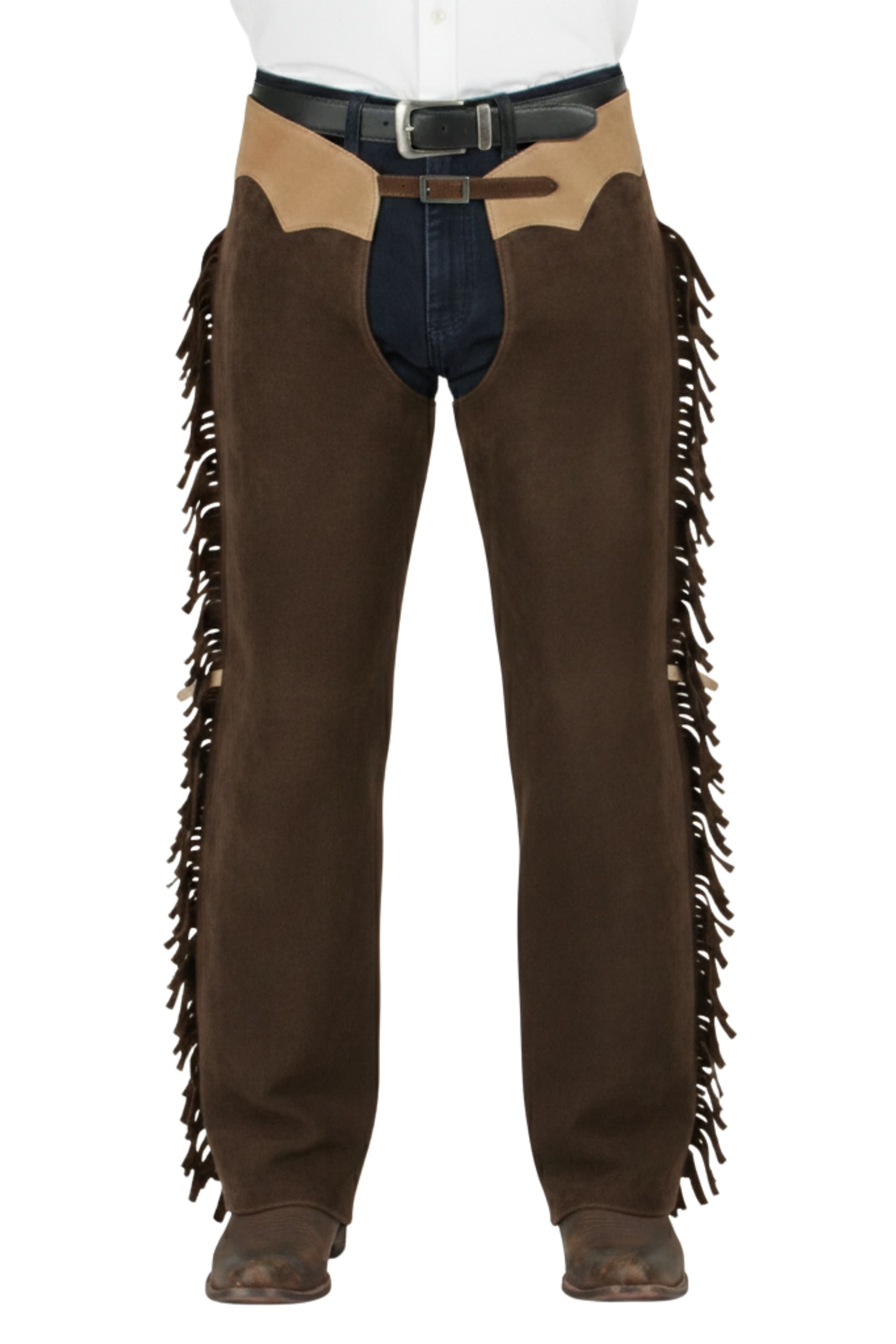
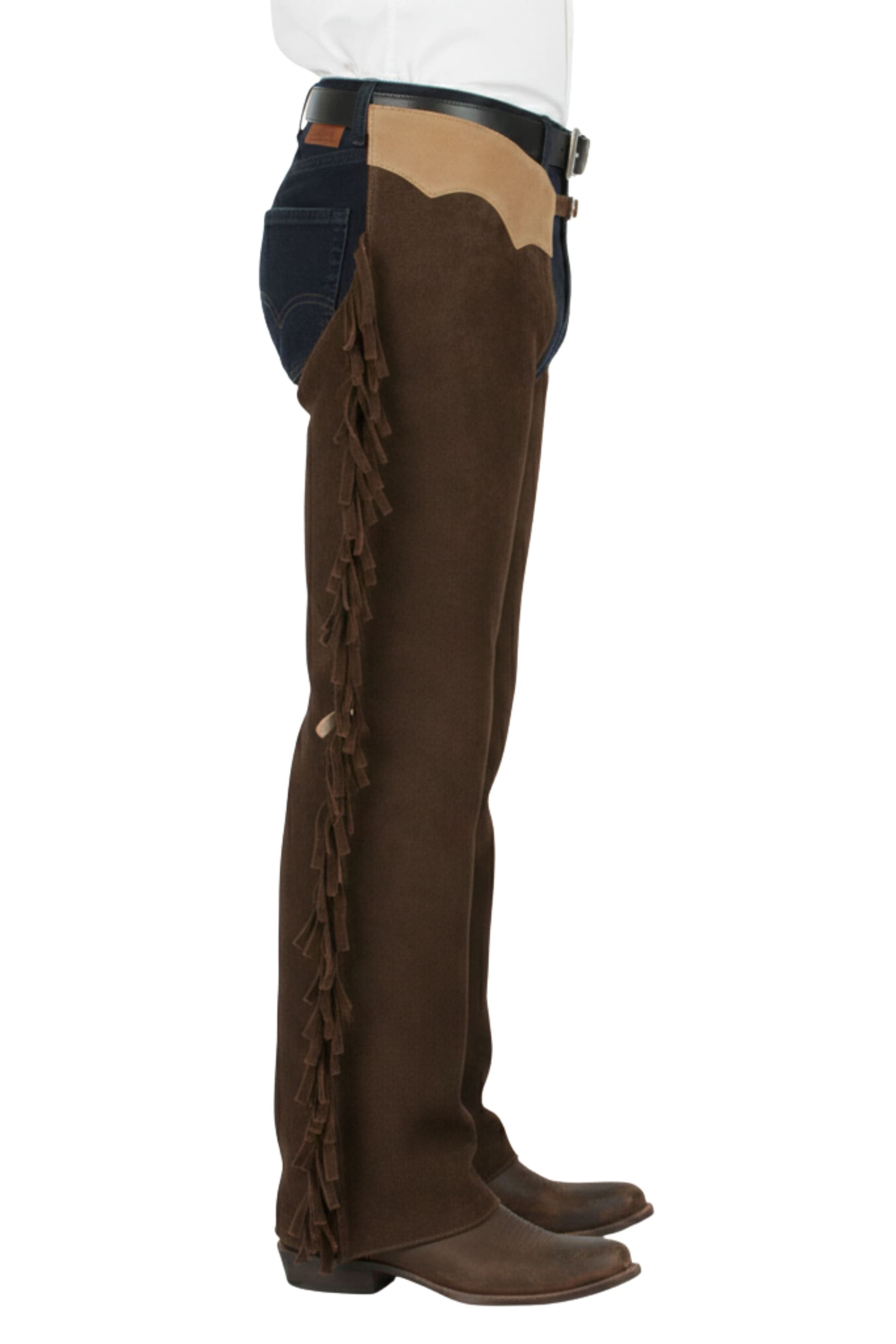
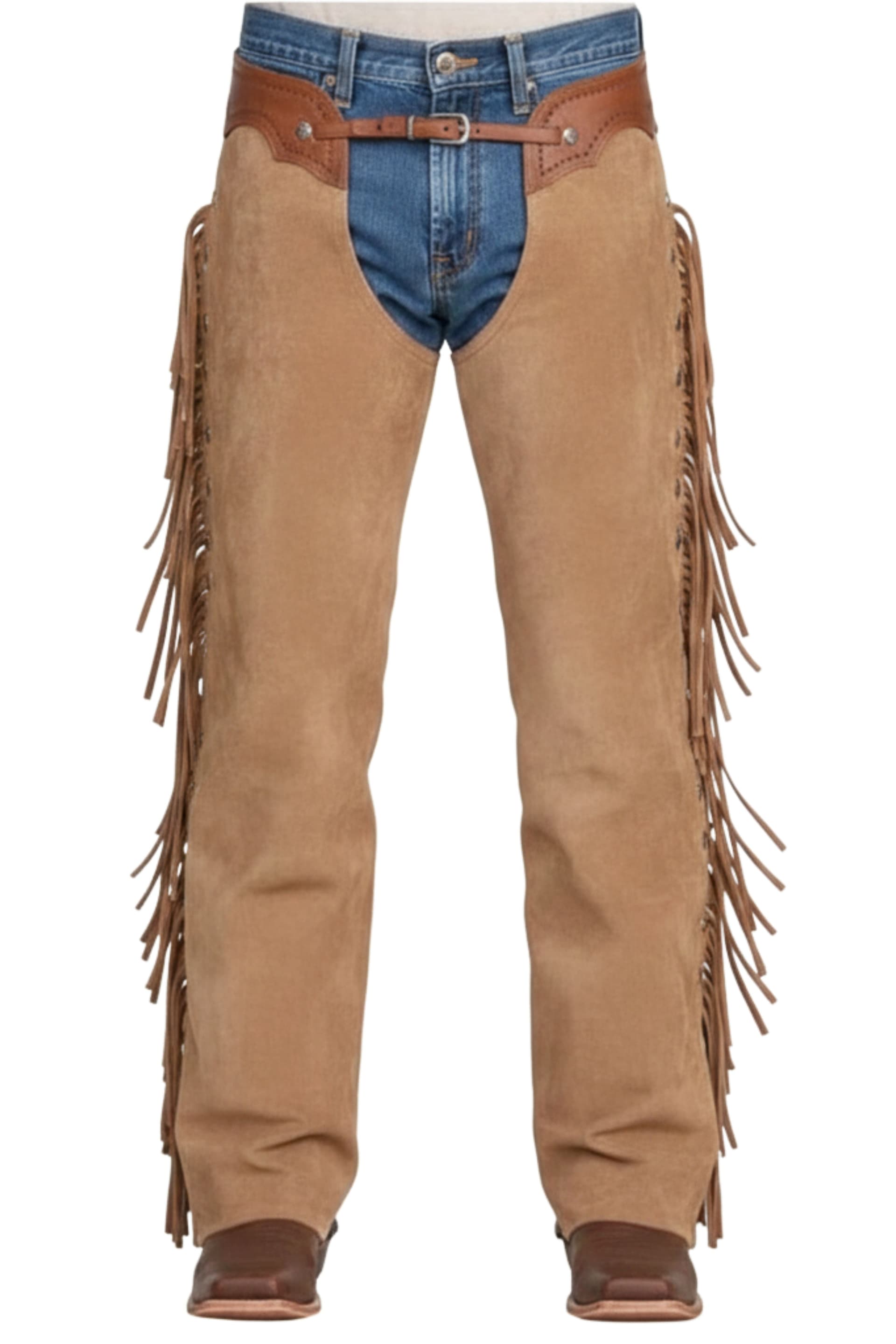
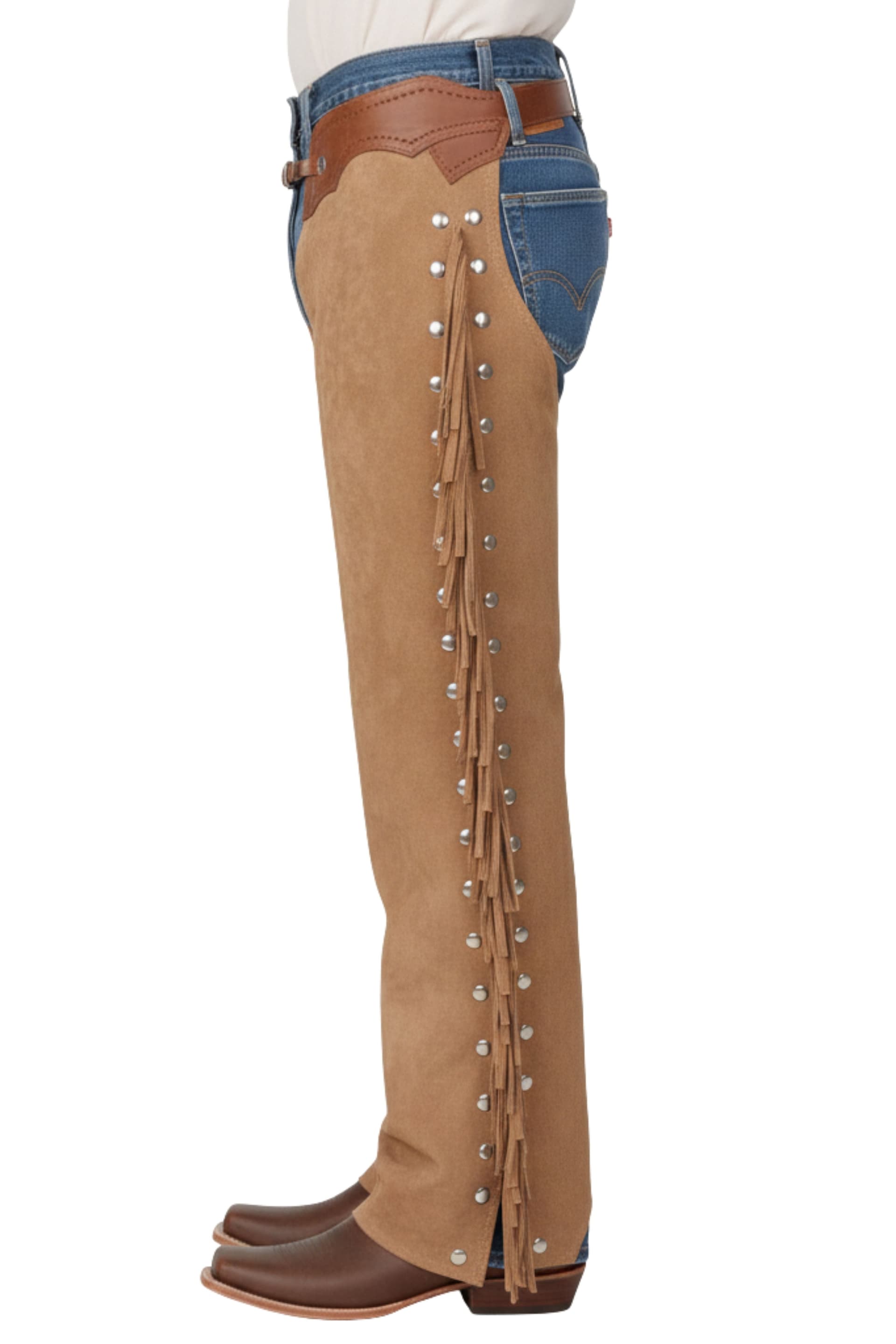
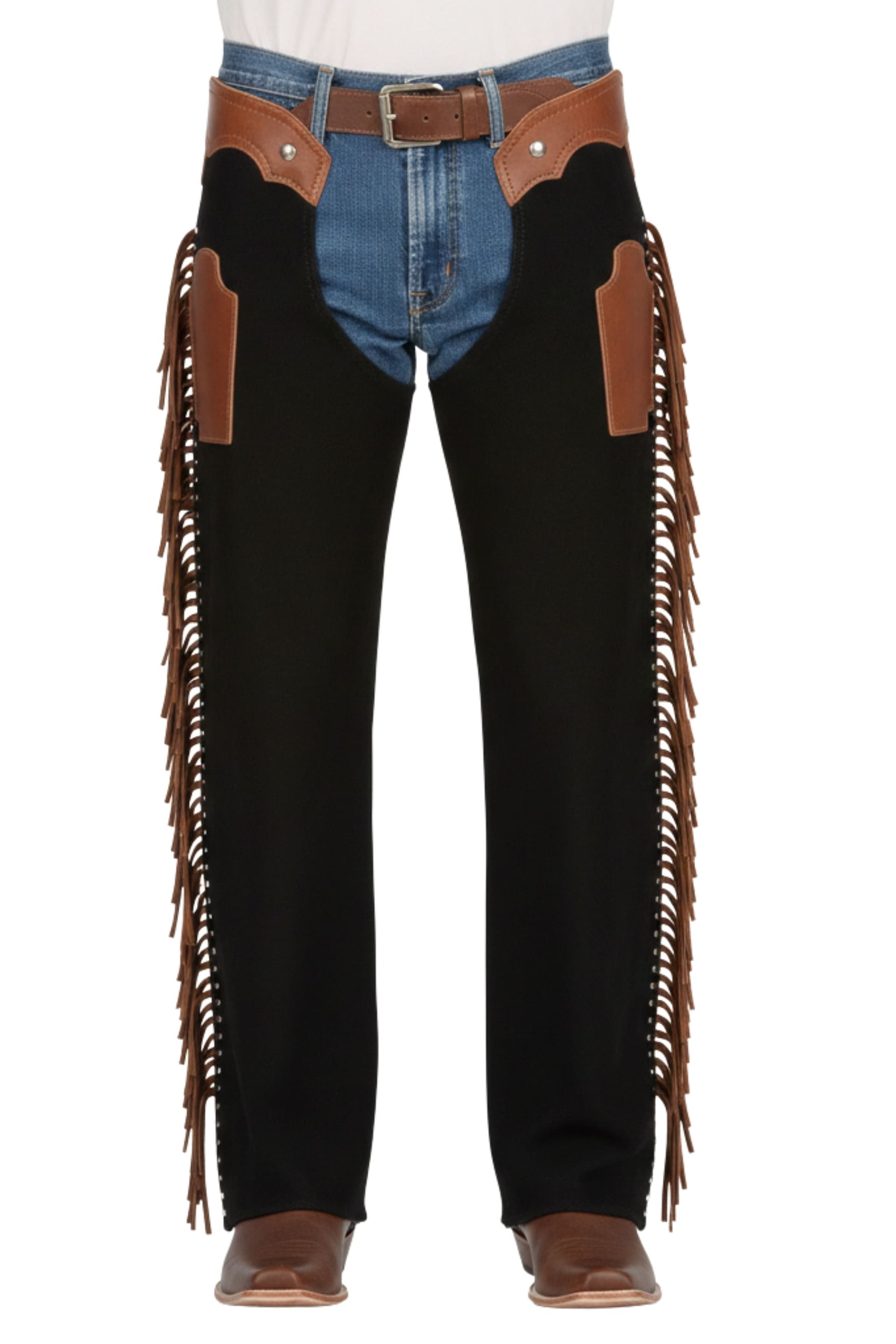
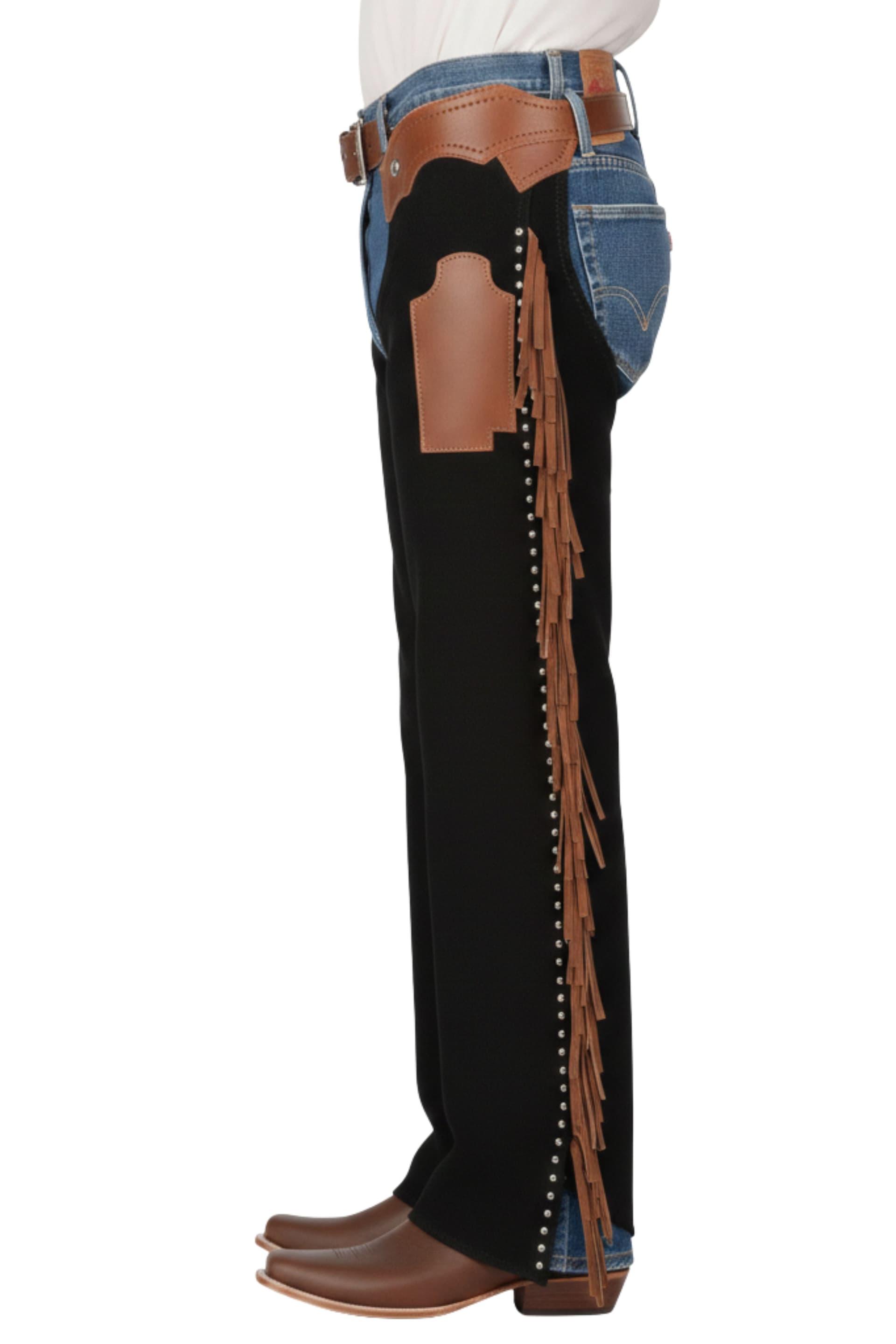
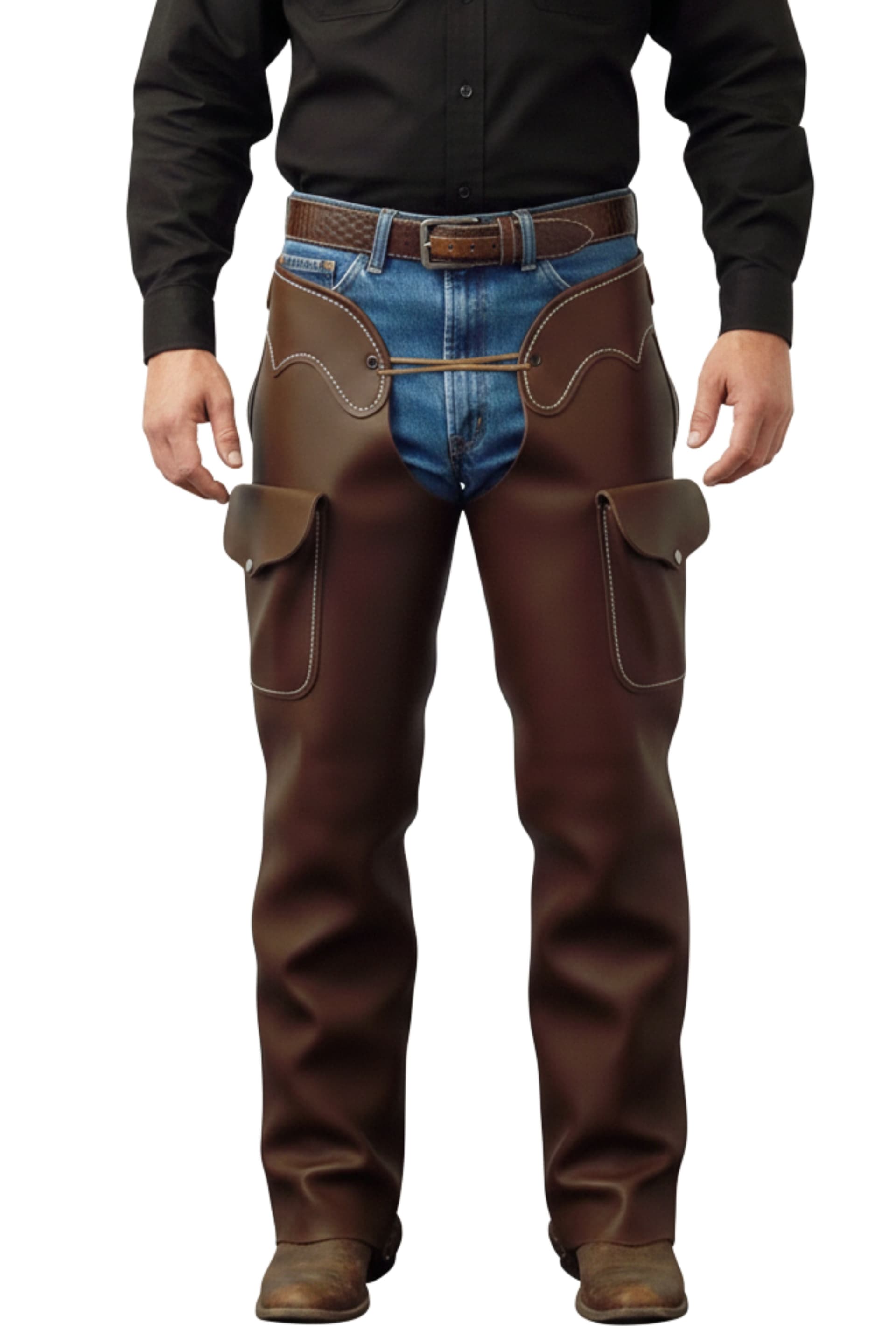
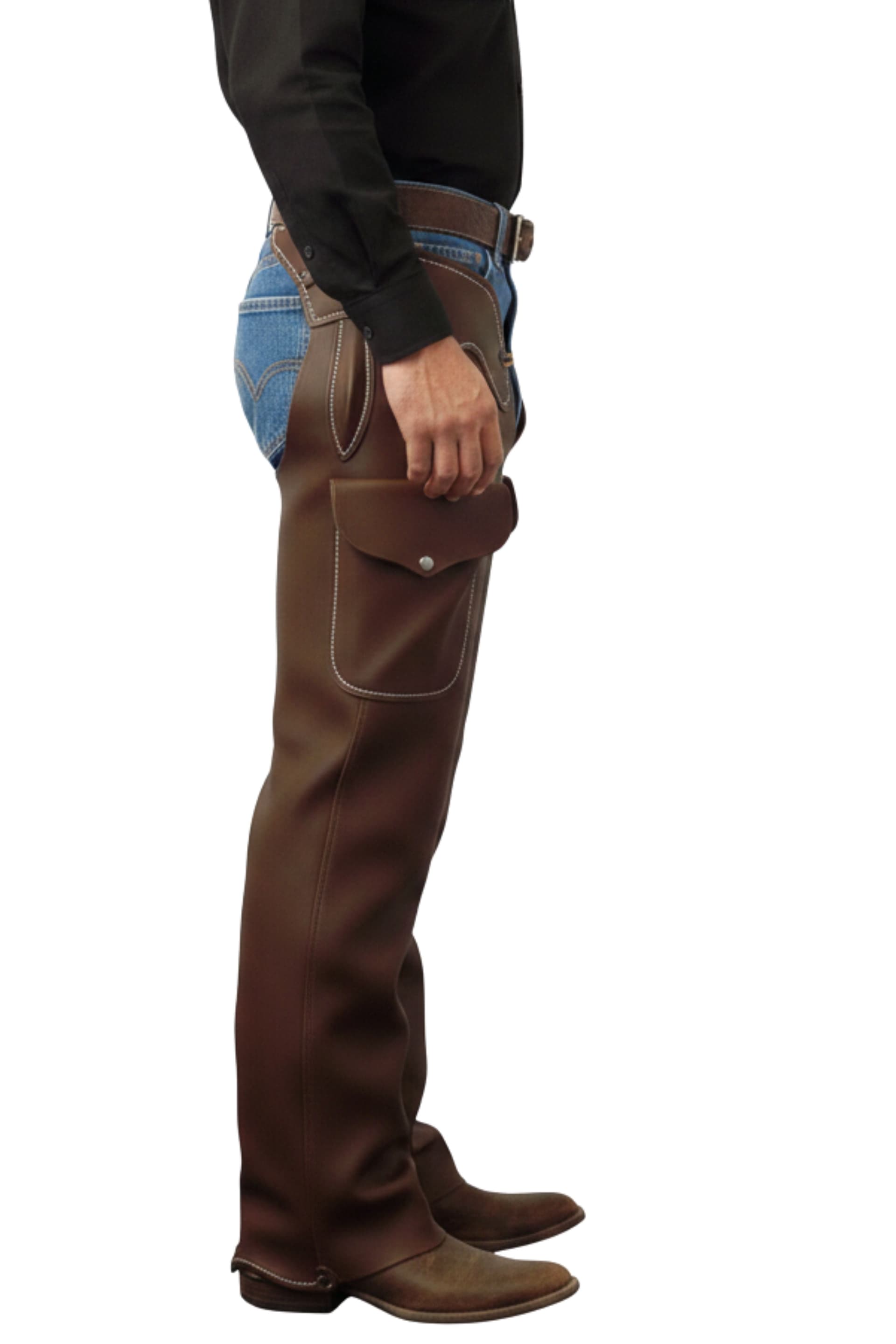
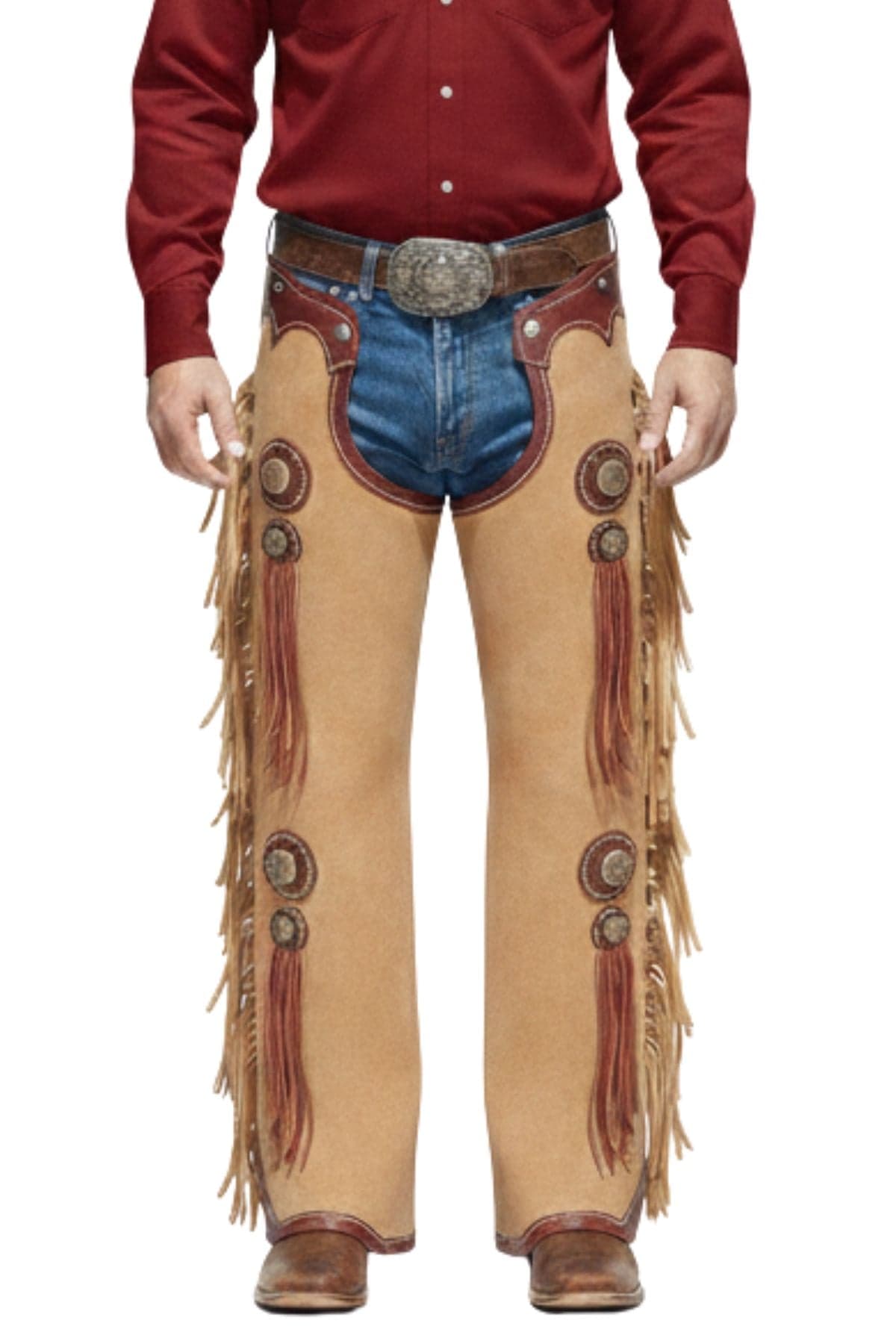
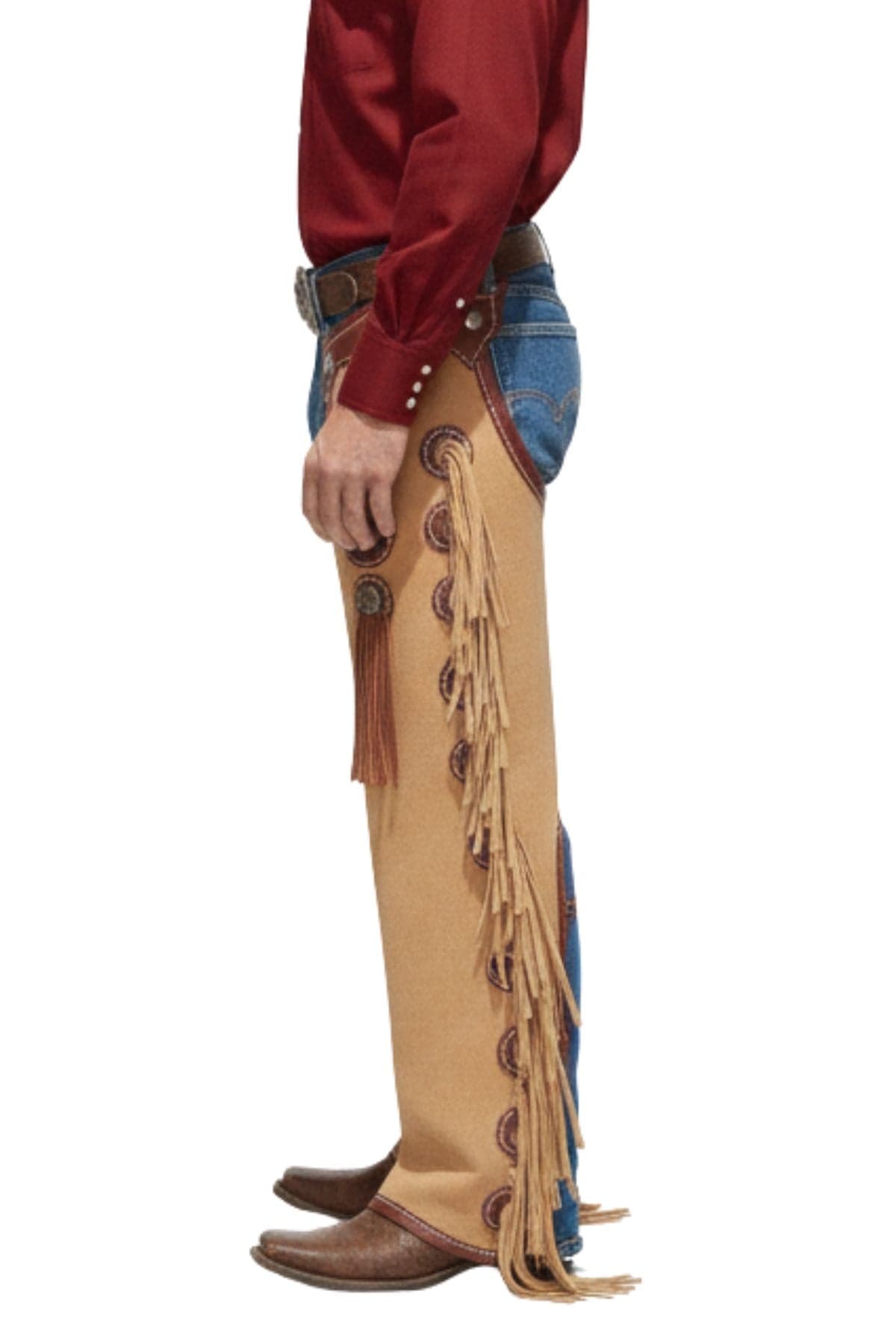
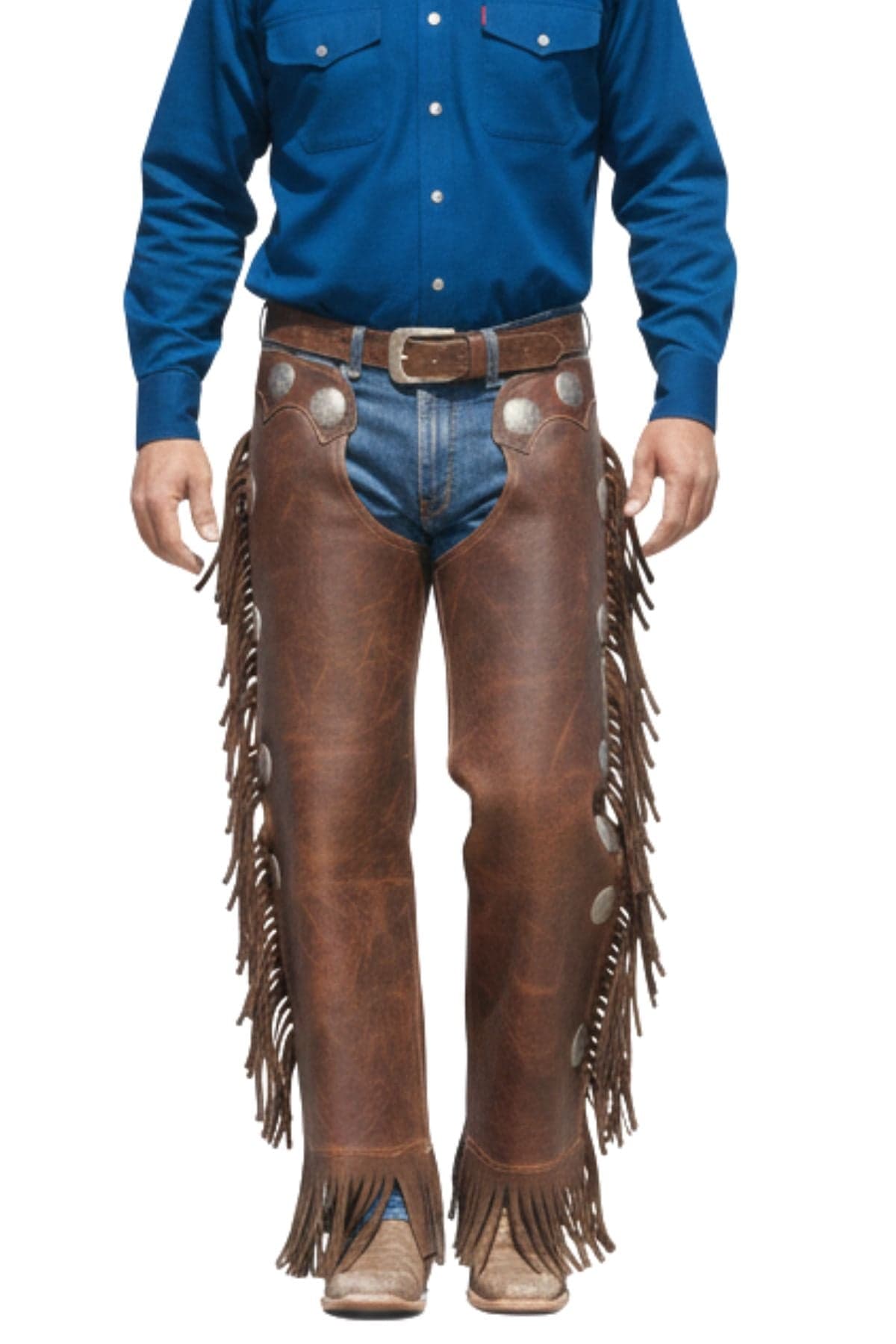
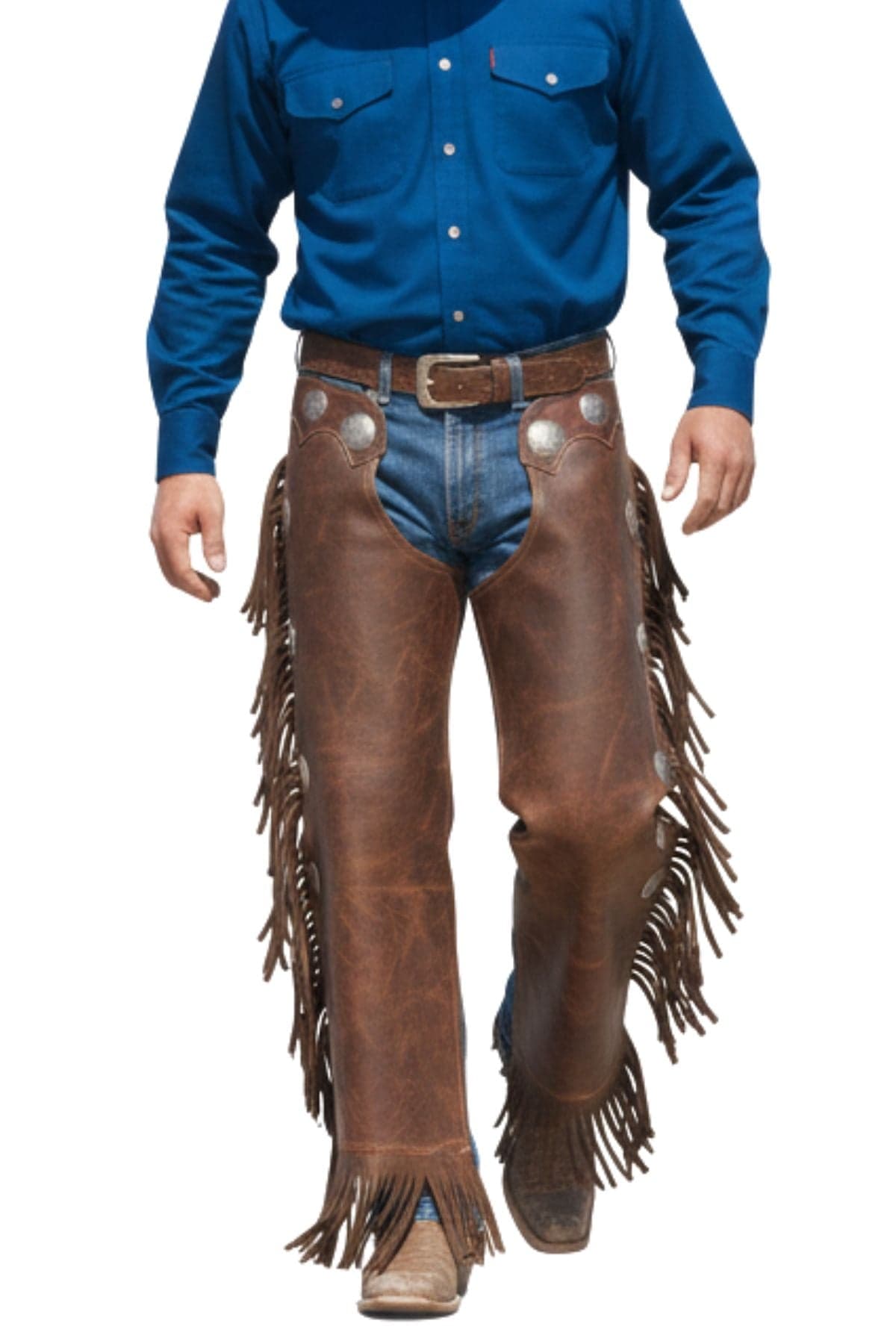
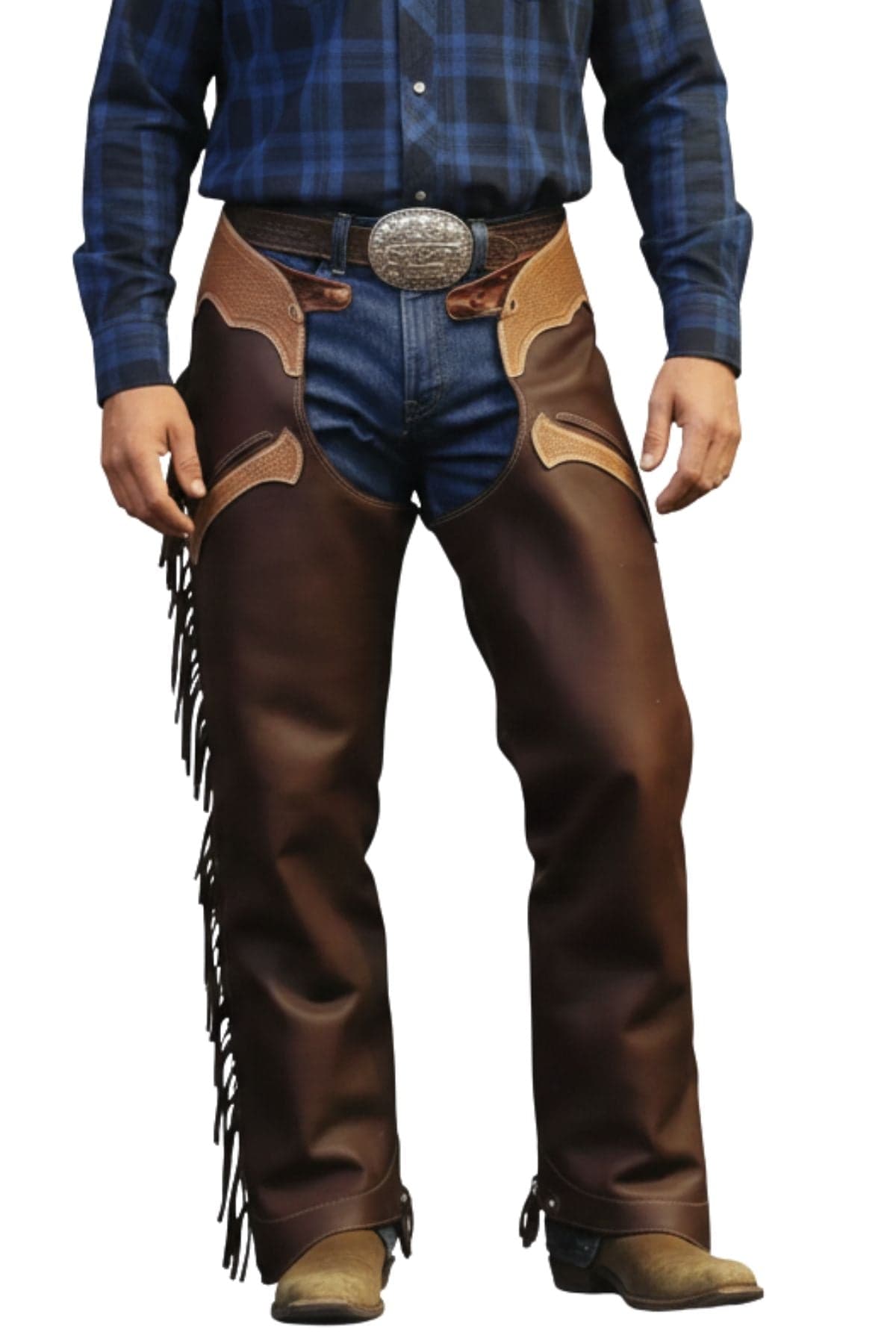
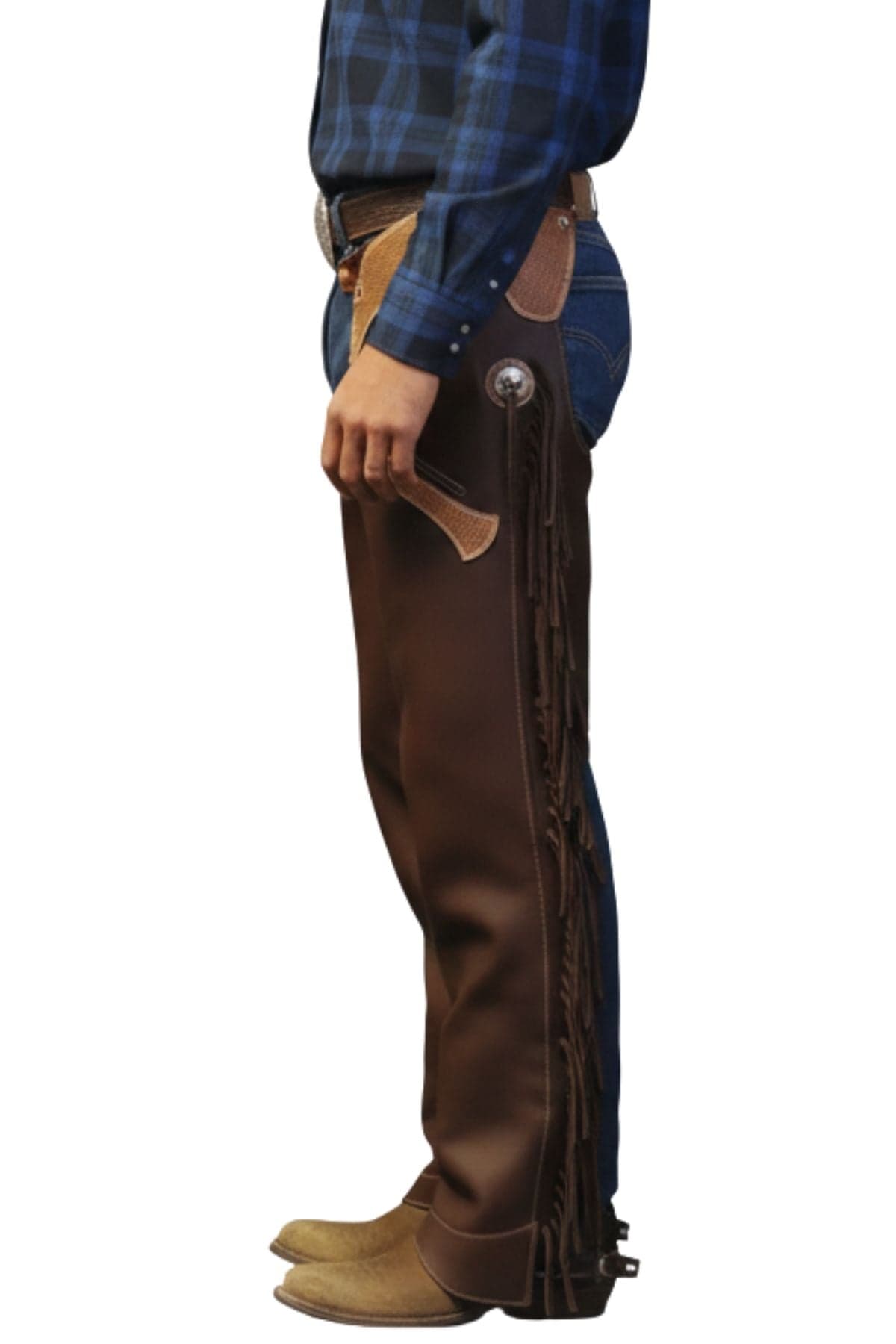
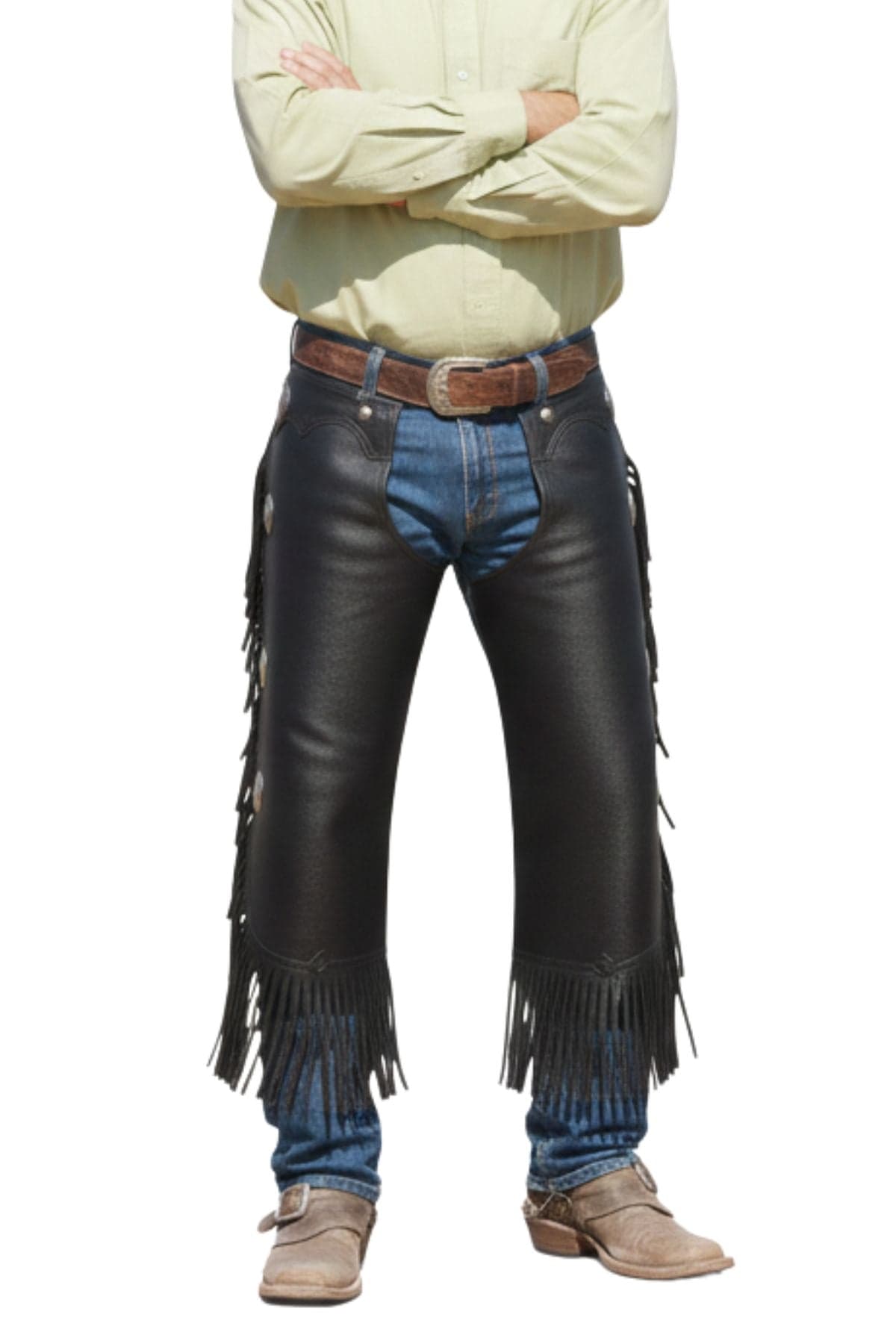
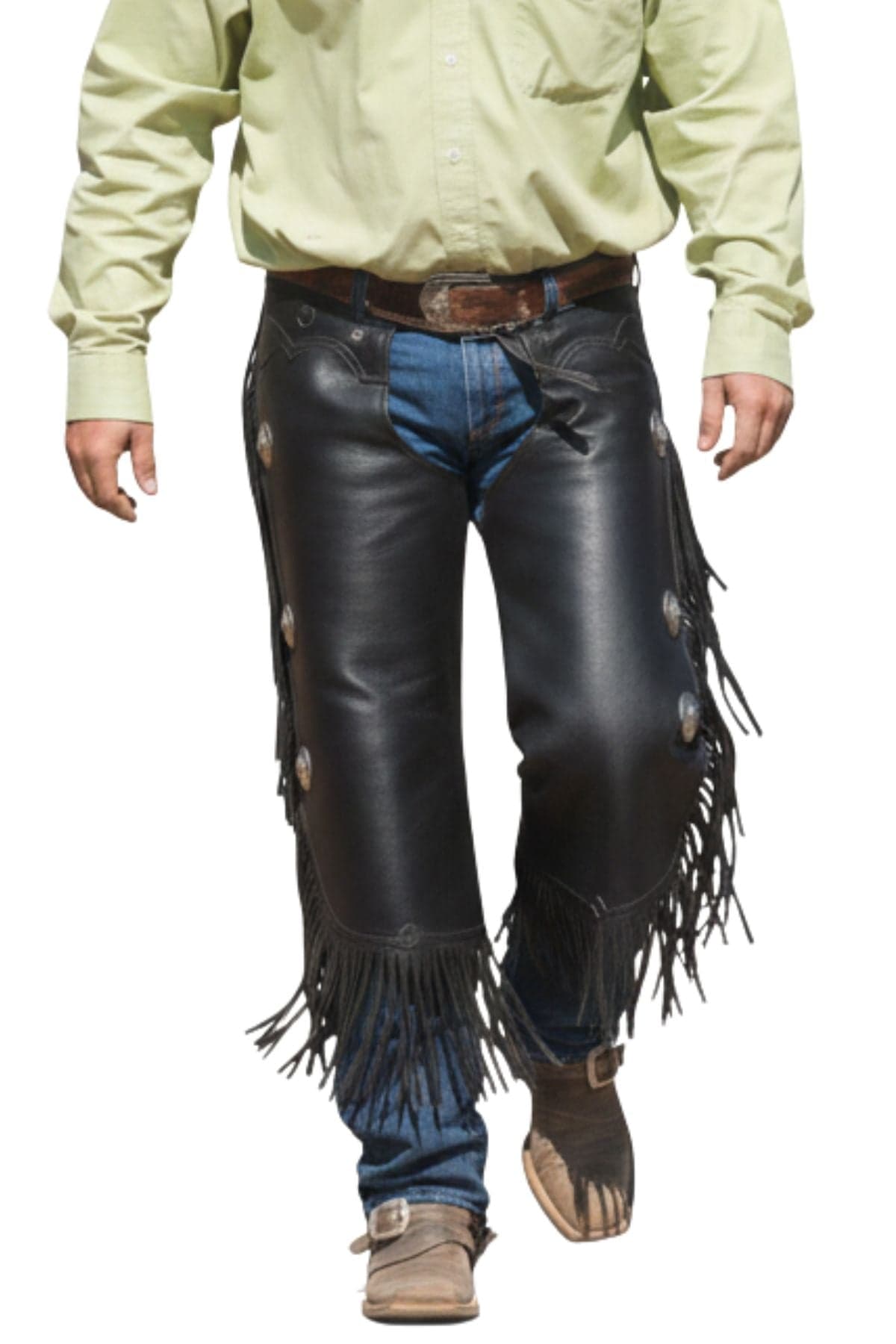
Ranch chaps are made for work: riding through brush, stretching wire, sorting cattle and moving hay. Chaps Fit ranch utility chaps are full-length leather chaps with belted waists and open backs. Choose from suede, fringed and concho-trimmed styles or plain black, all sized from 2XS to 8XL.
What Makes a Chap a Ranch Chap
Show chaps are designed to look sharp for a few minutes in the arena. Ranch chaps are designed to hold up to long days of use. In practice, that means:
- Leather that takes scuffs without looking wrecked. That's why suede and roughout are so common on working chaps.
- A sturdy yoke and belt that stays put through mounting and dismounting all day.
- Full-length legs that cover you from belt to boot, against brush and wire.
- An open back and seat, so you can ride, kneel and climb fences without the chaps binding.
Ranch Chaps by the Job
Brush and Rough Country
Mesquite, cactus, thorny scrub and cedar will rip denim open. Full-length chaps put leather between your legs and the brush, both on horseback and on foot. The Heavy Duty Ranch Utility Leather Work Chaps and the OpenRange Utility Leather Chaps are built for this.
Fence Line and Wire
Stretching and repairing barbed wire means the wire keeps whipping back against your thighs. Leather takes the snag that would otherwise tear your jeans or cut your skin. Full-length chaps are the better choice for fence work, since wire catches at every height.
Cattle Work Horseback
When you're gathering, sorting and doctoring cattle, your legs get pushed against gates, fences and cattle. Rope runs across your lap, and your legs rub against the saddle for hours. Chaps protect against all of that. Suede also grips the saddle better than bare denim, which helps you stay steady in your seat. Try the Cowhand Pro Utility Leather Chaps.
Ground Work, Hay and Feeding
Hay bales scratch and poke, and pitchforks, feed buckets and gates knock into your legs all day. Ranch chaps work just as well on foot as in the saddle. Because they're open-backed, you can walk, kneel and lift in them all day.
Suede (Roughout) vs Smooth Leather on the Ranch
Most chaps in this collection use suede (roughout) leather, which has the soft, napped side of the hide facing out. Here's how the two compare:
| Suede / Roughout | Smooth Leather | |
|---|---|---|
| Scuffs and scratches | Hides them; wear blends in | Shows them clearly |
| Grip in the saddle | Better; it holds your seat | Slicker |
| Dirt and dust | Holds onto it | Wipes clean easily |
| Water | Darkens and stiffens if soaked | Sheds light rain better |
| Best for | Daily horseback and brush work | Wet climates, easy cleaning, a dressier look |
For a smooth, dark option, see the Men's Black Ranch Utility Leather Chaps.
Full-Length or Chinks for Ranch Work?
The collection here is full-length chaps, and the right choice depends on your climate and terrain.
- Full-length chaps cover you to the boot. They're best in heavy brush, cold weather, and anywhere wire or thorns reach below the knee.
- Chinks stop below the knee. They're lighter and cooler in hot, open country, and many working cowboys choose them for exactly that reason.
For more on chinks, see our guide to chinks chaps, or browse Western Chaps for other cuts.
Fringe, Yokes and Conchos: What They Do on Work Chaps
- Yoke: the shaped leather panel at the waist. It carries the load between the belt and the legs, so a reinforced yoke helps chaps last longer.
- Conchos: metal discs that fix the leather ties at the belt and legs. They're decorative, but they also hold the lacing points in place.
- Fringe: mostly traditional and a matter of style. On work chaps, keep fringe short enough that it won't snag in brush or tangle in a rope. The Classic Ranch Utility Chaps with Fringes and the Ranch Utility Work Chap with Fringe for Hard Use combine fringe with a working build.
Keeping Suede Ranch Chaps Working
- Let mud dry first, then brush it off with a stiff brush. Wiping wet mud grinds it into the nap.
- After a soaking, let the chaps dry slowly at room temperature, draped over a saddle rack rather than folded. Once they're dry, brush the nap back up.
- Don't use saddle soap or oils on suede. They mat the nap and leave dark patches. Use a suede brush and a suede-specific cleaner.
- Hang them by the belt in a barn or tack room with airflow, away from rodents that chew leather.