Winter / Lined Chaps
Winter Lined Motorcycle Chaps
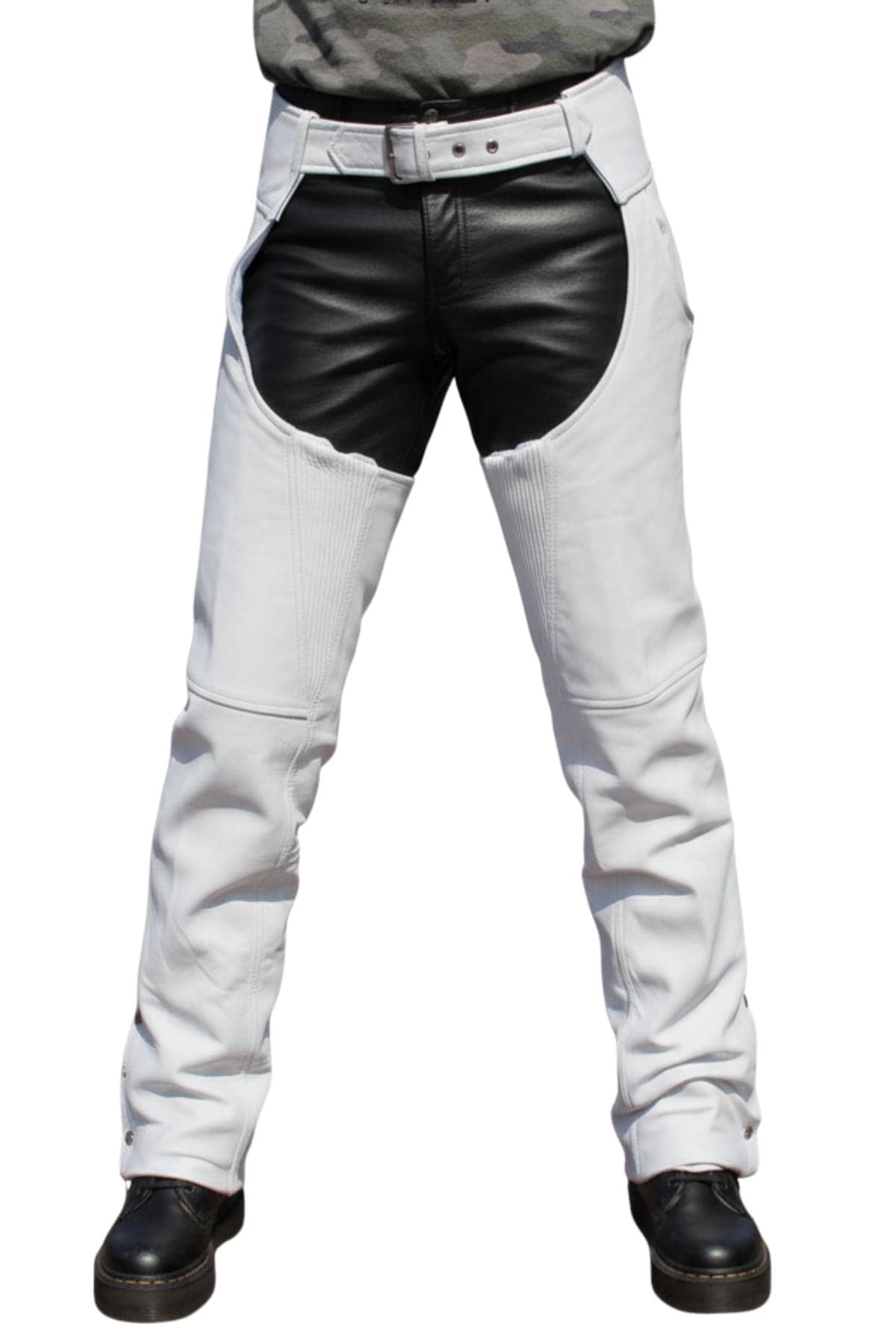
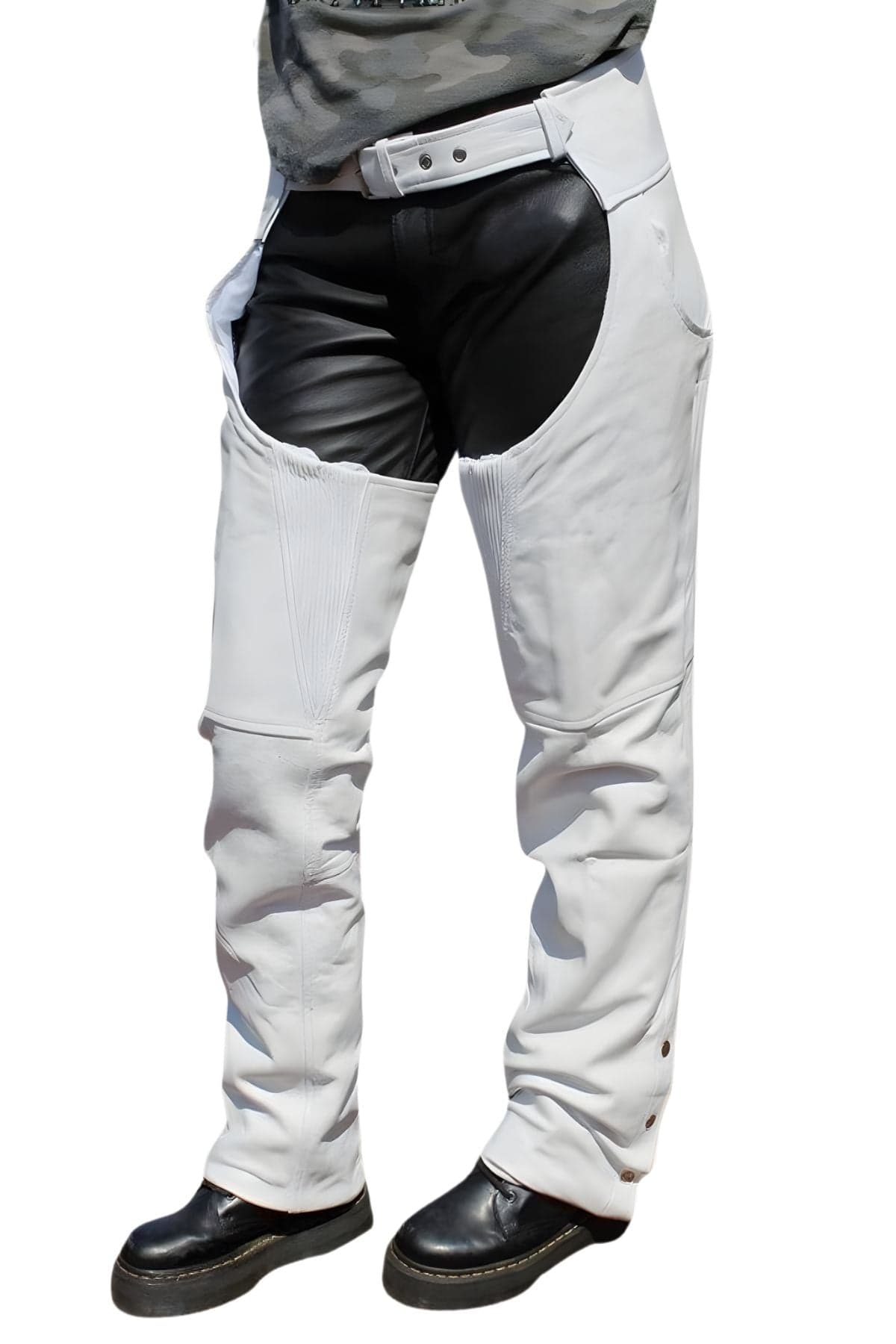
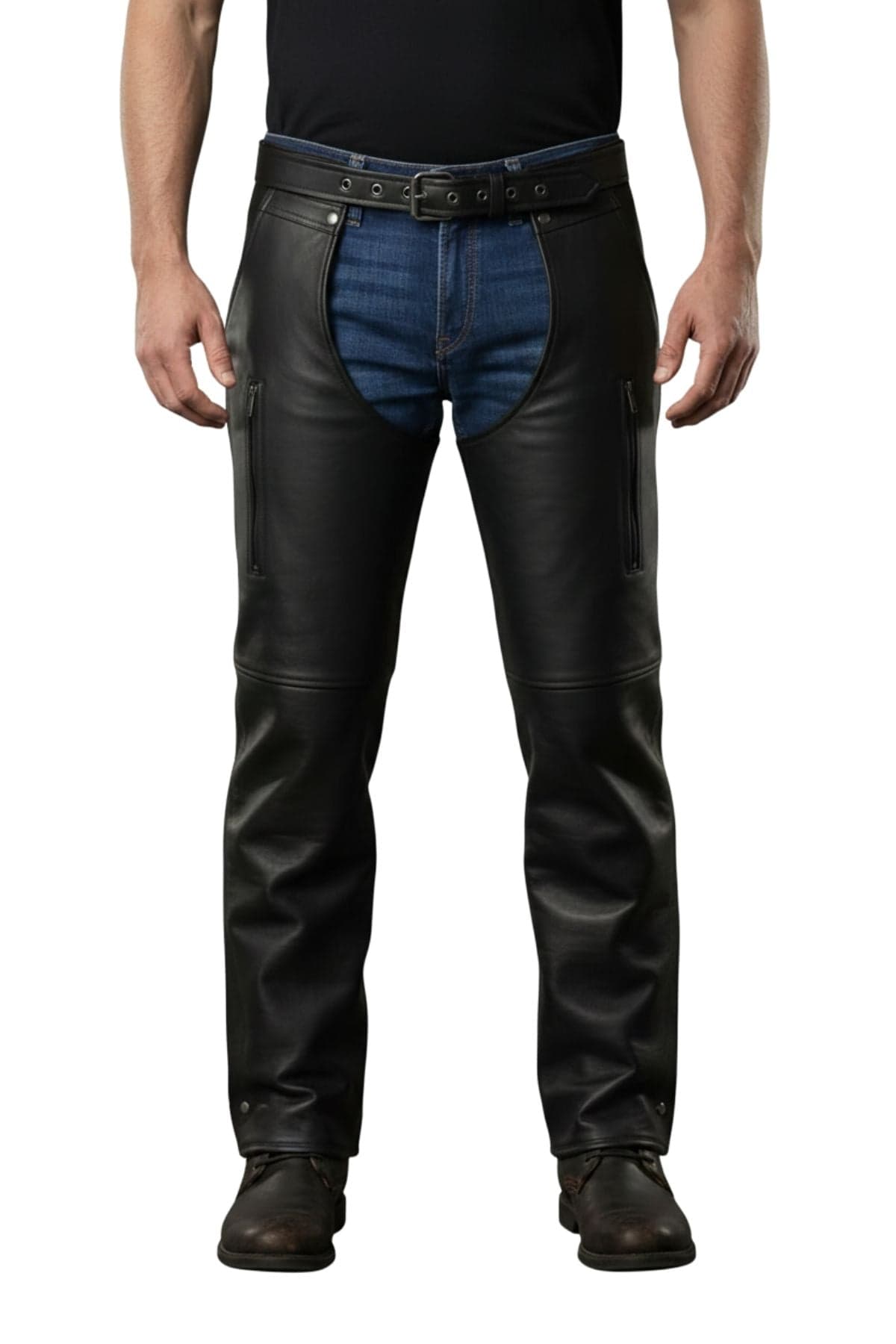
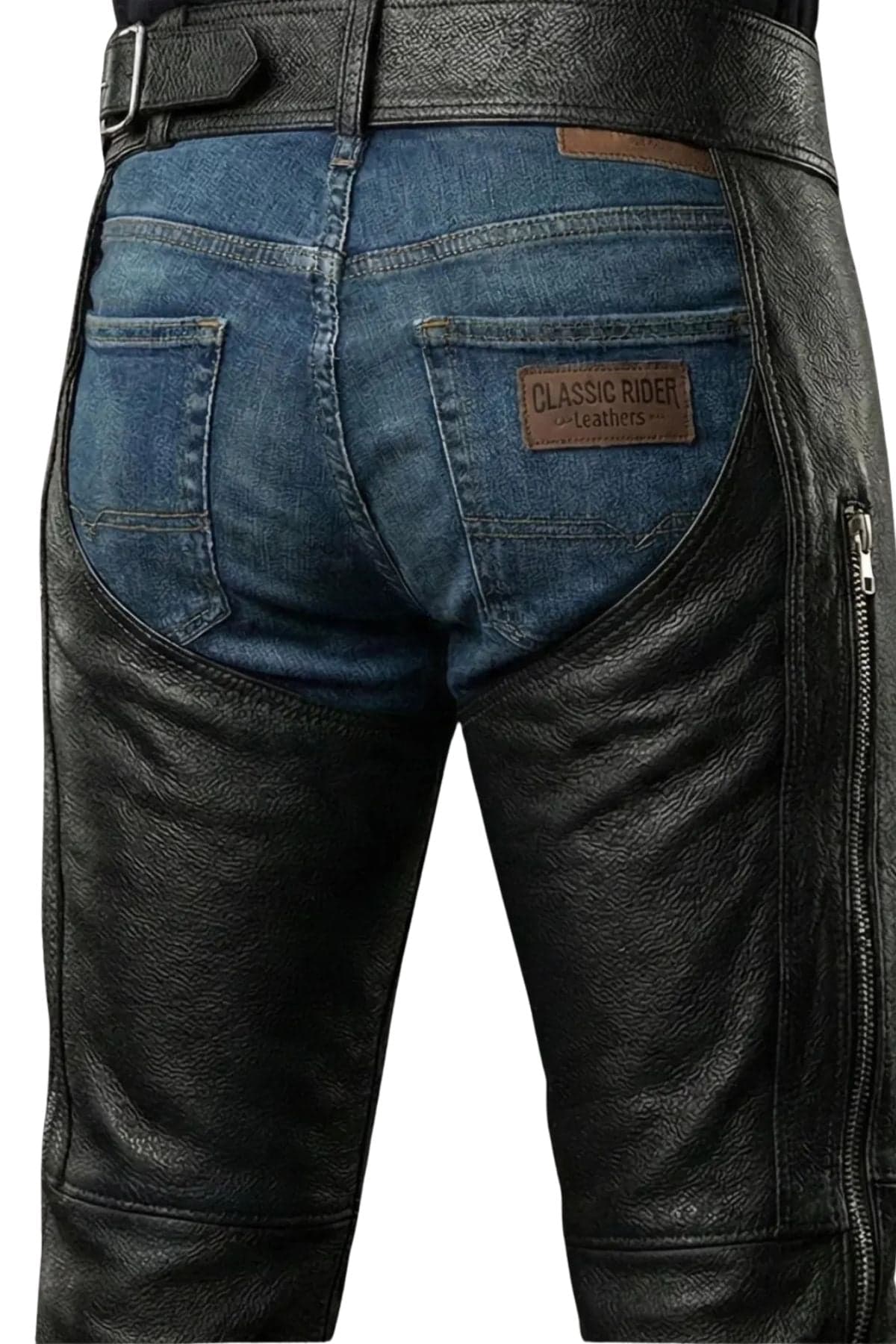
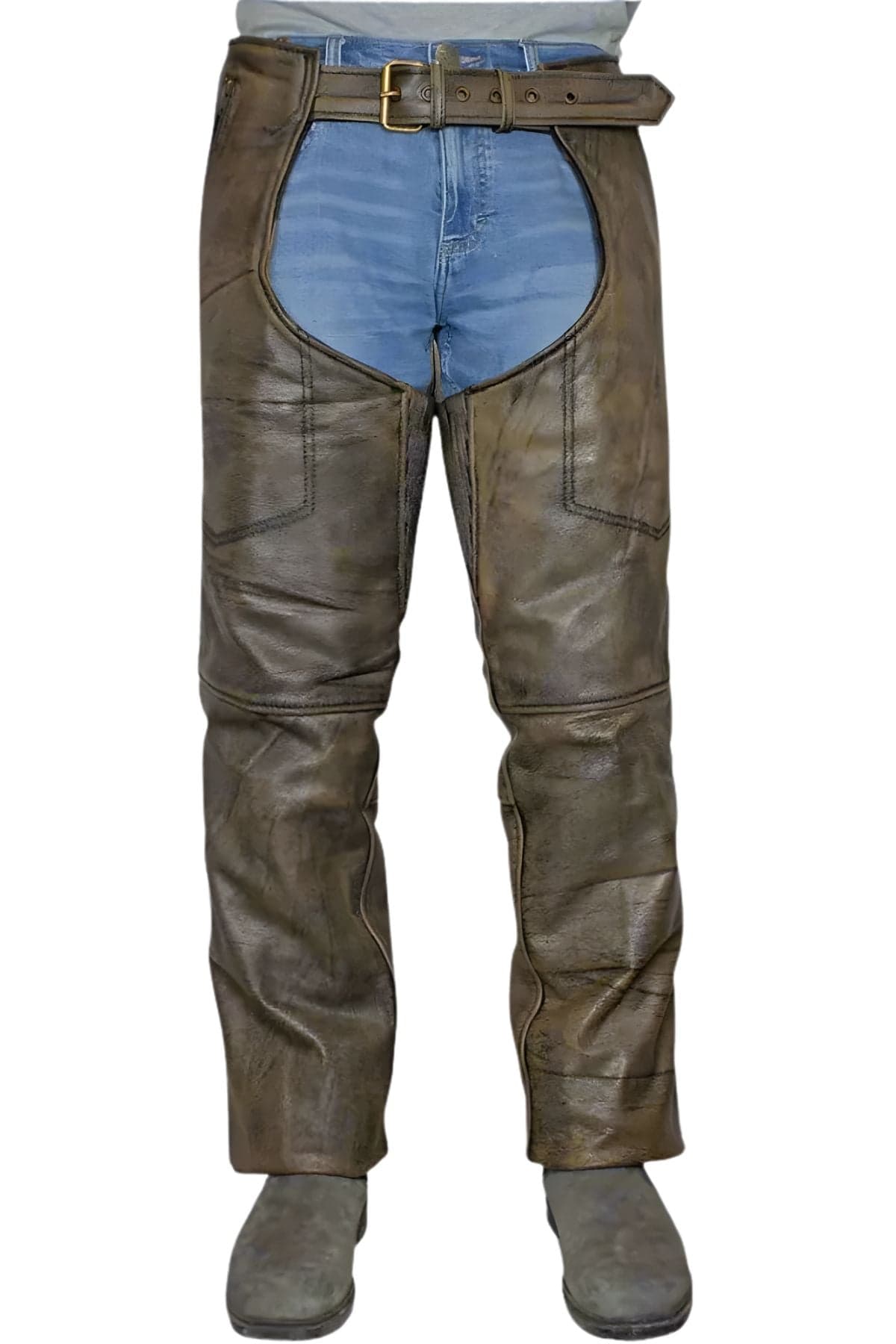
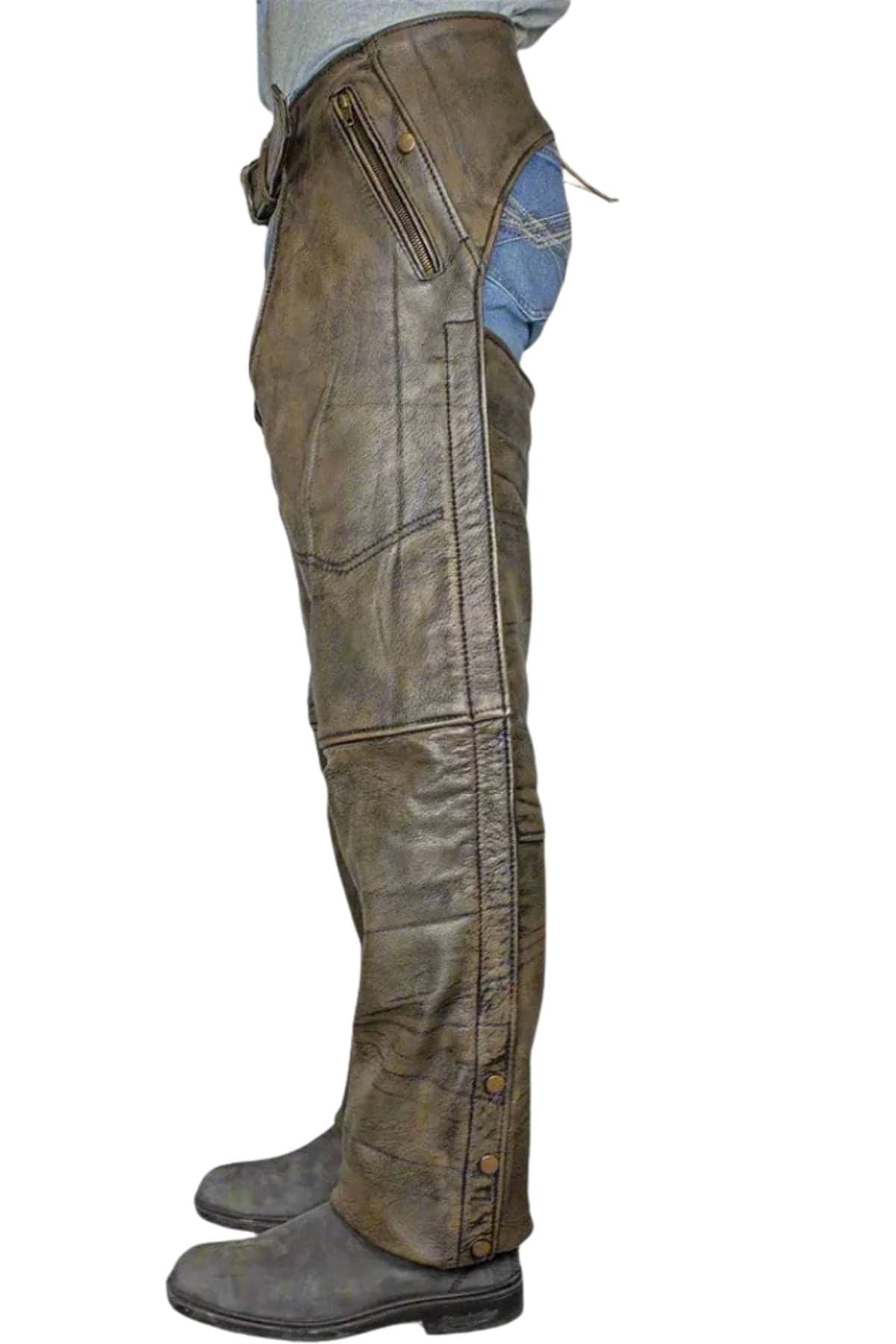
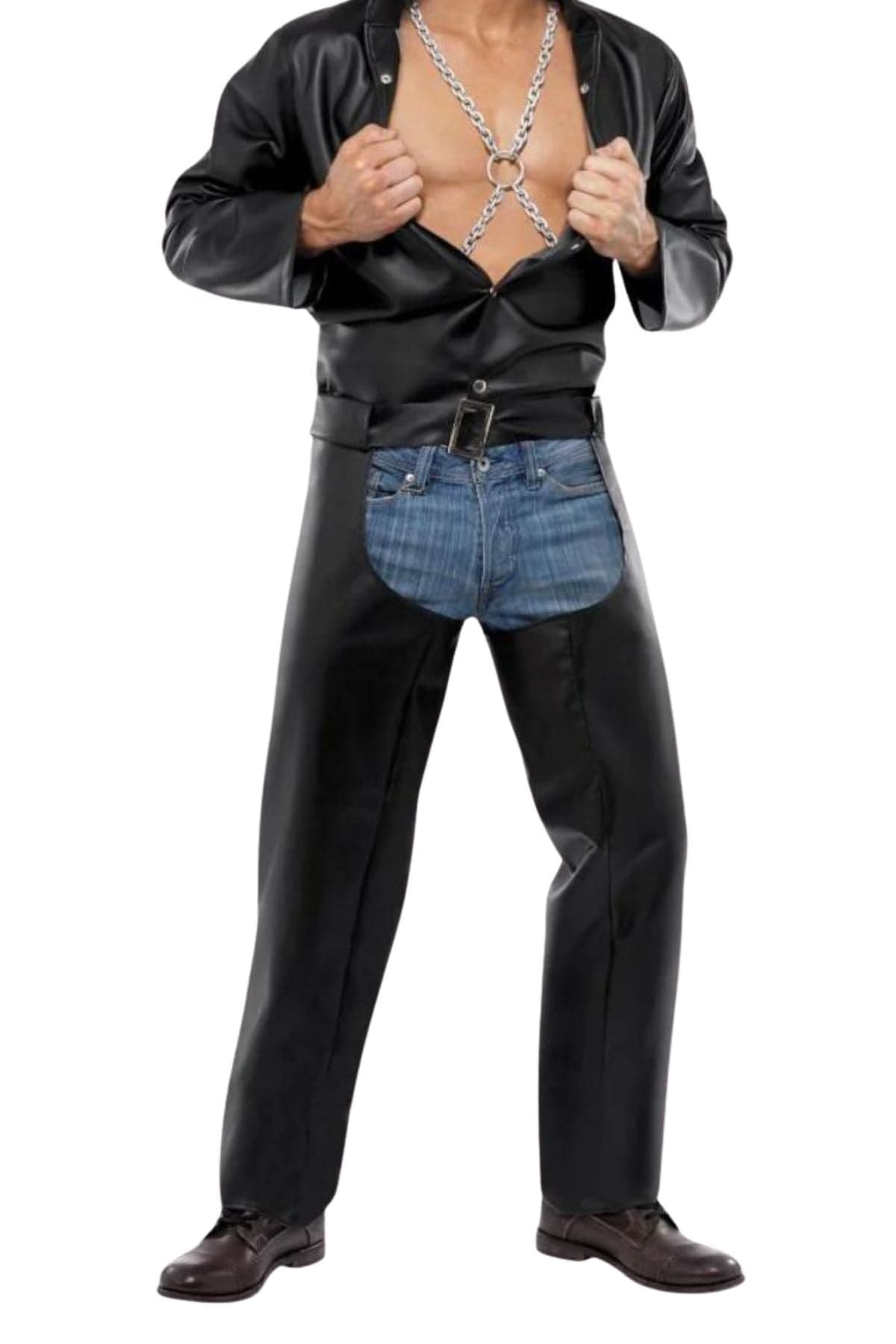
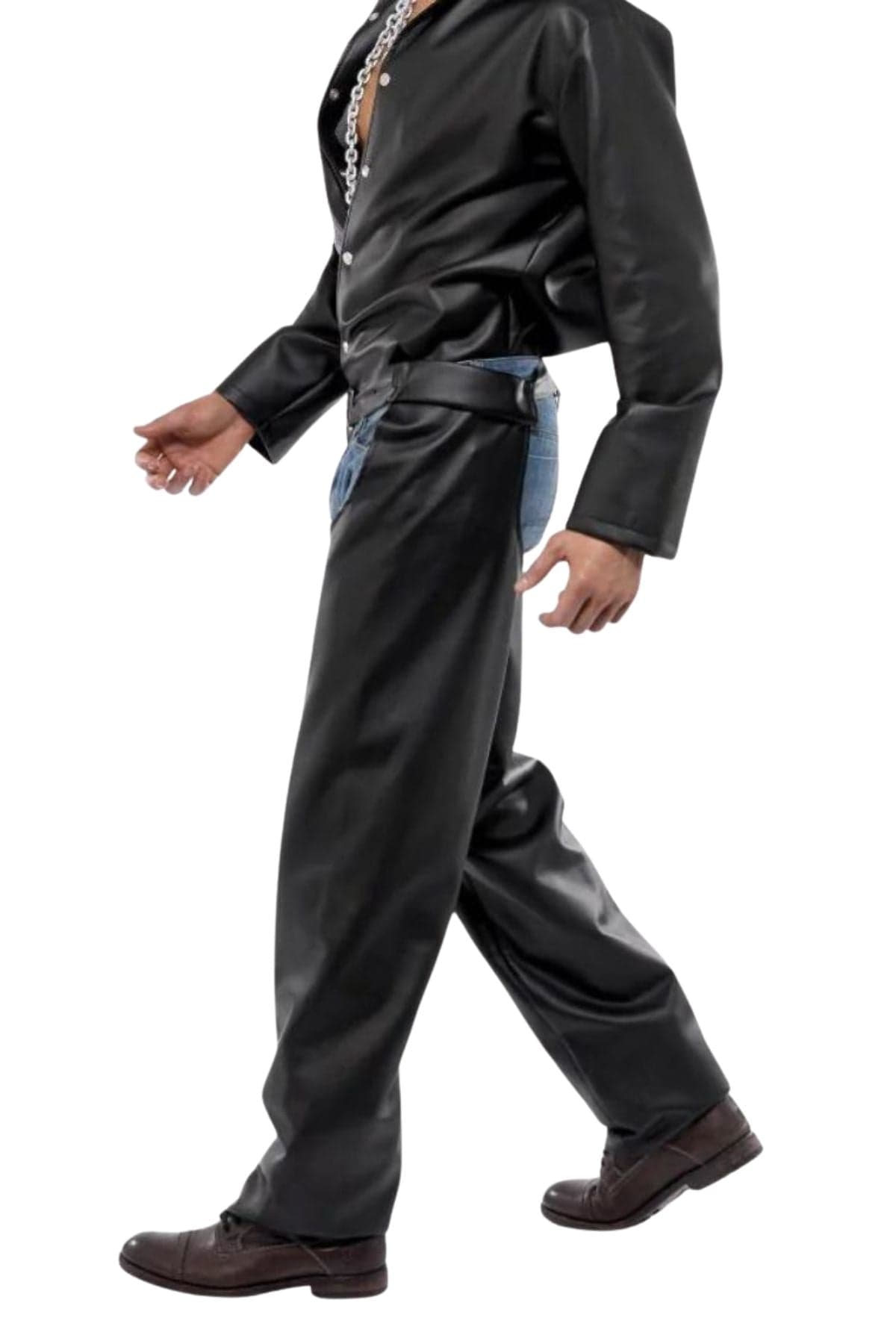
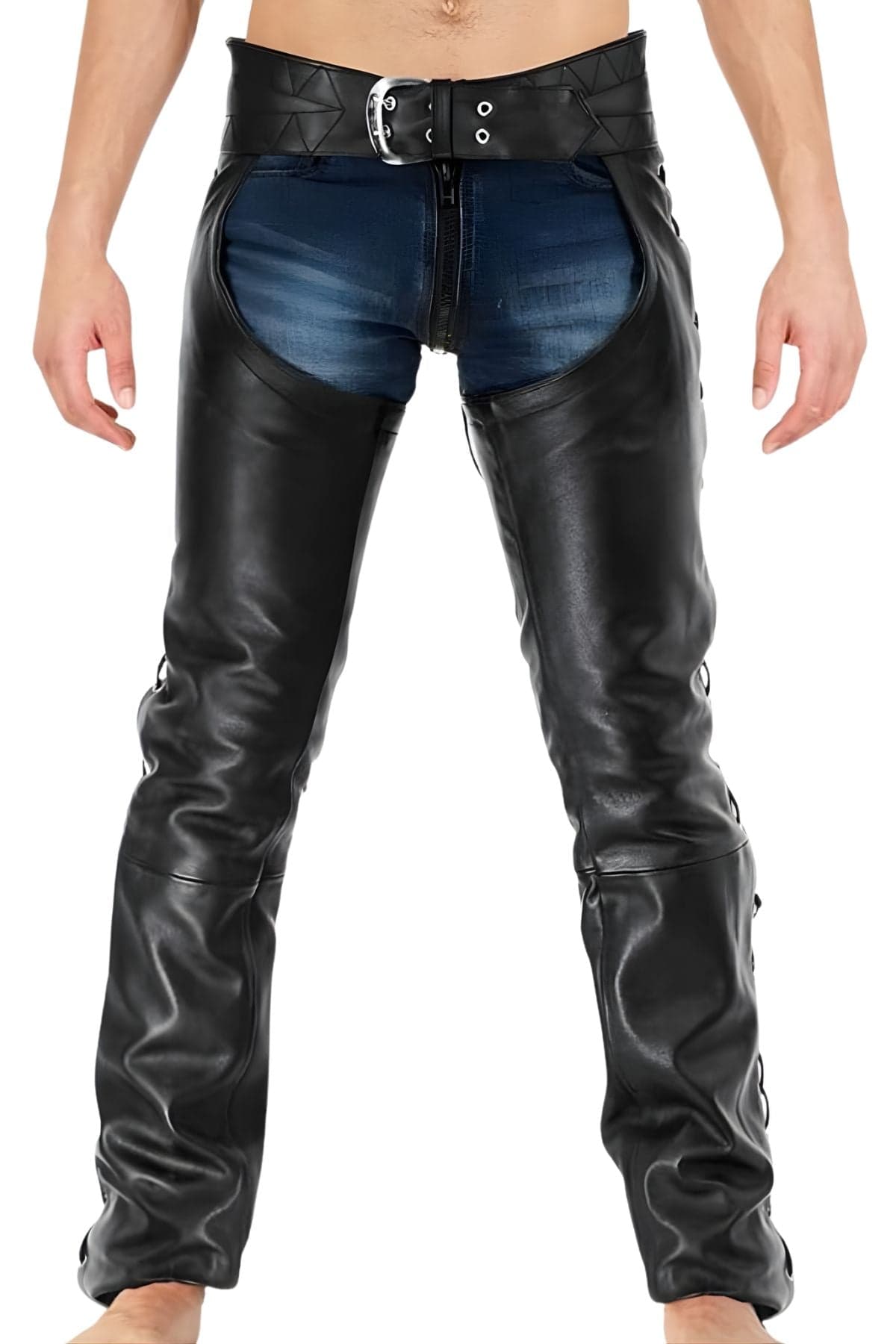
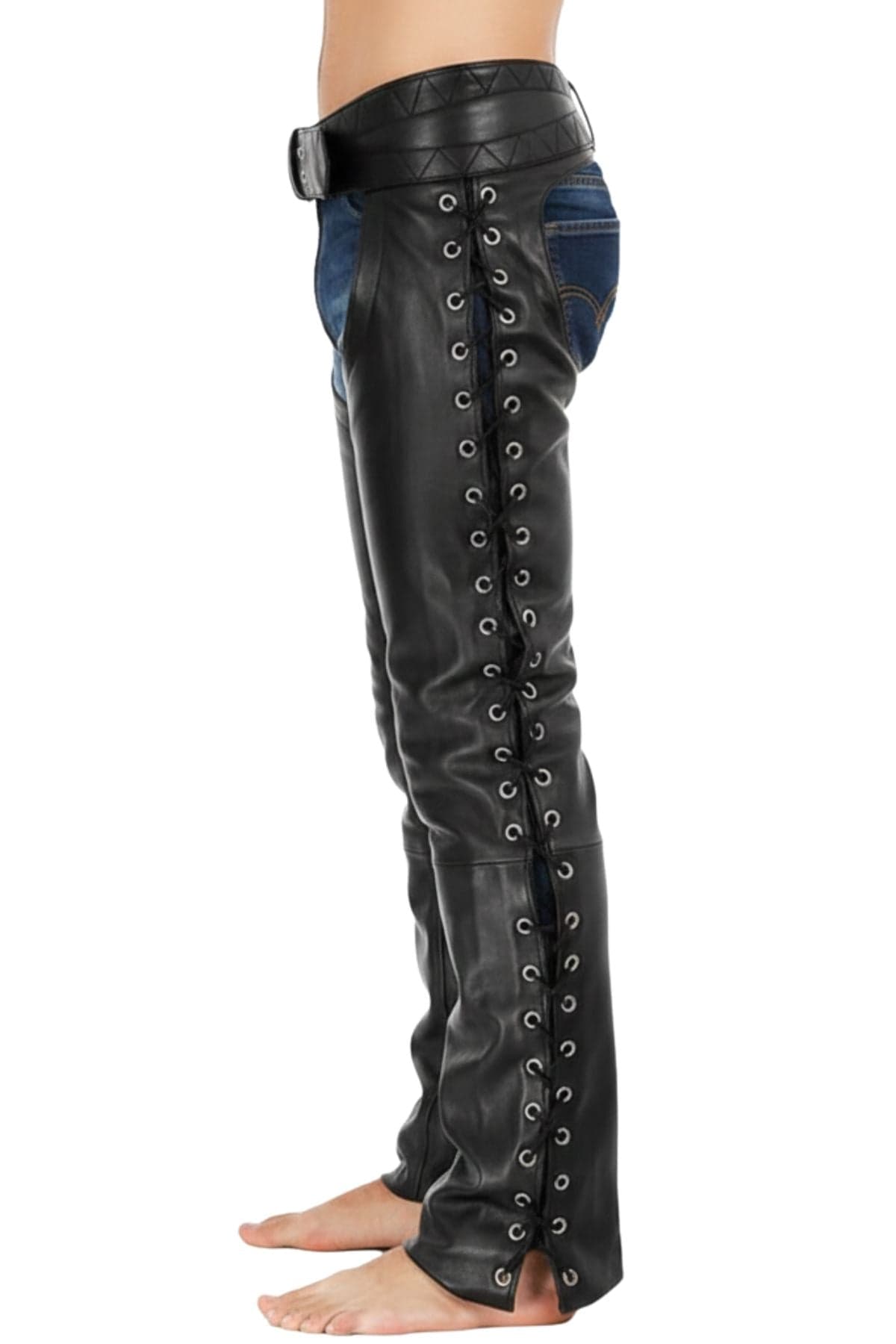
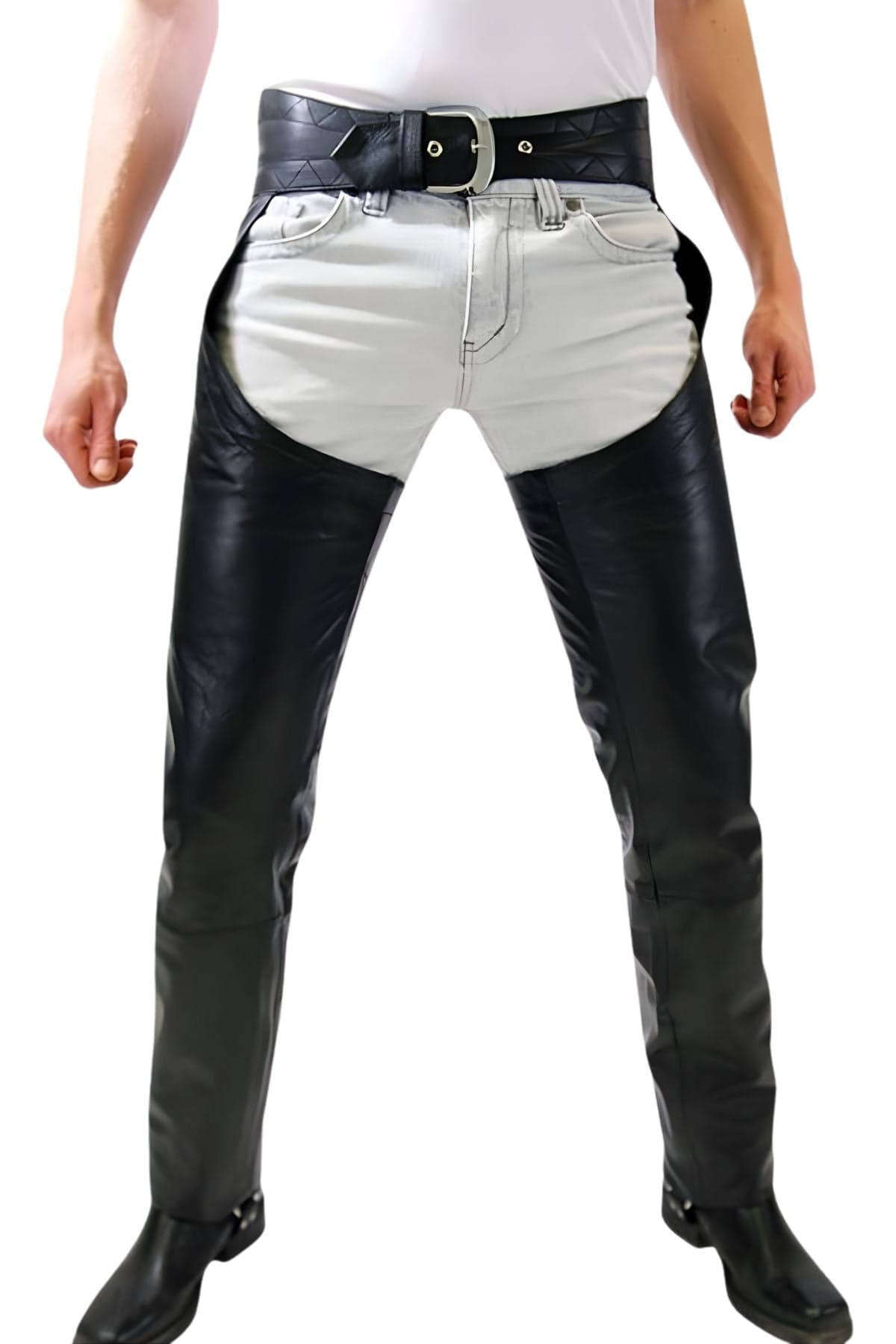
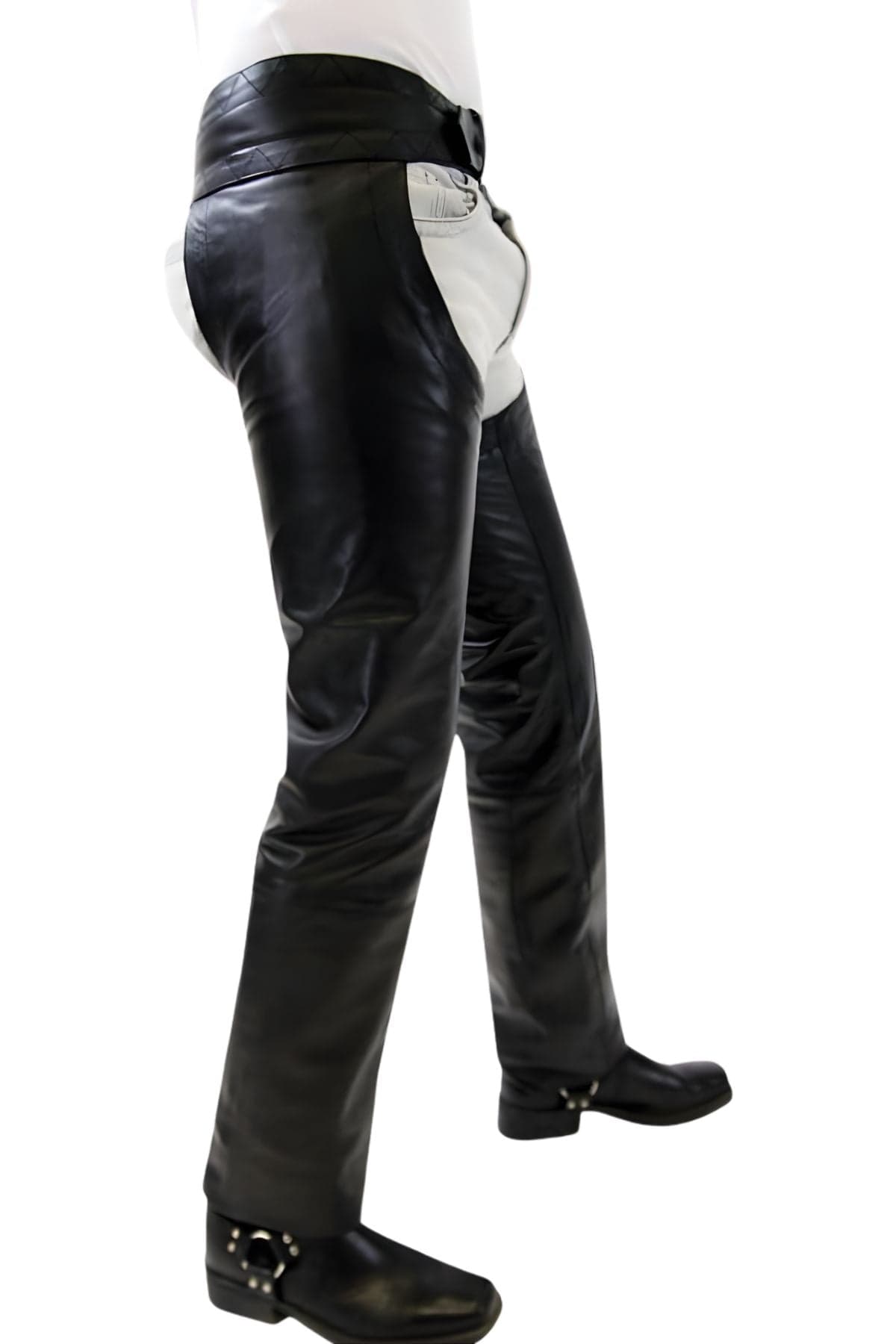
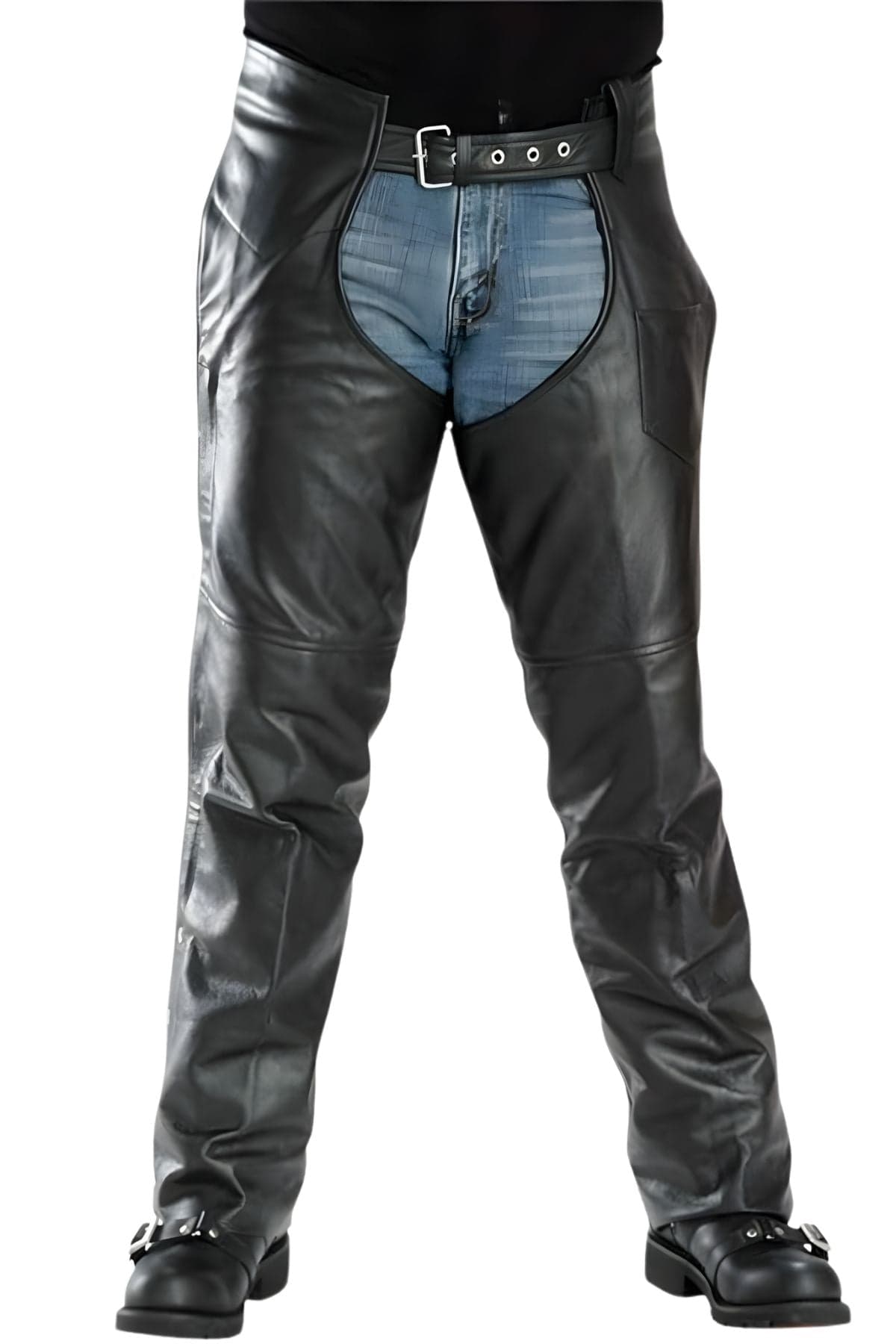
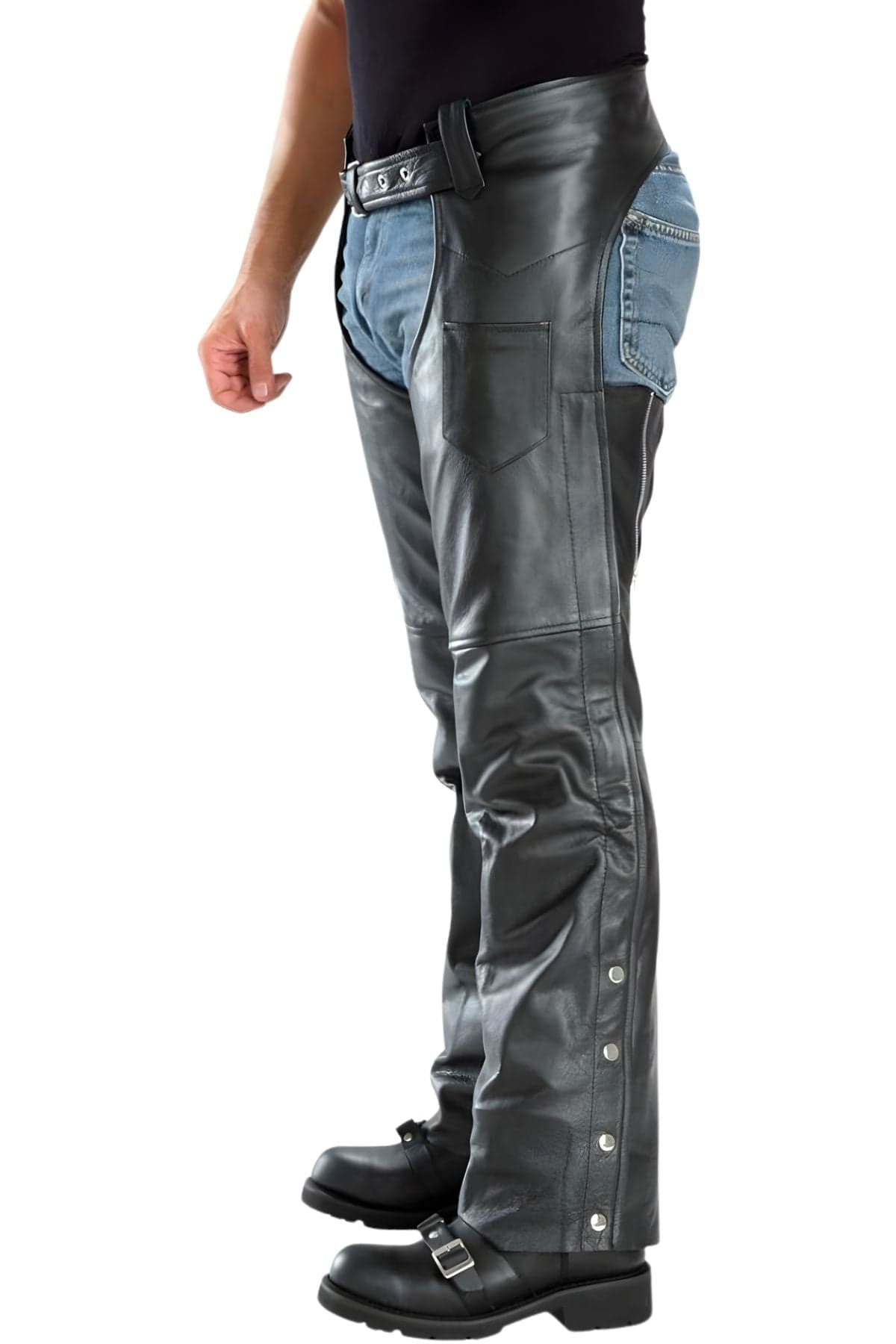
Cold air feels much colder at highway speed, and denim does almost nothing to stop it. Chaps Fit winter lined chaps pair genuine cowhide leather, which blocks the wind, with a thermal lining that holds in your body heat. That keeps your legs warm on cold mornings, late-season rides and all-year commutes. Choose from black, brown and distressed leather, with zippered pockets, back lacing and fringe, in sizes 2XS to 8XL.
How Cold It Really Feels at Riding Speed
Using the National Weather Service wind-chill formula, here's roughly how cold the air feels on exposed skin at 60 mph:
| Air temperature | Feels like at 60 mph |
|---|---|
| 50°F | about 39°F |
| 40°F | about 25°F |
| 30°F | about 10°F |
These are approximate. The formula was developed for weather forecasting, not specifically for riding.
The point is simple: a ride that feels fine at a standstill can become painfully cold at highway speed. Your legs are exposed to wind the whole time, and jeans let it straight through.
How Lined Chaps Keep You Warm
- Leather blocks the wind. Cowhide stops the cold air that goes straight through denim. That's the single biggest factor in staying warm on a bike.
- The thermal lining traps heat. An insulating layer between the leather and your jeans holds a layer of warm air against your legs.
- Fit seals out drafts. Snug thighs, closed zippers or snaps, and back lacing stop cold air from flowing up inside the chaps.
Lined Winter Chaps at Chaps Fit
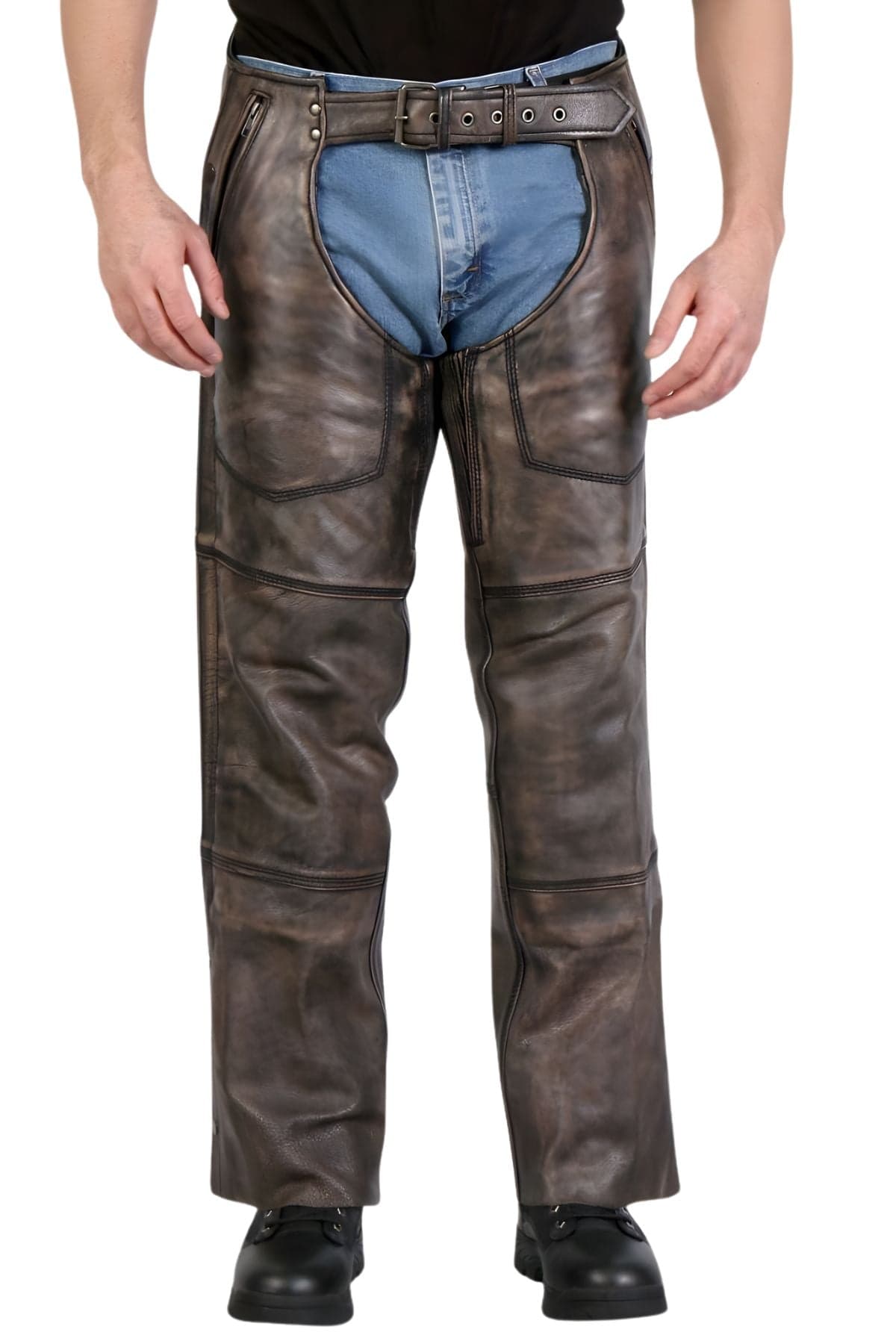
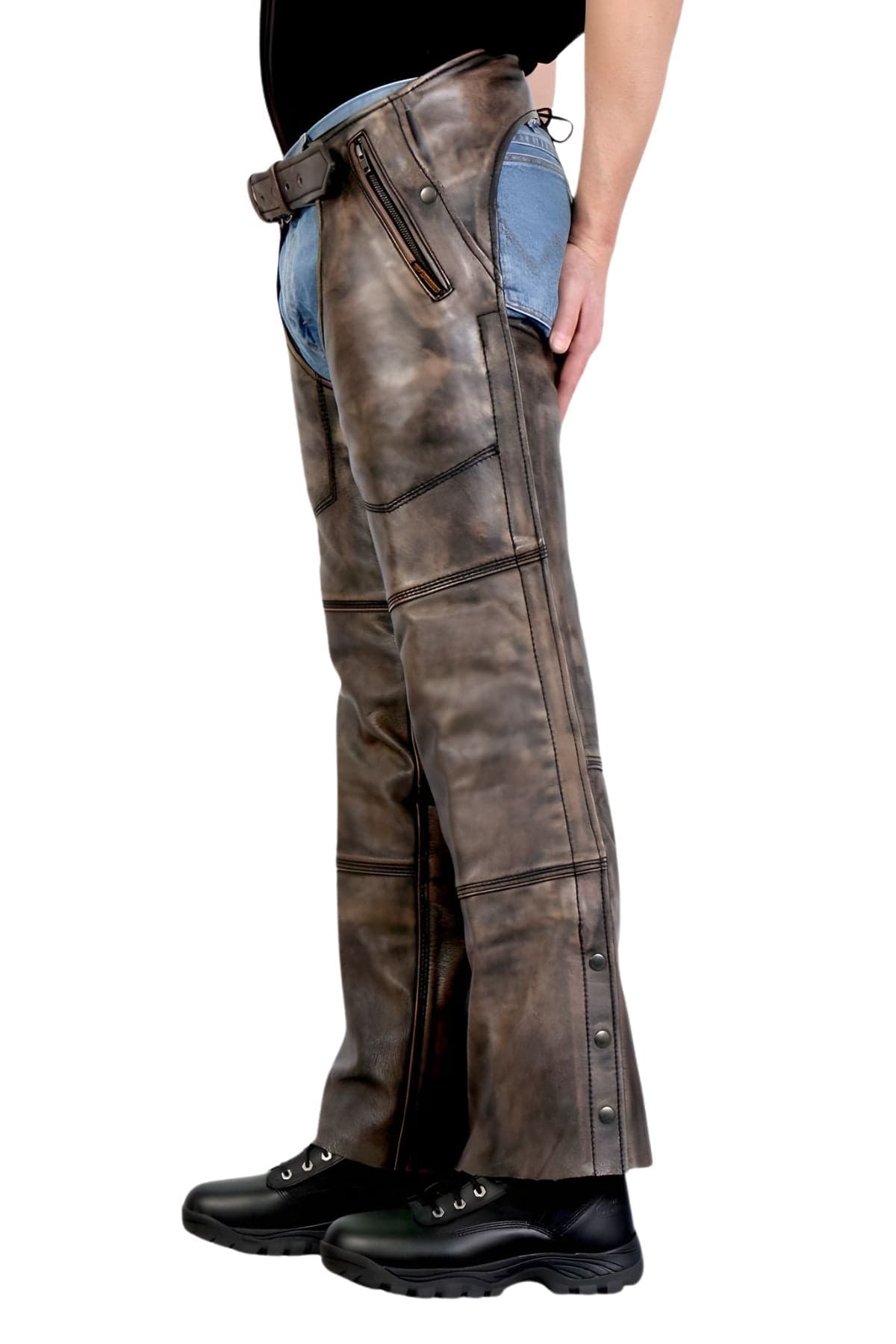
- Open Road Heavy Duty Distressed Leather Riding Chaps: genuine cowhide with thermal windproof protection, deep zippered pockets, full-length side zippers and adjustable back lacing, in a vintage distressed finish.
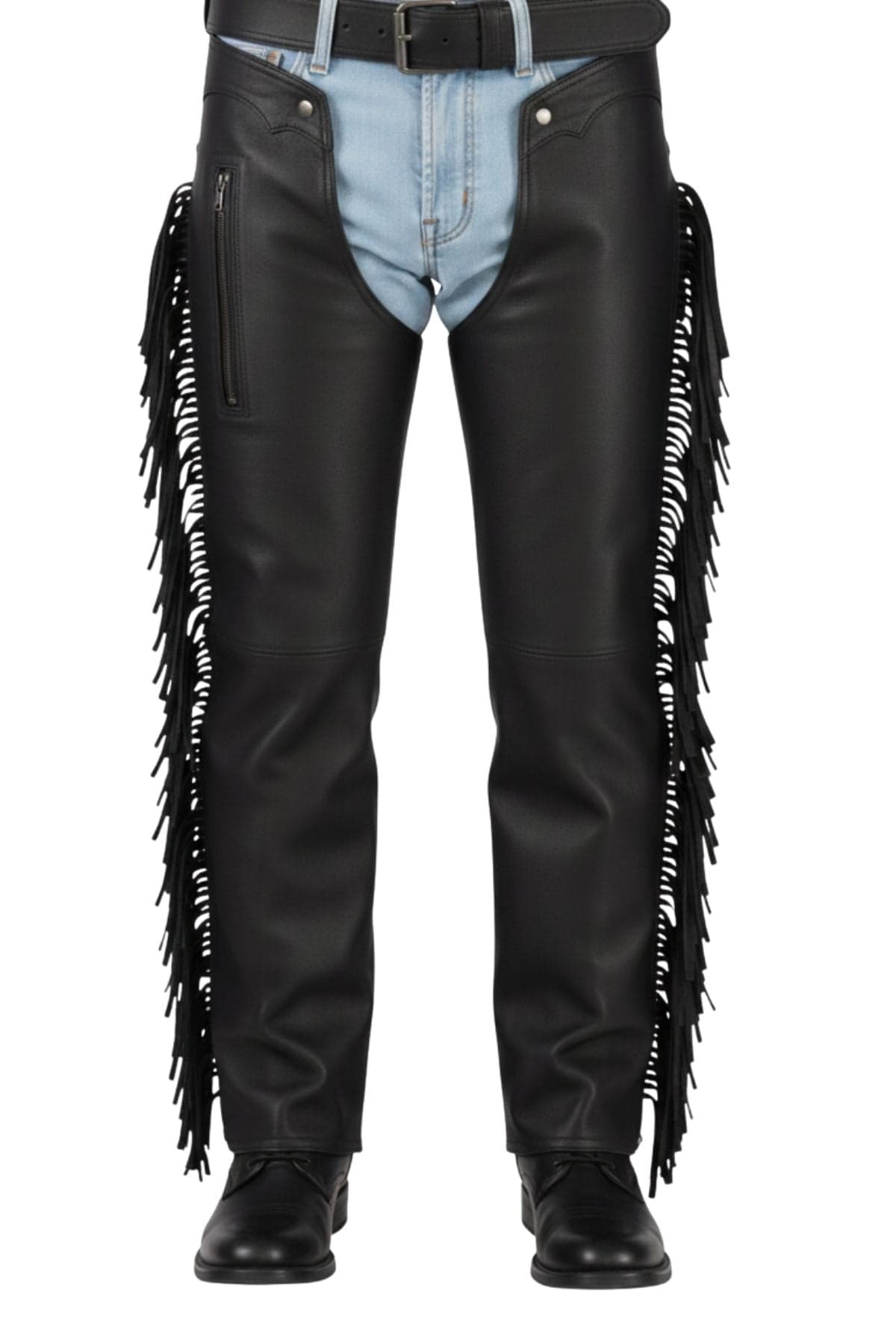
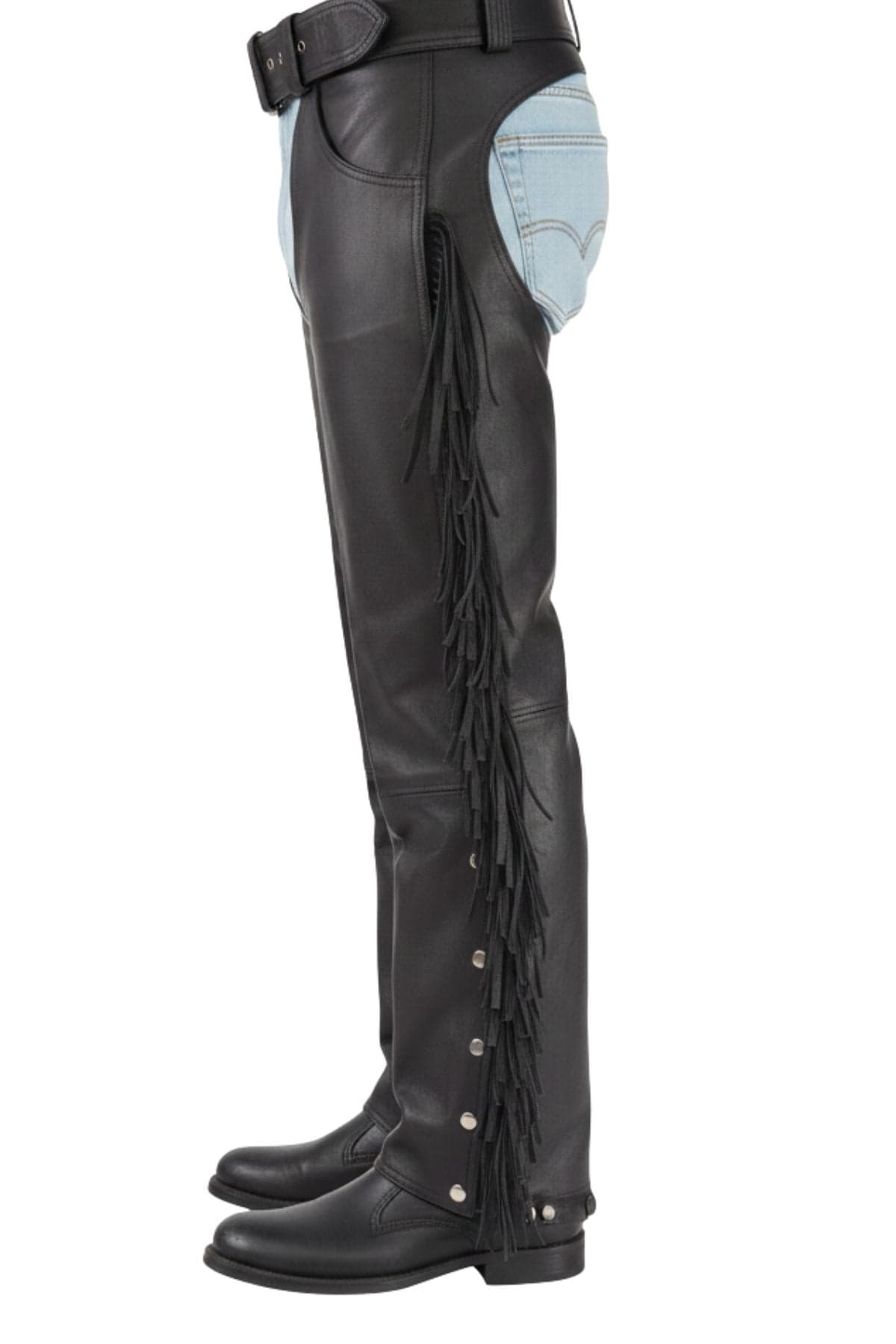
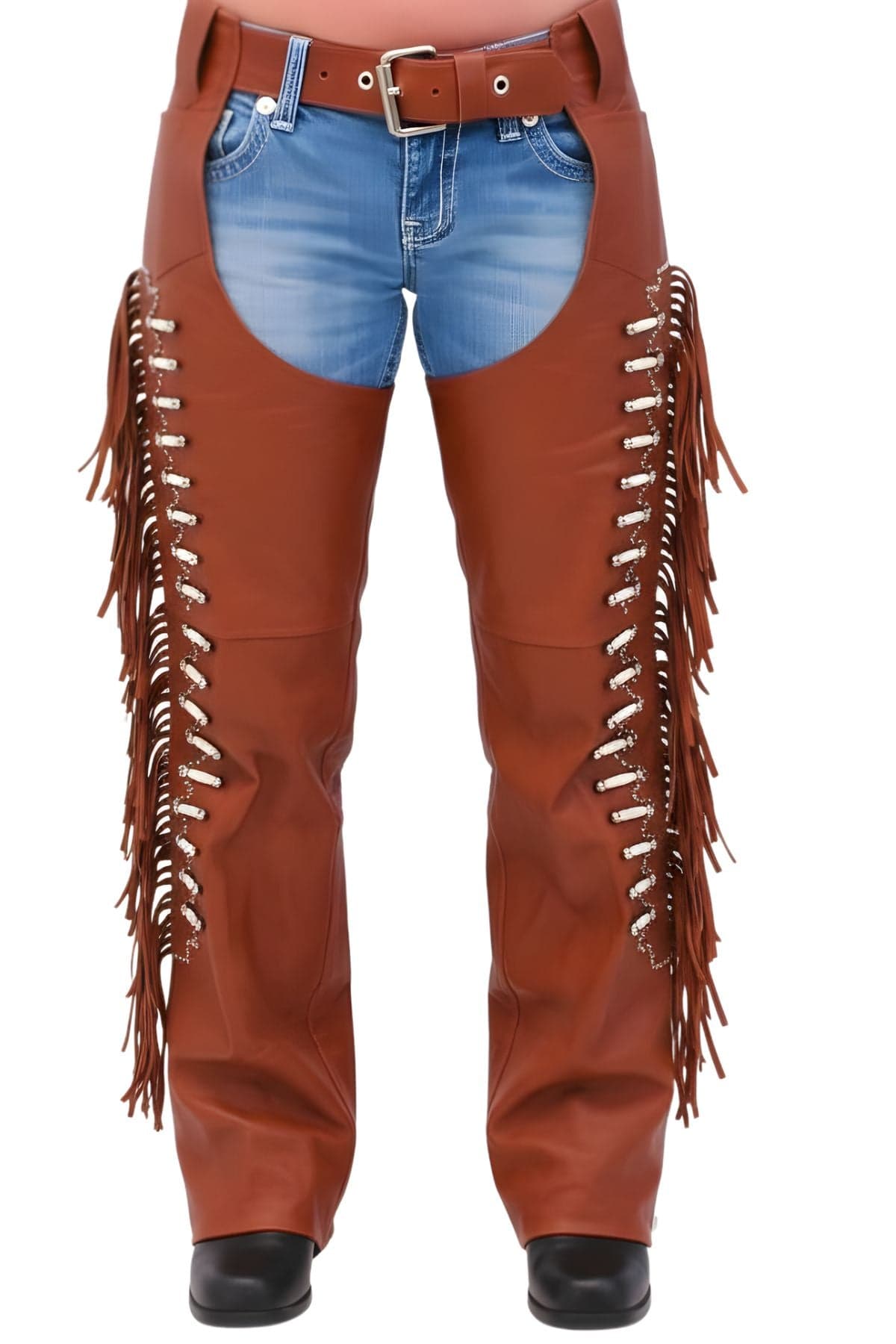
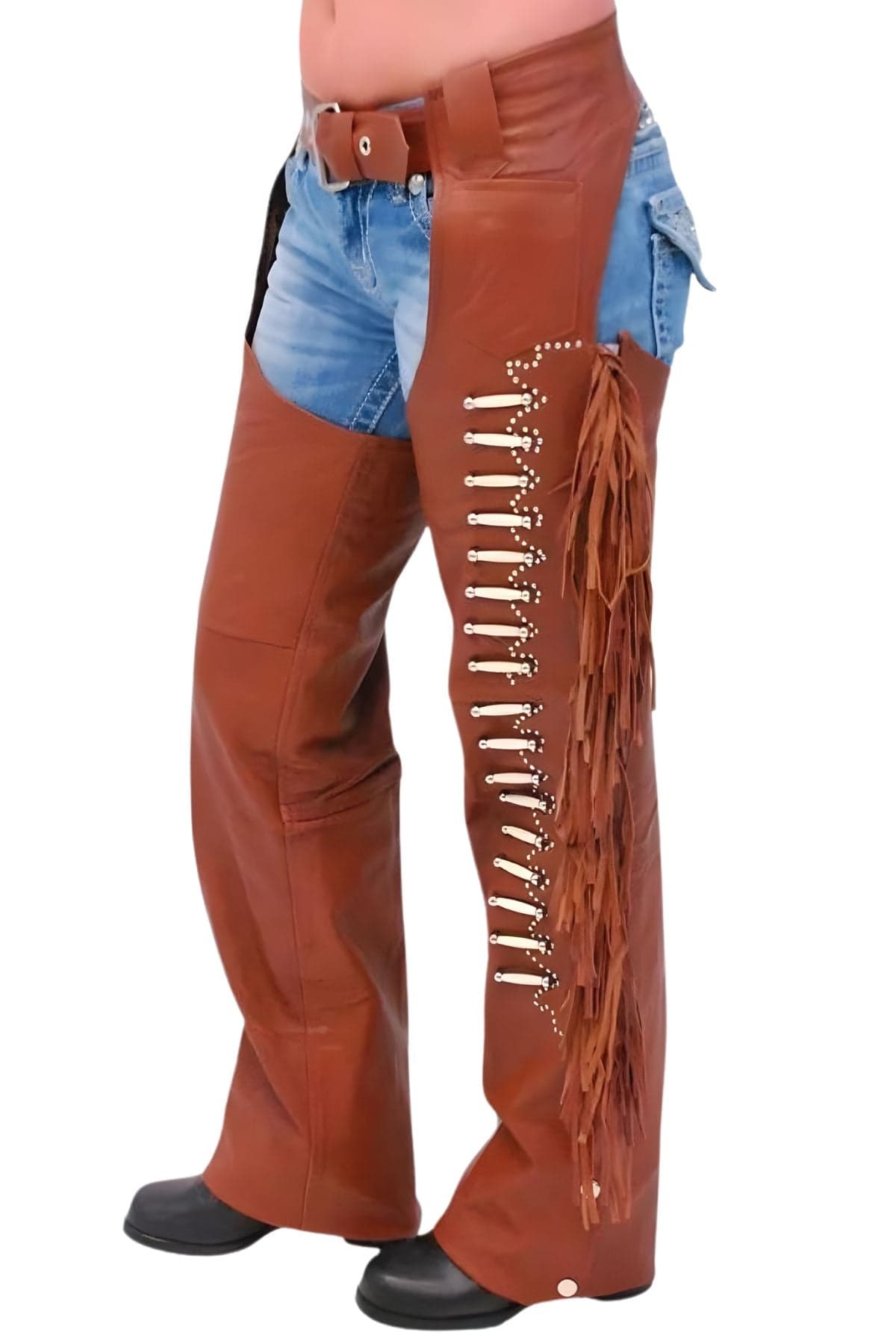
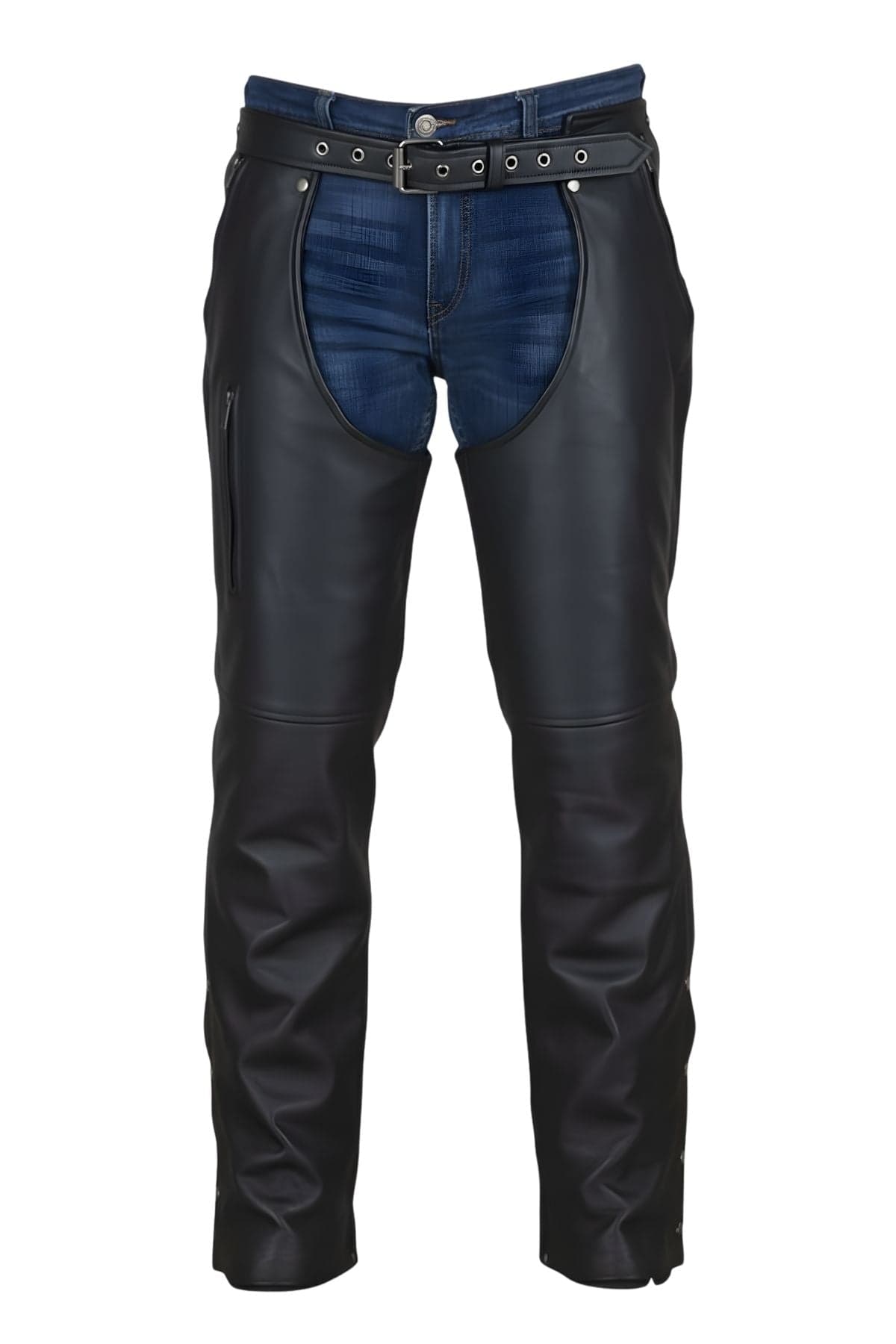
- Deluxe Leather Motorcycle Chaps: black cowhide with a heat-trapping thermal lining, a deep zippered thigh pocket and western fringe.
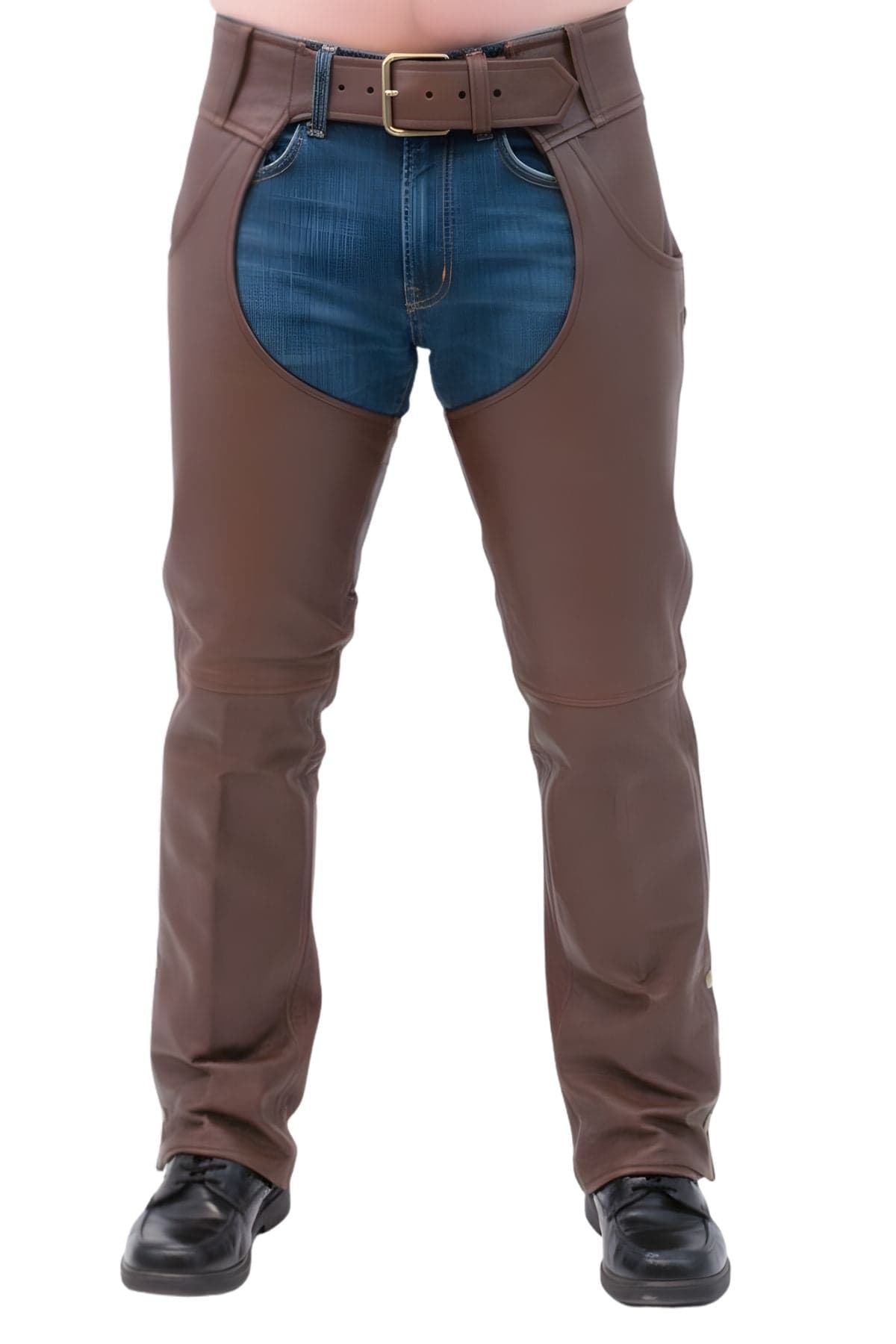
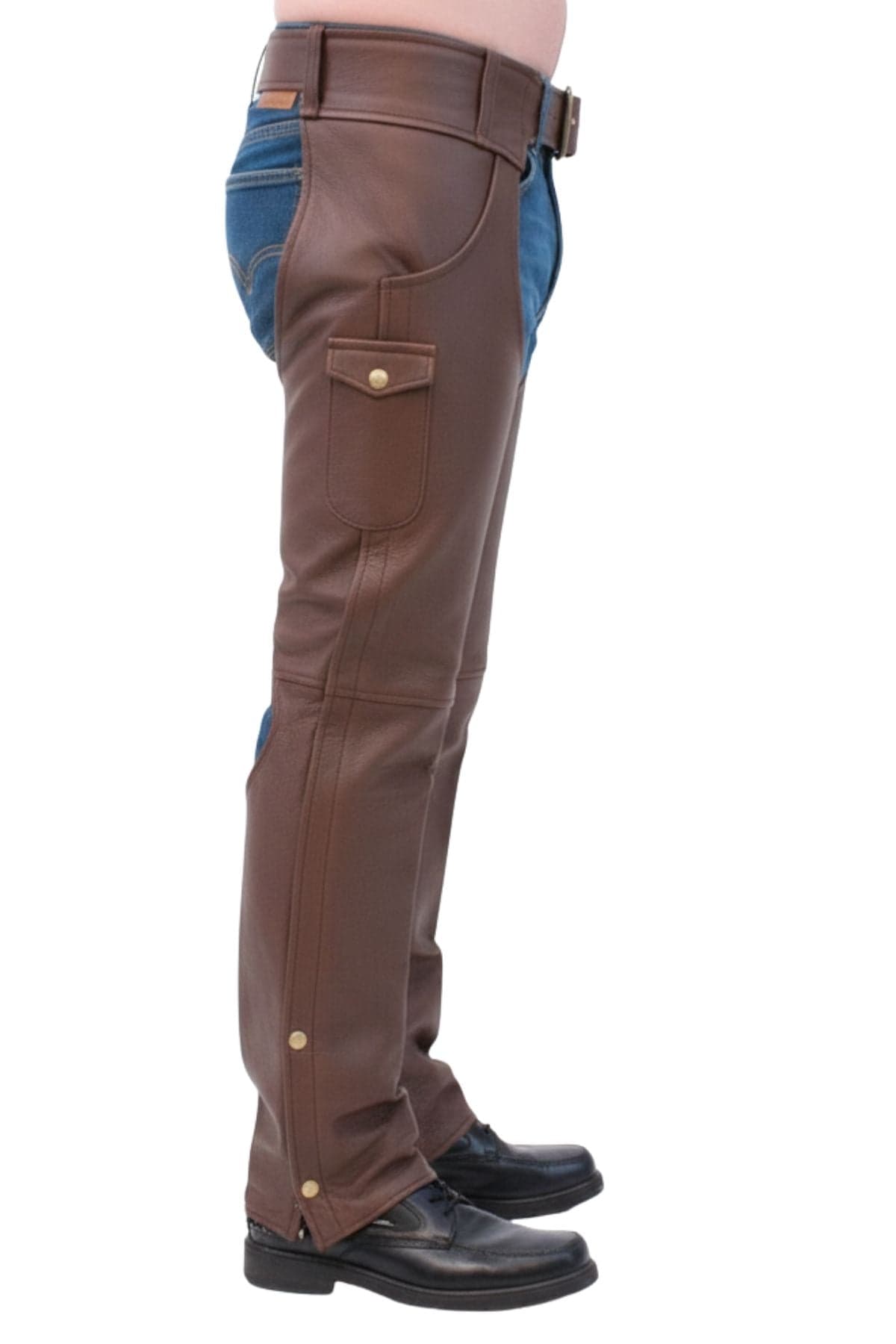
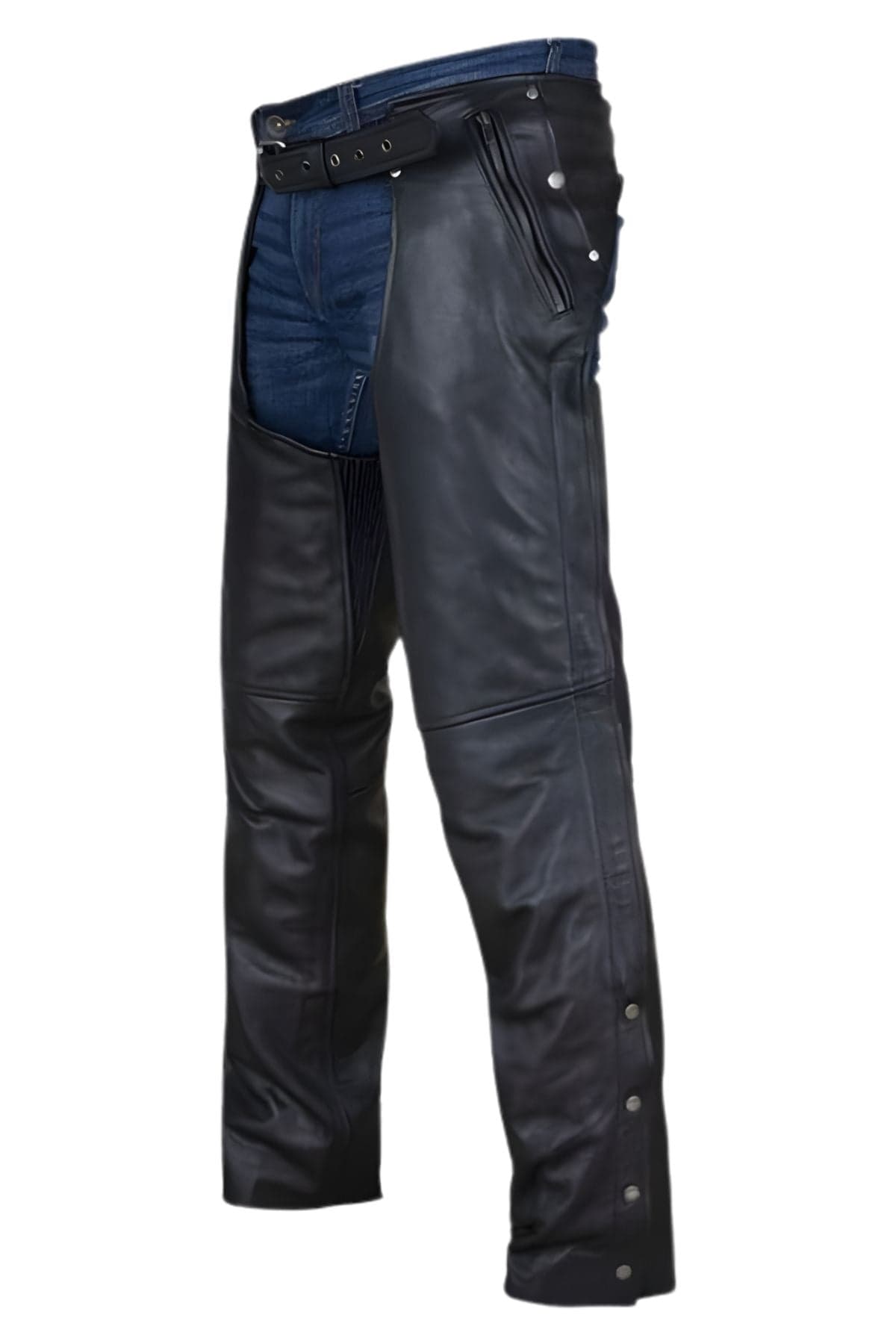
- Classic Brown Leather Biker Chaps with Side Pockets: real cowhide with winter thermal protection, utility side pockets and snap closures at the hem.
Each product page lists that style's lining and closure details.
How to Layer Under Winter Chaps
Lined chaps are the outer layer. What you wear under them matters just as much.
- Base layer: thermal leggings in merino wool or a synthetic fabric that wicks sweat. Avoid cotton long johns, which hold moisture and chill you.
- Middle layer: your regular jeans or riding pants. For very cold rides, choose fleece-lined jeans.
- Outer layer: lined leather chaps to block the wind.
- Heated gear: for serious cold, heated pant liners powered by the bike's electrical system fit comfortably under chaps. Run the cable out at the waist.
Leave room for these layers when you size (see below).
Sizing Winter Chaps
- Measure over your winter layers. Thermals and fleece-lined jeans can add an inch or more at the thigh.
- Use adjustable styles. Back lacing, like on the Open Road chaps, lets one pair fit over both light and heavy layers.
- Check the fit seated on the bike. The thigh shouldn't pull tight and the hem should still cover your boots with your feet on the pegs.
For larger sizes, see big & tall chaps. For exact measurements, see custom chaps.
Winter Riding: Care and Safety Tips
- Road salt: salt spray dries out and stains leather. Wipe your chaps down with a damp cloth after salty rides, let them dry at room temperature, then condition them.
- Rain and slush: wet leather loses warmth quickly. Pull rain overpants over your chaps in wet winter weather.
- Drying: never dry lined chaps on a radiator or near the engine. High heat cracks leather and can damage the lining.
- Visibility: winter days are short. Add reflective gear, since black leather is hard for drivers to see at dusk.
- Ice: no gear makes black ice safe. Check road conditions, and don't ride when the pavement may be icy.
- Listen to your body: if you're shivering hard or losing feeling in your hands or feet, stop and warm up. Cold slows your reactions.
Off-Season Storage
At the end of winter, clean off salt and grime, condition the leather, let the chaps dry completely, and hang them by the belt in a cool, dry place. Don't seal them in plastic. The lining needs to breathe to avoid mildew.