Woolies / Hair-on Chaps
Woolies & Hair-On Chaps
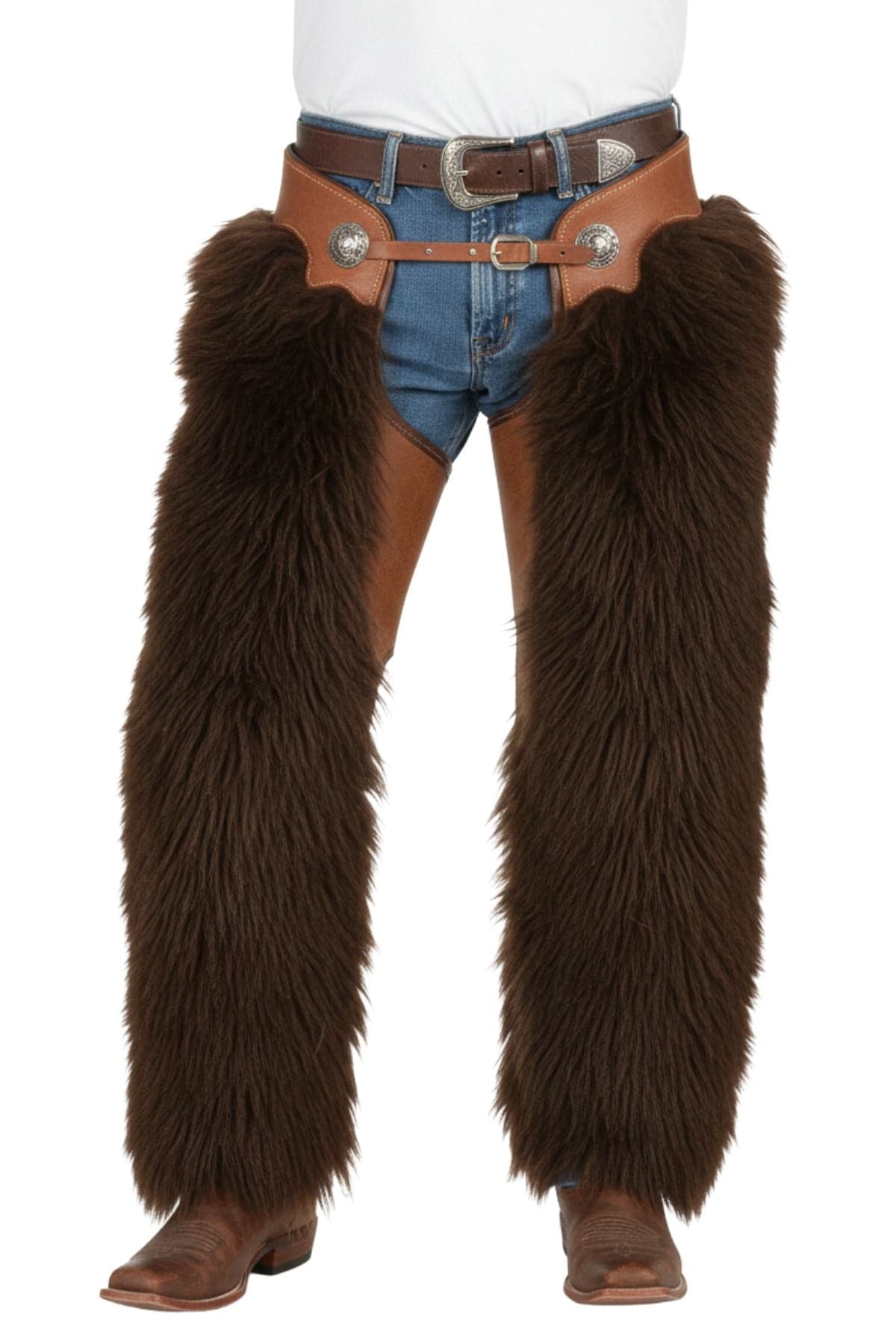
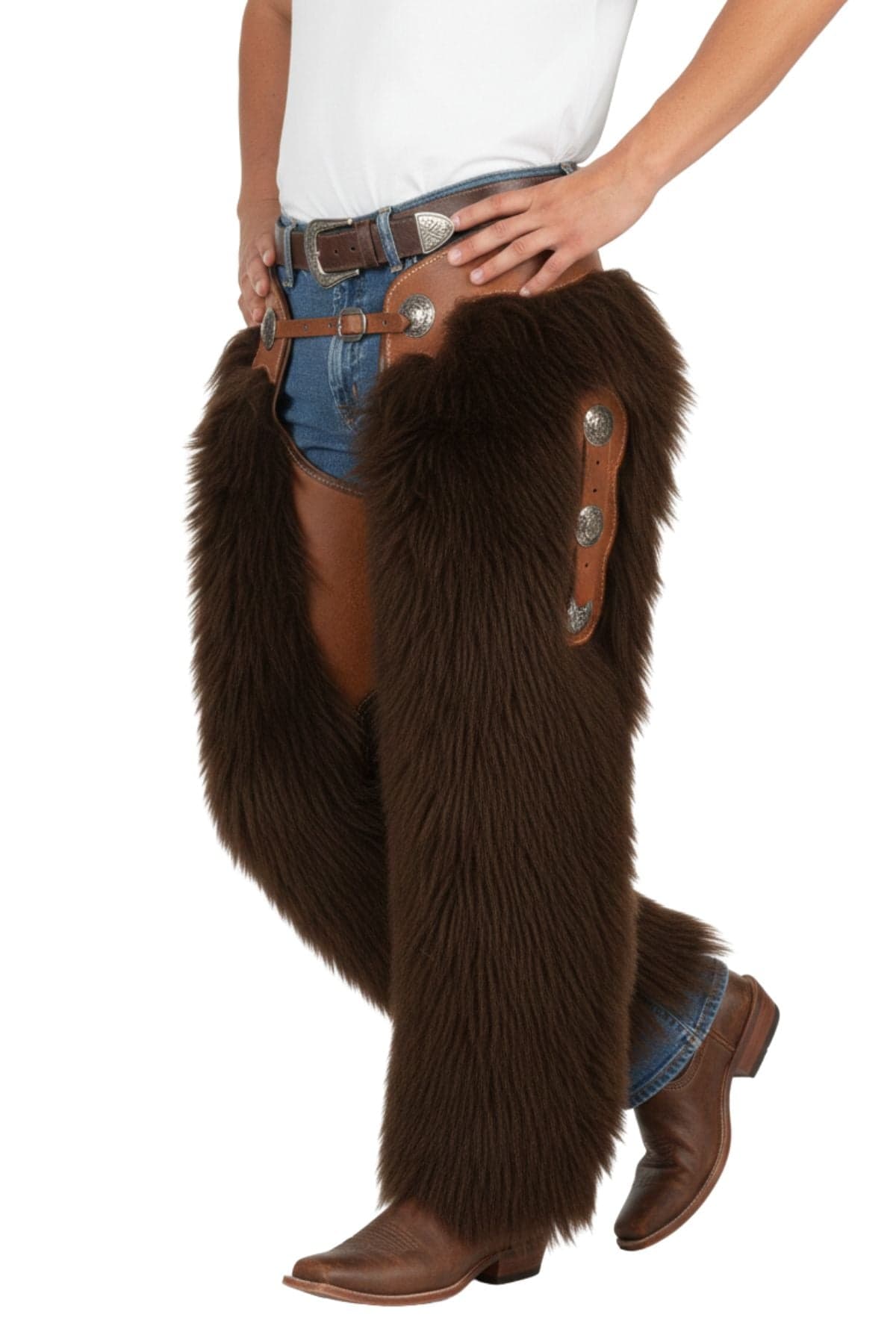
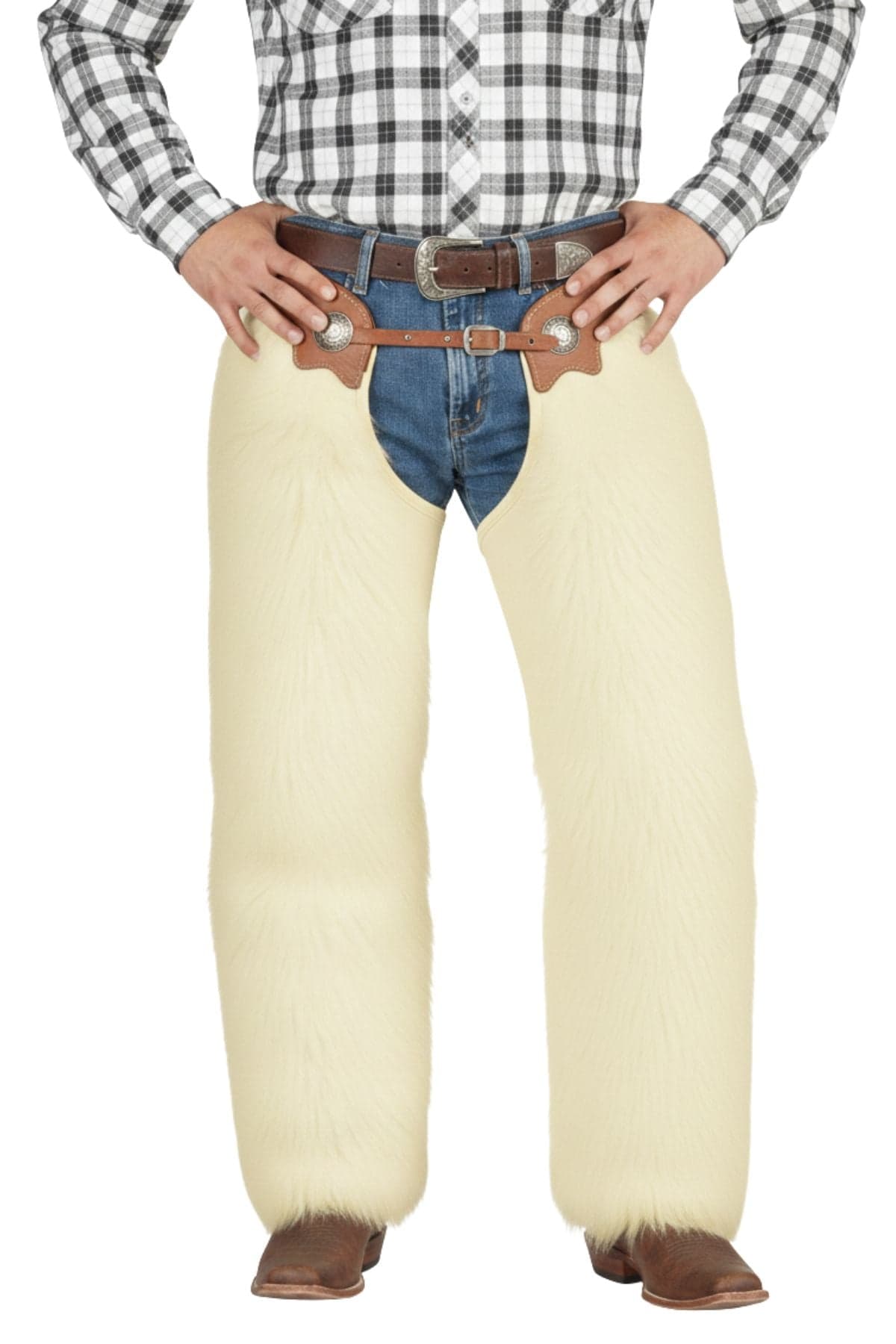
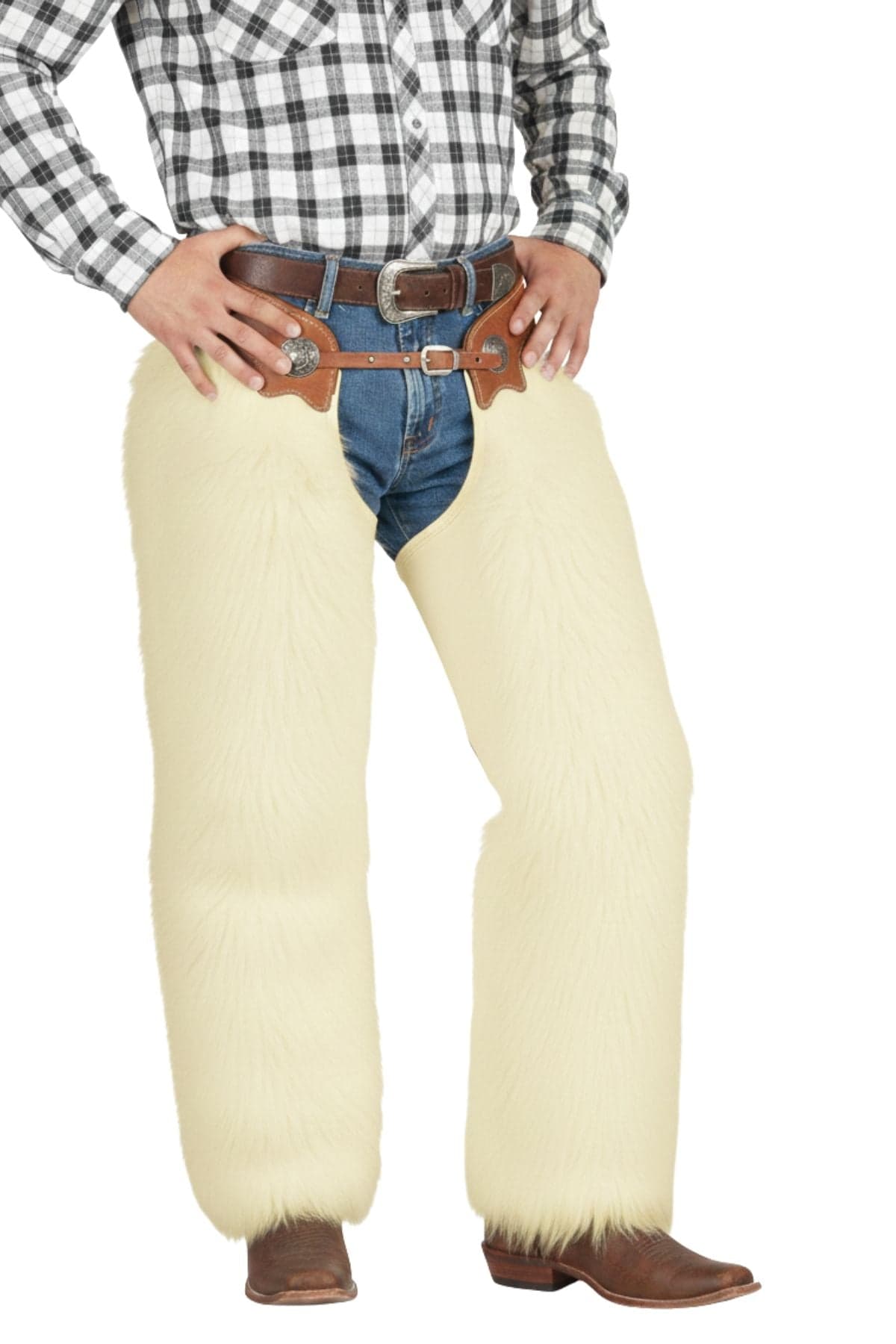
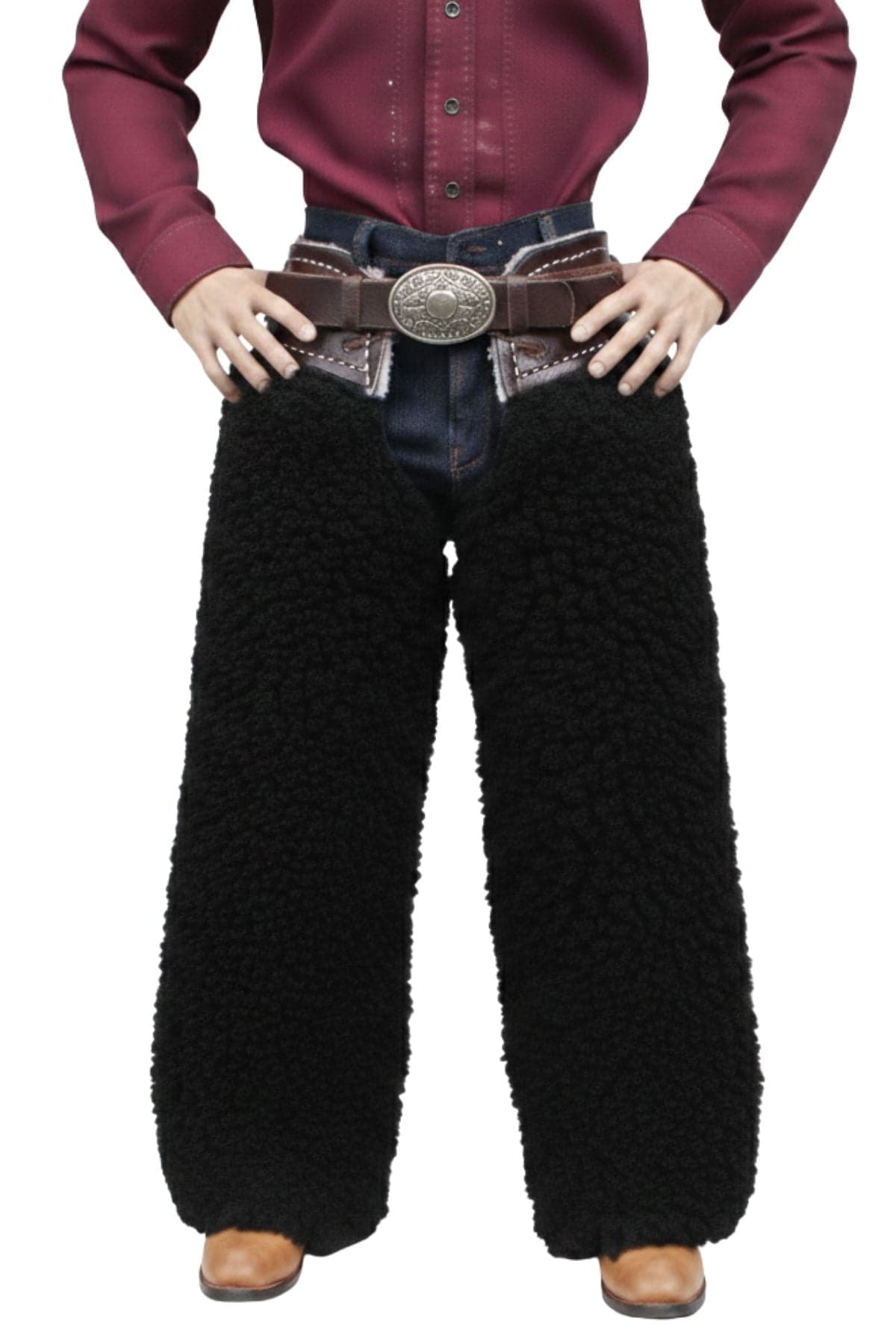
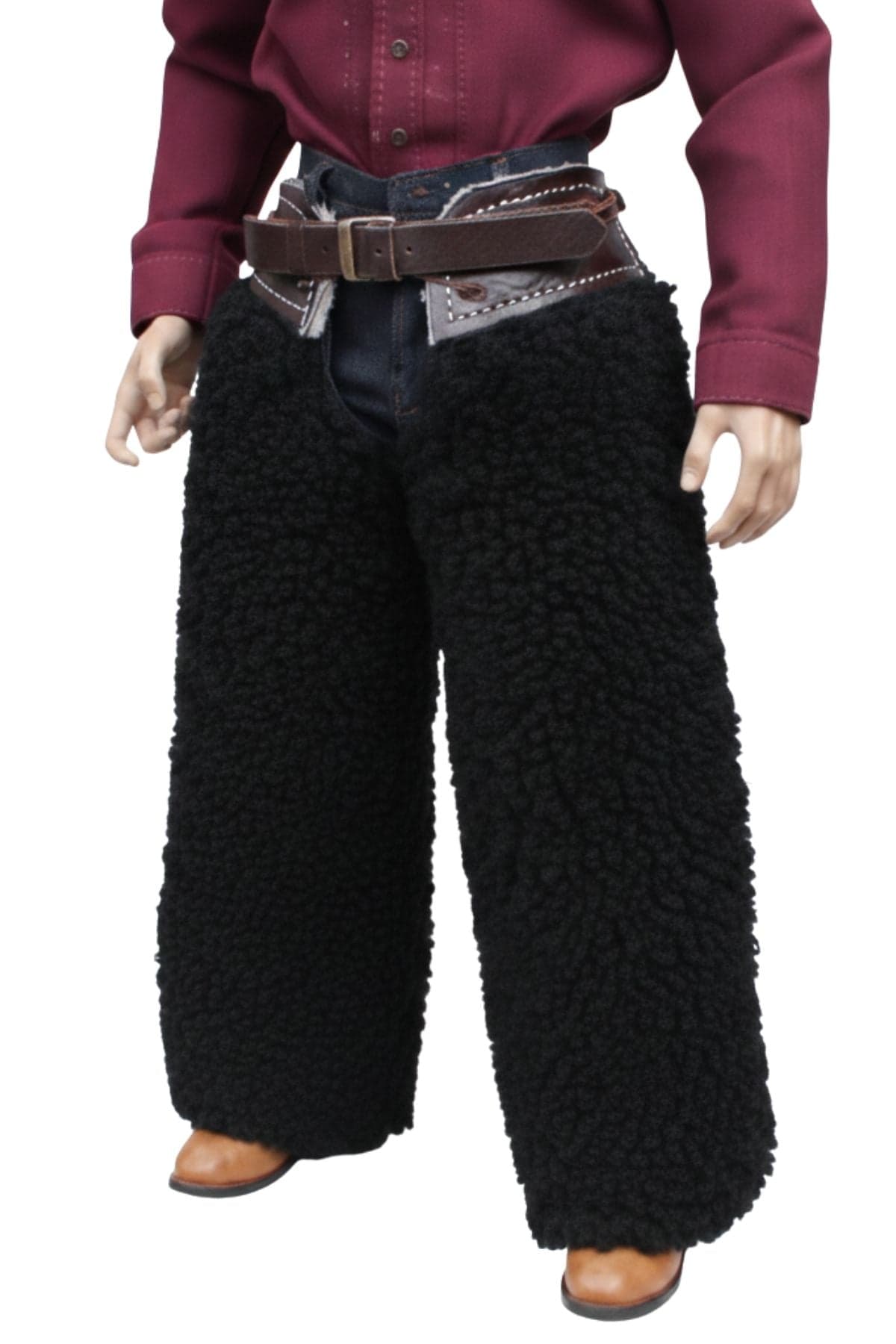
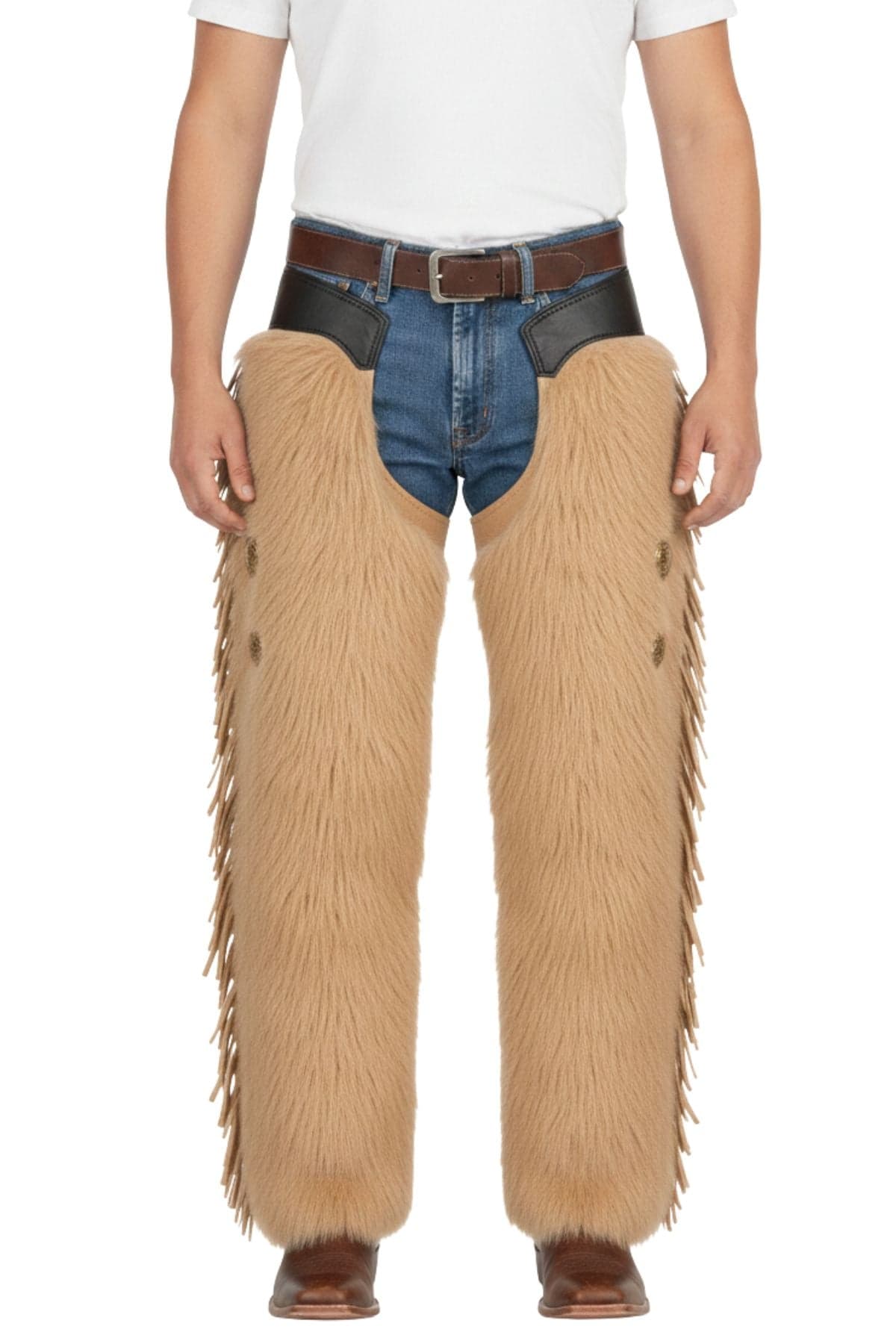
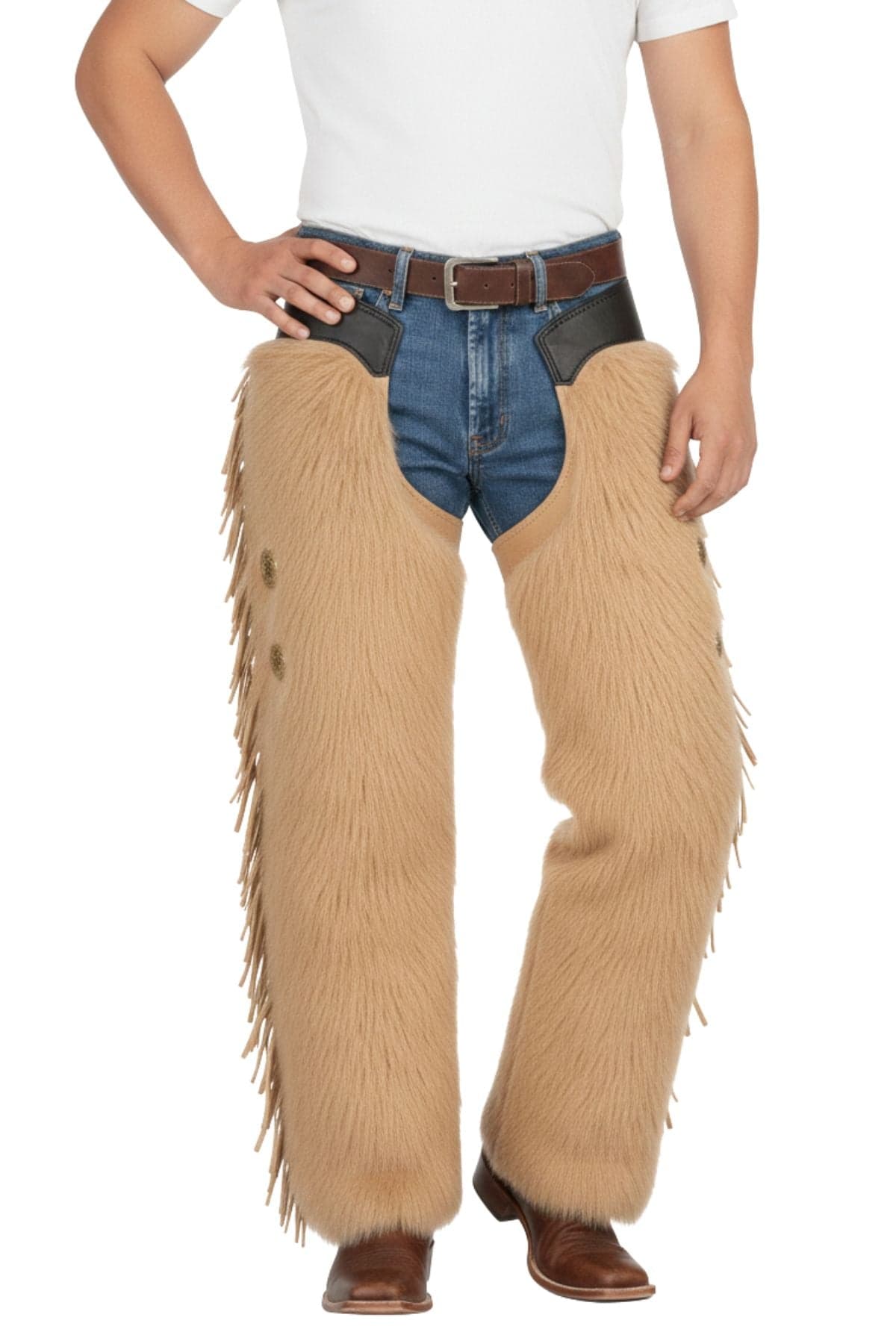
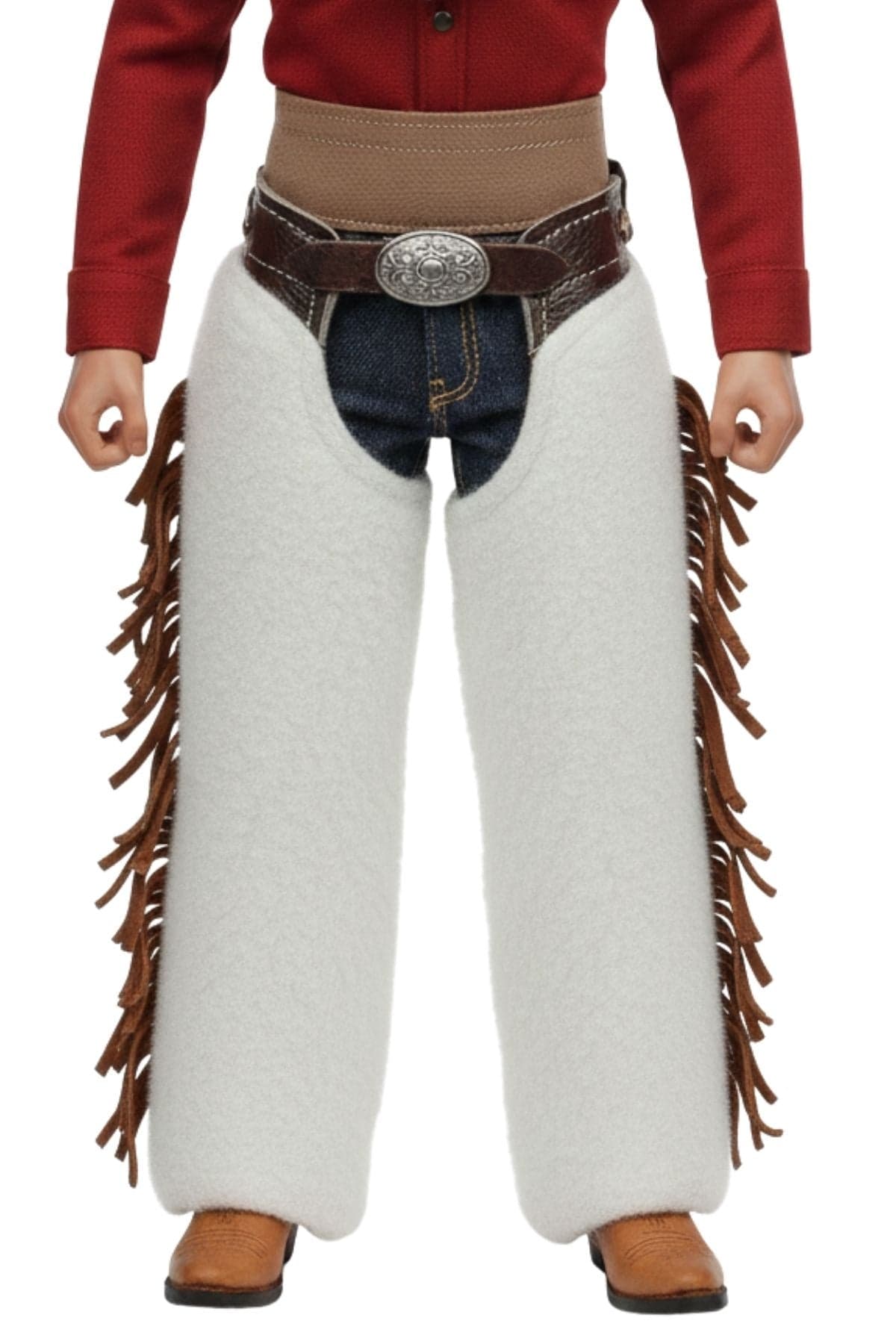
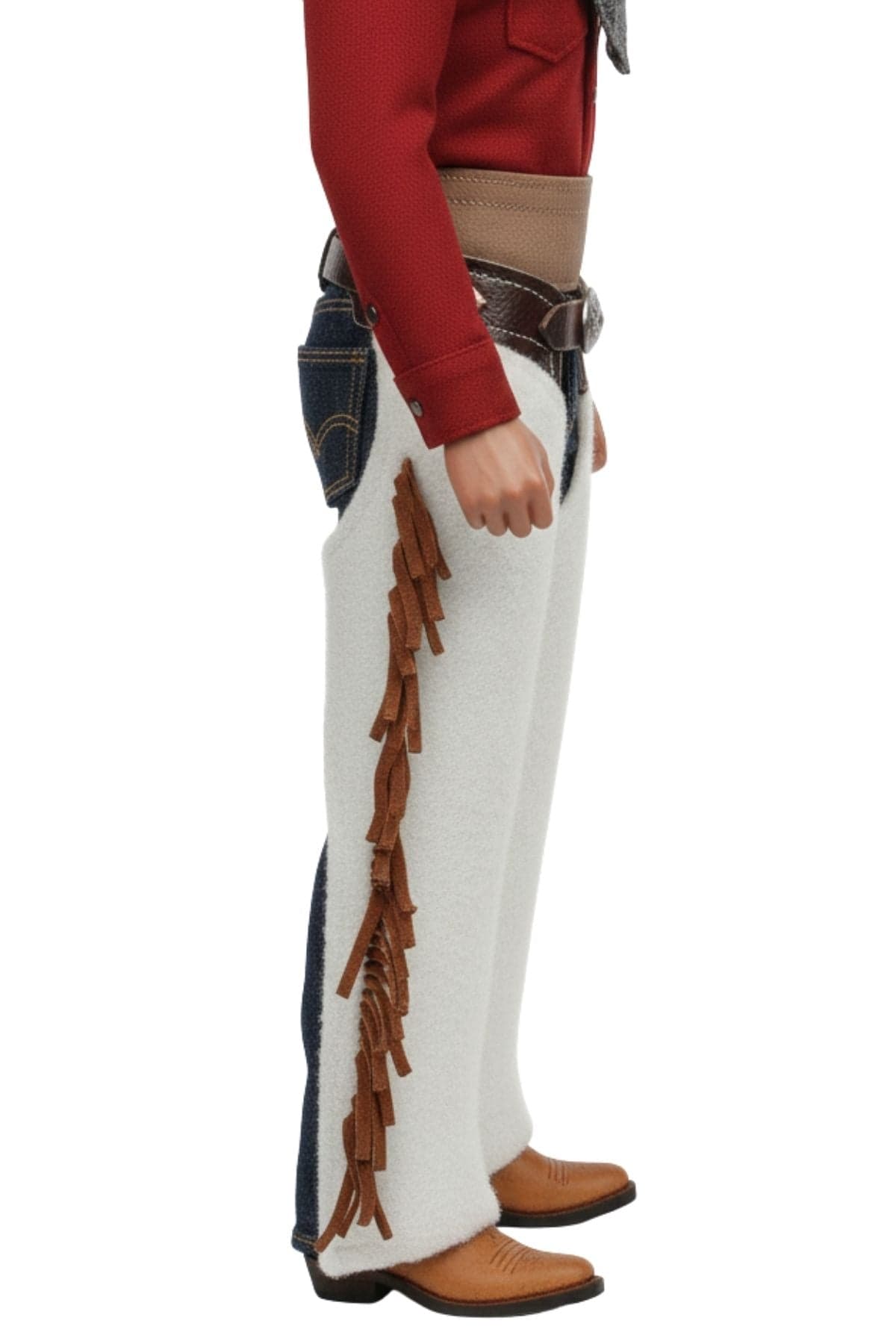
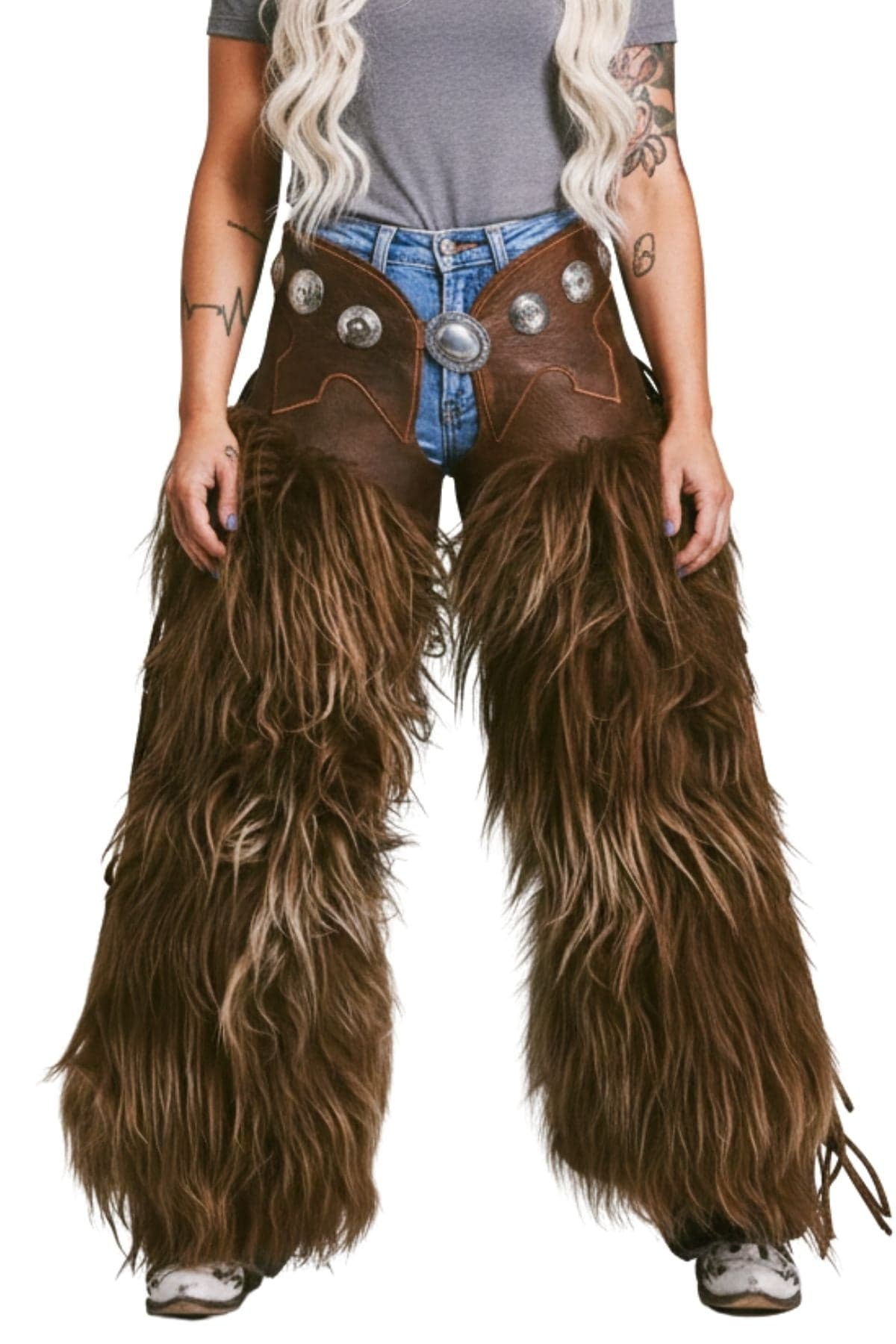
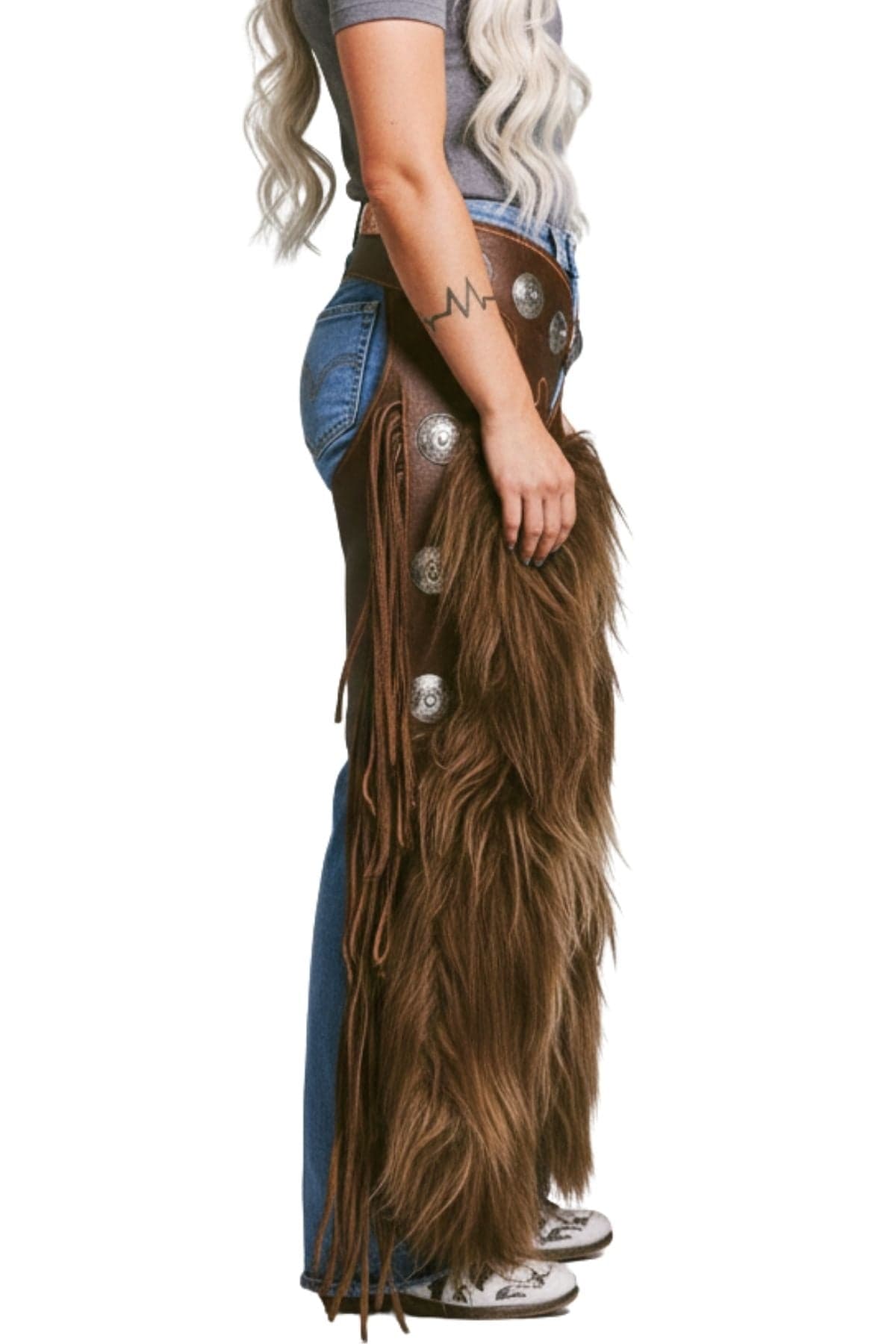
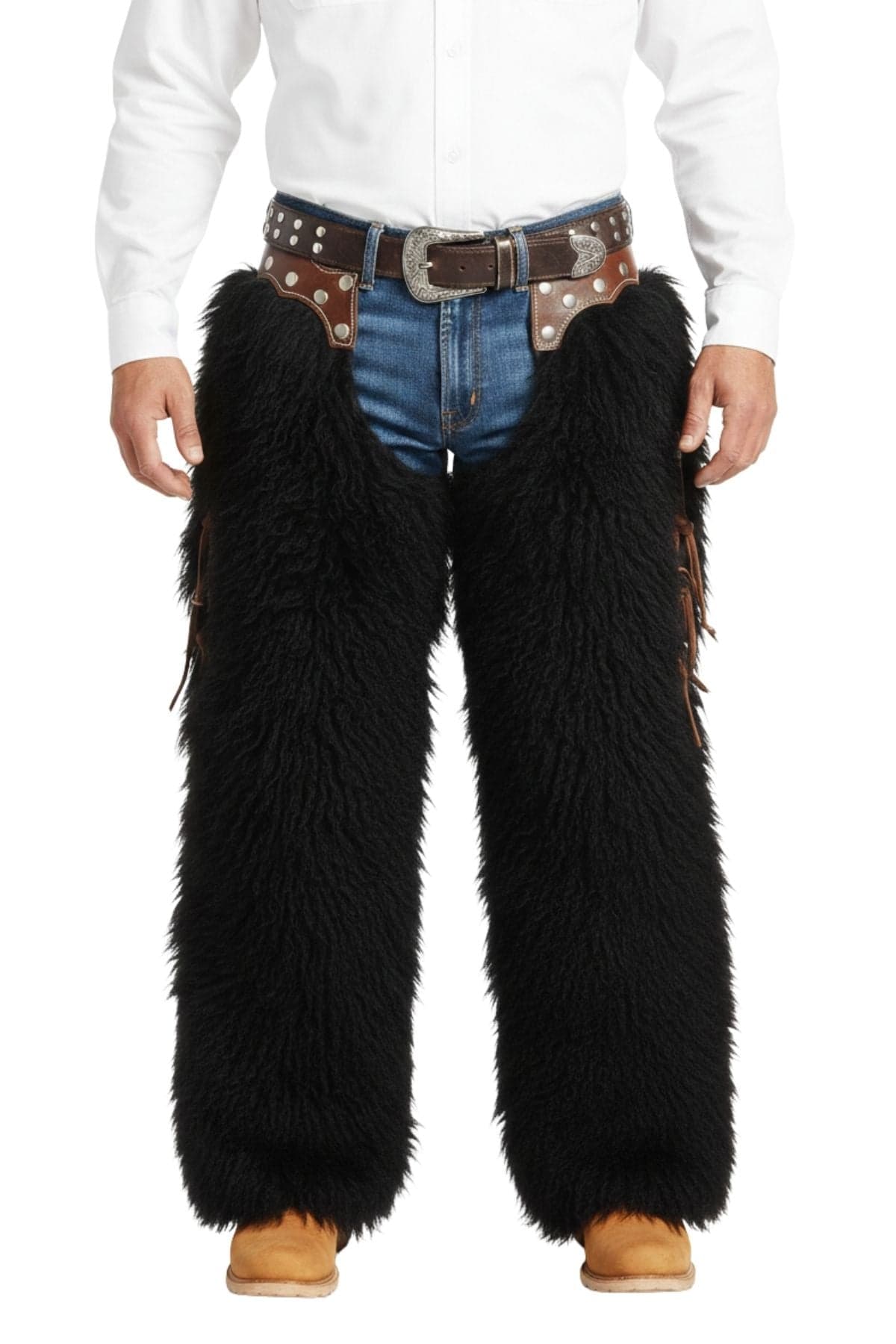
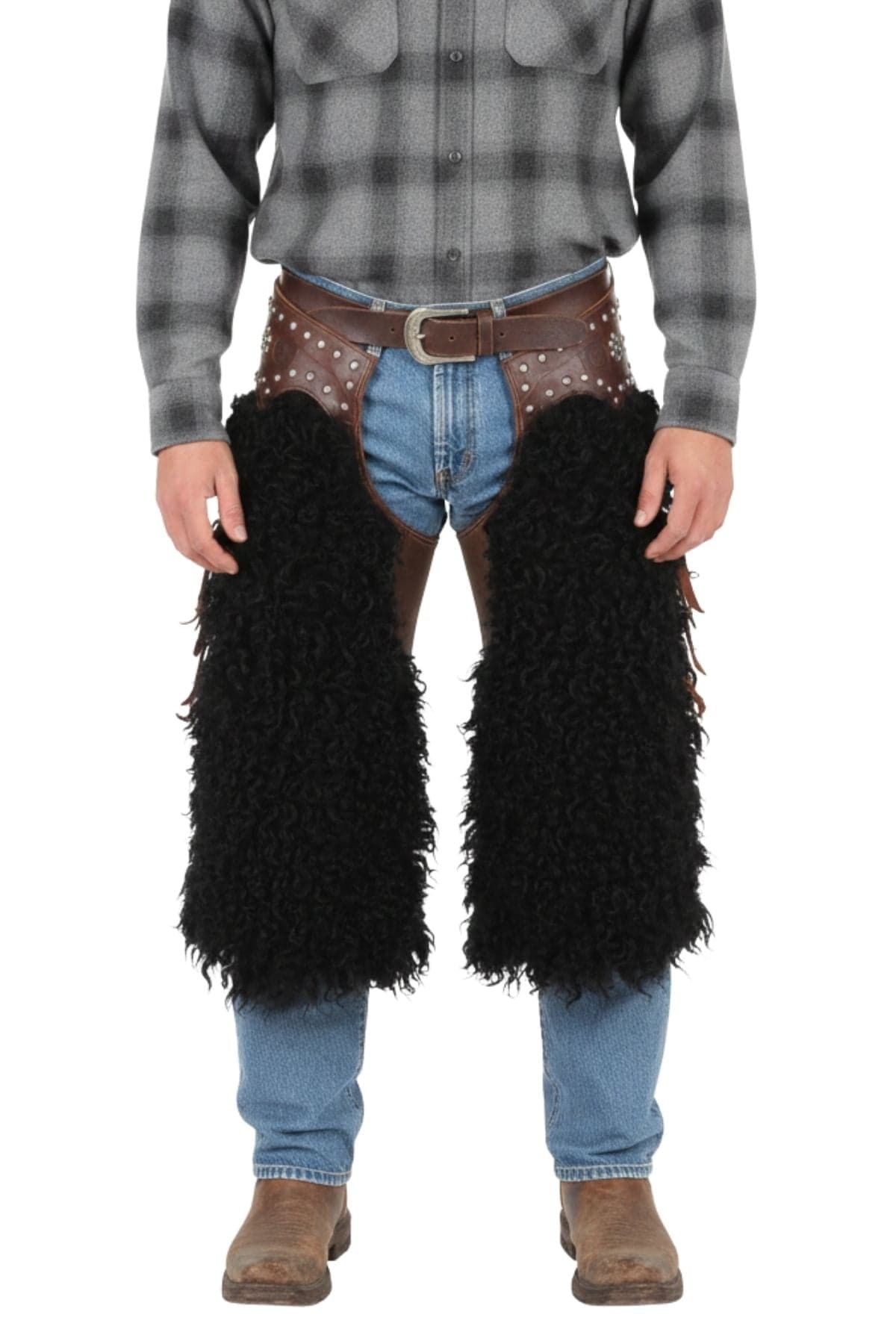
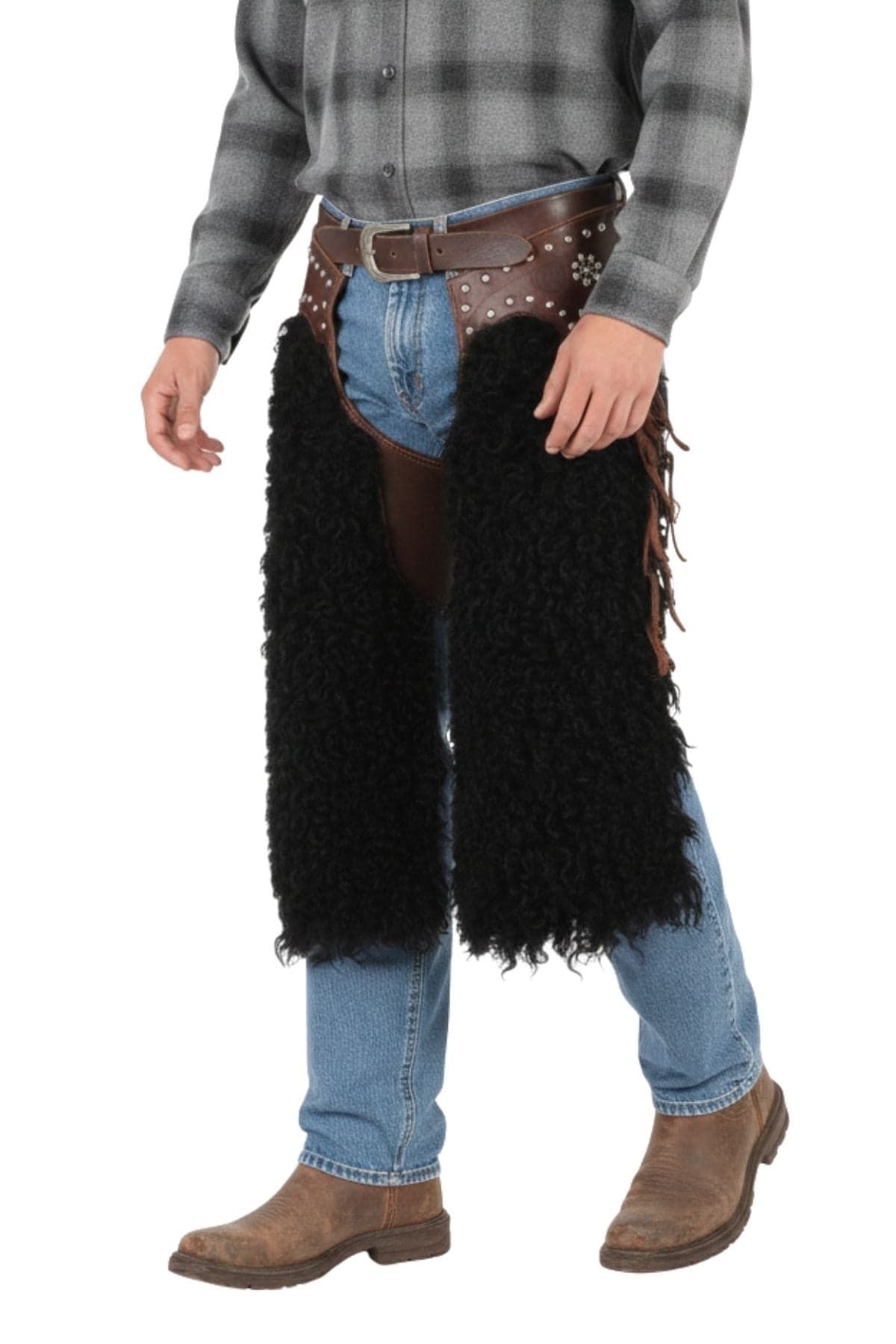
When the wind cuts through denim and the saddle is freezing cold, smooth leather isn't enough. Woolies are chaps covered in natural hair or fleece, and they're the warmest chaps a rider can wear. Chaps Fit woolies combine thick wooly leg panels with leather yokes and belts, in black and natural tan, with or without fringe and conchos. They're sized from 2XS to 8XL.
What Woolies Are Made Of
Woolies are chaps with the hair or fleece left on the hide, facing outward. The hair traps a layer of still air around your legs, which works like insulation and blocks wind that goes straight through plain leather. The traditional hides are:
- Angora goat: long, silky, wavy locks. This is the classic look of historic woolies.
- Sheepskin (shearling): dense, curly wool, very warm.
- Hair-on cowhide: shorter, flatter hair, often with natural patterning. It's more durable in brush.
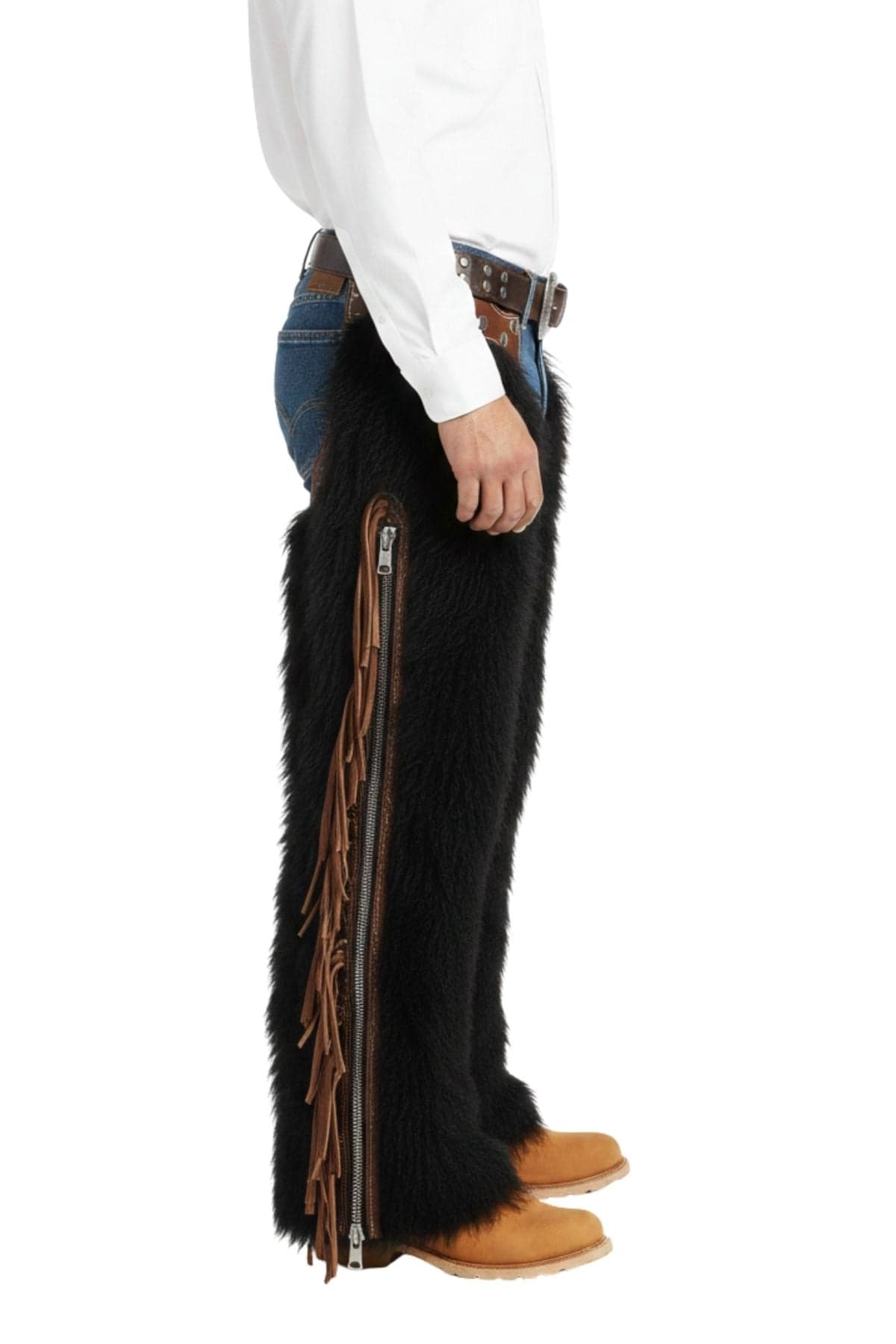
The hide is attached to a leather yoke and belt, and the legs usually zip or snap closed like shotgun chaps. Each Chaps Fit product page lists its hide and leather details.
Where Woolies Came From
Smooth leather chaps came north from the Spanish and Mexican vaquero tradition, where the main hazard was brush, not cold. When cattle work moved onto the northern plains and into the Rocky Mountains, cowboys needed warmth as well as protection. By the late 1880s, woolies had appeared on the Great Plains. They became the signature chap of northern cowboys and a favorite for photos and Wild West shows.
When to Wear Woolies (and When Not To)
Woolies are best for:
- Winter riding in below-freezing temperatures and wind
- Feeding cattle, checking fences and working through calving season in cold weather
- Late-season horseback hunting and packing trips
- Western events where the look matters
Choose smooth leather instead for:
- Heavy brush: long hair catches burrs, seeds and twigs.
- Wet snow: snow can build up in the hair and form ice balls.
- Warm weather: woolies will overheat you above cool temperatures.
- Motorcycle riding: hair mats and soaks up water at road speed.
Woolies vs Smooth Leather Chaps
| Woolies | Smooth leather chaps | |
|---|---|---|
| Warmth | Warmest option; hair traps air | Blocks wind but adds little insulation |
| Weight | Heavier, especially when wet | Lighter |
| Brush | Hair collects burrs and seeds | Sheds brush cleanly |
| Wet weather | Soaks up water and dries slowly | Sheds light rain |
| Care | Needs brushing and moth protection | Wipe clean and condition |
For smooth-leather styles, see Western Chaps and Batwing Chaps.
Woolies at Chaps Fit
- Black woolies with leather detailing: the Traditional Black Woolies Chaps with Elegant Fit, the Handmade Black Wooly Western Chaps and the Leather Woolies Chaps with Natural Shearling Fur, which has a full-length side zipper, leather fringe and conchos.
- Woolies with a leather yoke: the Classic Woolies Chaps with Genuine Leather Yoke pairs traditional wooly legs with a sturdy leather waist.
- Lighter and natural-colored styles: the Warm Woolies Chaps with Soft Fur Leg Protection, in natural tan with an open back and suede inner construction, and the Woolies Chaps Frontier Grit Classic.
- Show and event woolies: the Elegant Woolies Chaps Crafted for Western Wear and the Elegant Woolies Chaps with Soft Plush Texture.
Hair-on and woolie chaps take longer to make than standard styles. See our Shipping Policy for current production times, and order early for winter.
Caring for Woolies and Hair-On Hides
- When they get wet: shake off the water, then hang them to dry at room temperature, away from heaters and stoves. Heat shrinks and hardens the leather underneath the hair.
- Once they're dry: brush or comb the hair with a wide-tooth comb to separate matted locks. Pick out burrs by hand rather than pulling them through.
- For dirt: let mud dry completely, then brush it out. Don't wash woolies in a machine or soak them.
- Against moths: wool and angora attract moths. Store woolies clean, in a breathable cotton bag with cedar, never sealed in plastic. Check them before winter.
- For the leather parts: condition the yoke and belt as you would any leather, and keep conditioner off the hair.