Chinks Chaps
Chinks Chaps
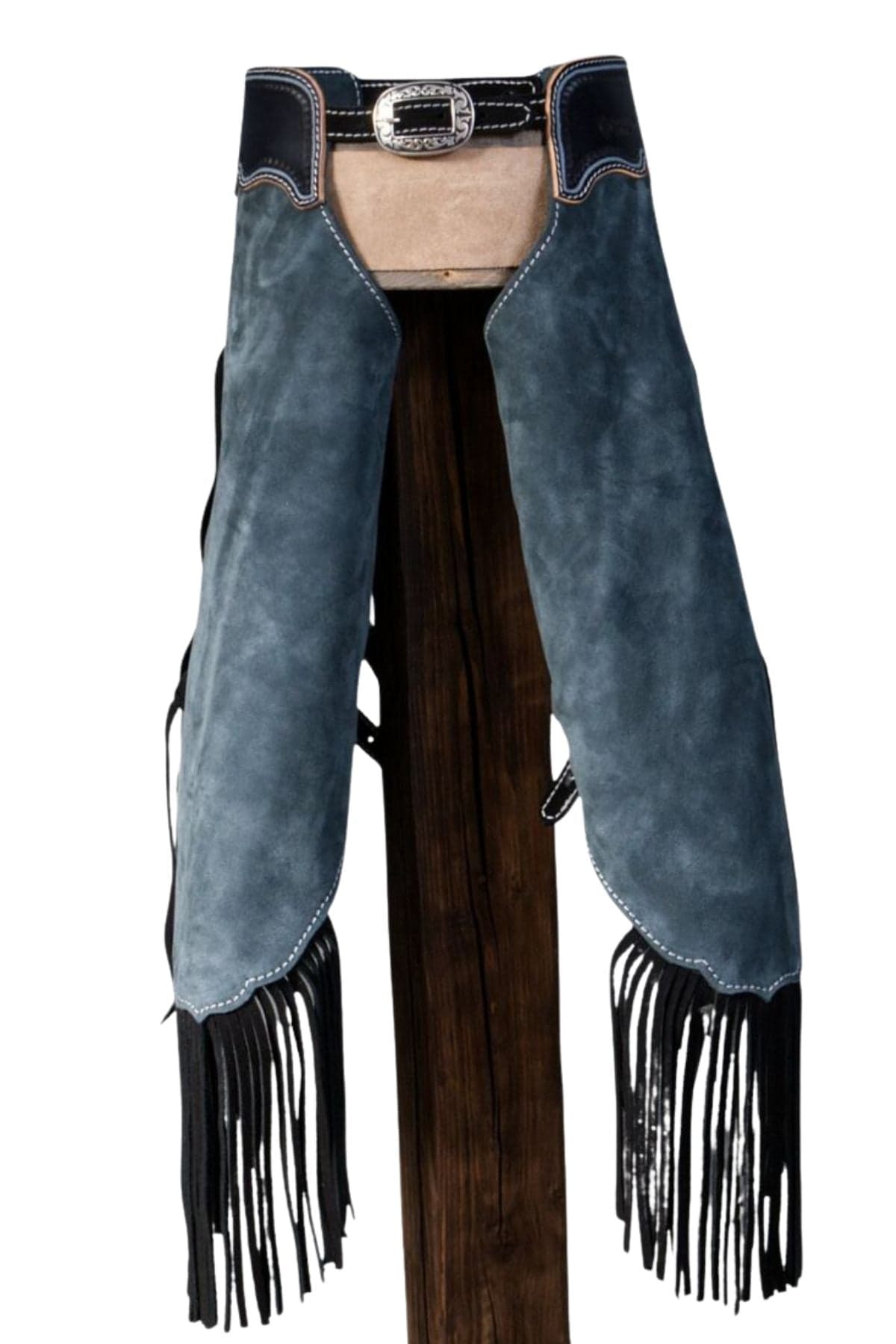
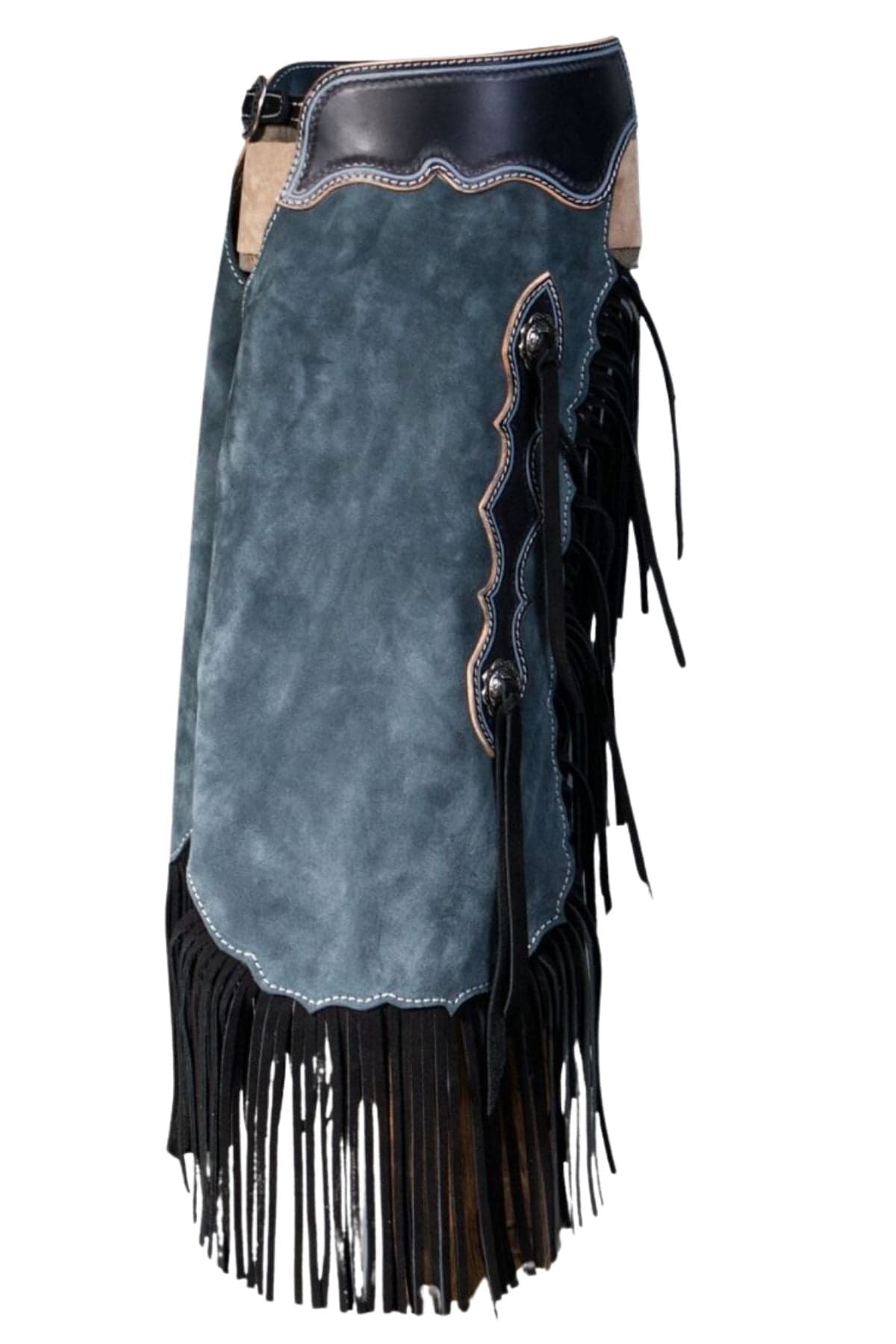
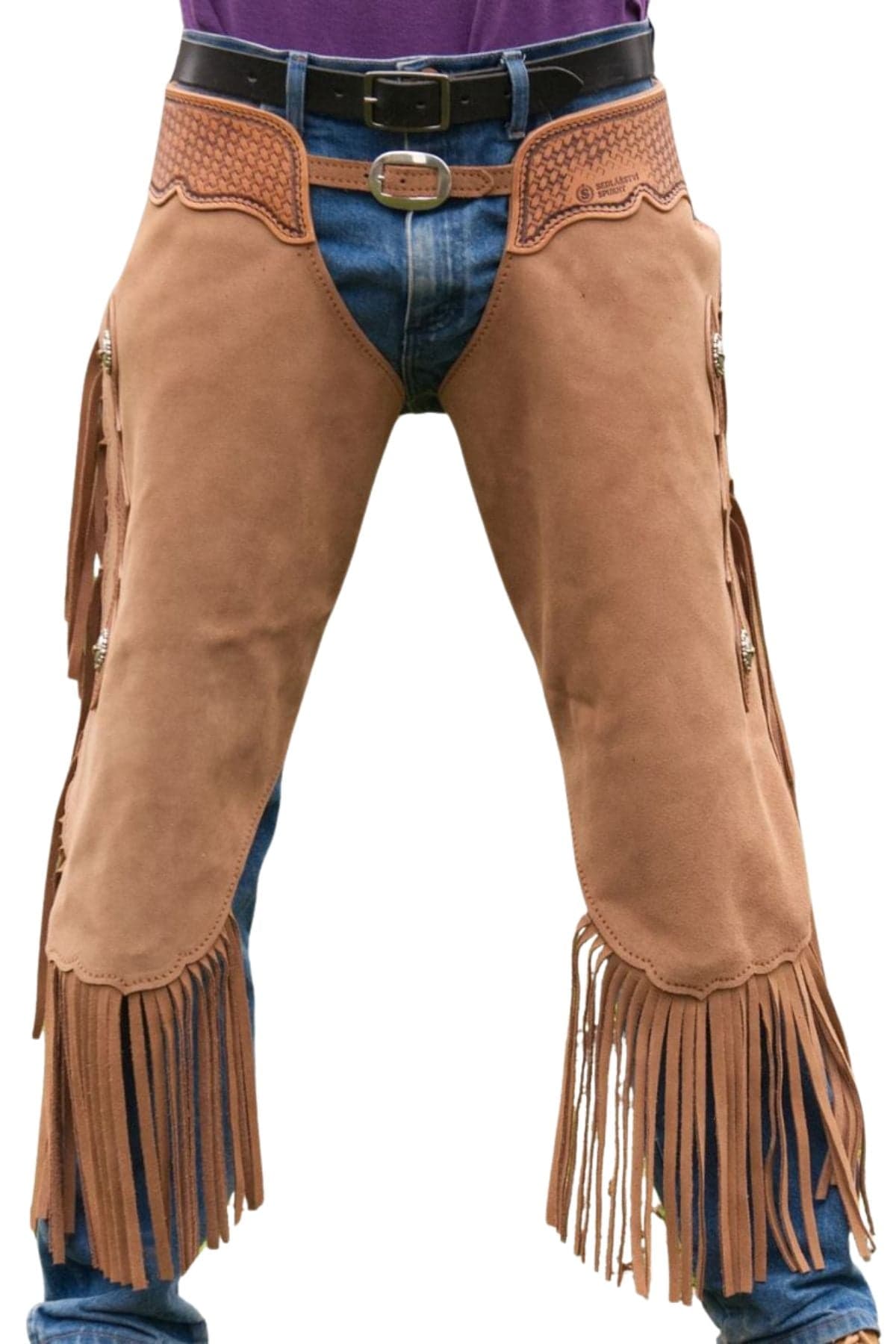
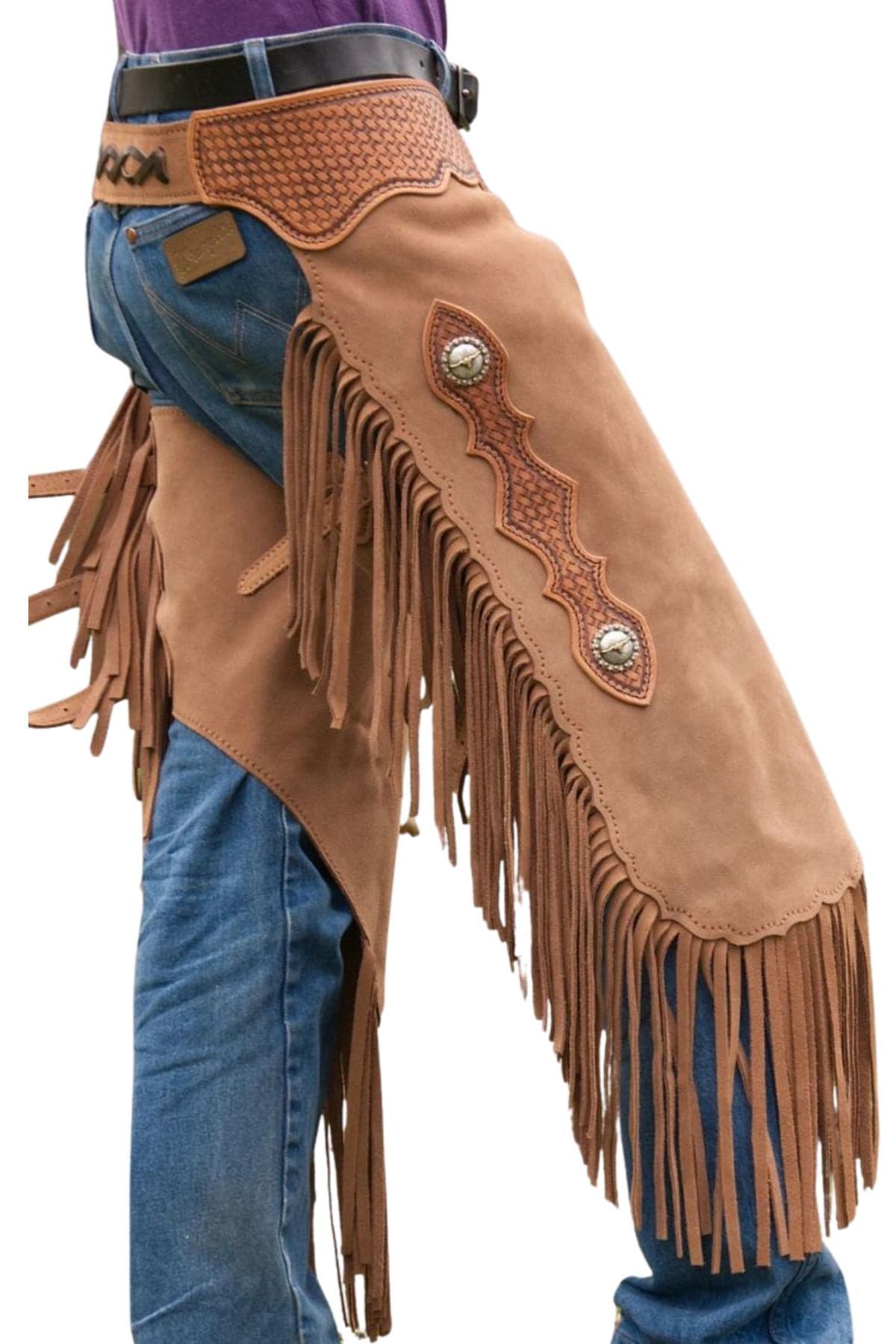
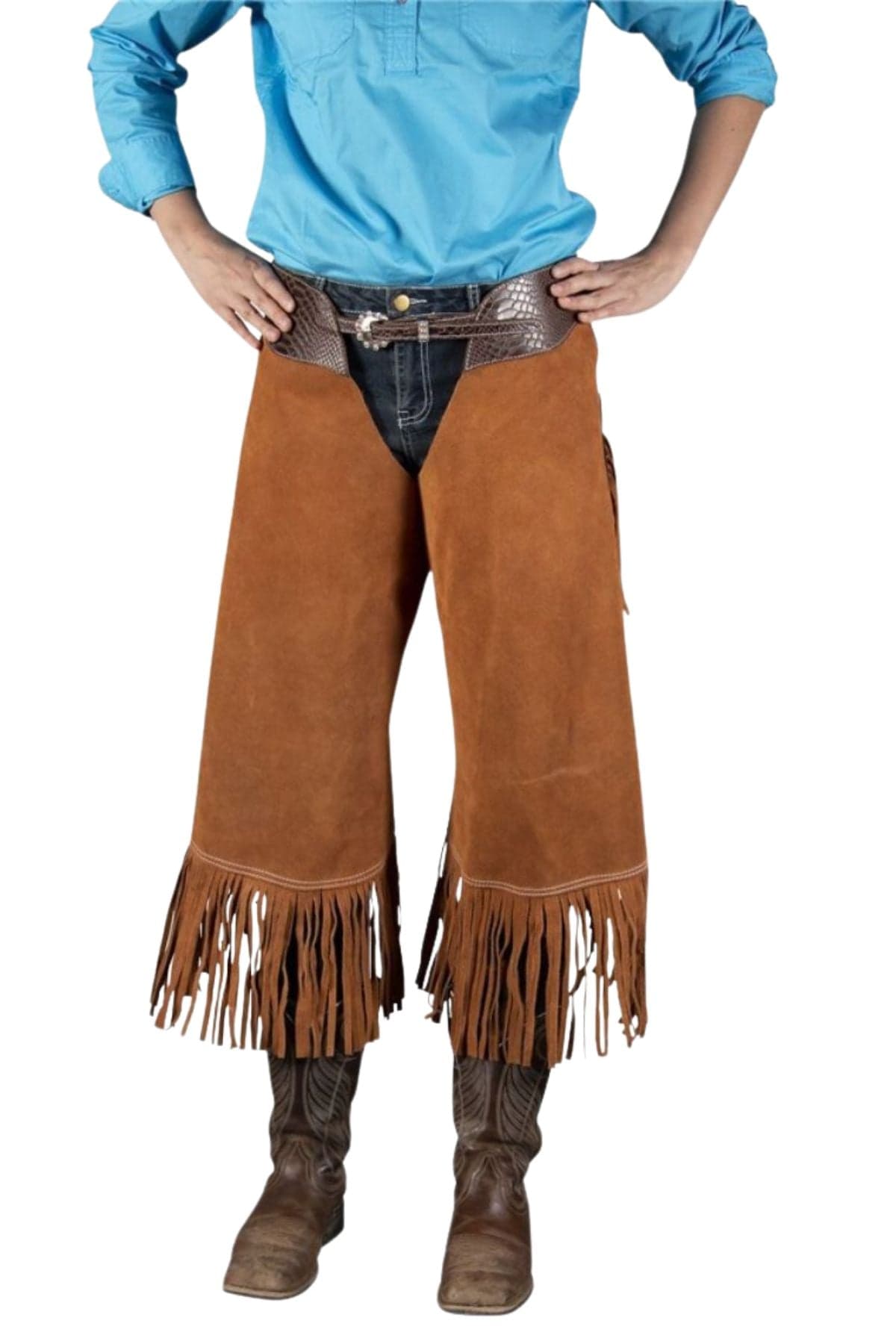
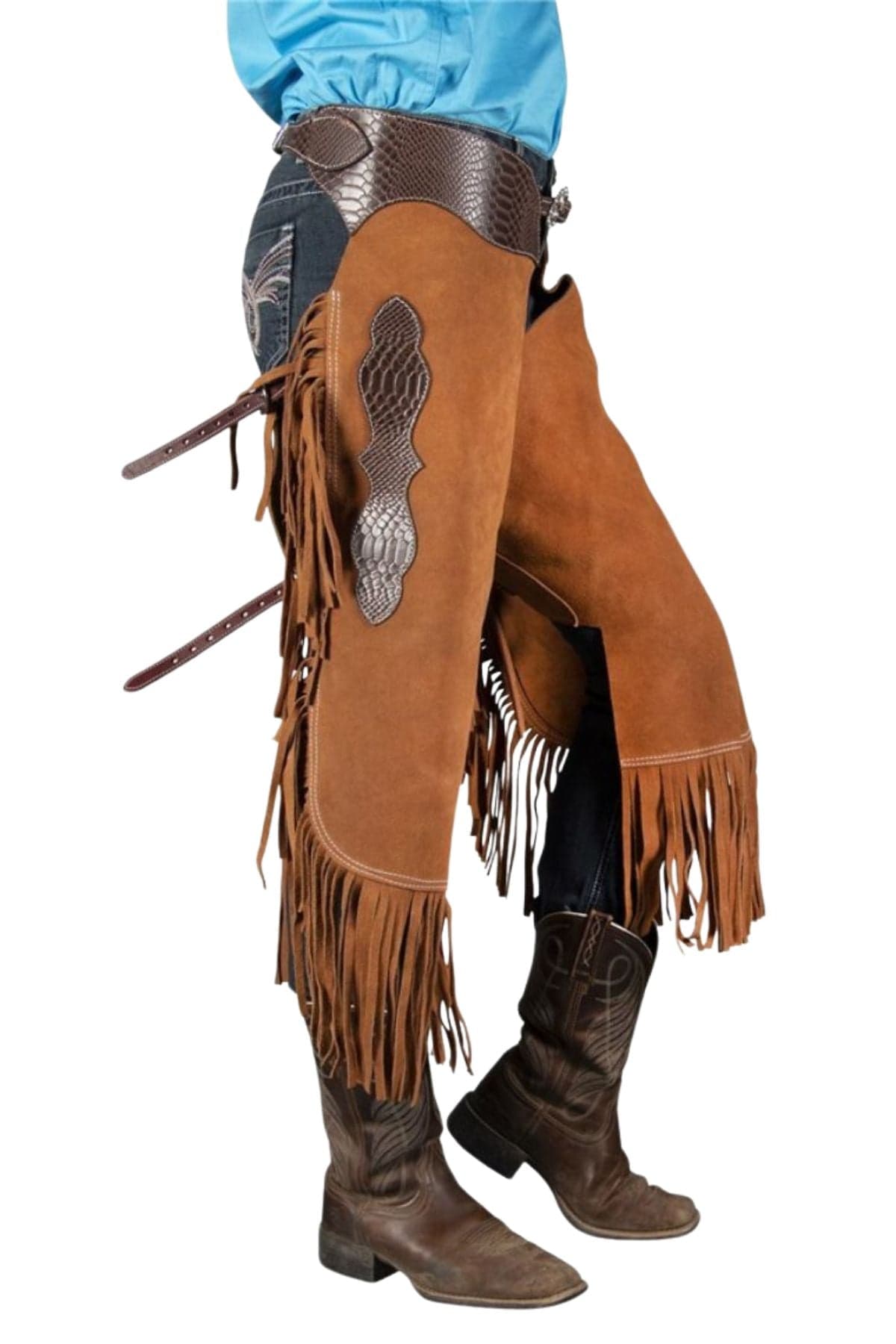
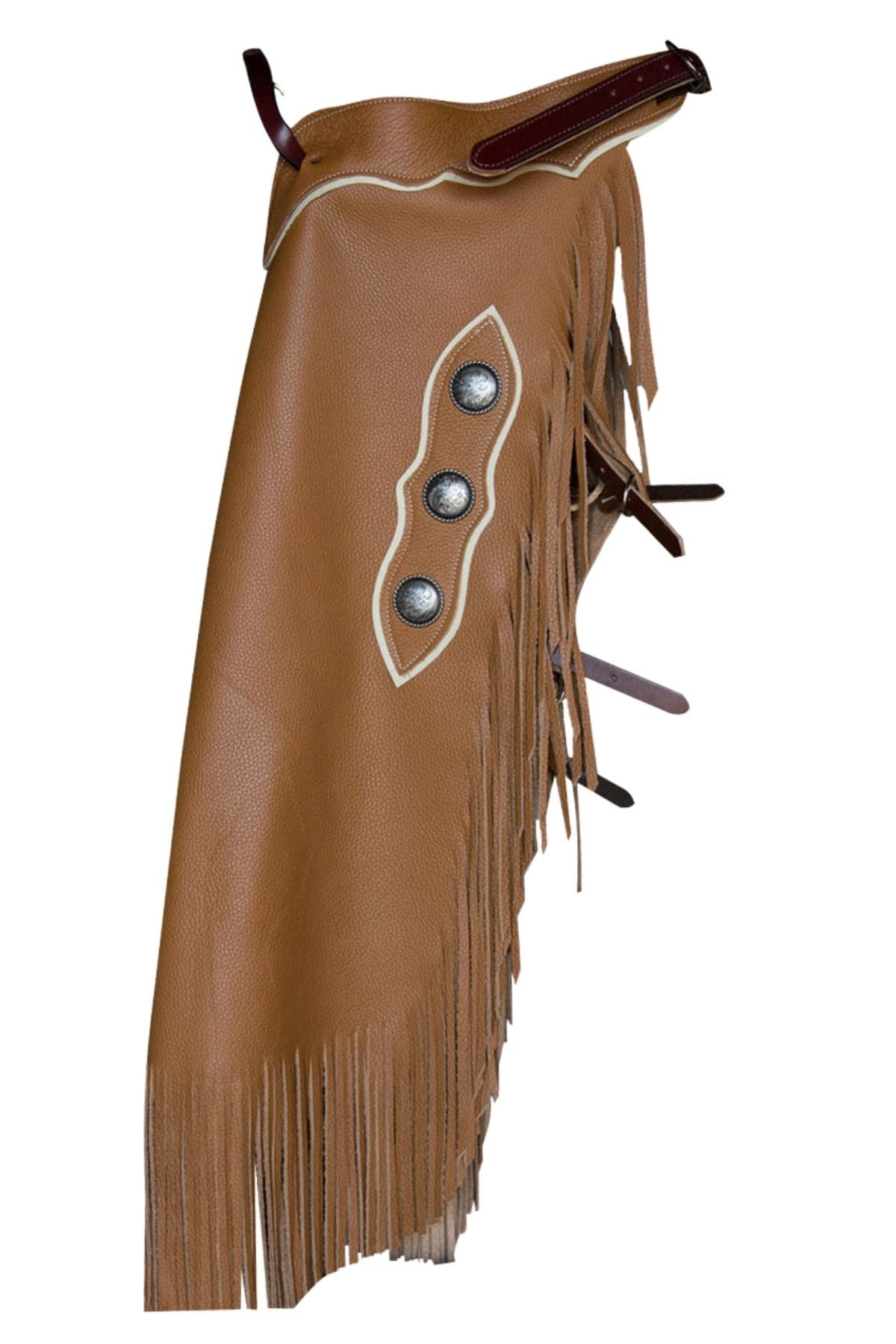
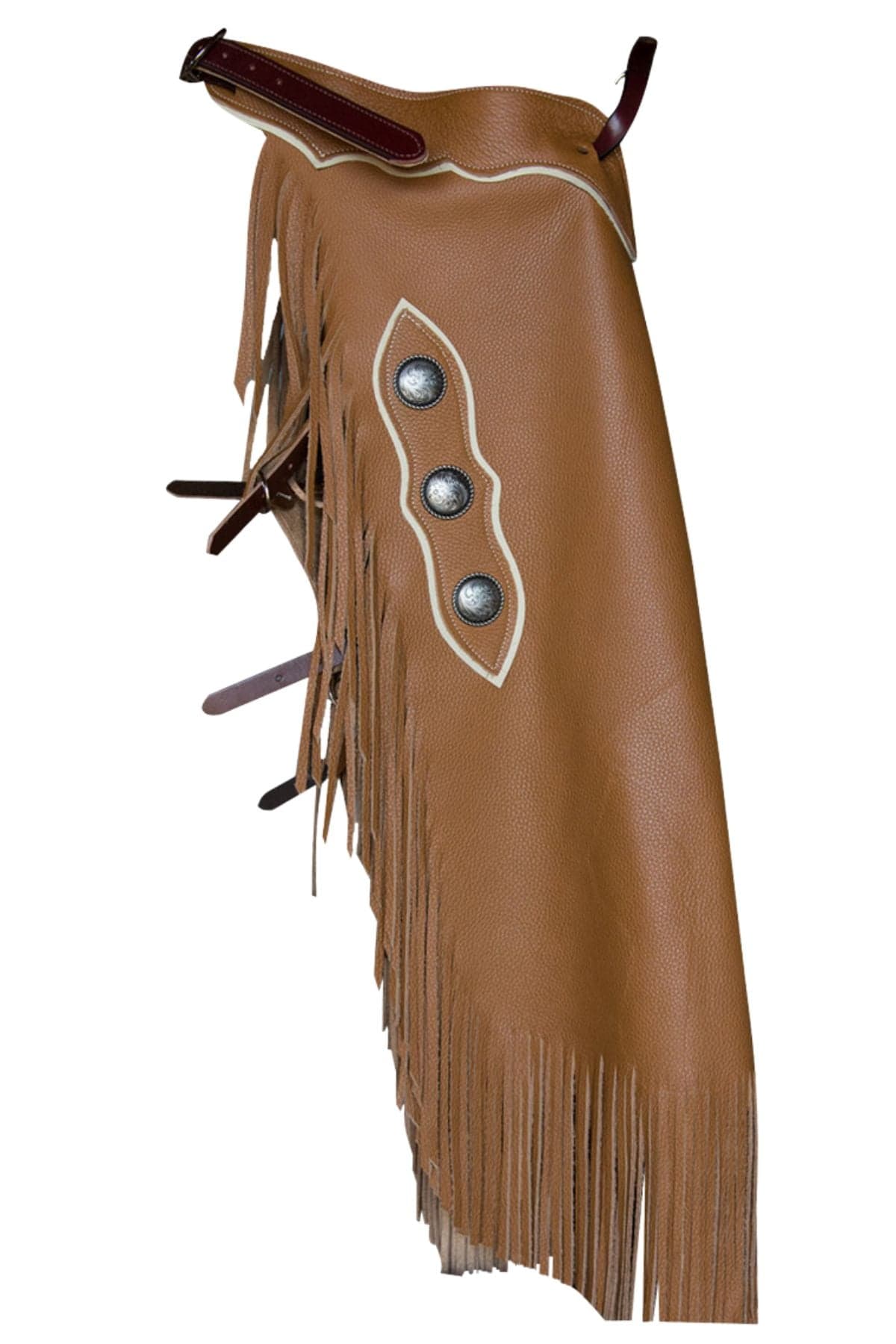
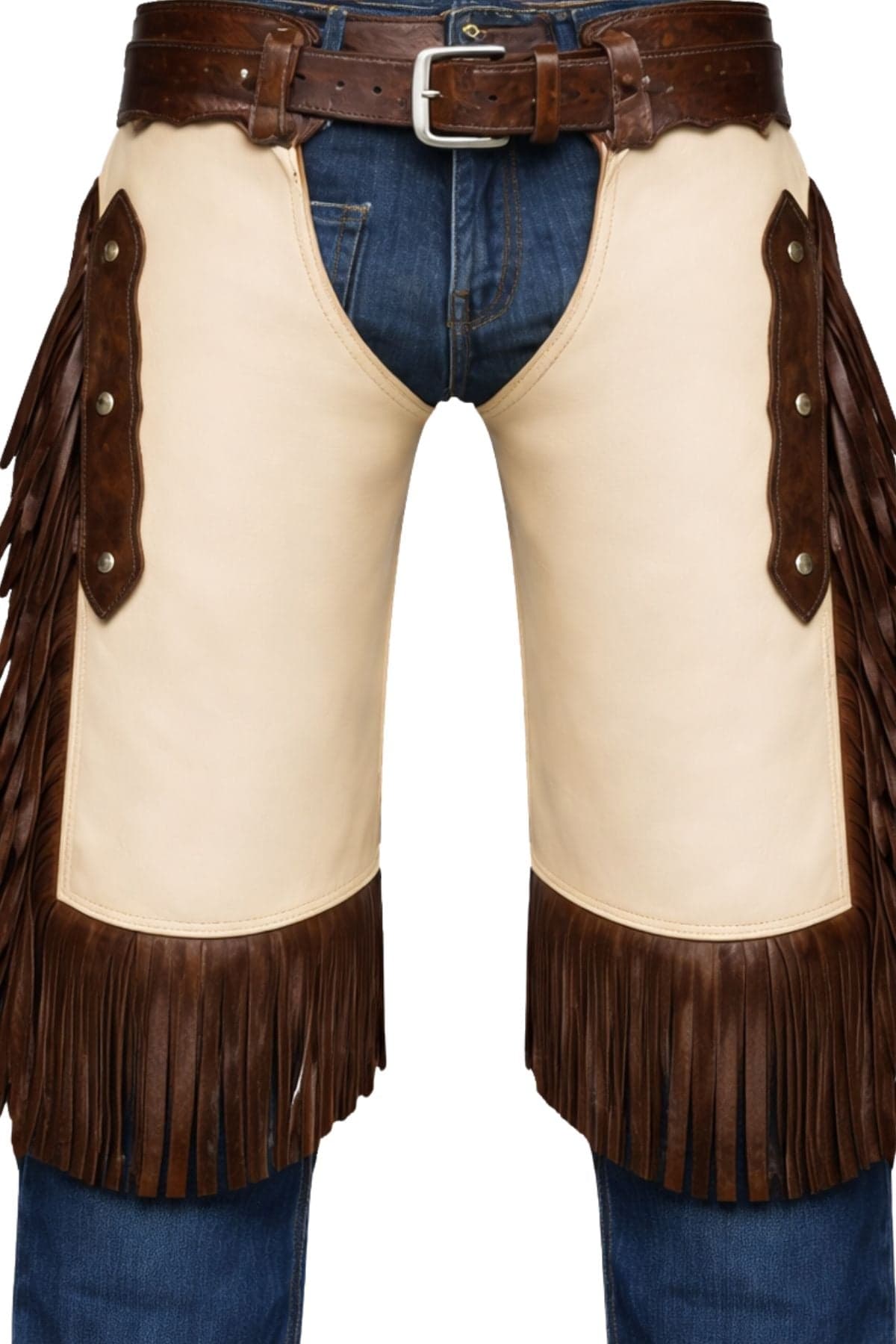
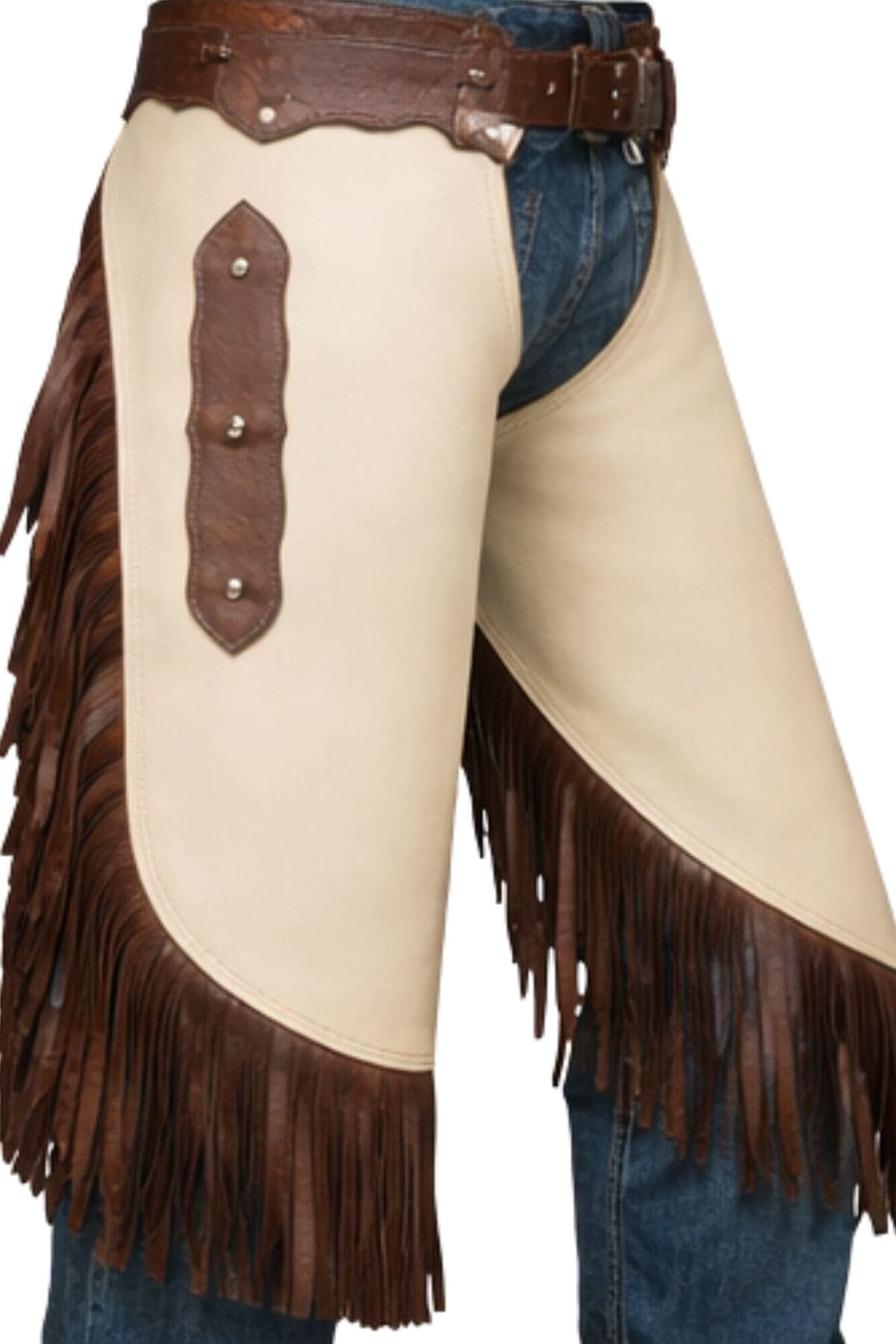
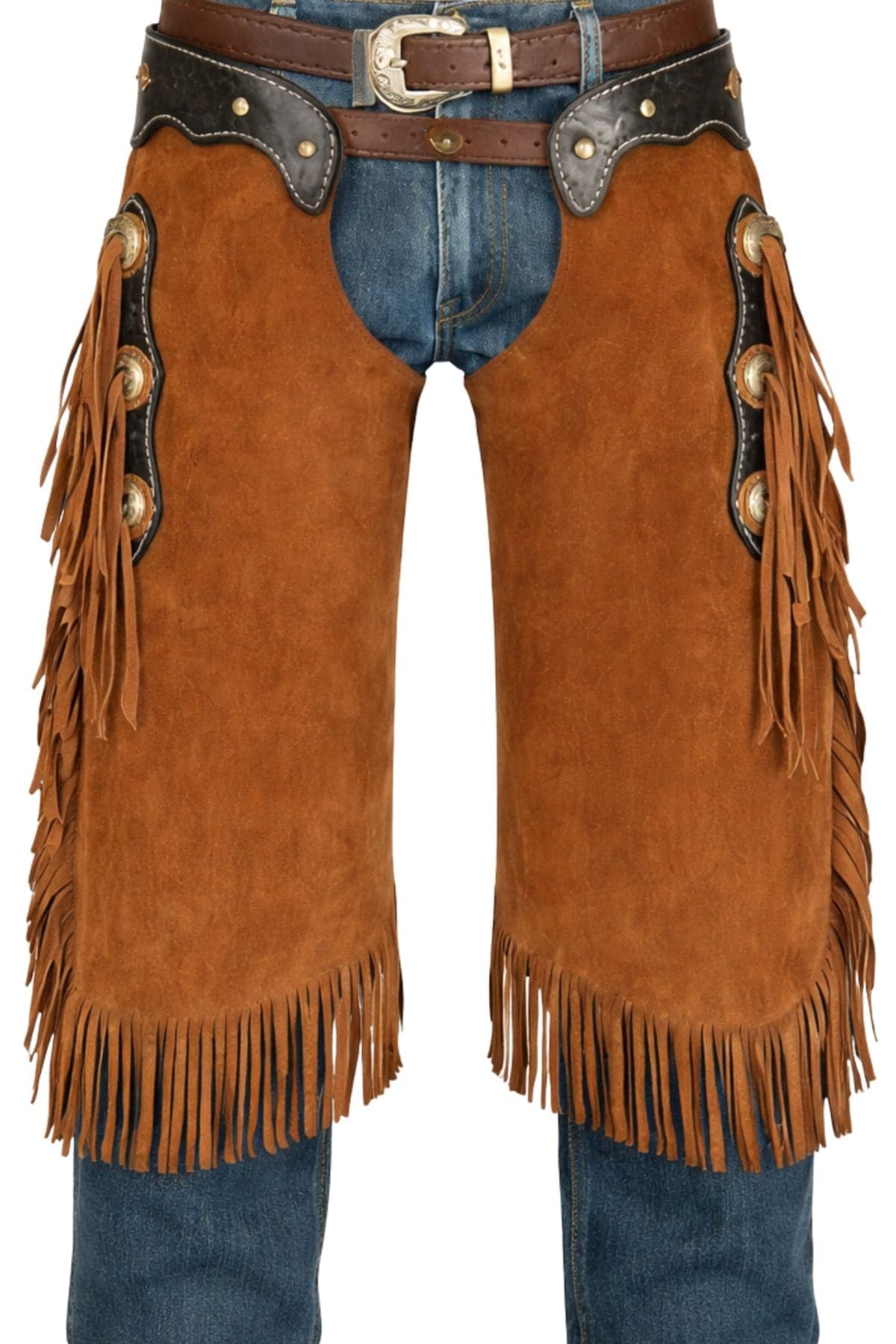
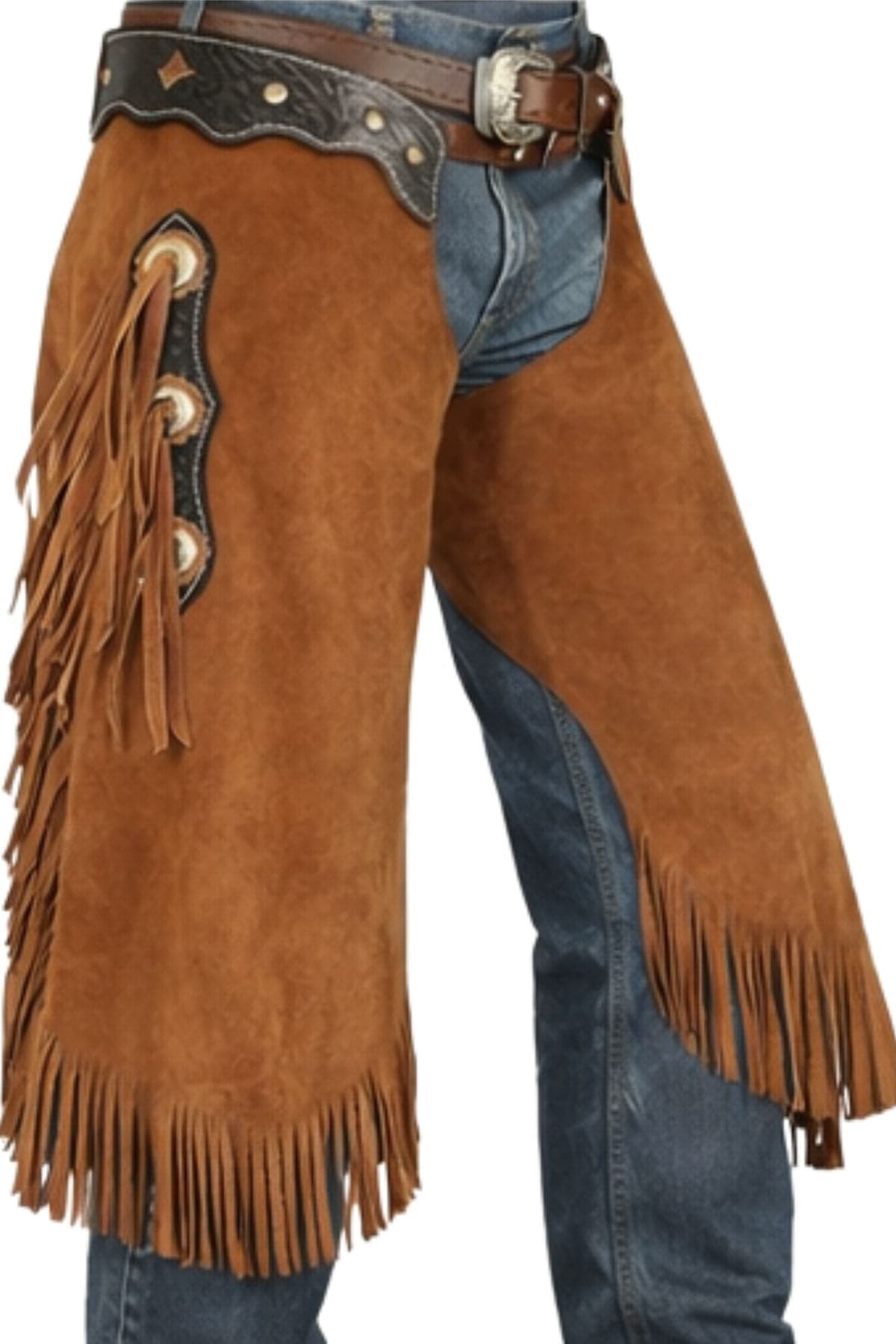
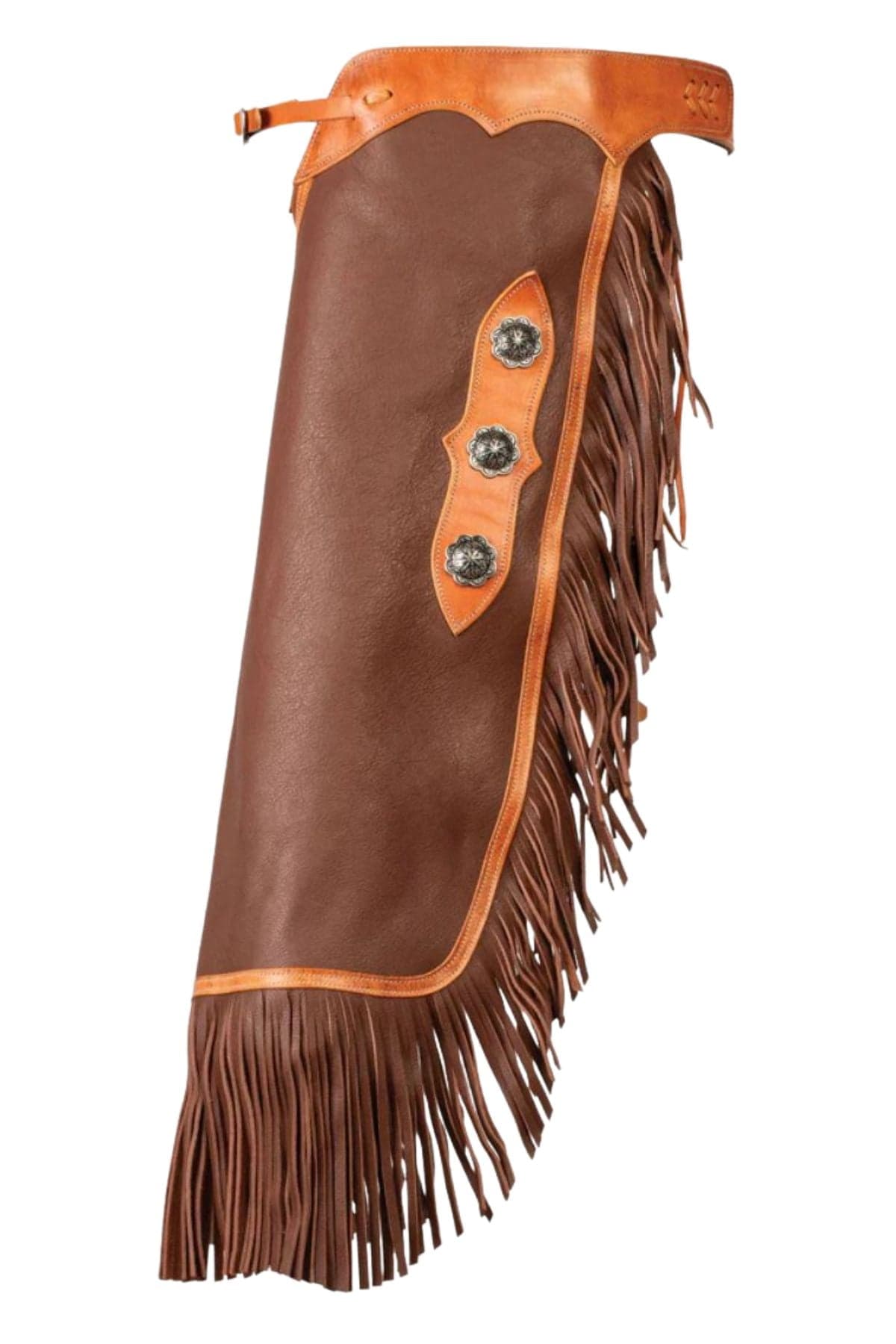
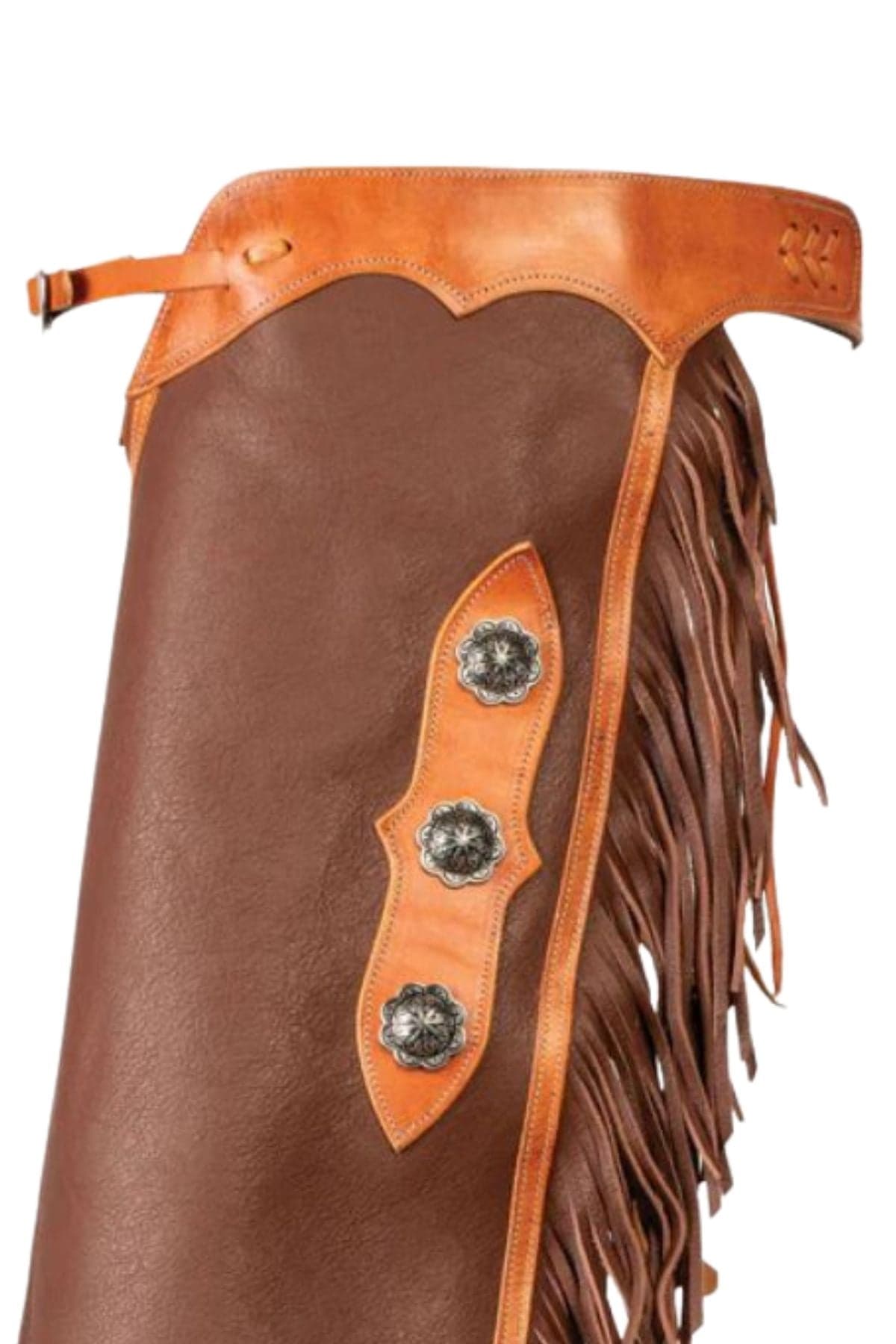
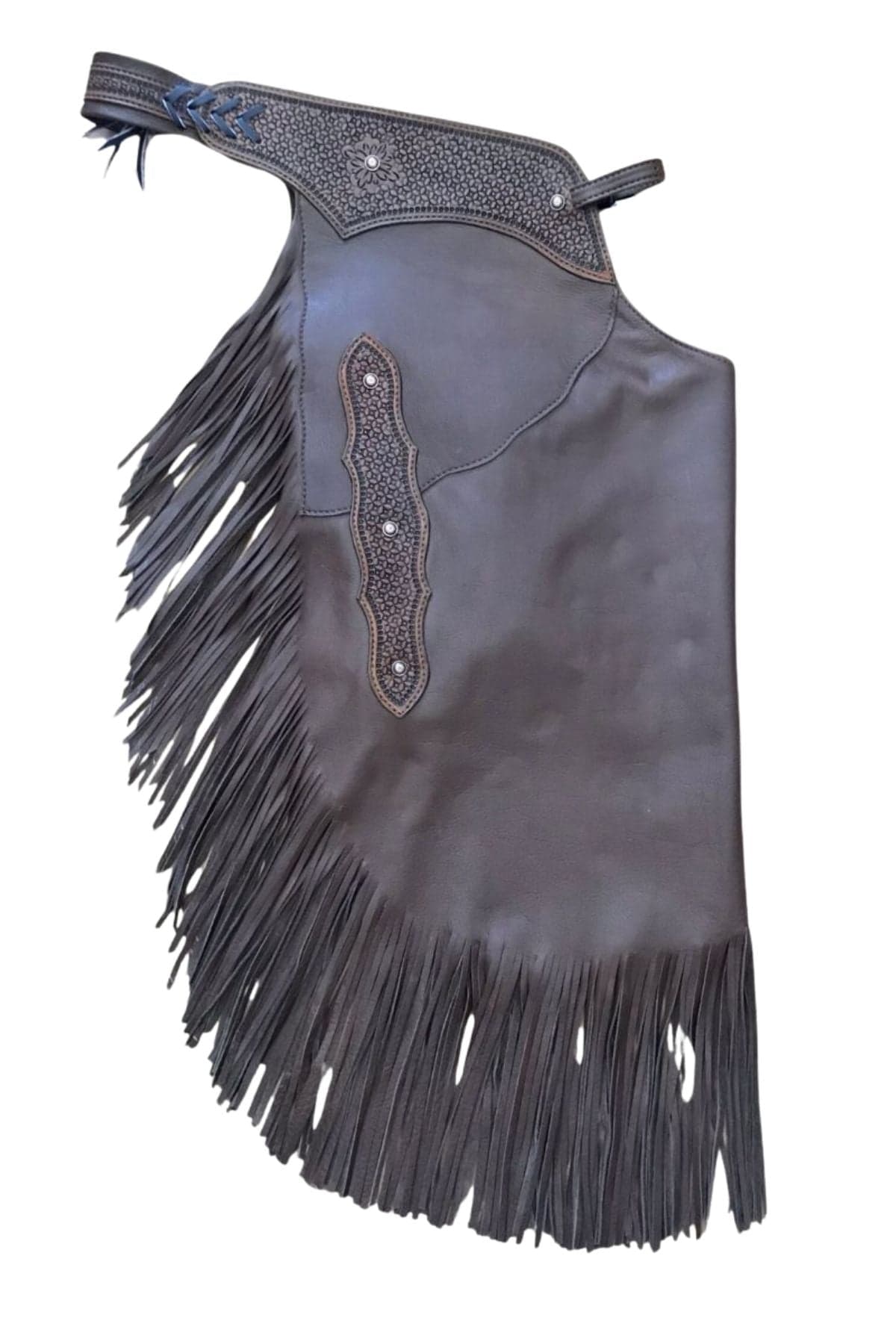
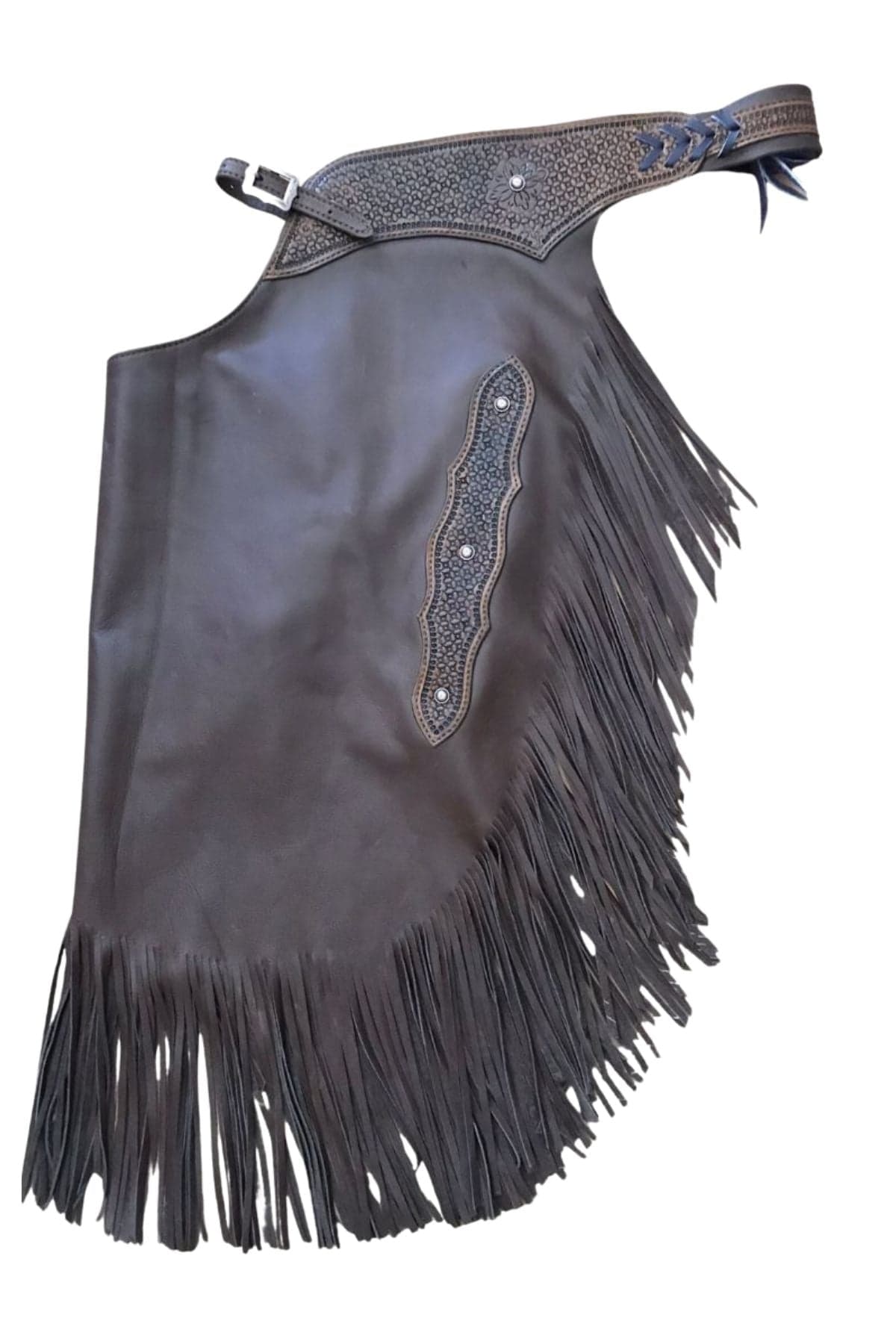
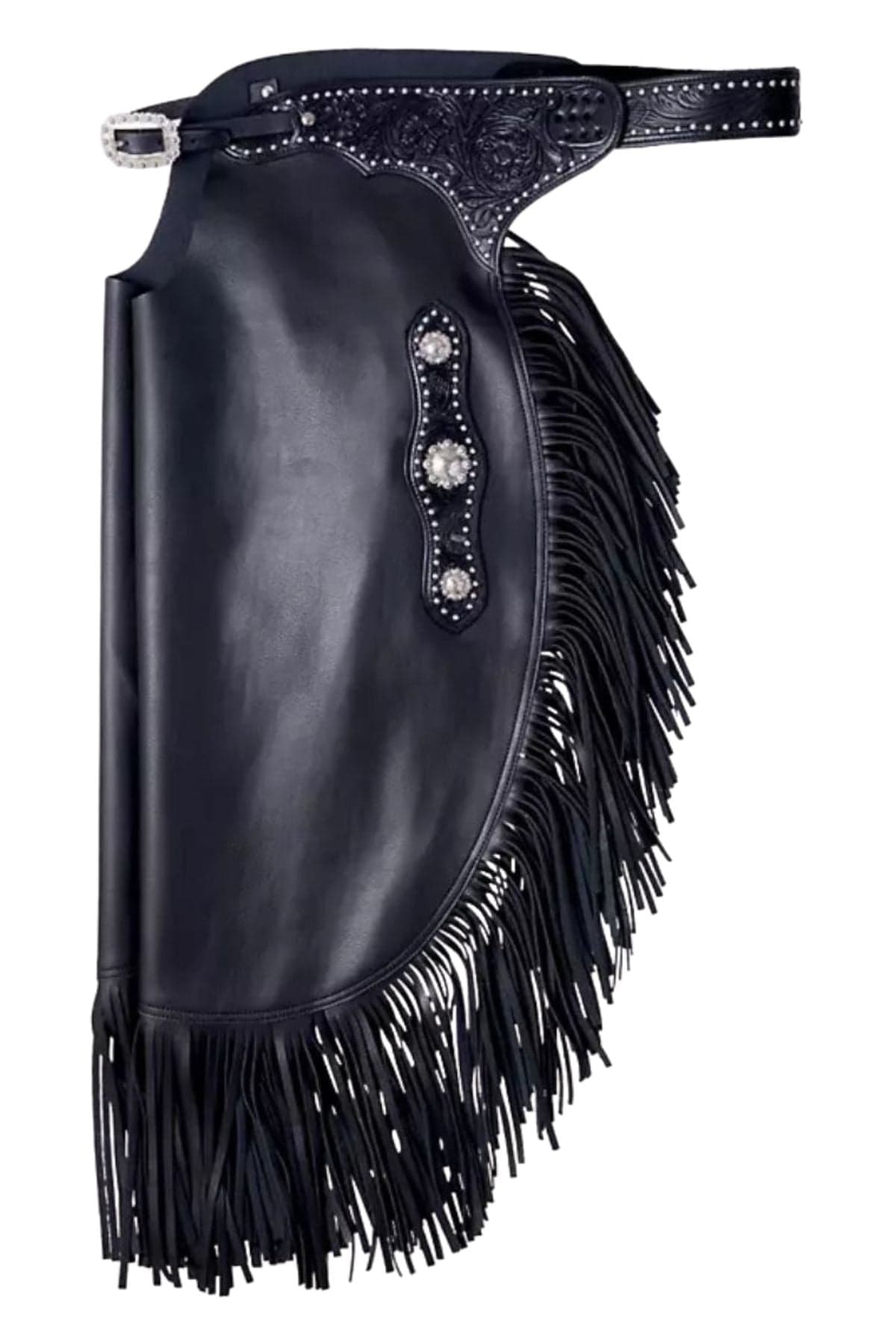
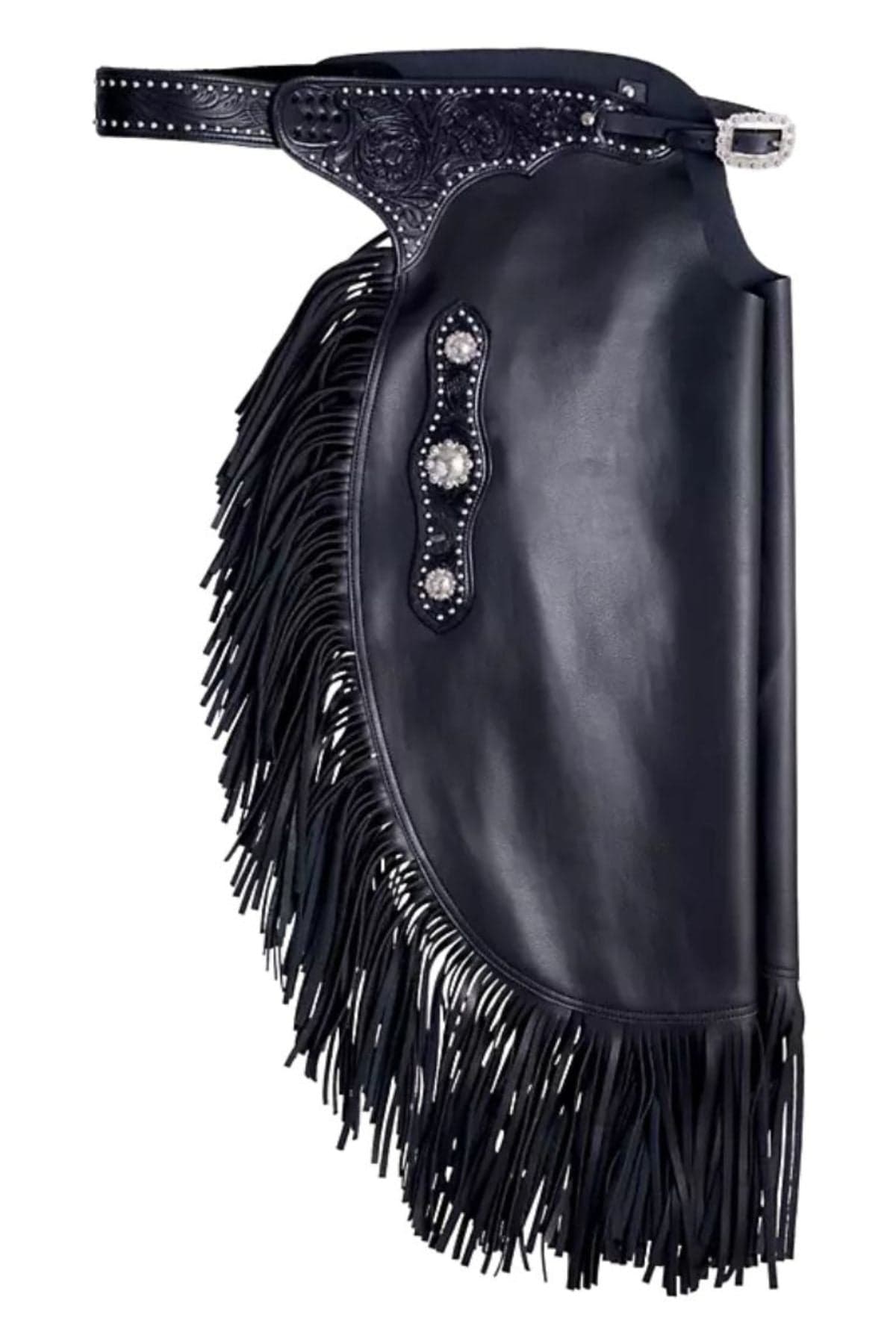
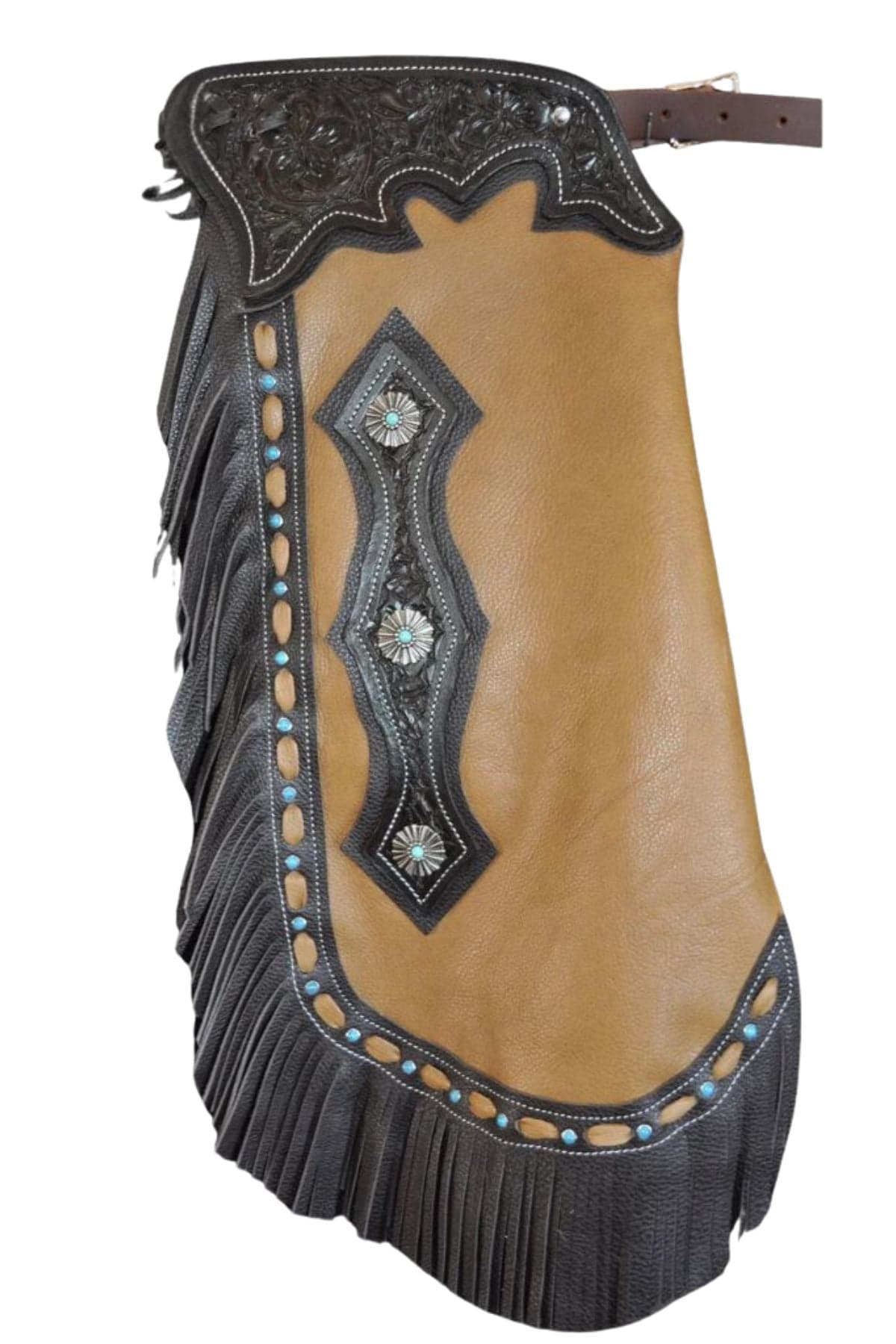
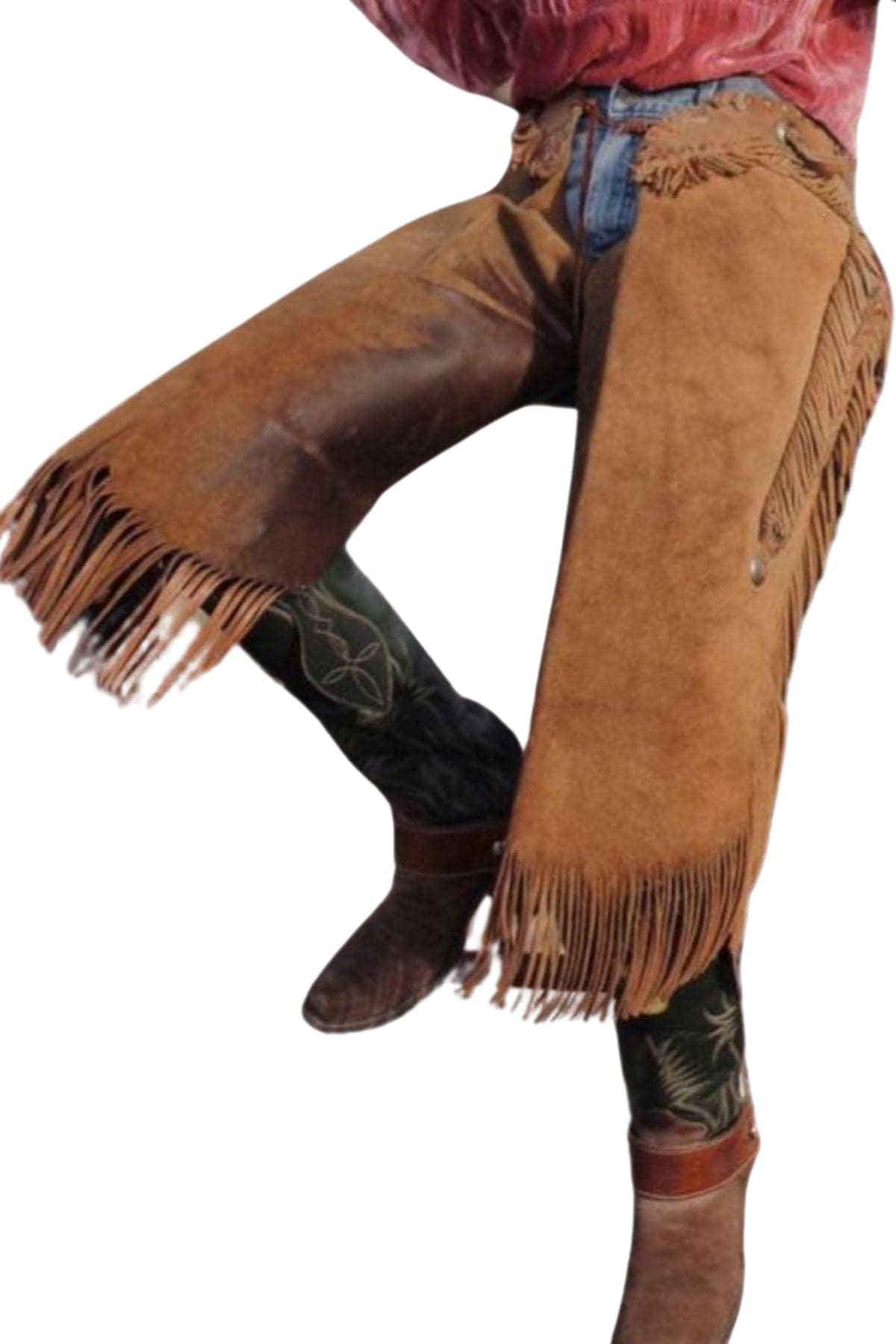
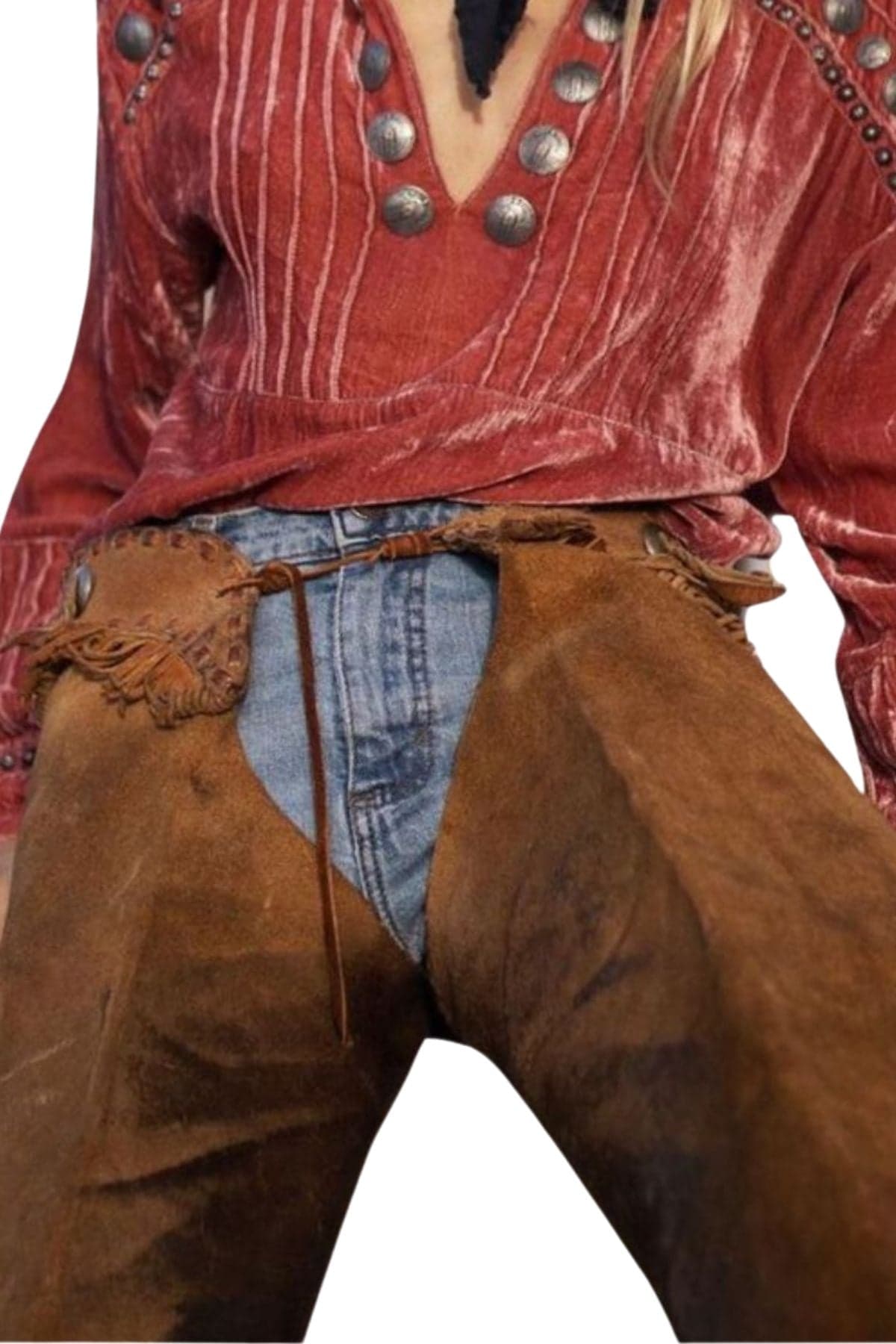
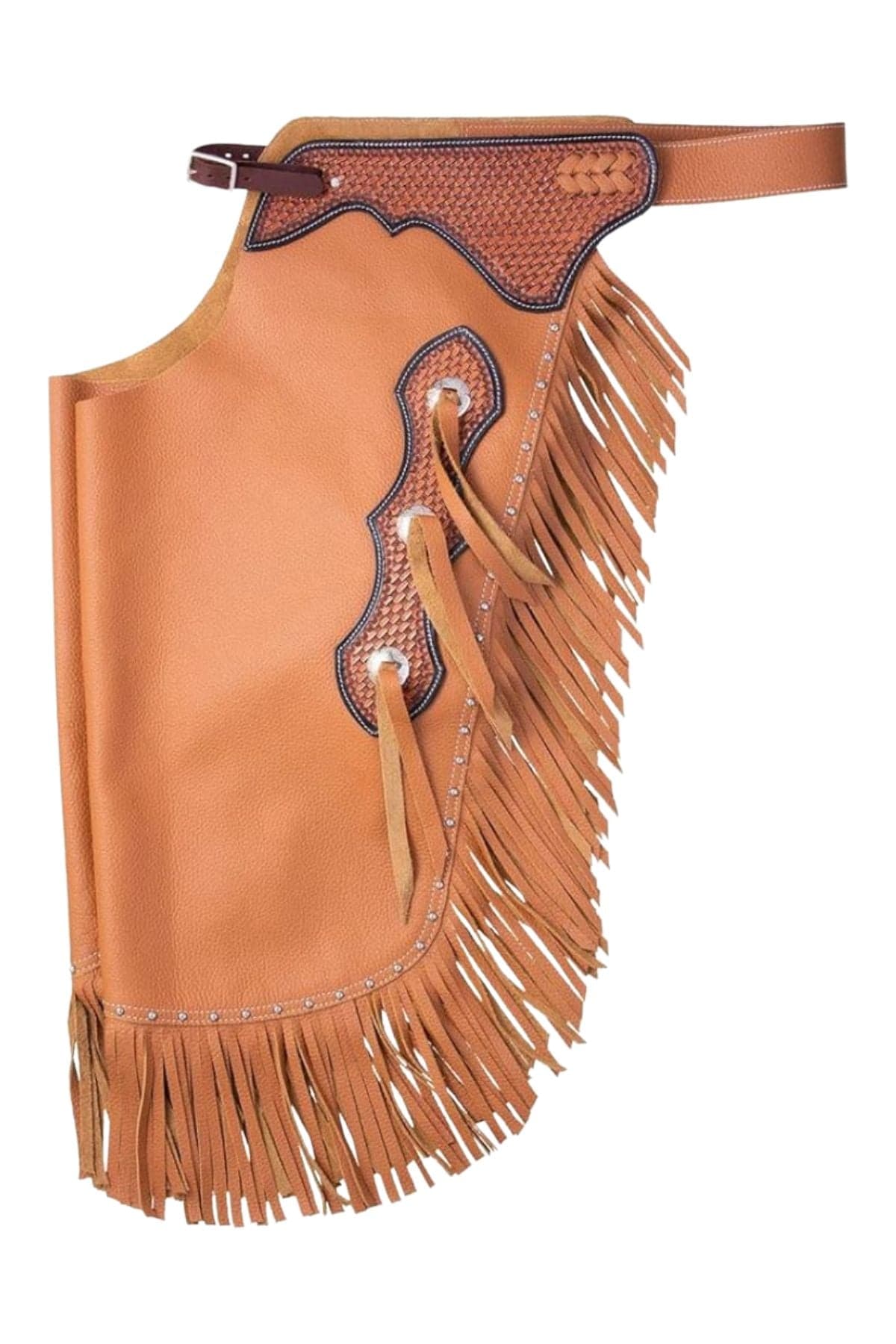
Chinks are the western chap cut short. The leather wraps your thigh and knee, stops a few inches below the knee, and finishes with long fringe that moves with your horse. They're cooler than full-length chaps, easier to walk and work in, and a ranch tradition that's never gone out of style. Chaps Fit chinks come in smooth leather and suede, in black, brown and stone blue, with fringe and western yokes.
What Are Chinks?
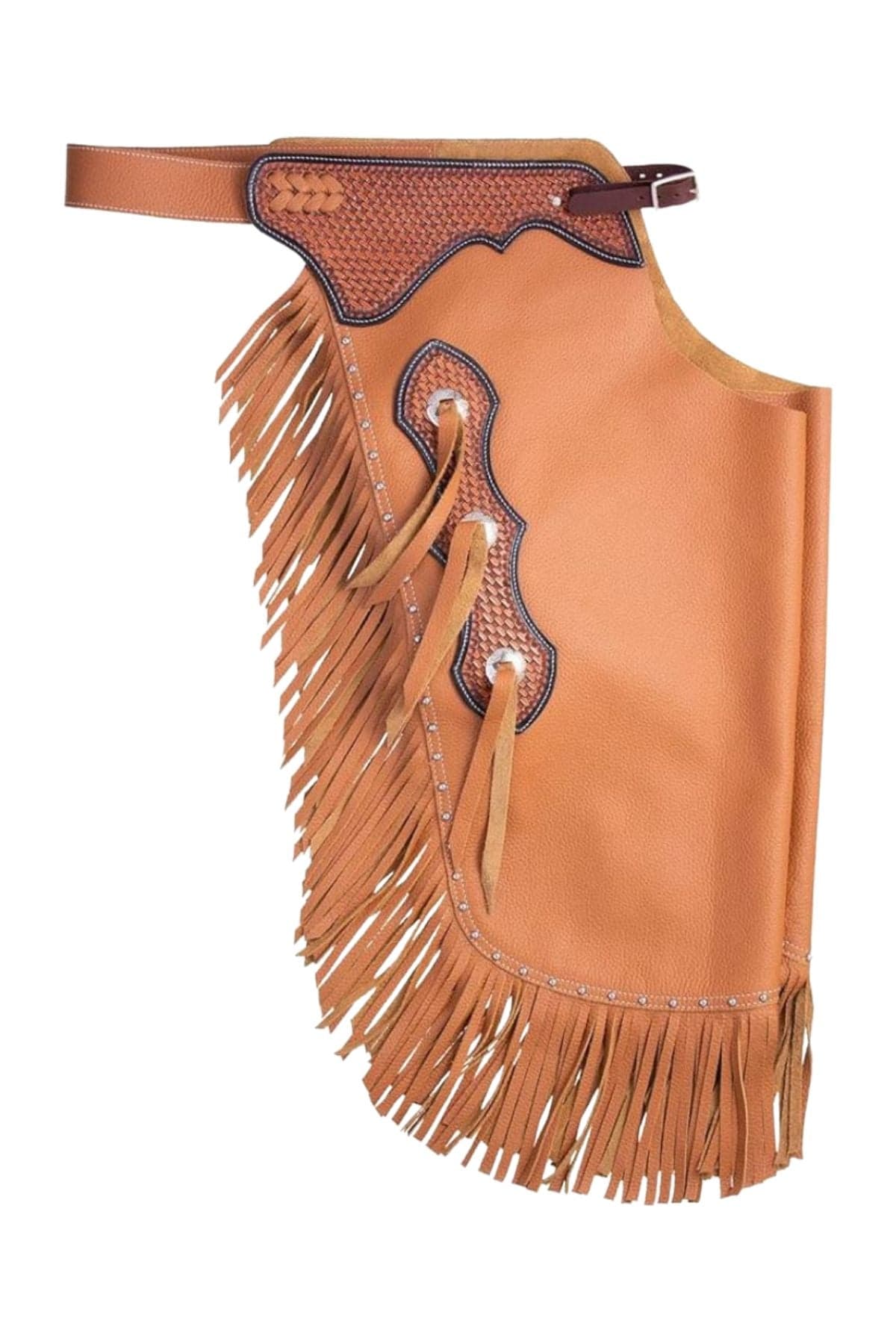
Chinks are short western chaps that:
- end two to four inches below the knee, though long fringe can make them look up to four inches longer
- fasten with two straps, snaps or buckles high on each thigh, instead of a full-length zipper
- leave the lower leg free, so your boots, spurs and calves stay clear
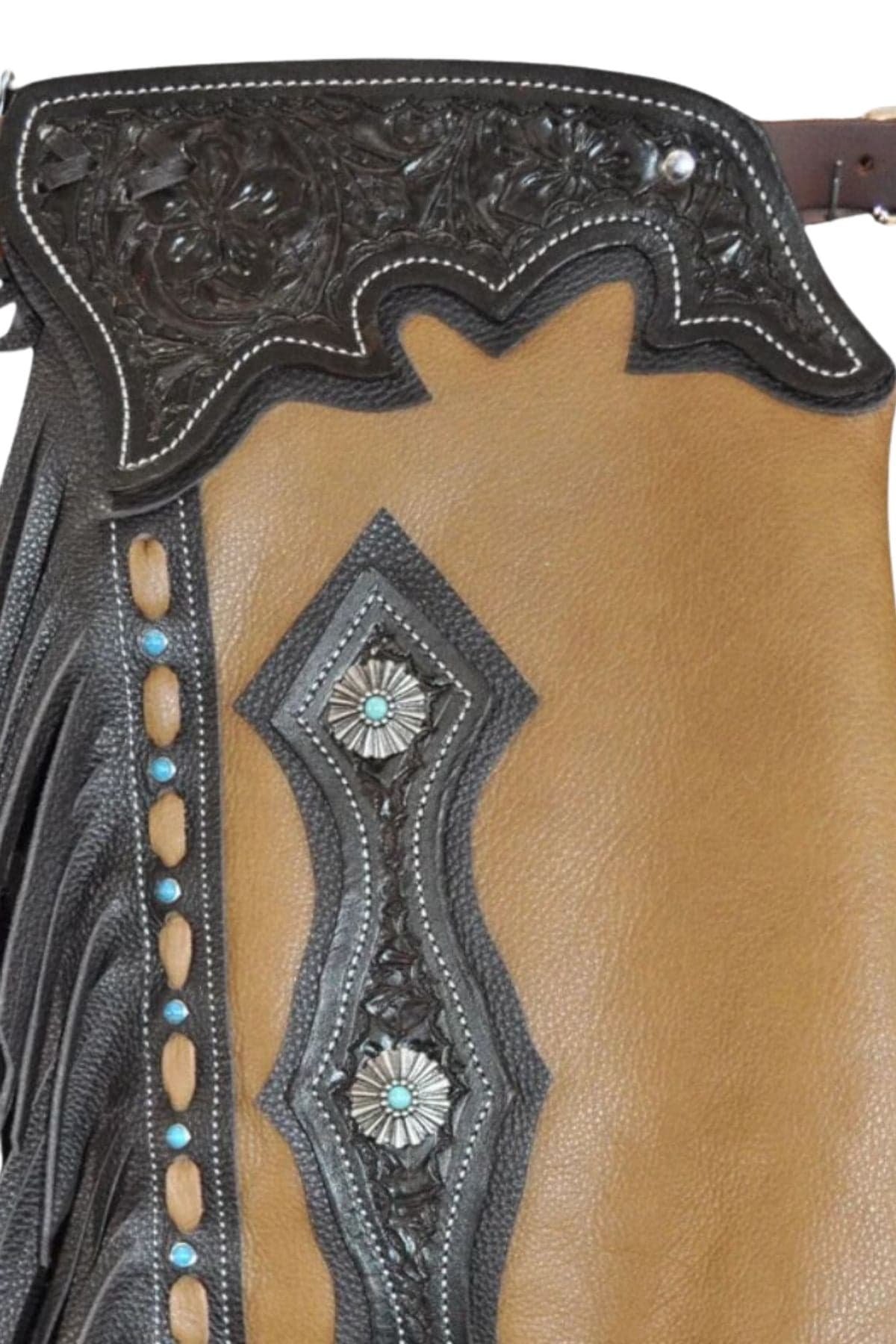
- have a yoke and belt like full-length chaps, often decorated with tooling or conchos
The leg shape falls somewhere between a close-fitting shotgun and a wide batwing: fitted at the thigh, then falling loose around the knee.
Where Chinks Came From
Chinks are thought to come from armitas ("little armor"), the short leather leggings worn by Spanish and Mexican vaqueros. The name itself likely comes from chinkaderos, an old term for those same leggings. Chinks carried on in the buckaroo tradition of the Great Basin and California. Today they're popular with working cowboys, horse trainers and ranch riding competitors across the West.
Chinks vs Full-Length Chaps
| Chinks | Full-length chaps (shotgun or batwing) | |
|---|---|---|
| Length | 2–4" below the knee | To the boot heel |
| Heat | Coolest option | Warmer |
| Walking and ground work | Easy, nothing around your ankles | Bulkier |
| Lower-leg protection | Shins and calves exposed | Full leg covered |
| Best for | Hot climates, horse training, ranch riding, work that mixes riding and ground work | Heavy brush, cold weather, show classes that need full chaps |
If brush or thorns reach below your knee where you ride, choose full-length shotgun or batwing chaps.
Why Riders Choose Chinks
- They stay cool. Less leather and an open lower leg make chinks the coolest chaps for summer and hot country.
- They protect where your leg meets the saddle. Chinks cover your thigh and knee, which rub against the saddle and stirrup leathers and take the brunt of the brush and rope.
- They leave your lower leg free. Nothing gets between your calf and the horse, which helps with fine leg cues, and your boots and spur straps stay clear.
- They're easy to wear off the horse. Walking, kneeling and working on the ground is easy in chinks, so many trainers and ranch hands keep them on all day.
Chinks at Chaps Fit
- Suede chinks: the soft nap grips the saddle and hides scuffs. See the Rugged Brown Suede Chinks Chaps, the Stone Blue Suede Western Chinks with Black Fringe and the Cowboy Suede Leather Chinks.
- Cowhide chinks: tough and traditional. See the Western Chinks Chaps in Cowhide Leather, the Handmade Western Cowhide Leather Chinks and the Western Cowhide Chinks with Fringe.
- Smooth and lighter leathers: the Black Smooth Sheep Leather Chinks are softer and lighter than cowhide, good for a smart black look. See also the Black Western Leather Chinks.
- Classic fringed styles: the Classic Western Chinks with Fringe, the Western Chinks Chaps and the Ranch Rider Brown Leather Western Chaps.
- For women: the Tomachi Brown Western Cowgirl Chaps are made from suede. See also women's leather chaps.
How Chinks Should Fit
- Waist: the belt sits snugly on your hips over your jeans.
- Thigh: the straps close comfortably around the upper thigh, secure but not tight. You should be able to sit, mount and kneel without them pulling.
- Length: the leather ends 2–4 inches below your knee, measured while you're standing. The fringe hangs below that.
- When mounted: the leather should cover your knee when it's bent in the stirrup.
To measure, record your hips at the belt line and your upper thigh, both over your jeans, plus the distance from your belt line to 2–4 inches below your knee. Chinks here run from XXS to XXL. For larger sizes, or a specific length or fringe, see custom chaps.
Caring for Chinks
- Suede: brush it after each use, let mud dry before brushing it out, and use a suede cleaner on stains. Don't use saddle soap or oil on suede.
- Smooth leather: wipe it with a damp cloth and condition it when it feels dry.
- Fringe: shake it out and comb it with your fingers. If a strand tears, trim it neatly rather than pulling it.
- Storage: hang chinks by the belt so the fringe falls straight.