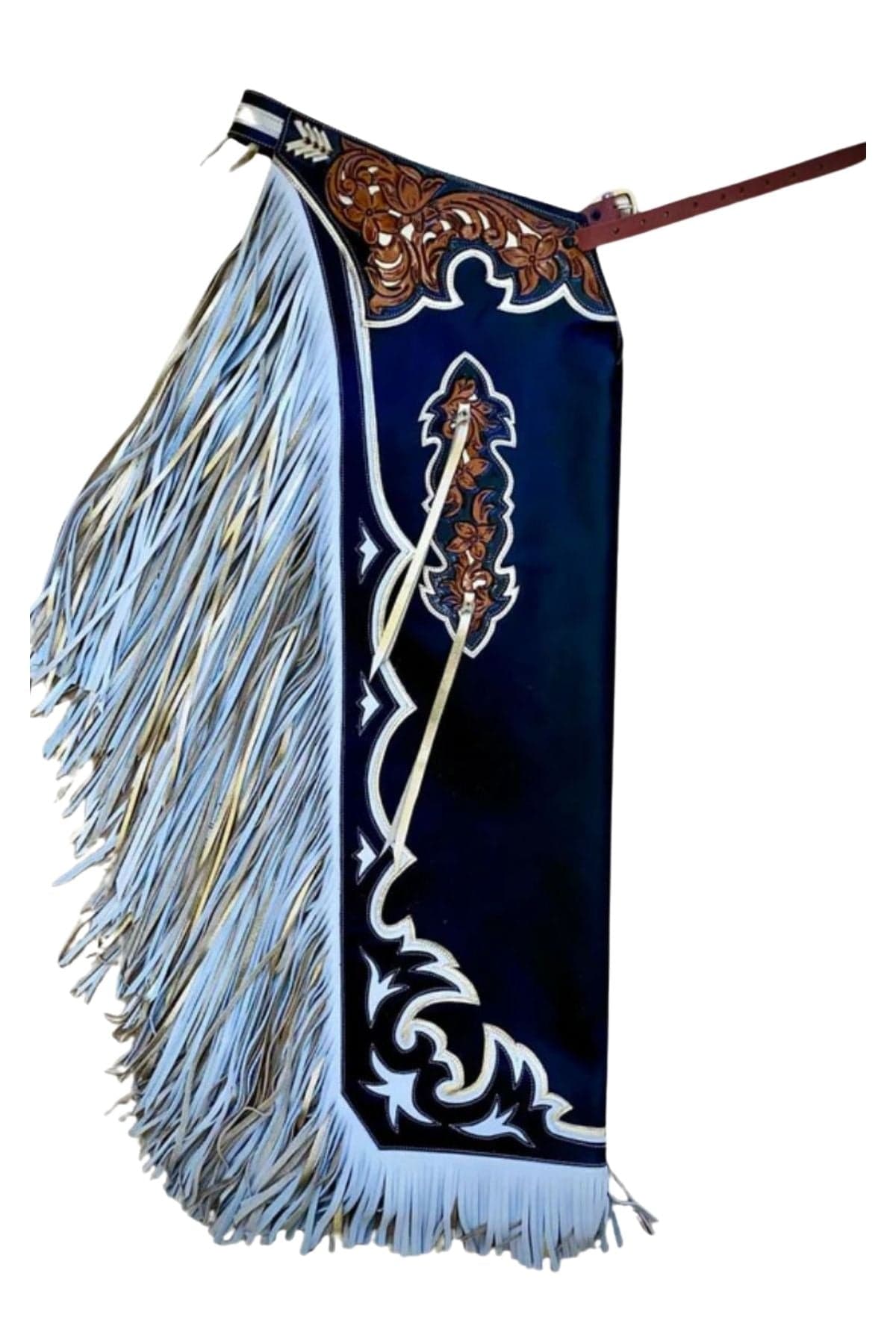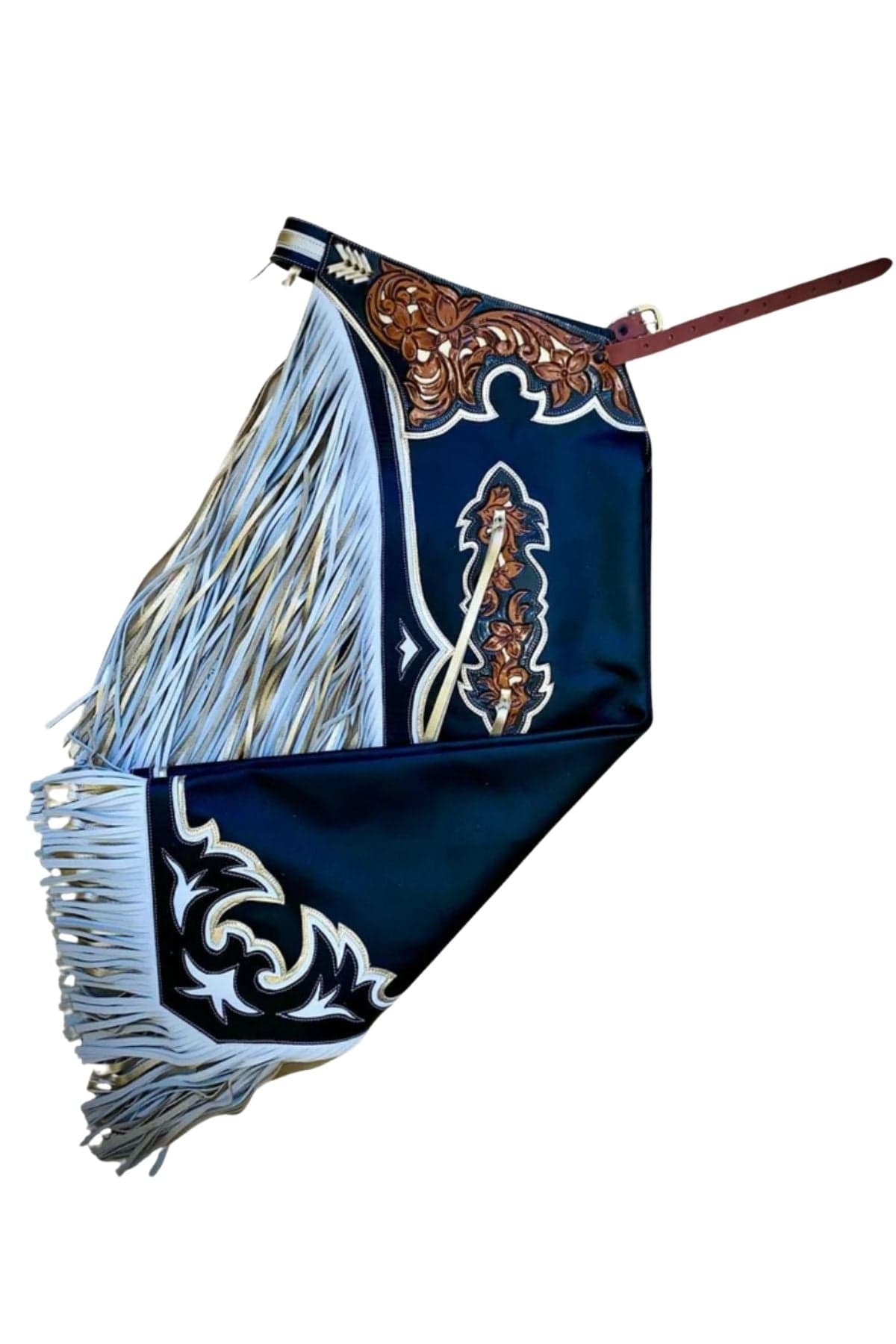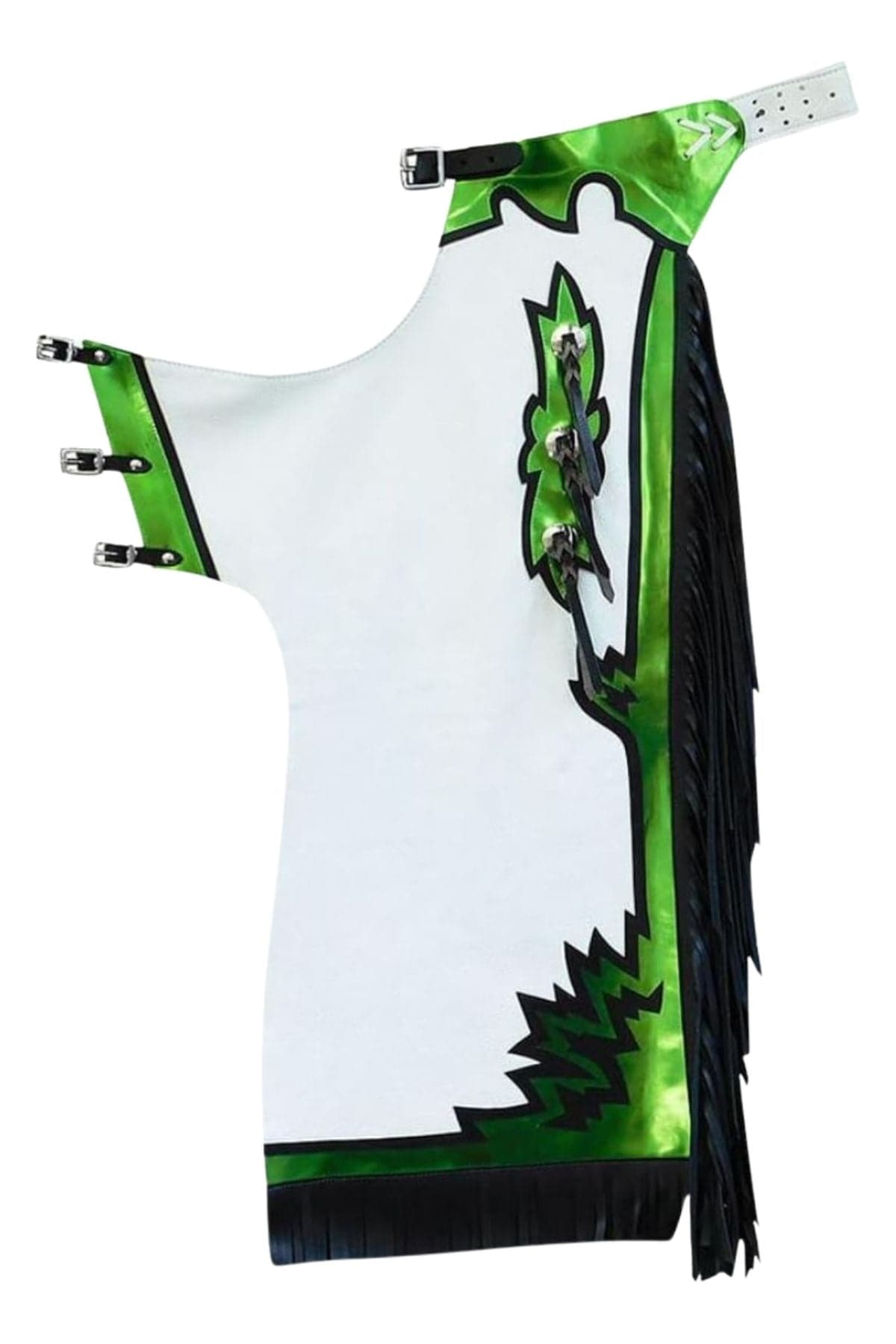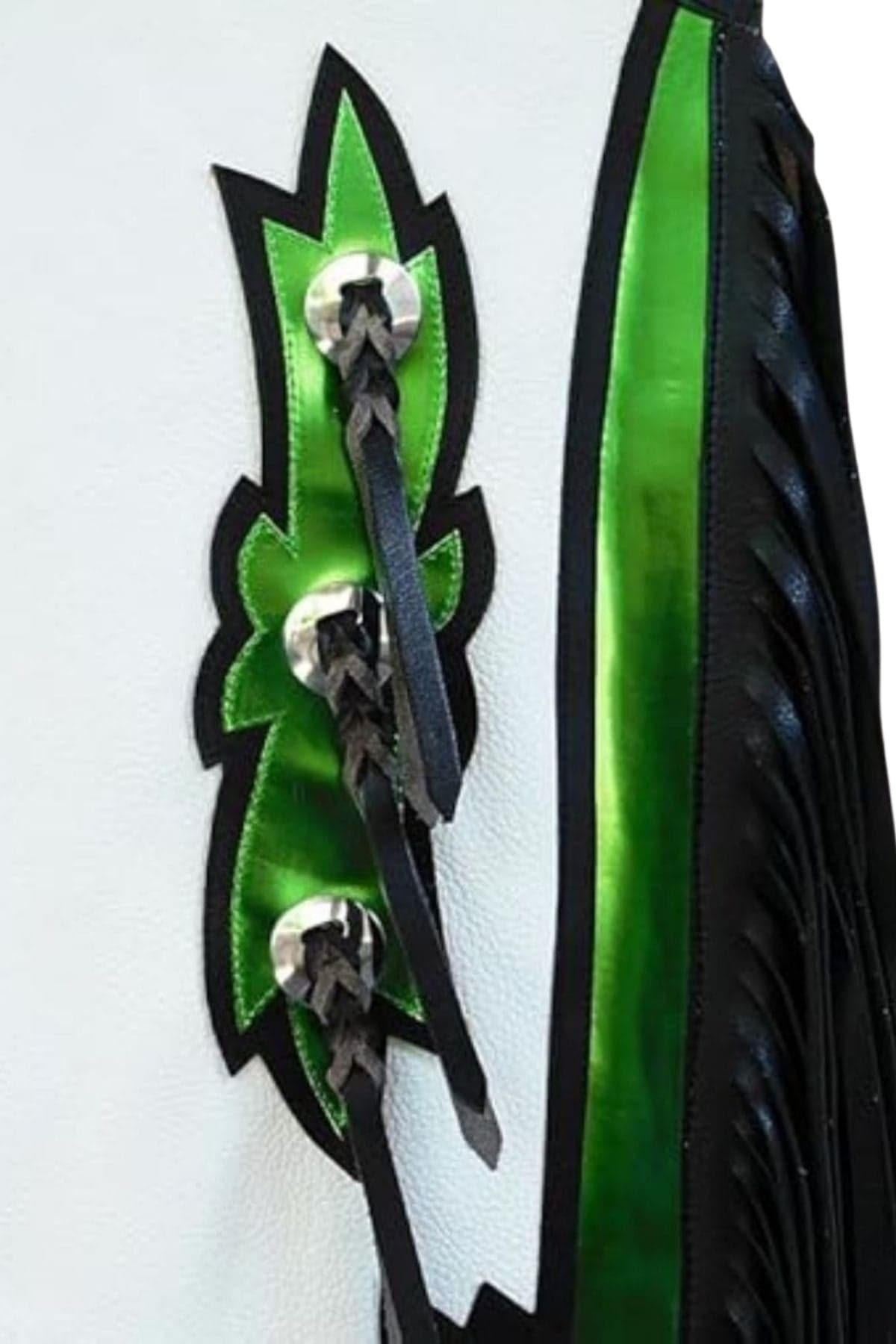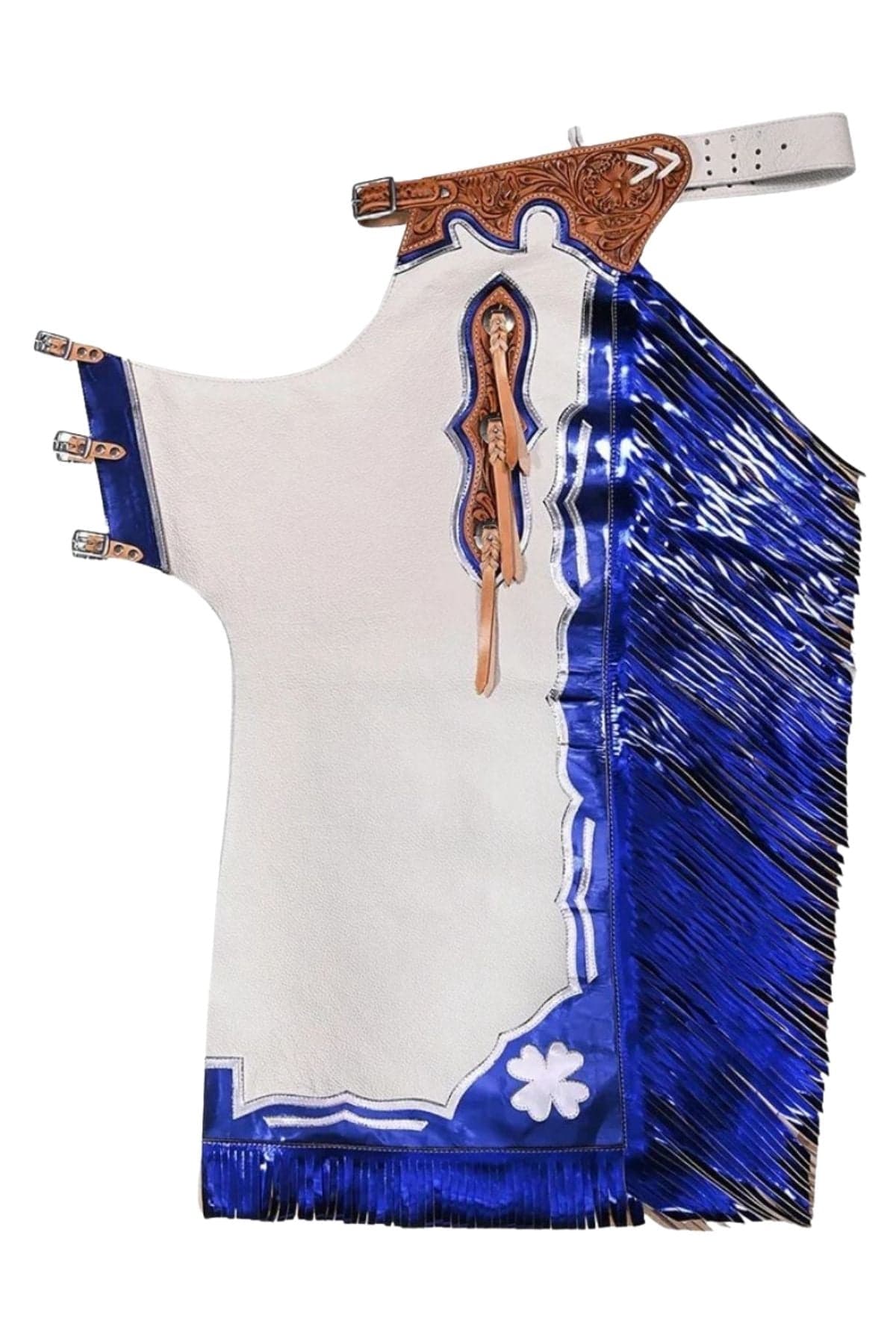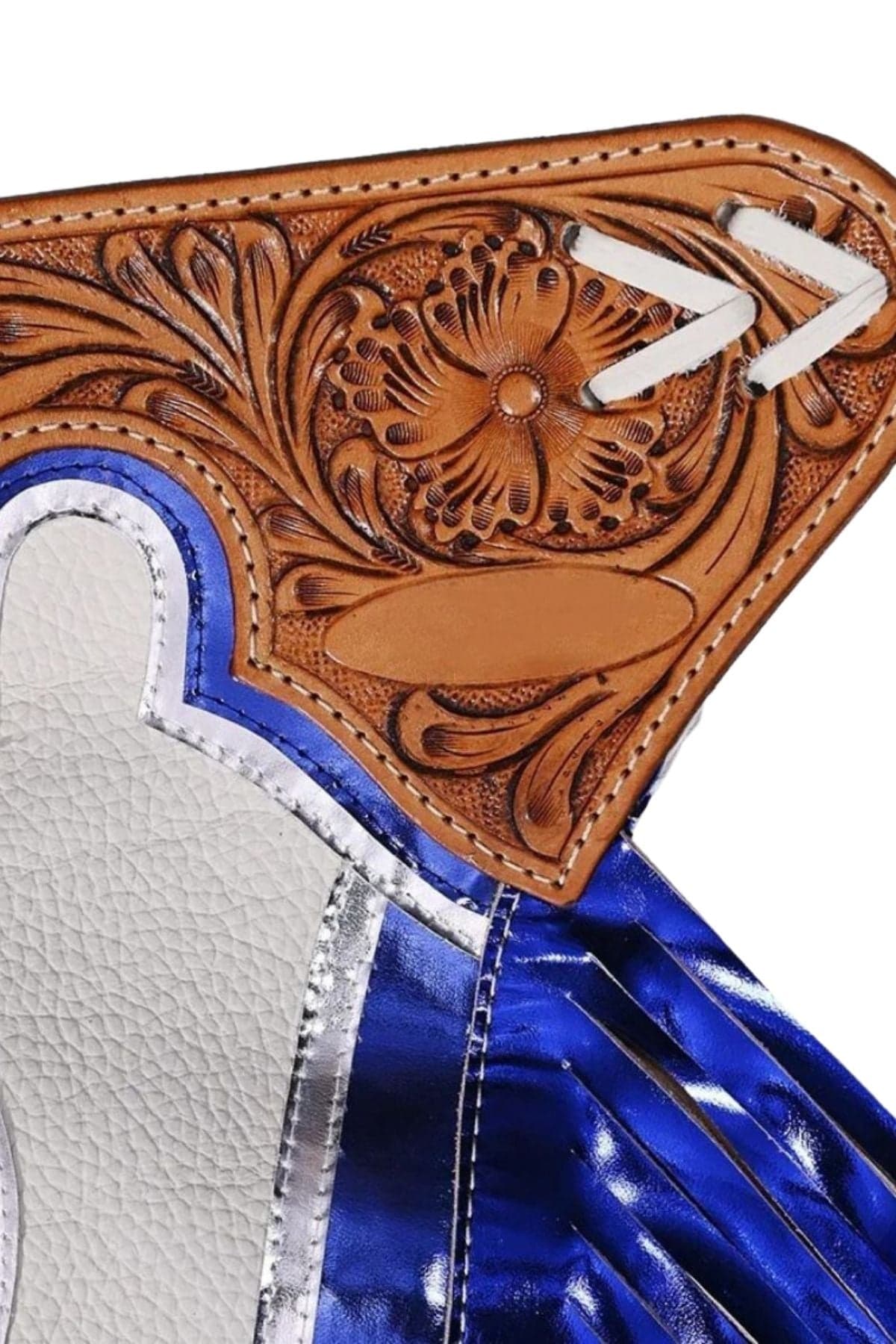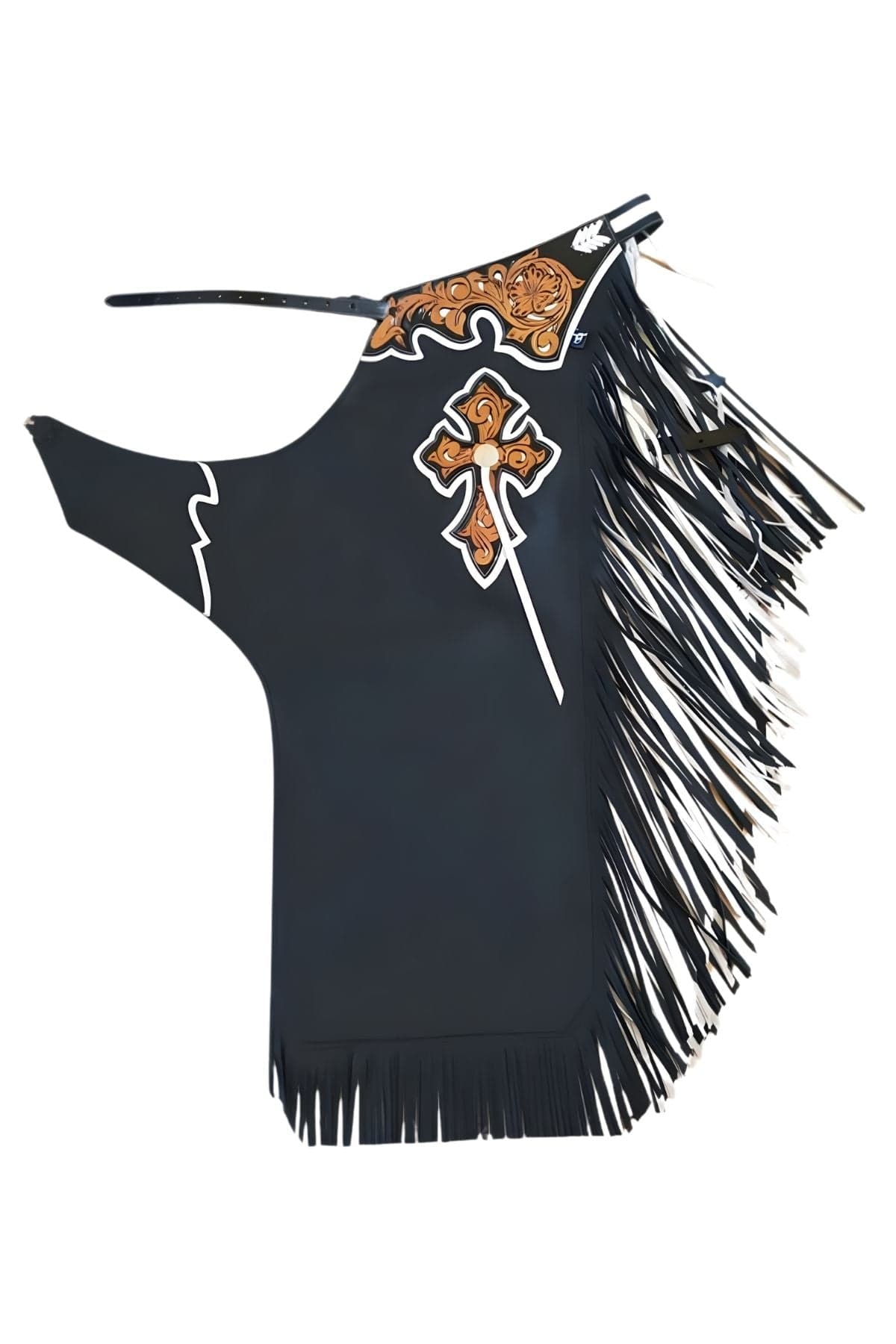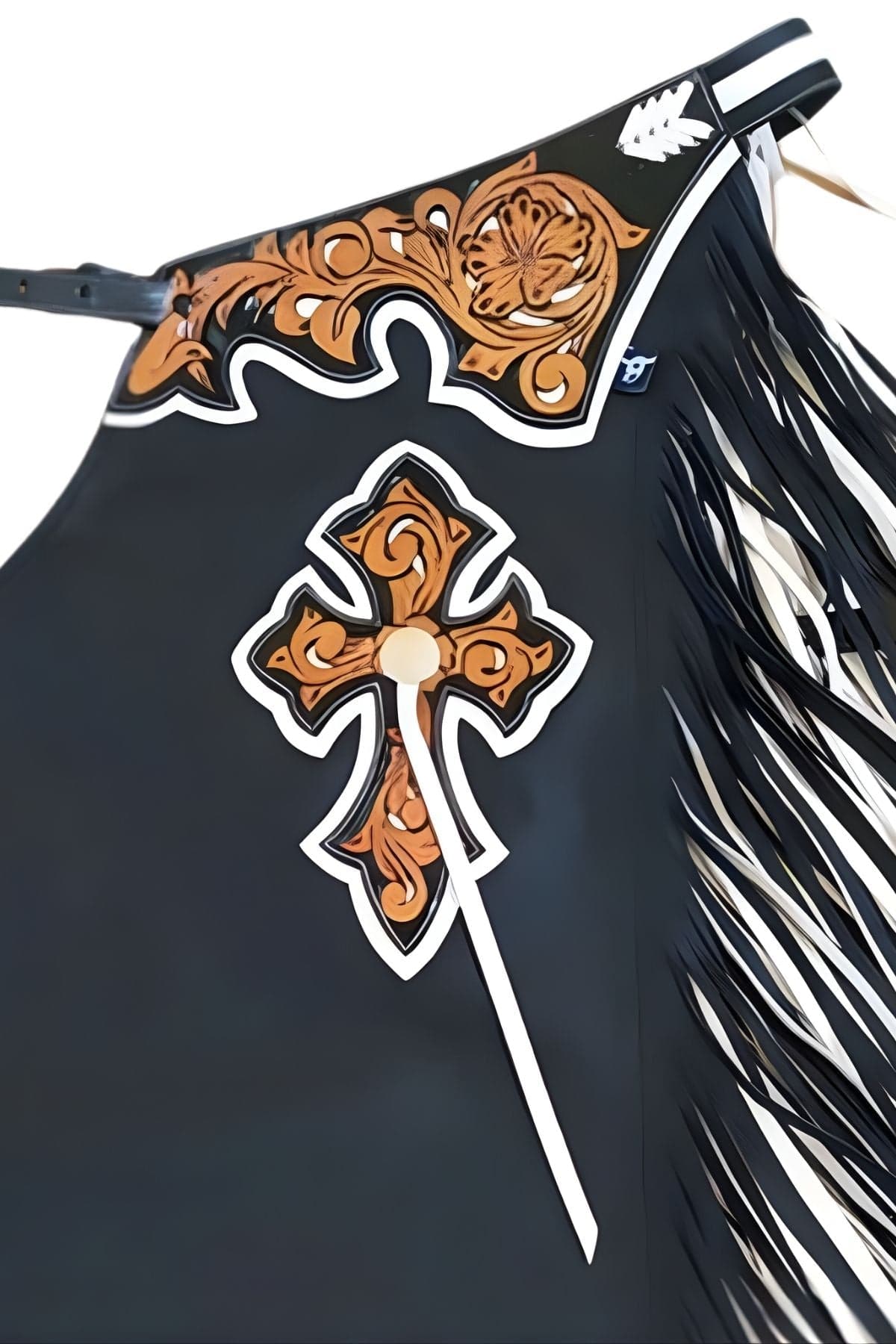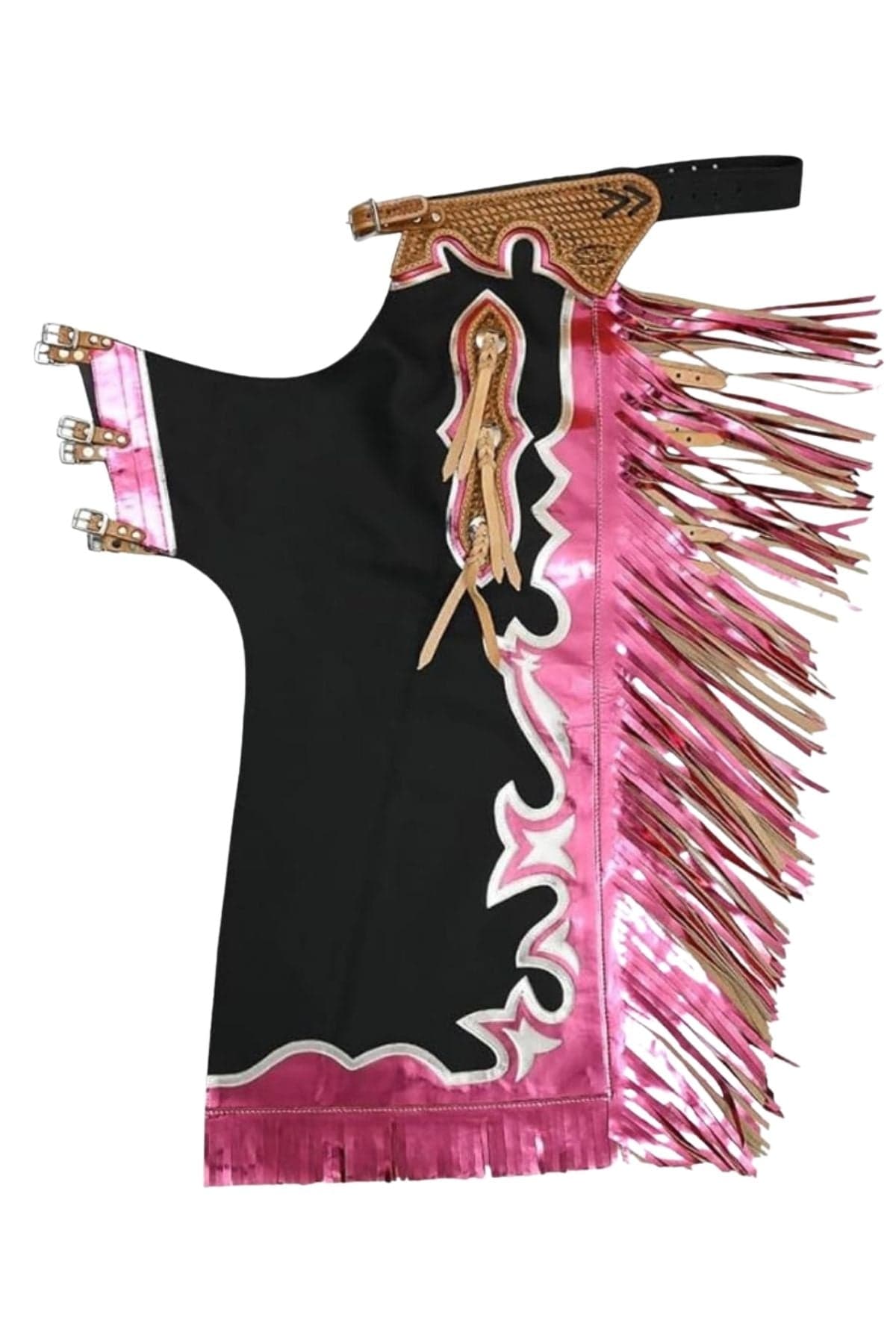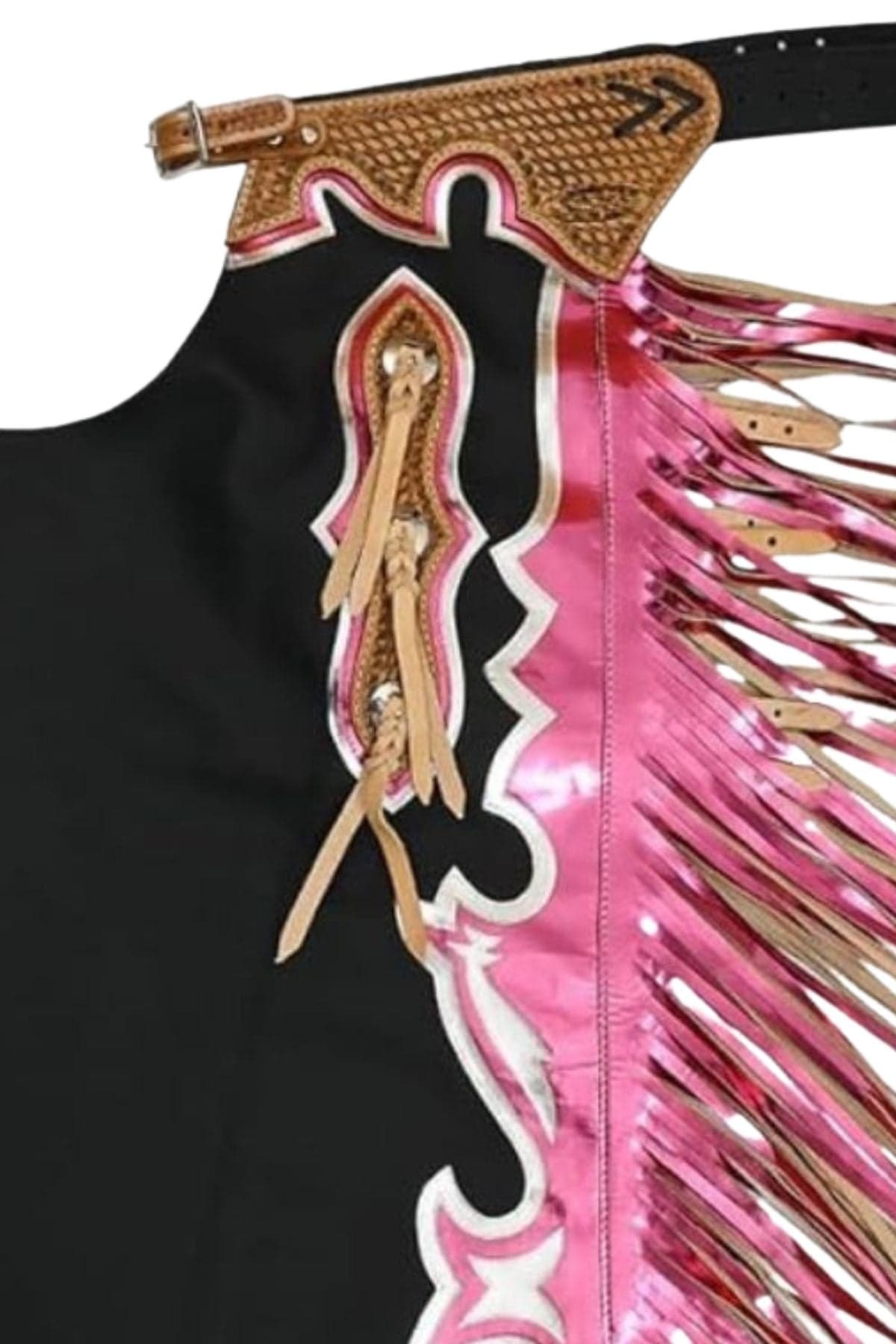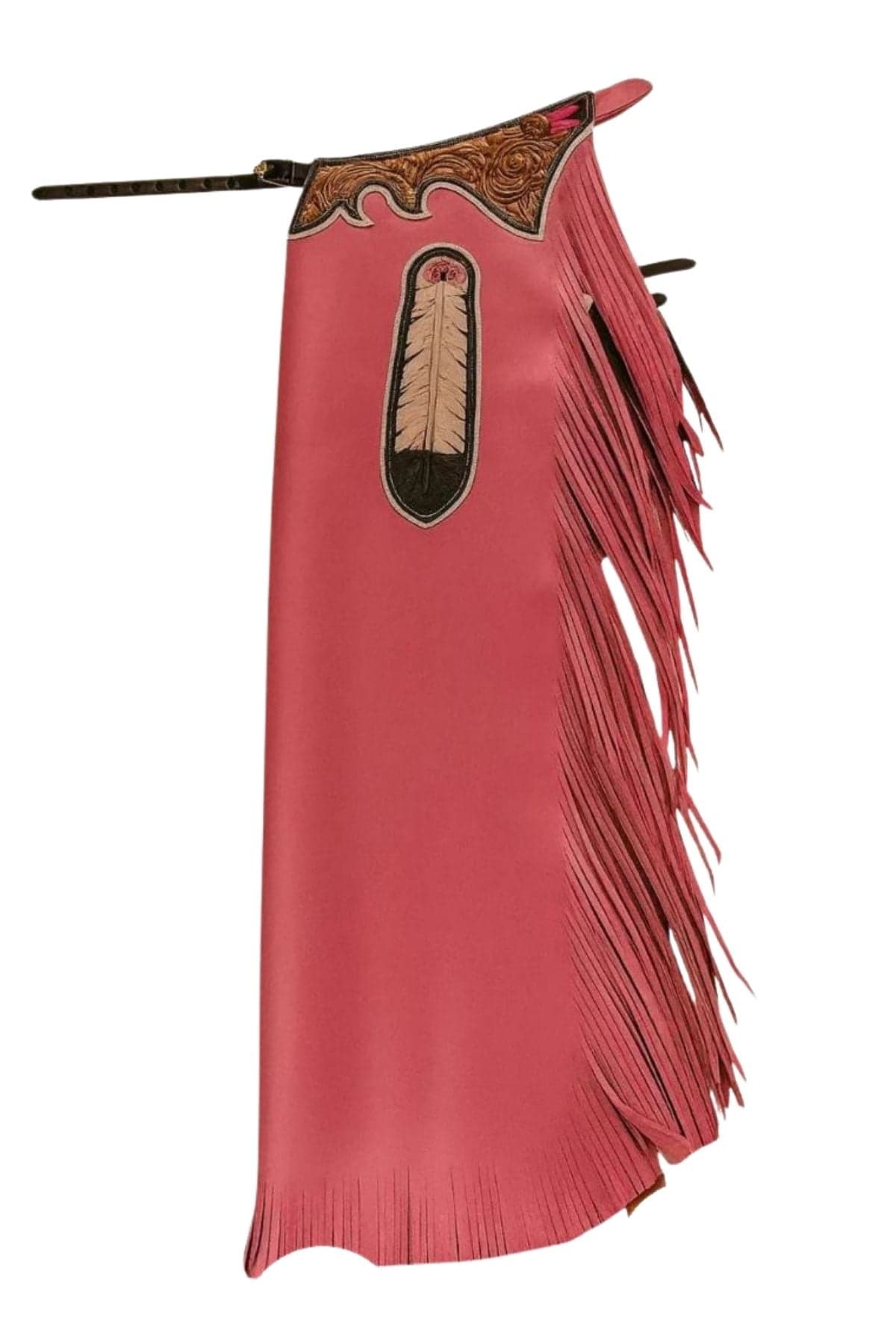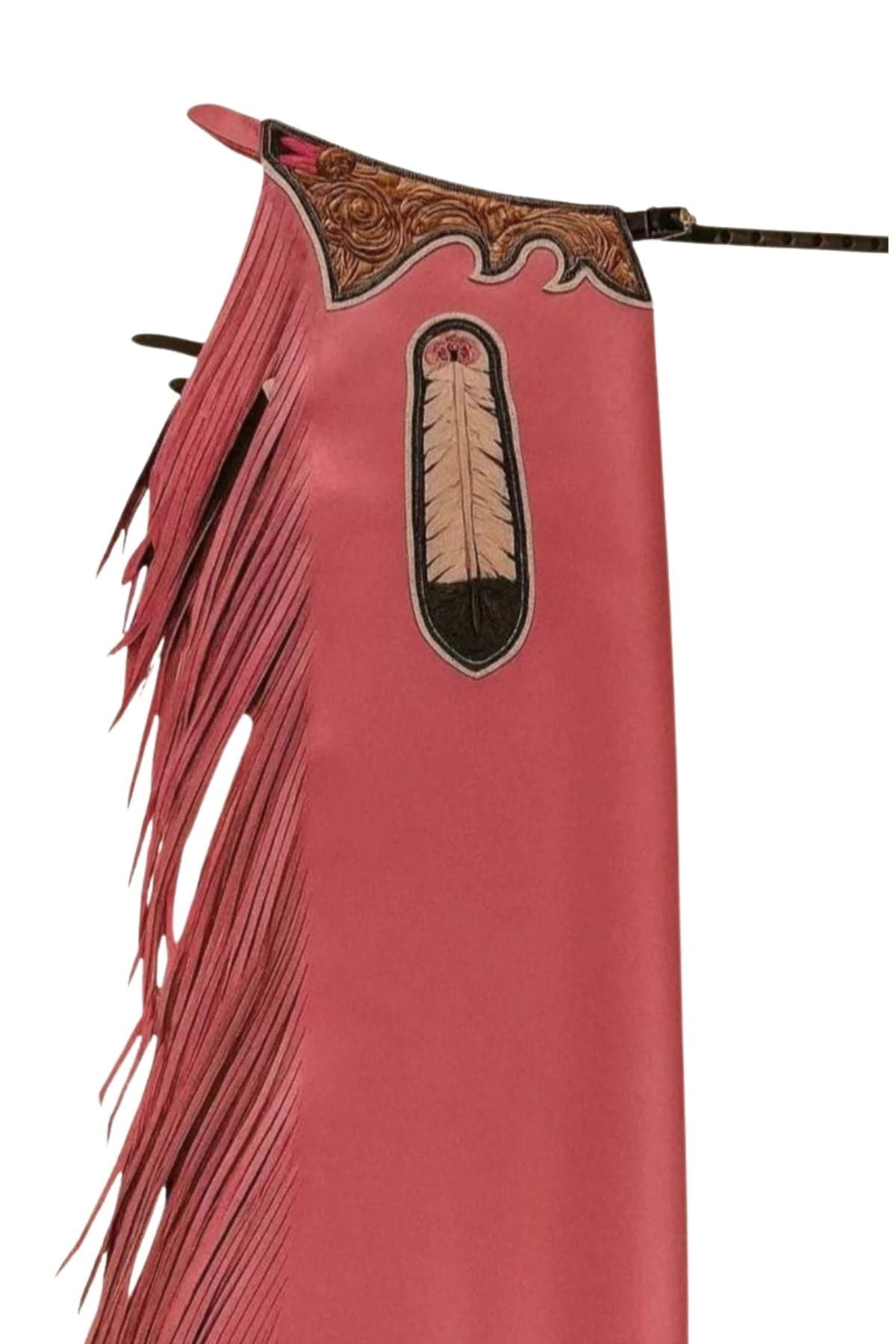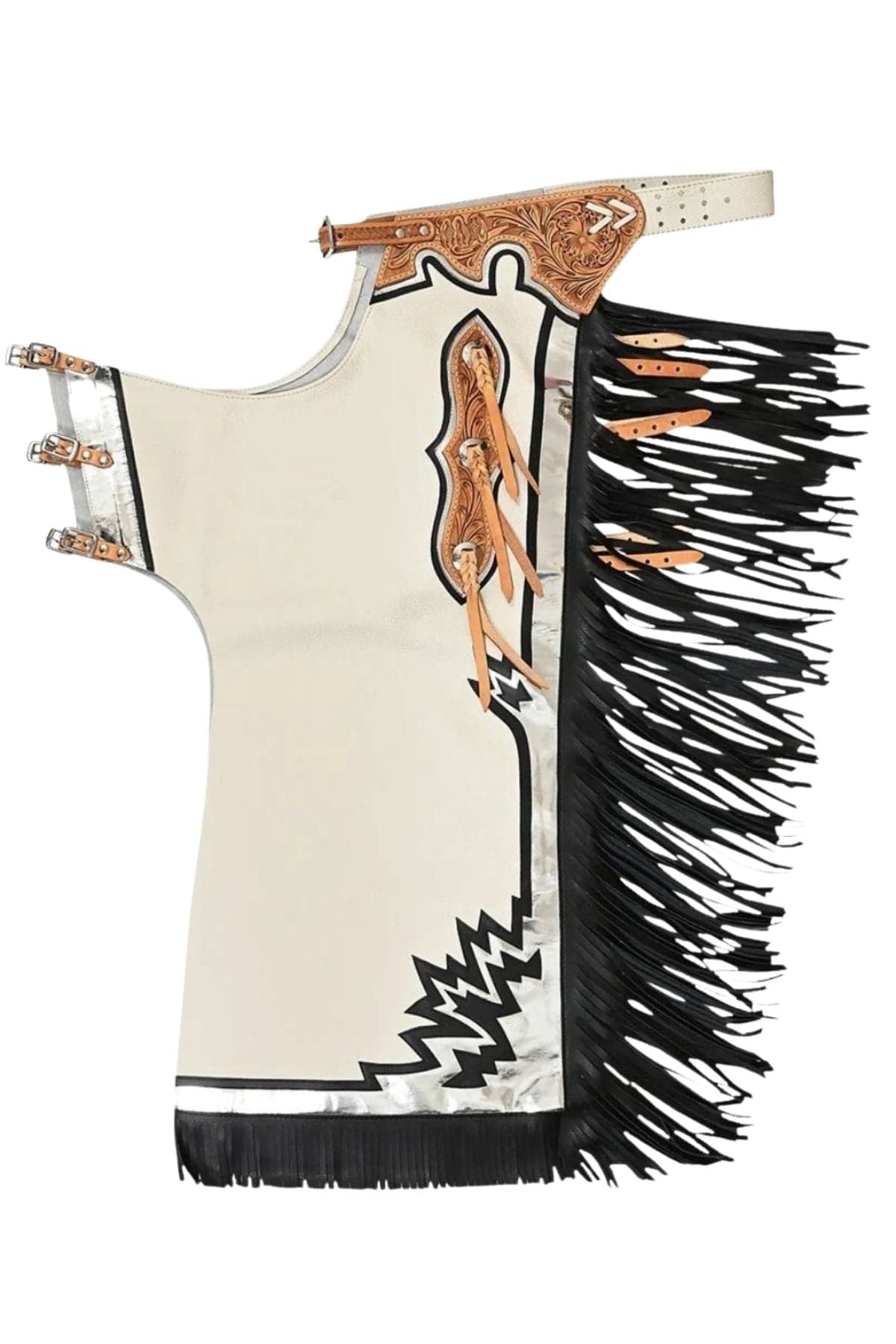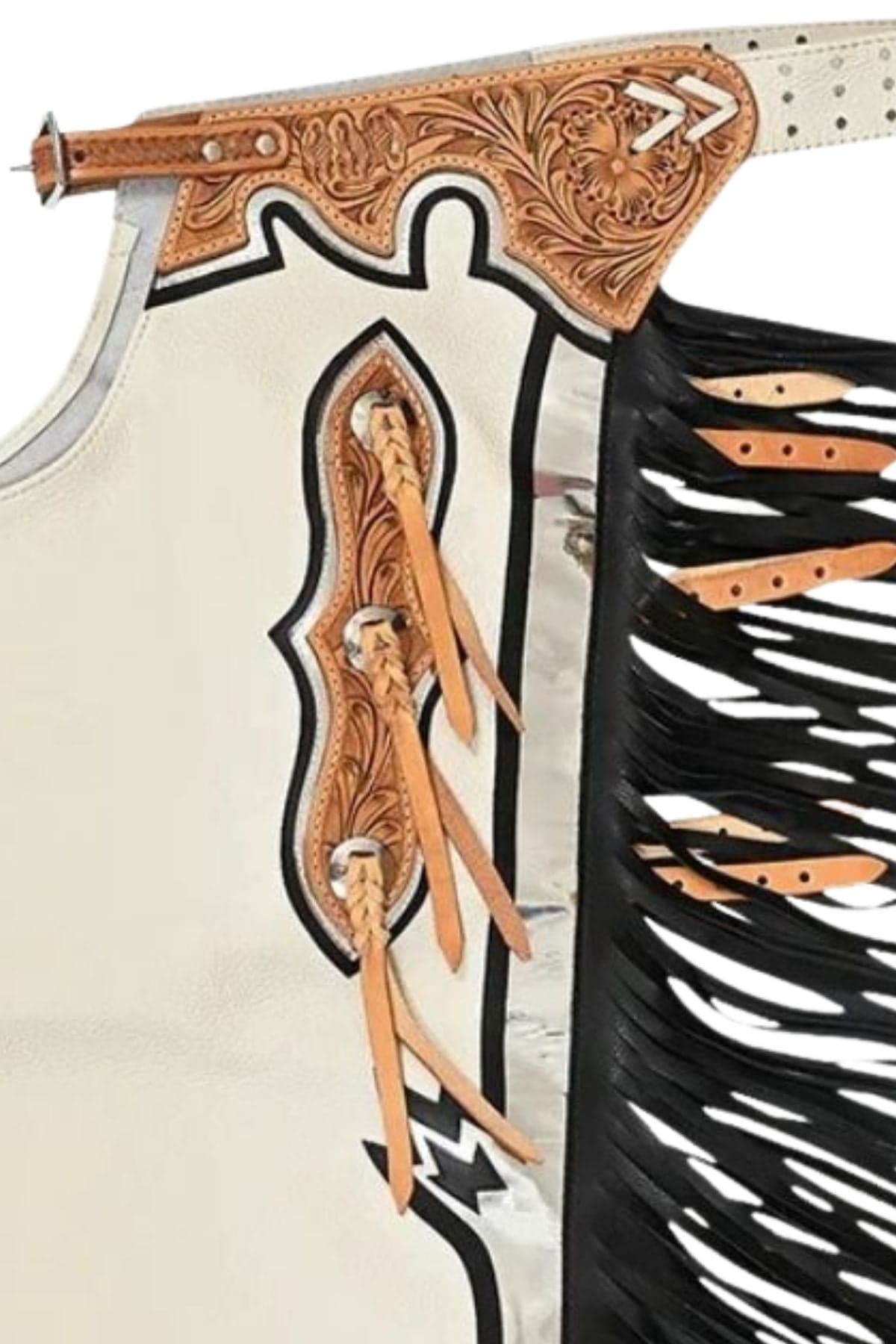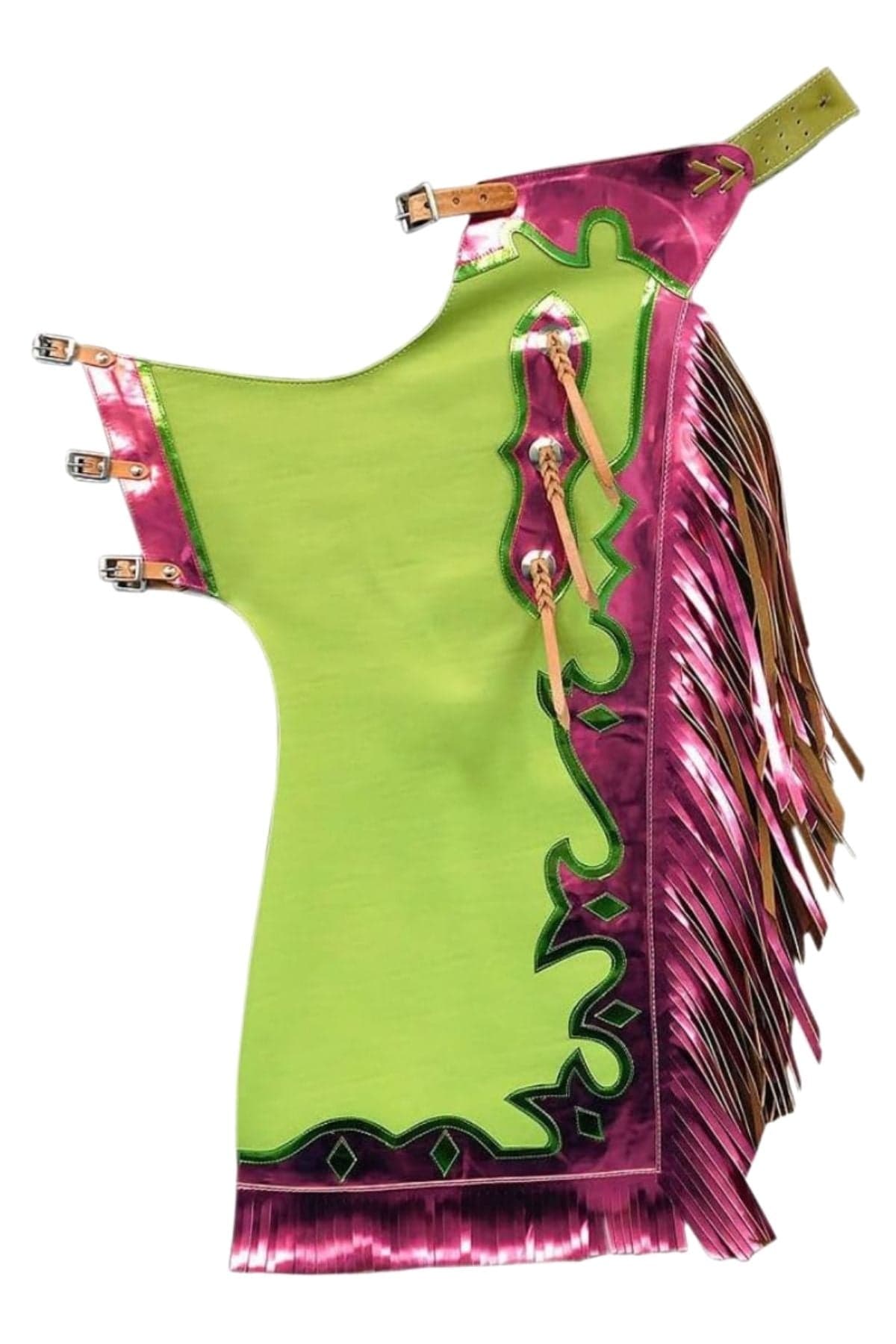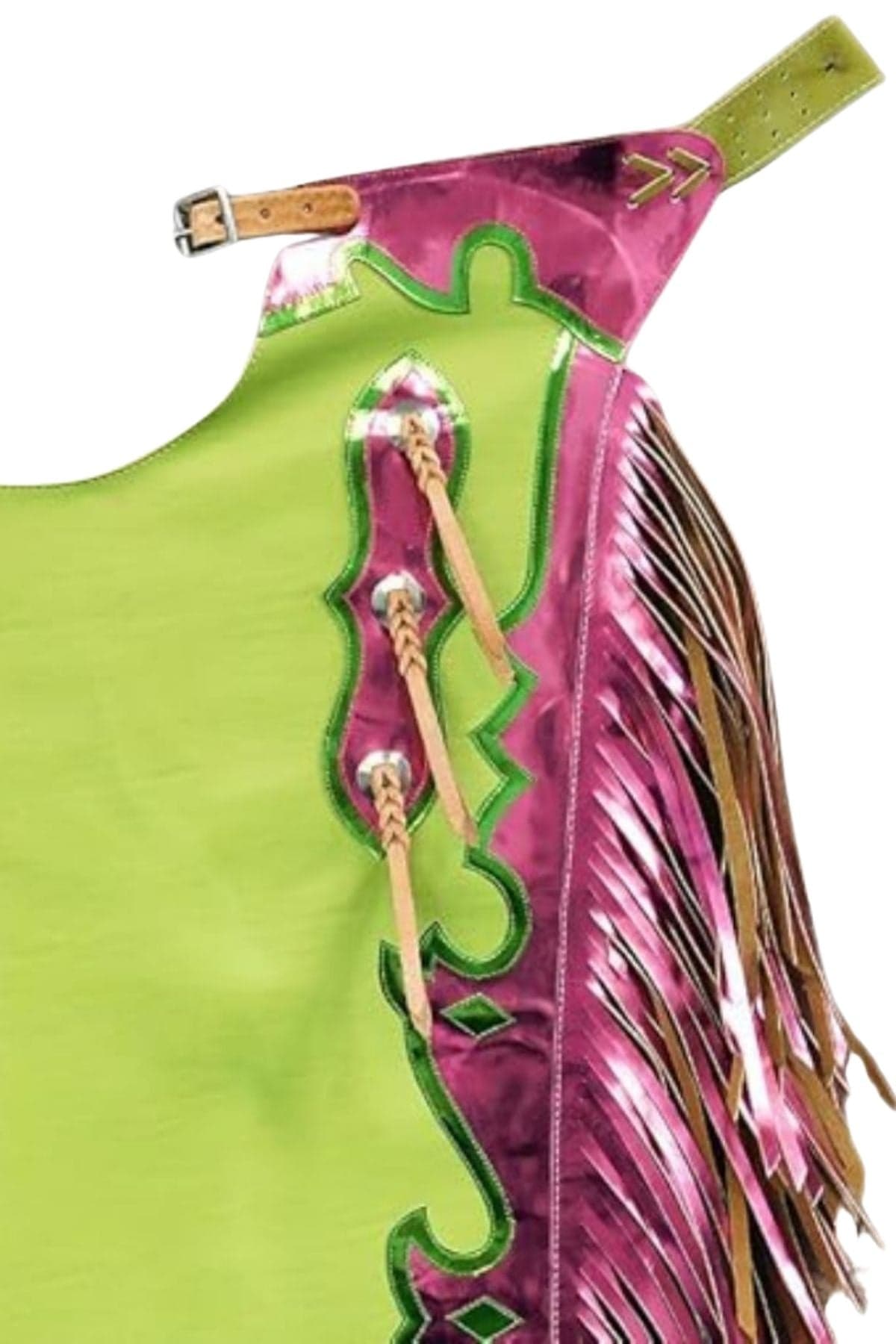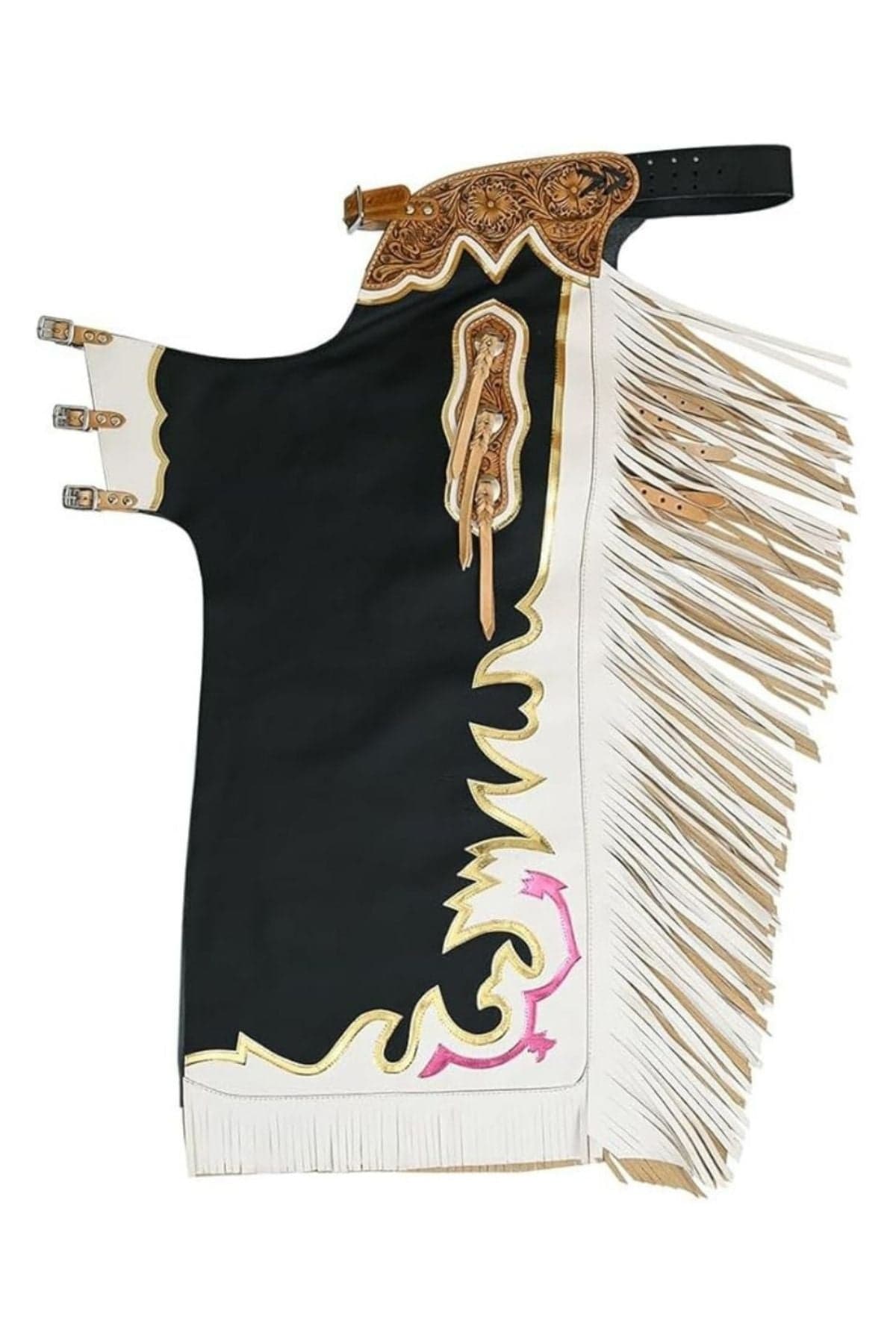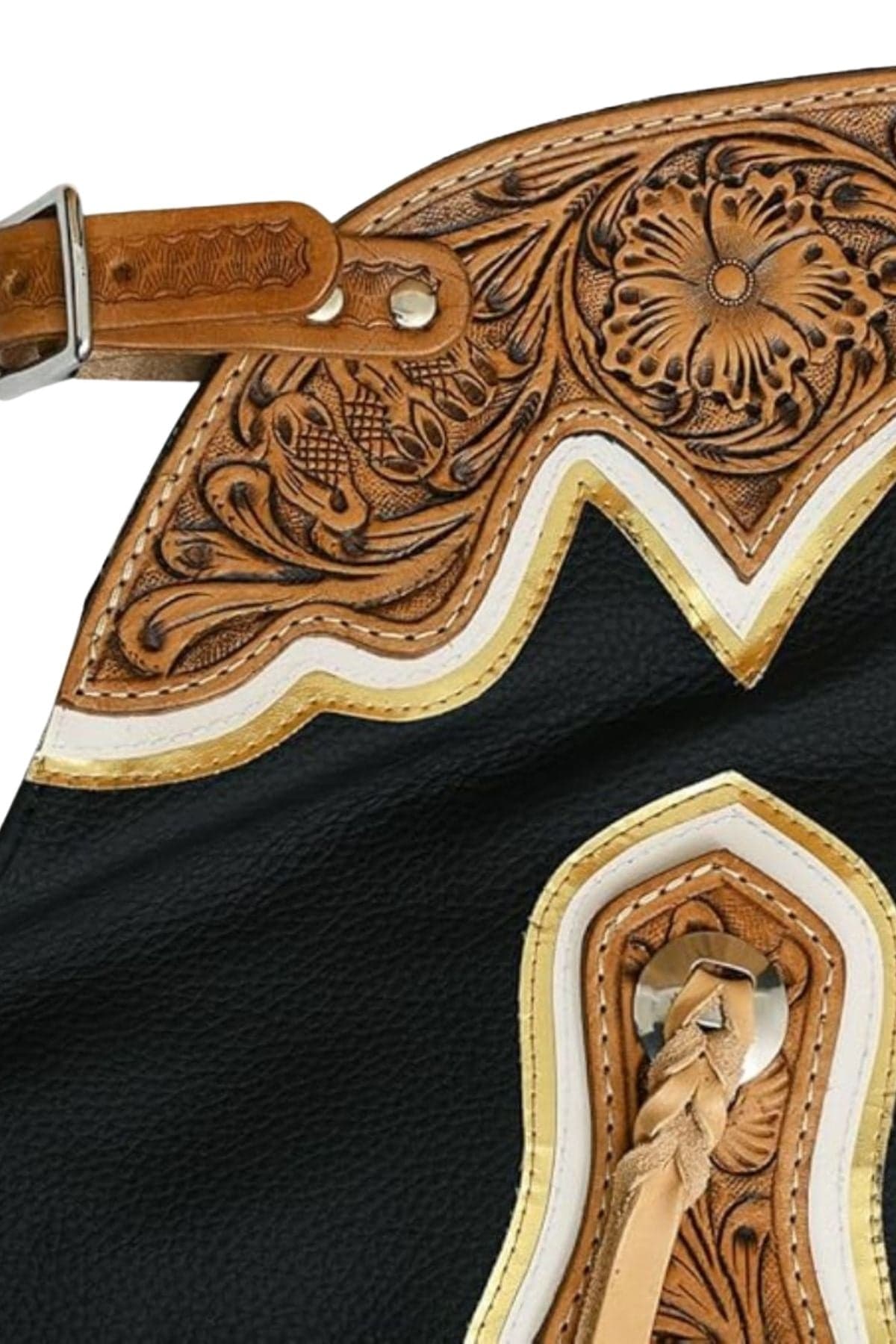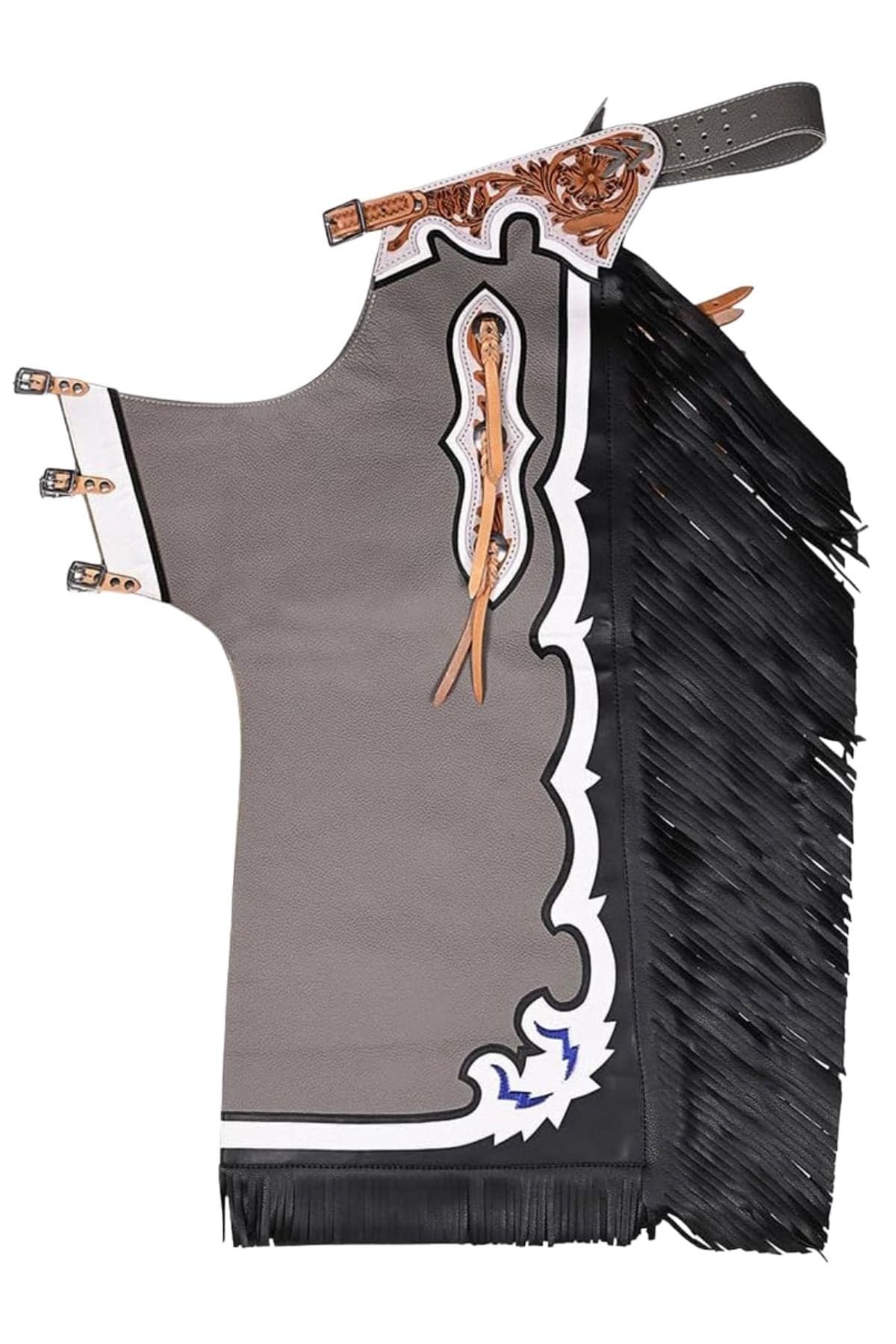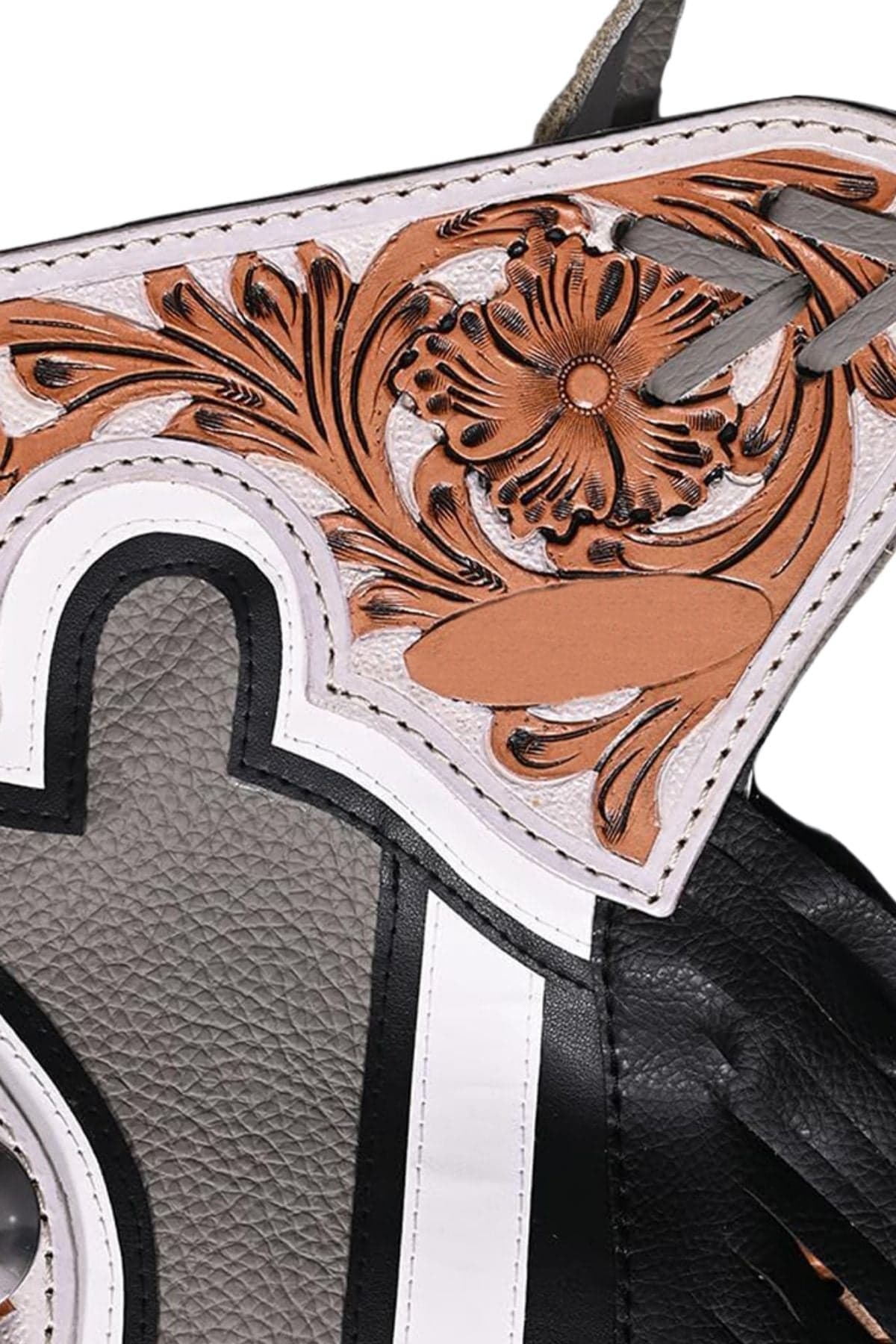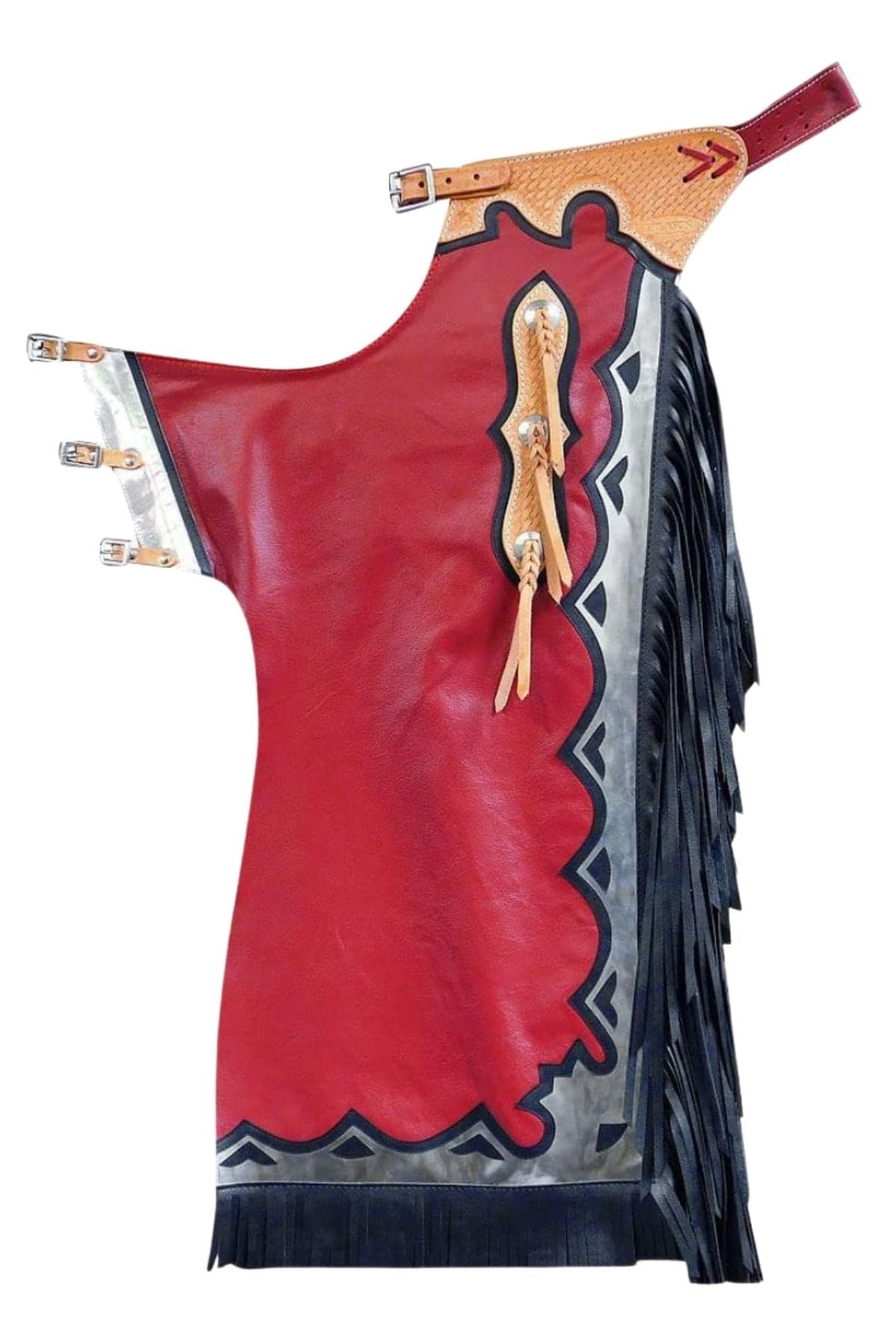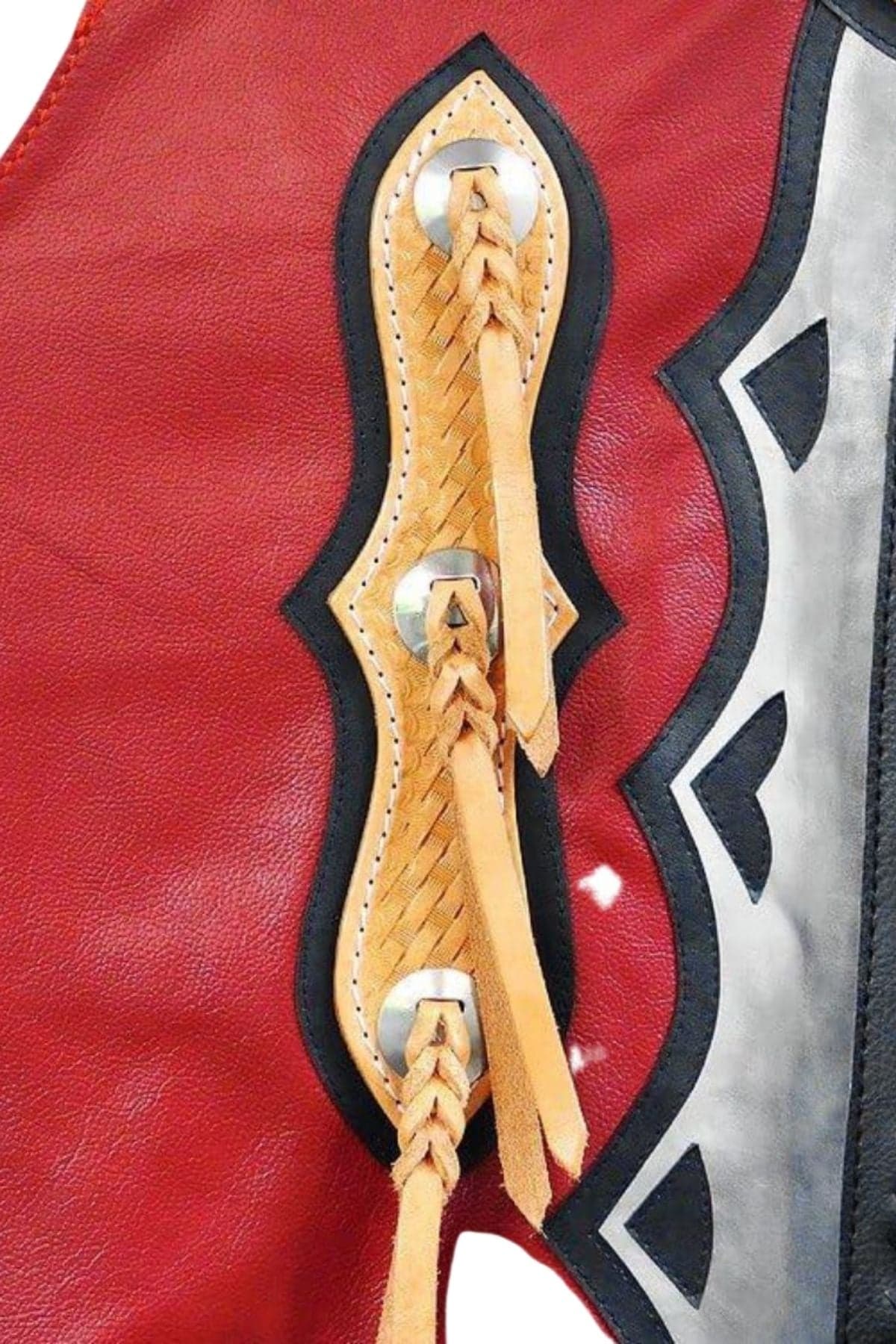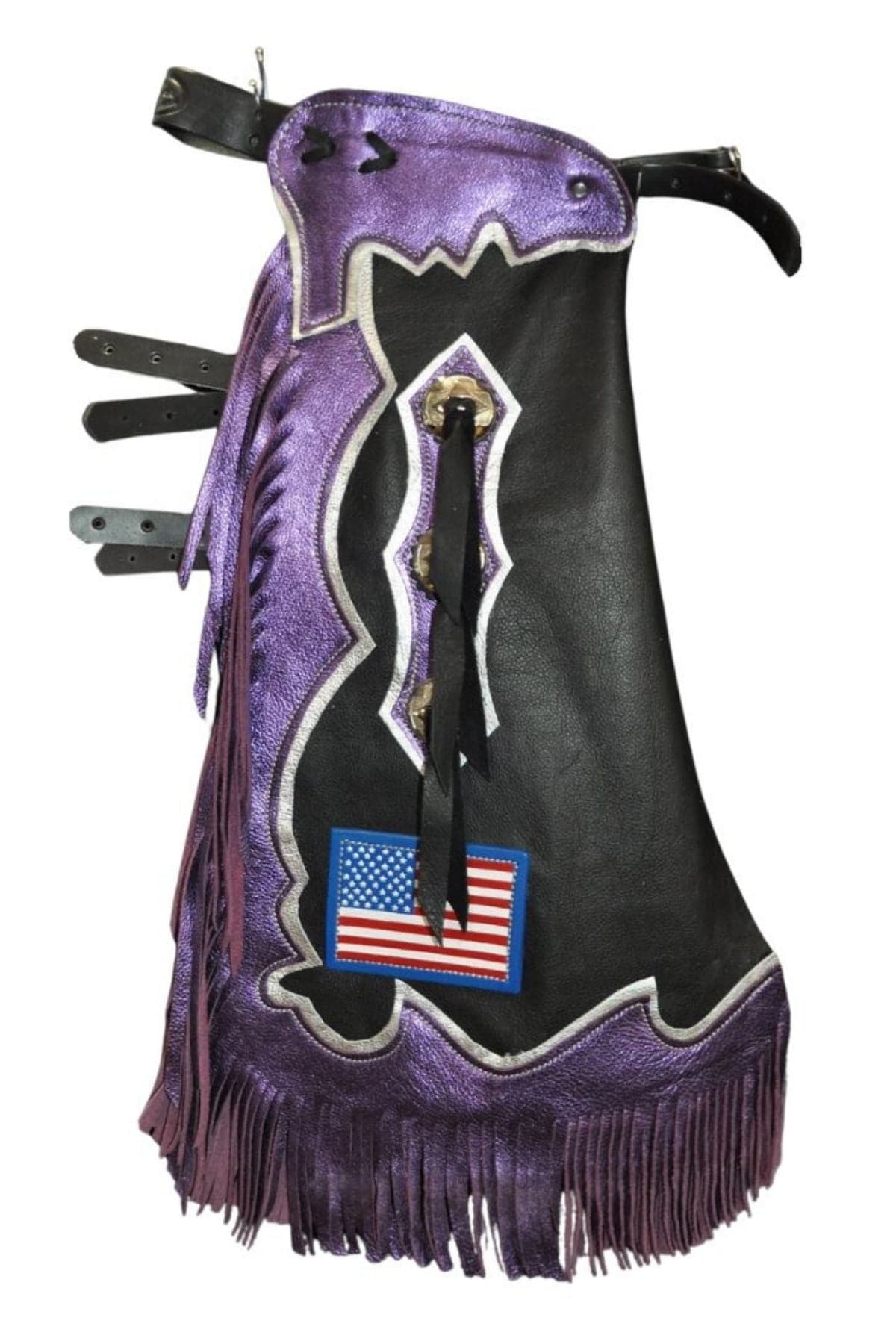
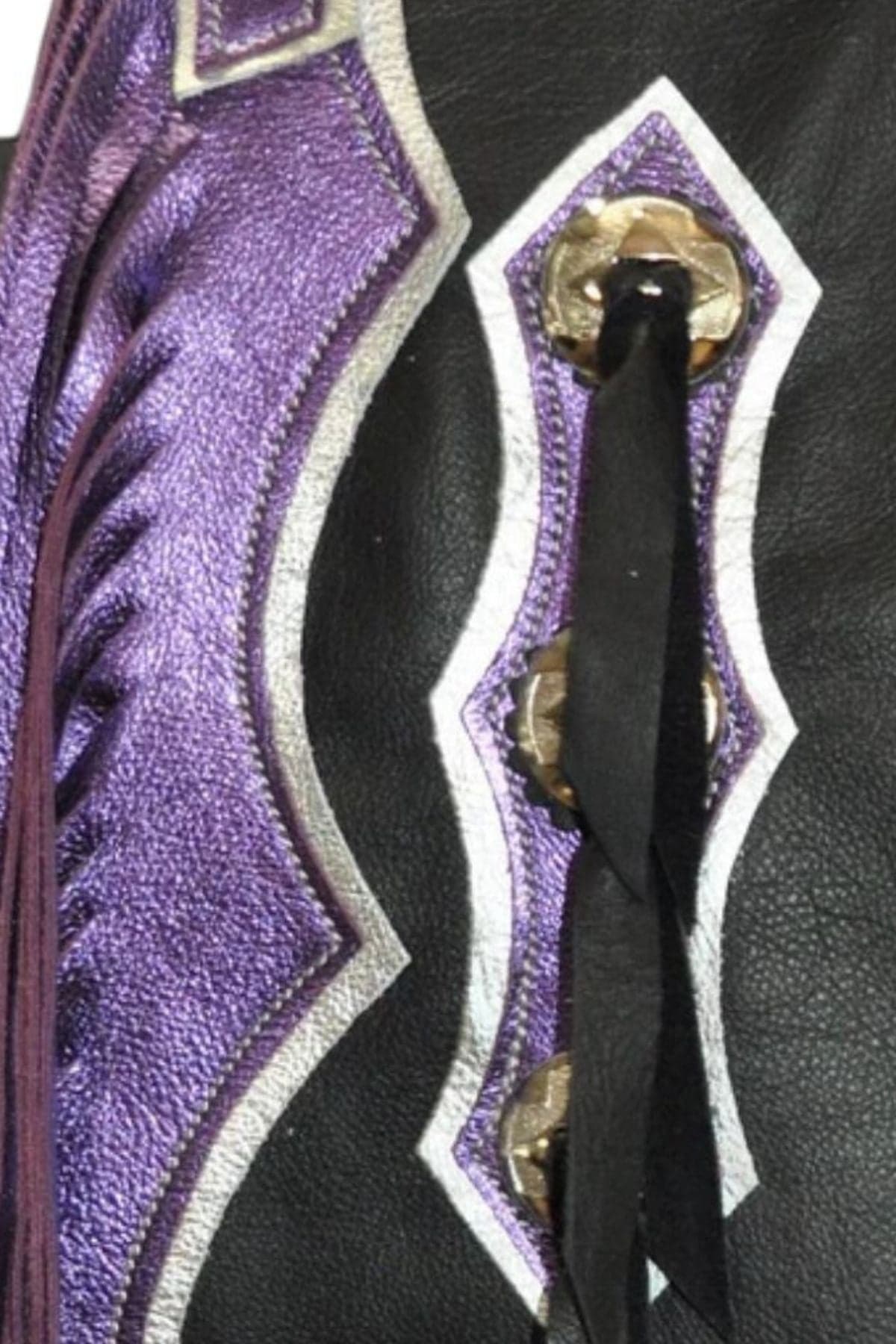
Rodeo chaps are made to be seen. Wide wings, long flowing fringe and bold color show every move of an eight-second ride from the back row of the stands. Chaps Fit rodeo chaps come in leather two-tones, metallic fringe, hand-tooled yokes and colors from classic black and white to neon green and hot pink, for bull riders, bronc riders and rodeo queens, in sizes 2XS to 8XL.
Rodeo chaps grew out of the working batwing chap. They keep the wide, open leg and snap closure, but they're built for the arena:
The result is lighter to move in than a heavy working chap, and far easier to spot from across the arena.
On a bucking animal, fringe moves with every kick, spur and change of direction, which makes a rider's leg action easy to follow. It's also about identity: fringe color, length and pattern are how many contestants make their chaps recognizably their own. Chaps also protect your legs from rope, the bull rope's tail, the chute and the animal's hide as you slide into position.
| Event | Chaps? | Typical style |
|---|---|---|
| Bull riding | Almost always | Batwing rodeo chaps with long fringe, fastened above the knee |
| Saddle bronc | Usually | Batwing rodeo chaps, cut to let the legs spur freely |
| Bareback bronc | Usually | Batwing rodeo chaps |
| Rodeo queen and pageant | Often, for grand entries and appearances | Colorful, heavily decorated chaps that match the outfit |
| Roping and ranch events | Sometimes | Chinks or plain batwings |
| Barrel racing | Rarely | Riders usually compete in jeans |
These are different garments, even though both are sometimes called "show chaps":
Many contestants want chaps that are unmistakably theirs, with their name or initials, their colors, a sponsor logo or a signature overlay. Personalized work, and sizing outside our standard chart, is available through our custom chaps. Rodeo and show chaps take longer to make than standard styles, so check our Shipping Policy and order well before your season or pageant date.
Rodeo chaps protect your legs from rope, chute rails, the animal's hide and abrasion when you fall. They don't protect you from a bull's horns, hooves or weight. For roughstock events, a protective vest is standard equipment, and many riders also wear a helmet and mouthguard. Follow your association's safety rules and wear chaps as part of complete protective gear.