Welding Chaps
Leather Welding Chaps
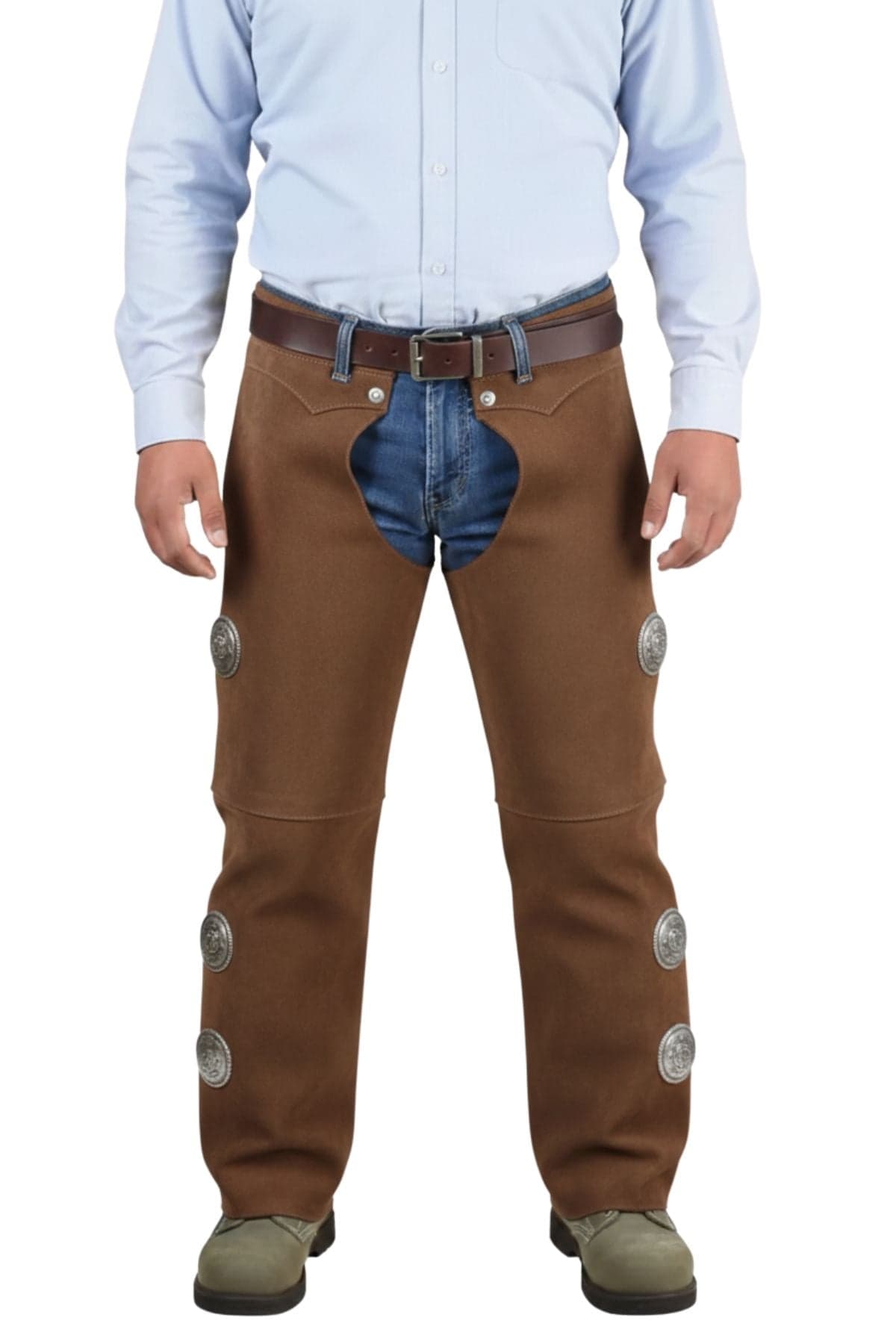
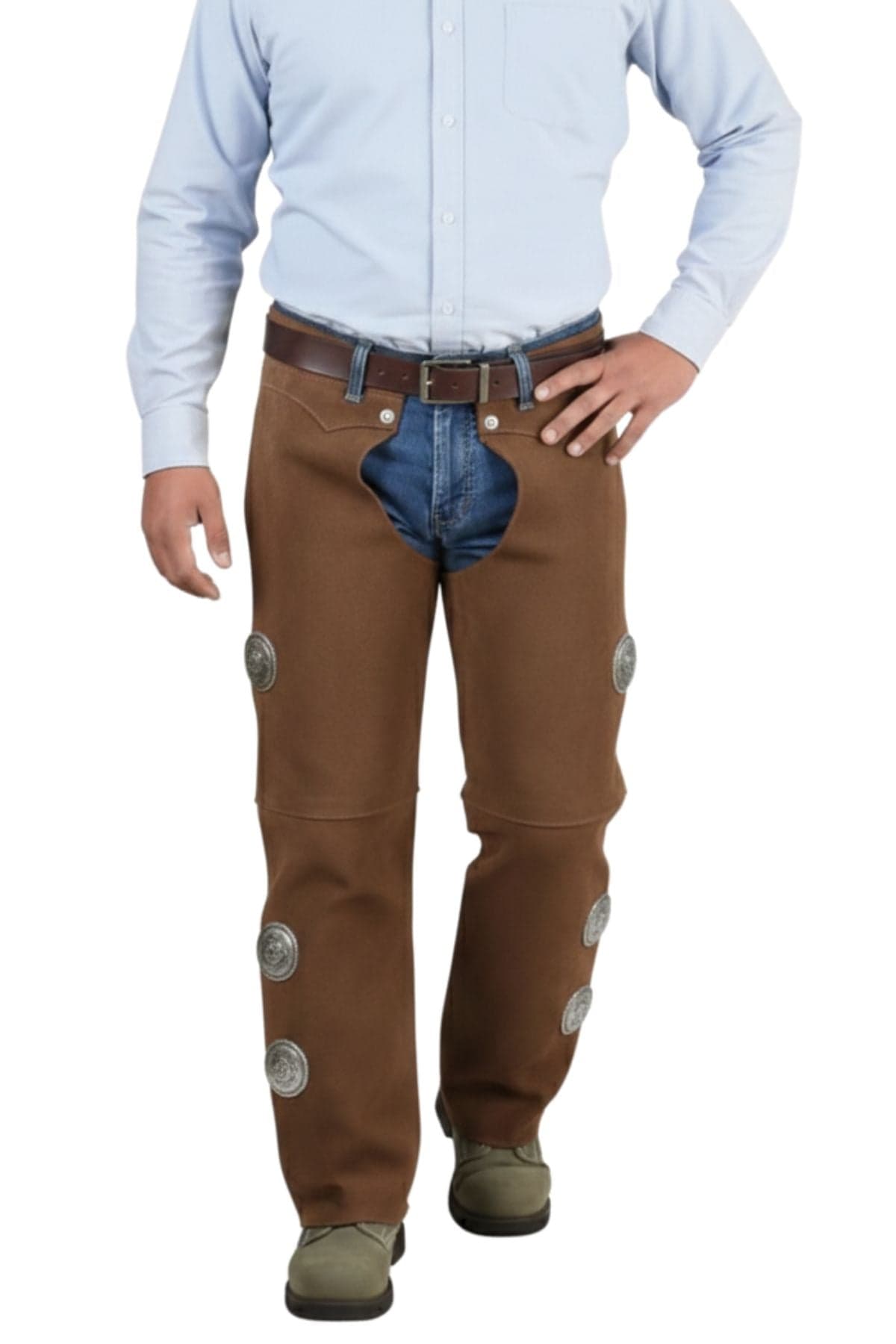
Spatter, slag and grinding sparks mostly land on your thighs and lap. That's the area welding chaps cover. Chaps Fit makes leather welding chaps in split-leg, full-length and bib styles for welding, cutting, grinding and fabrication. Each style is sized from 2XS to 8XL, so the chaps fit your body instead of relying on one strap setting.
What Welding Chaps Protect, and What They Don't
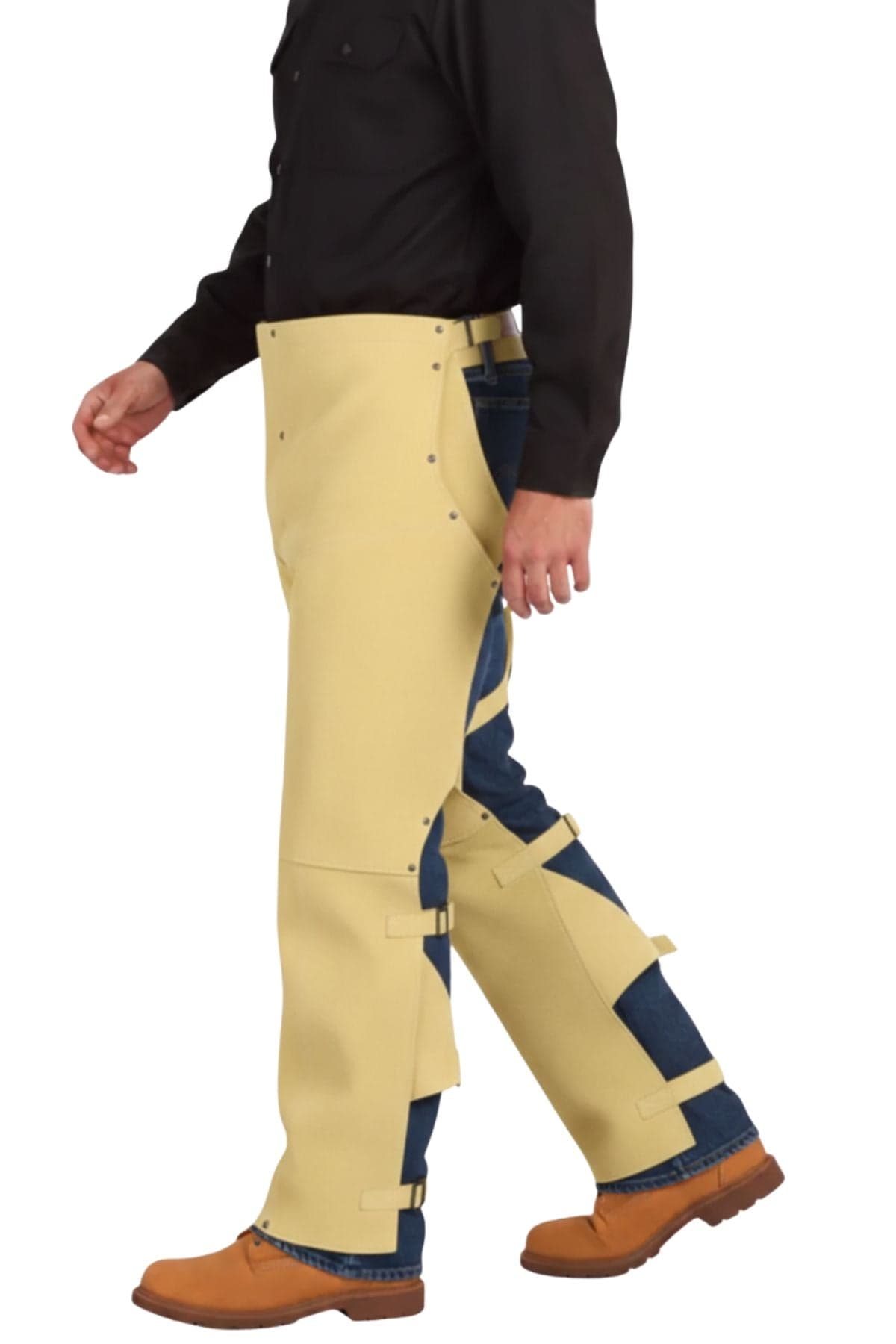
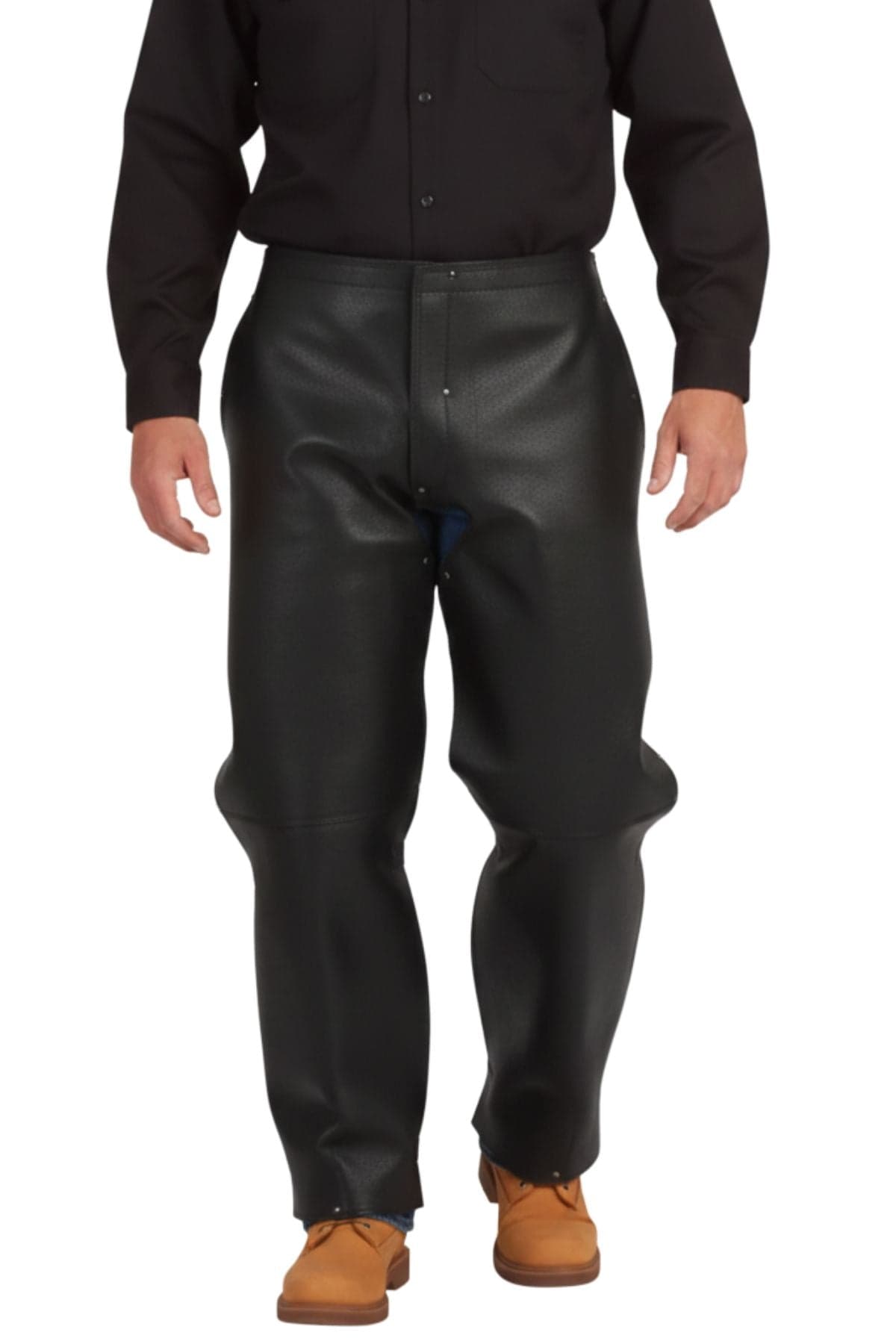
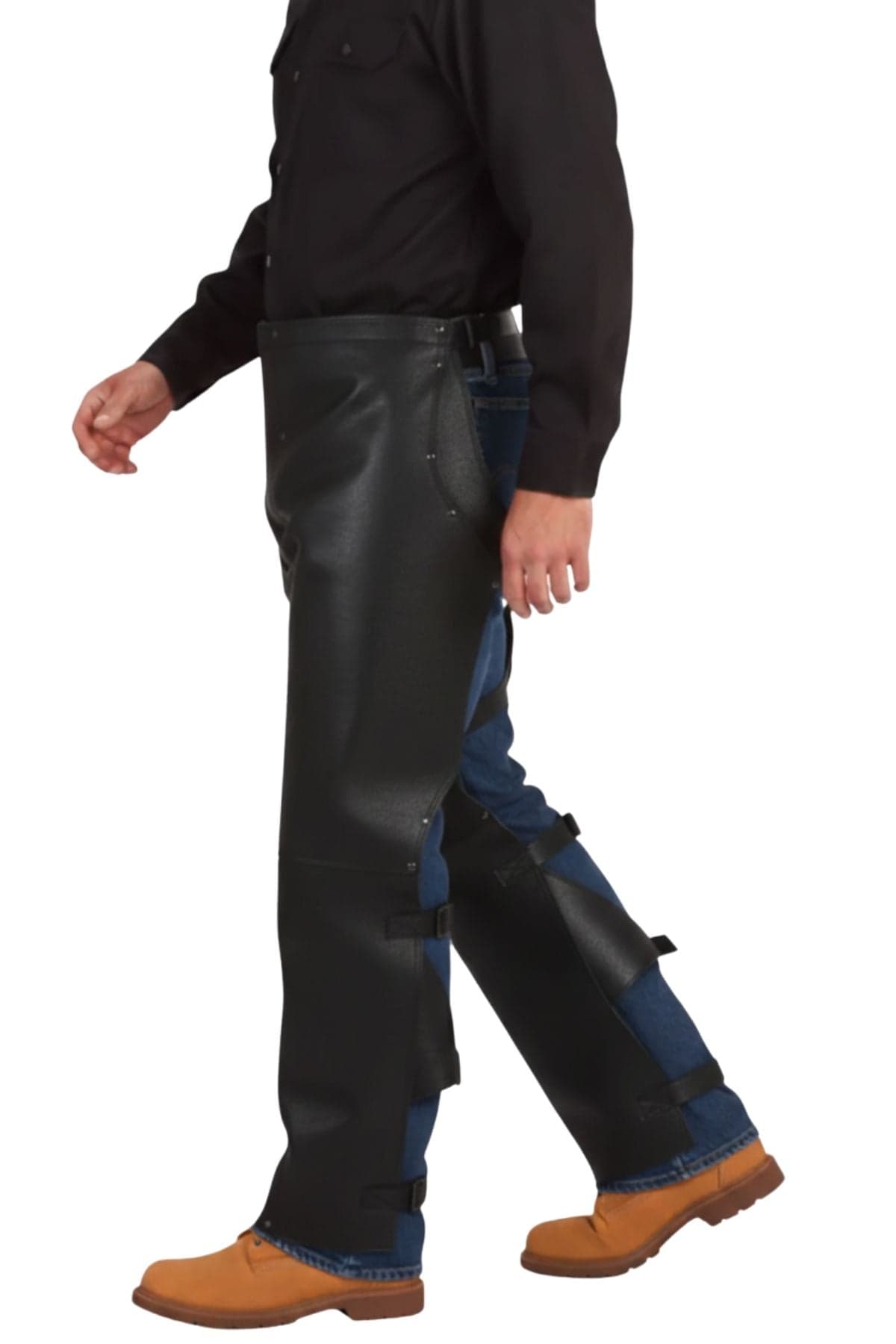
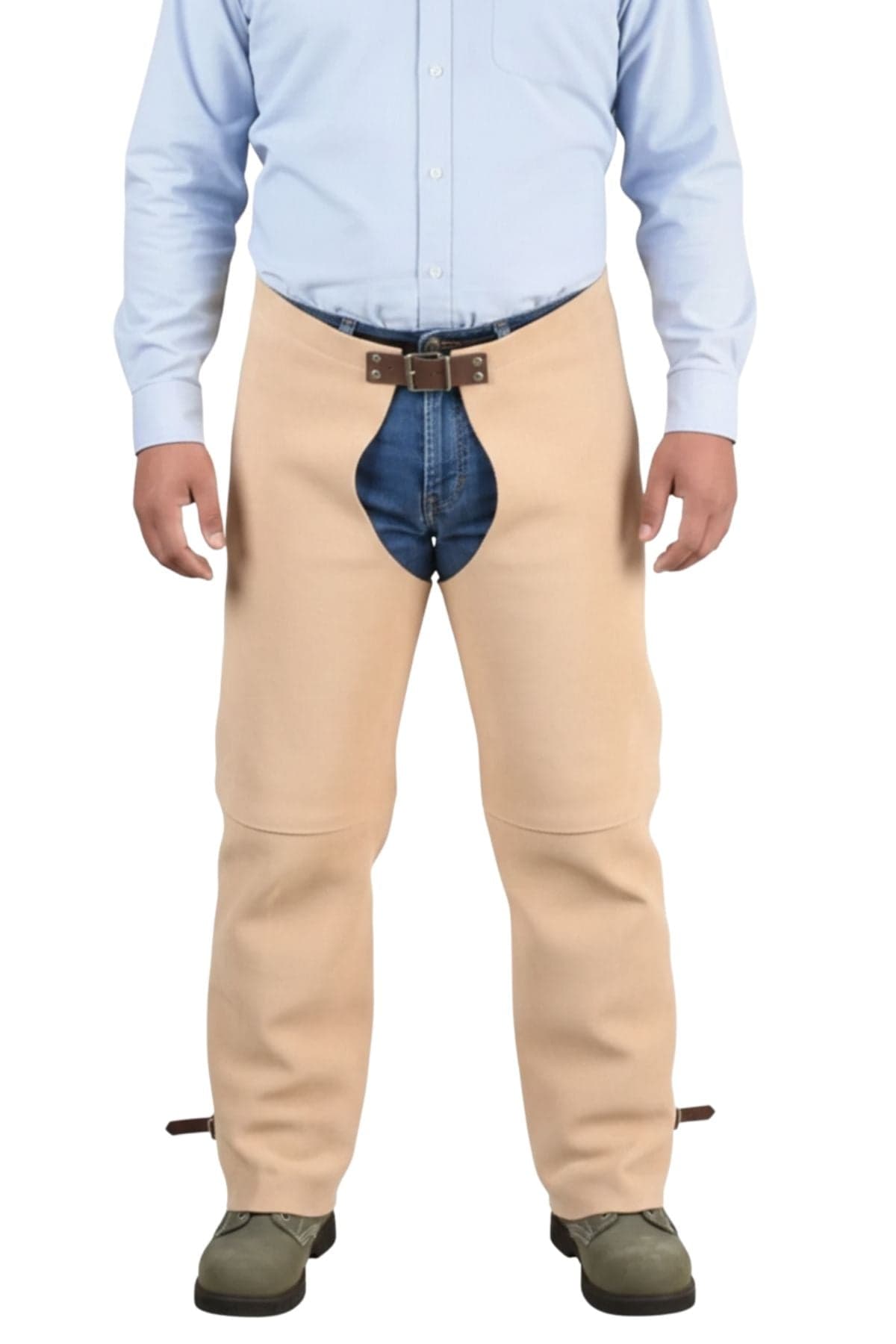
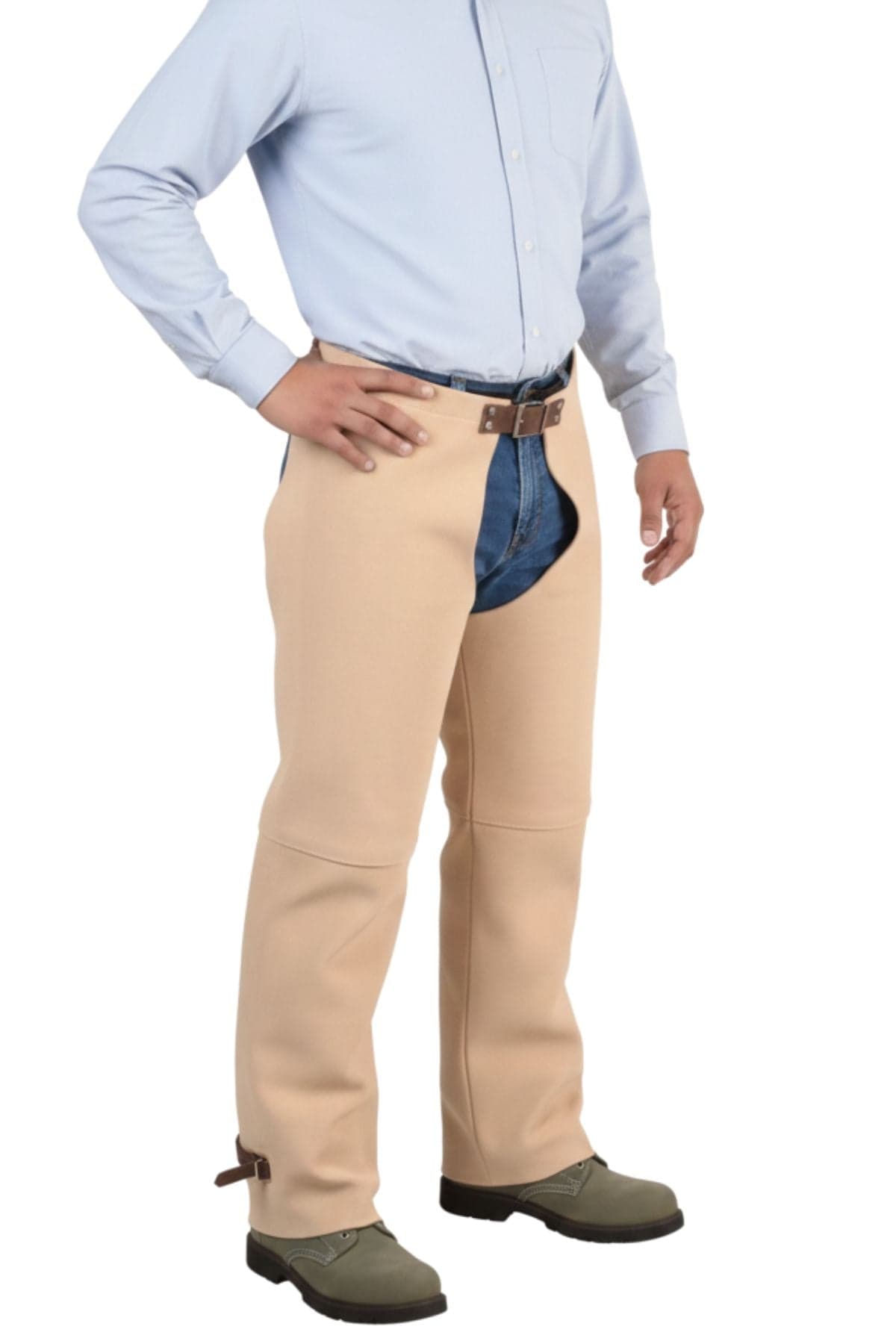
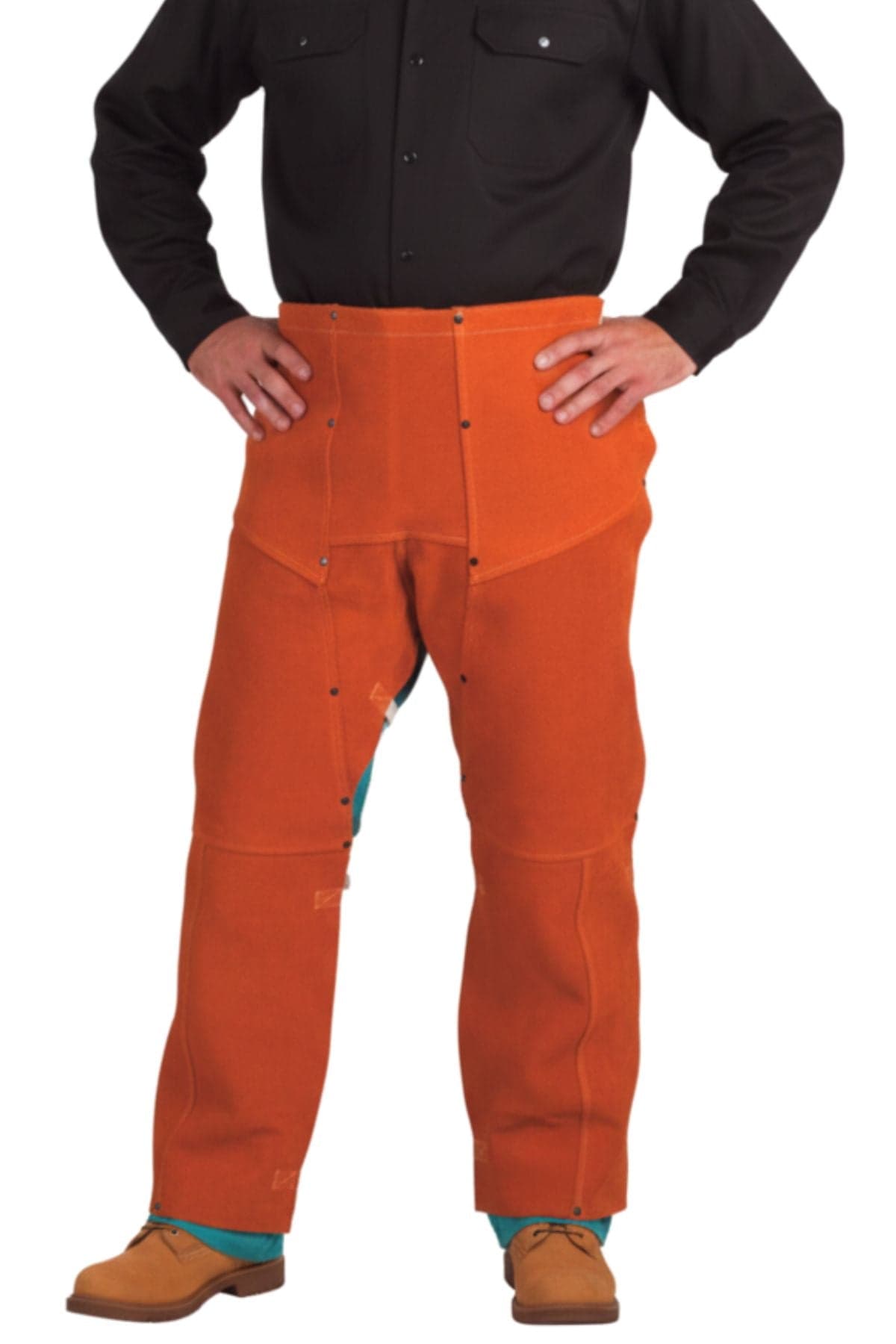
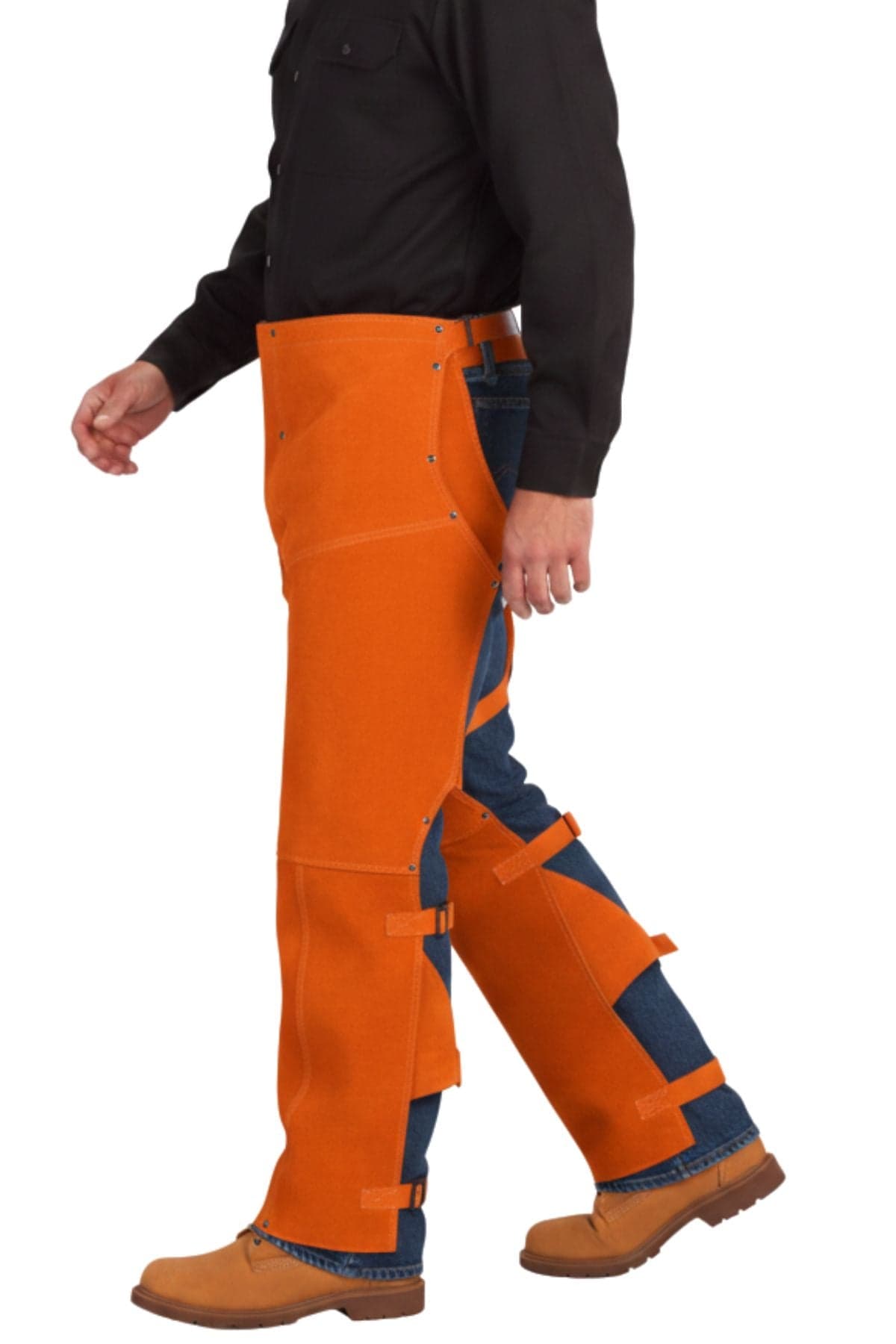
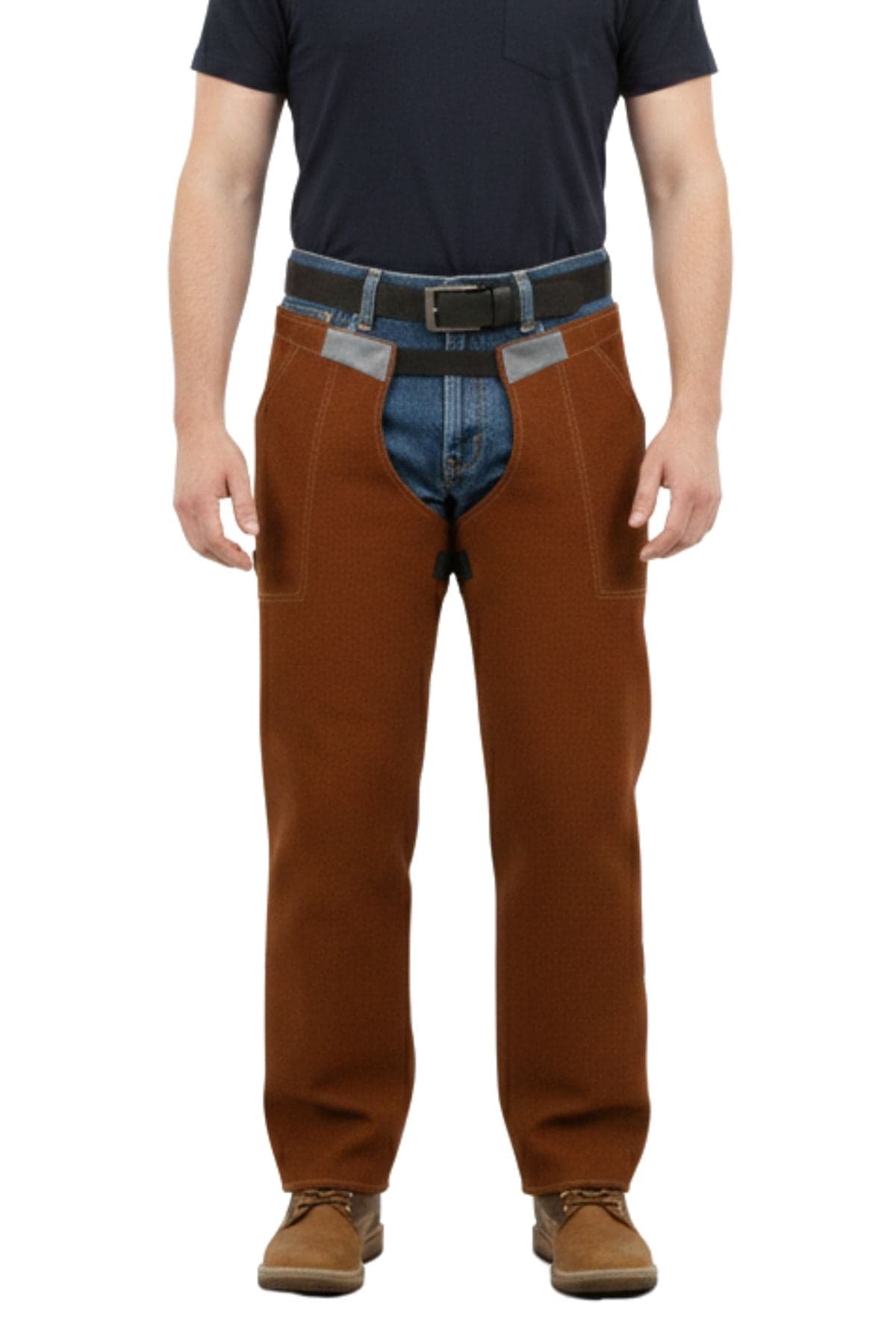
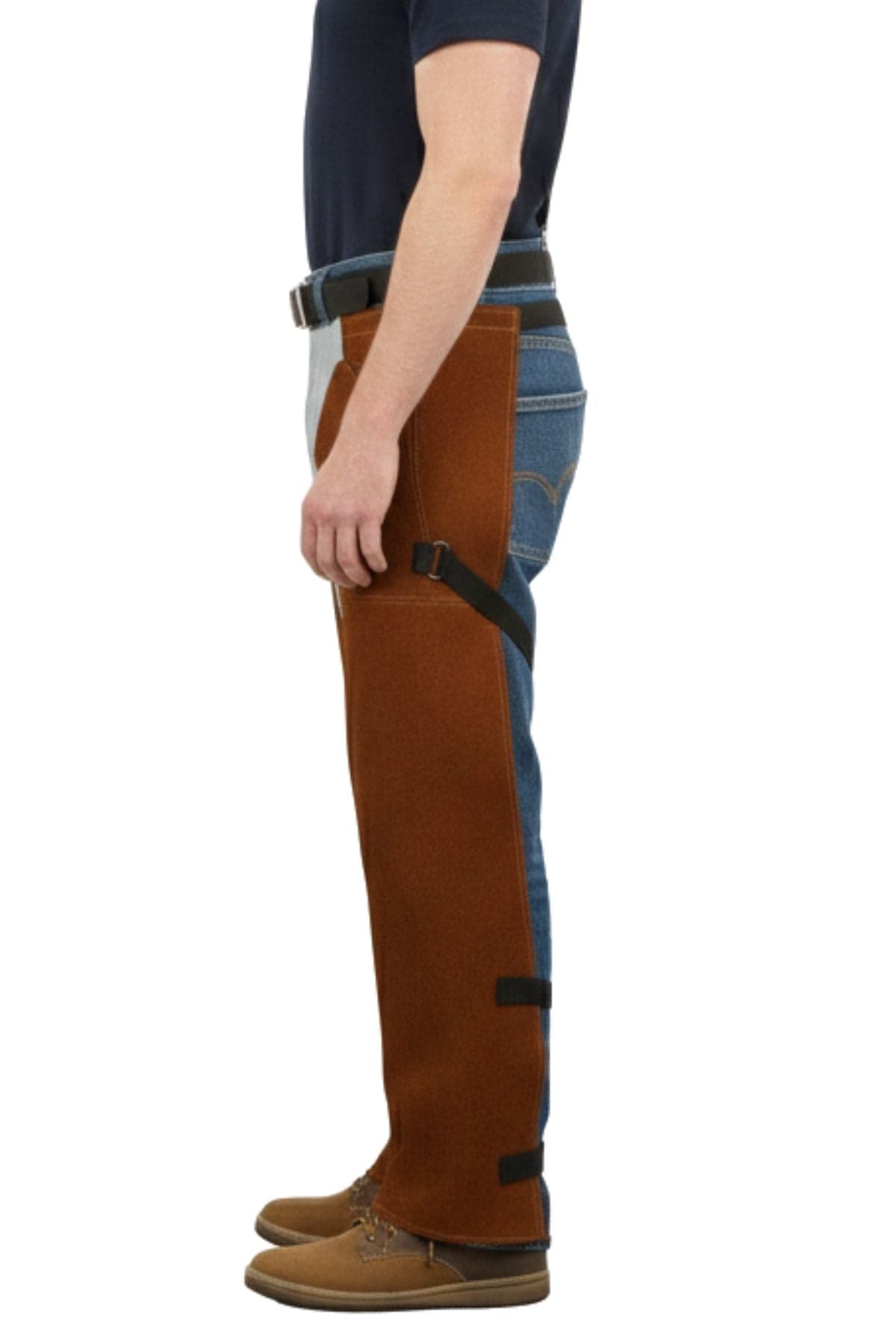
Welding chaps are leather panels that strap over your work trousers. They're open at the back, so they cover the front and sides of your legs, the area that faces the arc and the grinding wheel.
They're designed to:
- stop sparks, spatter and hot slag from burning through your trousers
- take abrasion from sheet metal edges and rough stock
- keep grinding dust and hot fragments off your clothes
They're not designed to:
- protect the backs of your legs
- stop heavy molten metal pours, as in foundry work, which needs specialist aluminized gear
- replace any protective clothing your employer or site specifically requires
Welding Chap Styles at Chaps Fit
Split-Leg Strap Chaps
Each leg is a separate panel with its own straps, so you can kneel, crouch and climb without the leather pulling. Our Heat Resistant Leather Chaps for Welders use split leather, an ergonomic split-leg design and quick-release buckles, which lets you get out of them fast at the end of a shift.
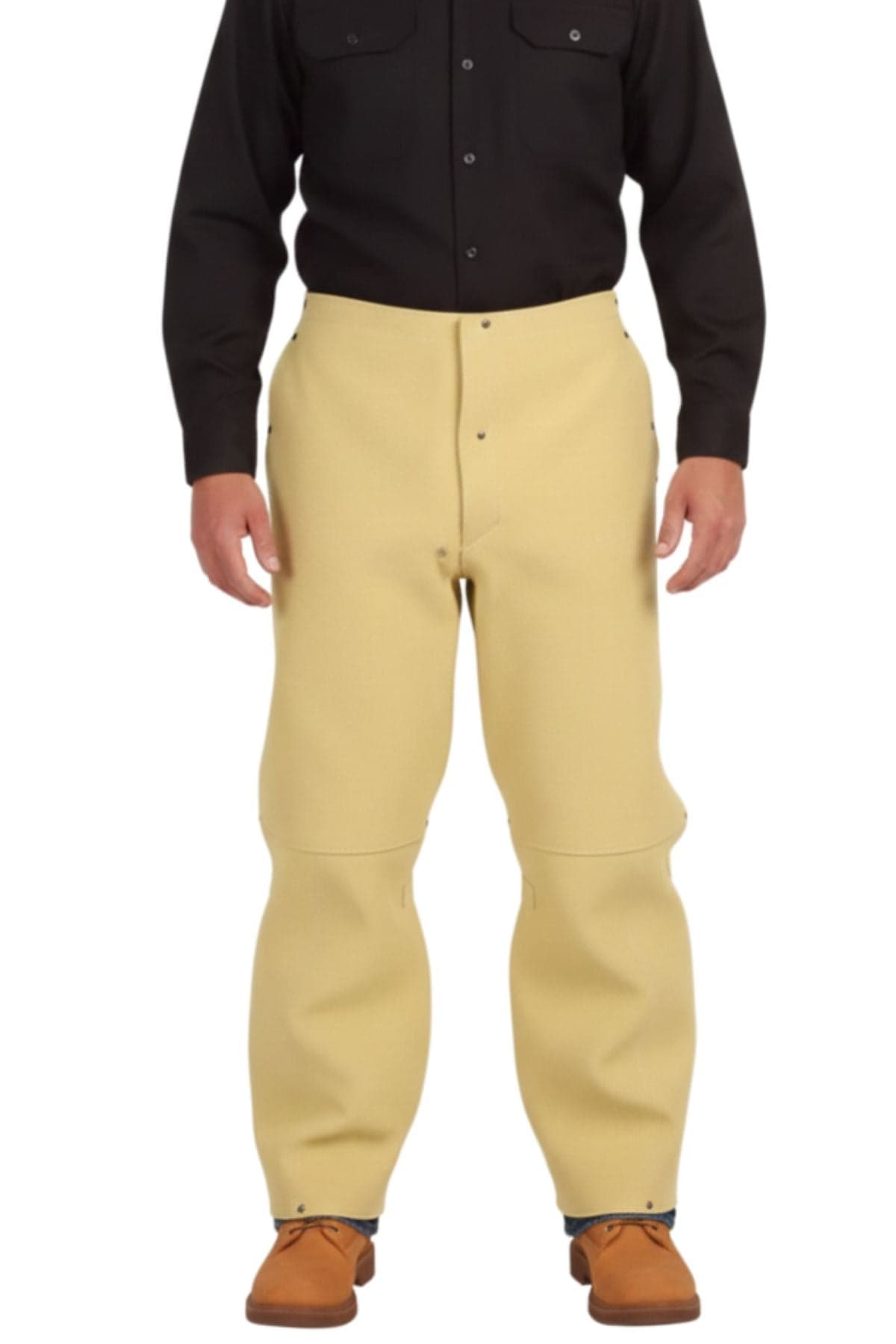
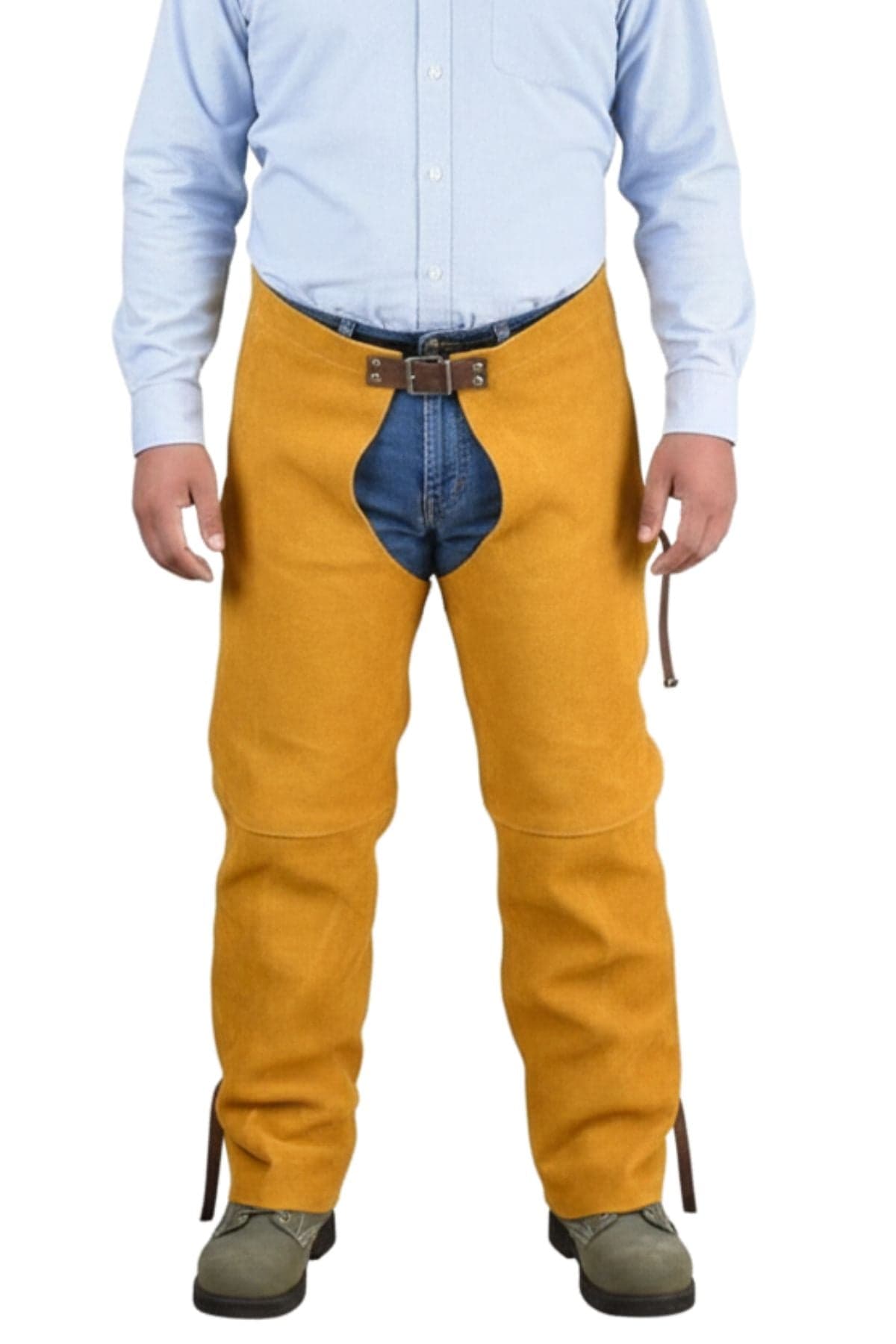
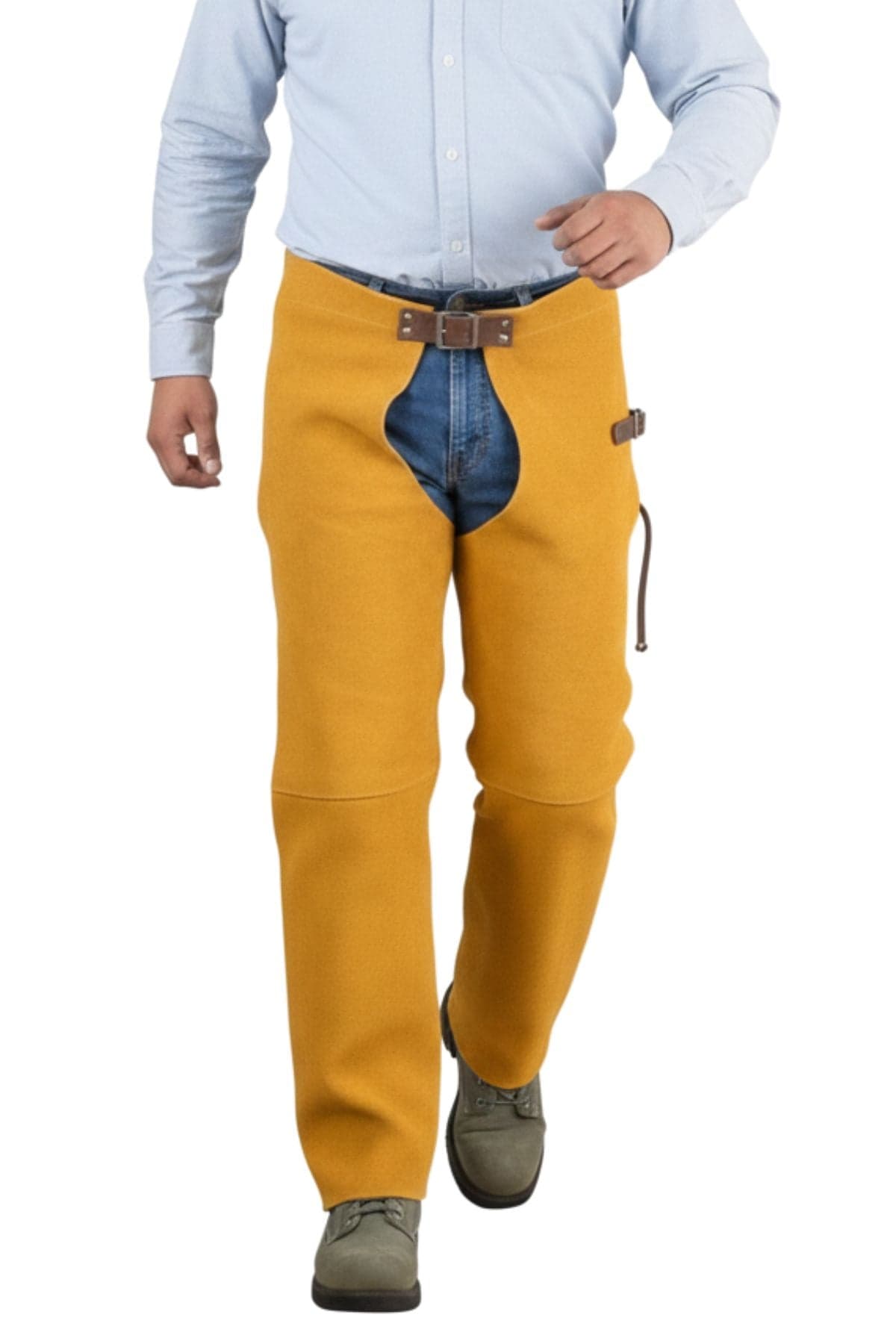
Full-Length Welding Chaps
Full-length chaps run from waist to boot, covering the knee and shin as well as the thigh. They suit floor-level work and jobs where spatter falls onto your lower legs. See the Full Length Leather Welding Chaps for Welders Pro.
Bib-Style Welding Chaps
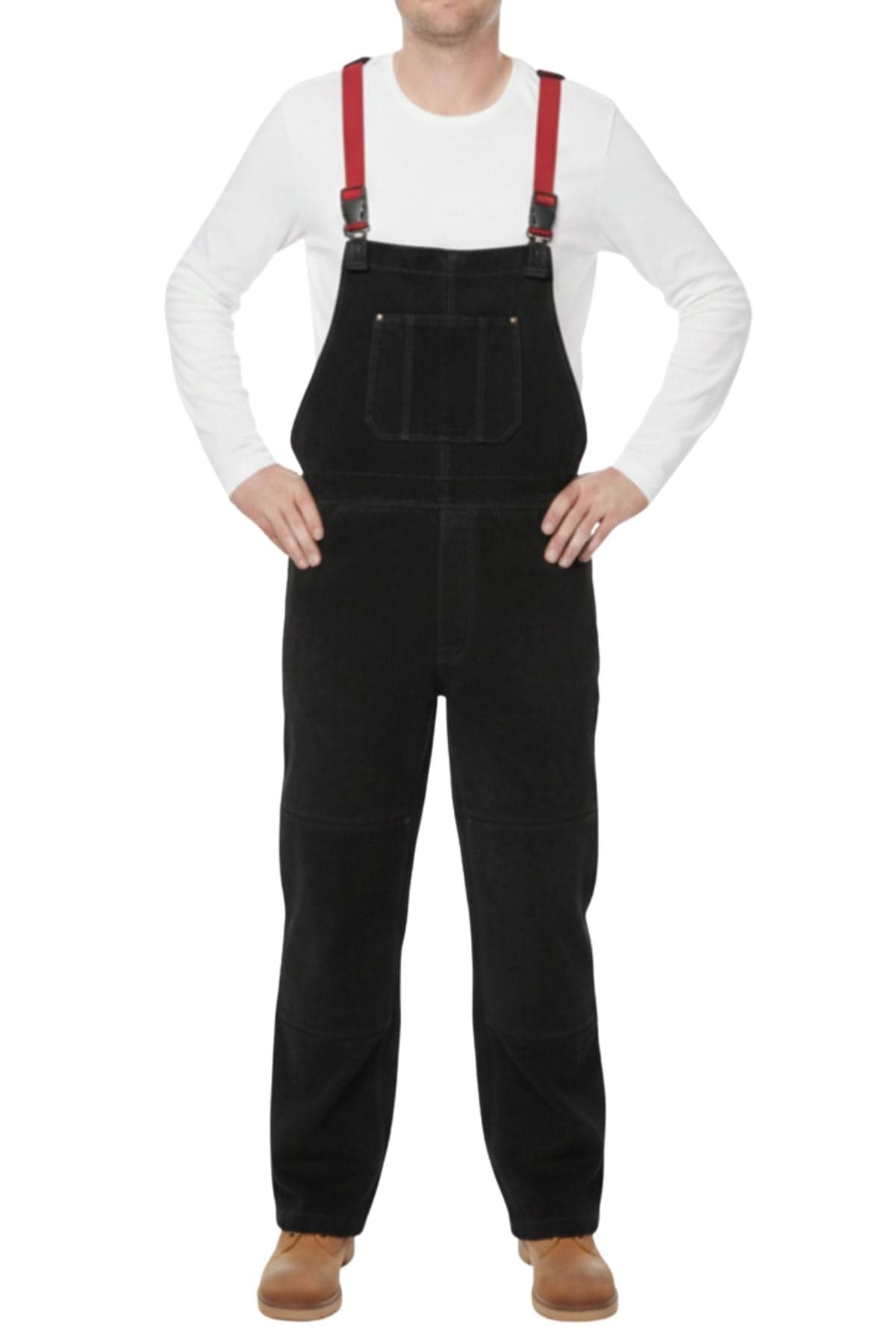
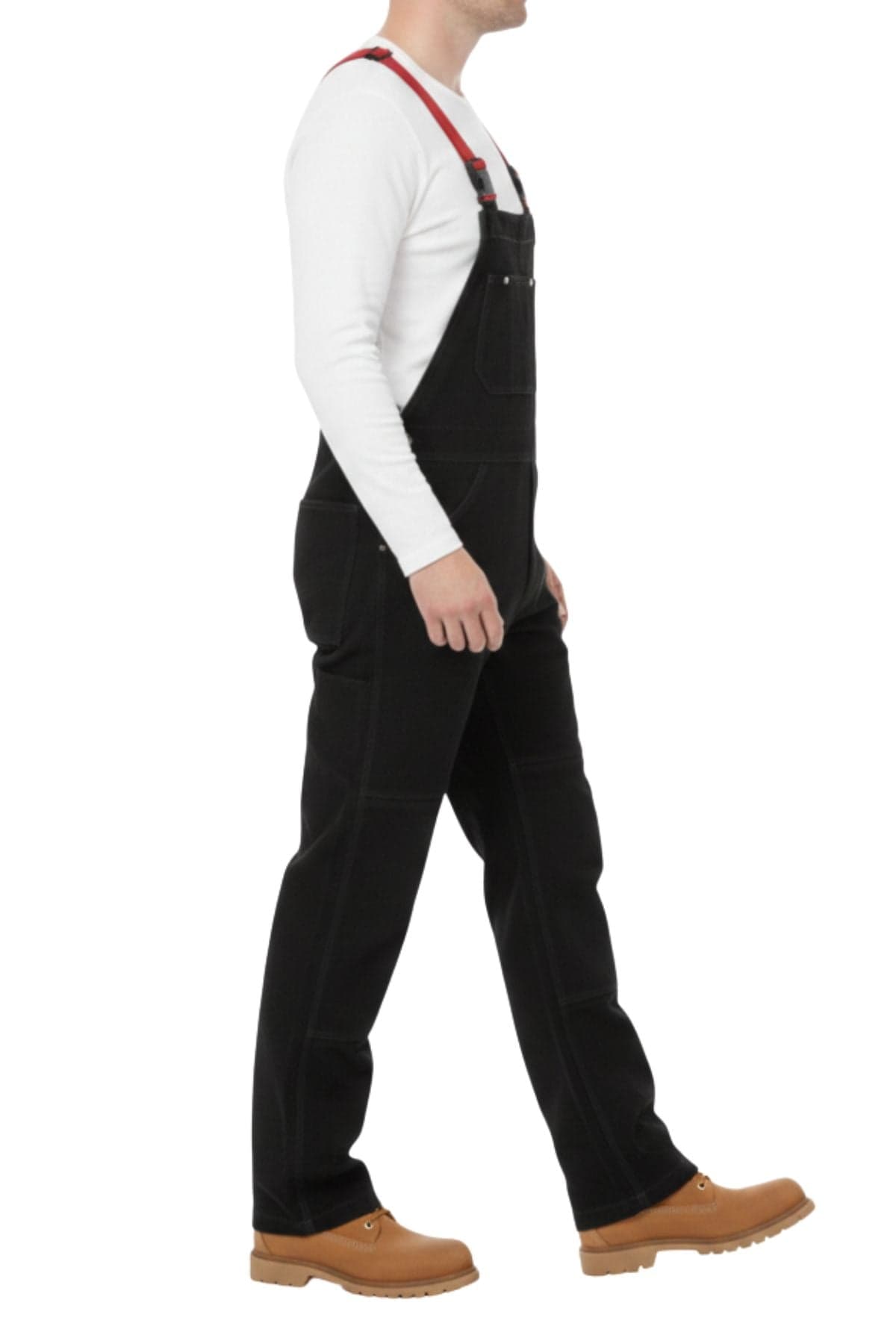
A bib extends the protection up over your waist and chest, and adjustable suspenders hold it in place. That makes it useful for overhead and out-of-position welding, where spatter falls onto your torso. Our Bib Style Leather Welding Chaps are made of suede. They have a front bib pocket for small tools and two back pockets.
Sized to Fit, Not One-Size-Fits-Most
Most industrial welding chaps come in a single size and are adjusted with straps. That works for average builds, but it causes problems at either end of the range:
- Larger welders run out of strap length, and the leather stops short of covering the sides of their thighs.
- Smaller welders end up with extra leather flapping at the knee, which catches on stock and gets in the way of kneeling.
Chaps Fit makes welding chaps in 2XS through 8XL, so the leather covers your thighs properly at every size. If your measurements fall outside the chart, custom chaps can be made to your size.
Split Leather vs Grain Leather for Welding
A cowhide is split into layers.
- Grain leather is the smooth outer surface. It's the leather used for riding chaps and dress goods.
- Split leather is the fibrous inner layer, with a suede-like texture on both sides.
Split leather is the standard for welding gear. It's thick, tolerates heat well, and costs less to replace when spatter wears it out. Smooth grain leather sheds spatter a little more cleanly but is usually saved for gloves and riding gear. Each Chaps Fit product page lists the leather it uses.
Matching Your Chaps to the Work
- Stick and flux-core welding throw the most spatter. Choose full-length or bib coverage.
- MIG welding in a flat position at a bench is usually well served by split-leg chaps.
- TIG welding produces little spatter, but chaps still protect against heat from the work and from grinding between passes.
- Overhead and vertical welding send spatter down onto your lap and chest. A bib style covers what leg-only chaps miss.
- Grinding and plasma cutting throw long spark streams at leg height. Full-length coverage keeps them off your knees and shins.
For forge and hot-metal work, see our blacksmith chaps in Work Chaps.
What to Wear Under Welding Chaps
- Natural fibers or FR clothing. Wear cotton, wool or flame-resistant work trousers. Synthetic fabrics like polyester and nylon melt onto skin when a spark gets past the leather.
- No cuffs and no open pockets. Both catch hot spatter.
- Trousers over your boots, or boot covers. Spatter that falls into a boot top is one of the most common welding burns.
- Leather gloves. Wear gloves with a cuff long enough to overlap your sleeve.
Inspecting and Caring for Welding Chaps
- Keep them free of oil and grease. Oily leather ignites far more easily than clean leather. Wipe spills off right away, and don't wipe greasy hands on your chaps.
- Brush off dust and metal fines after each shift. Metal particles held against the leather wear it down.
- Don't wash them in a machine. Spot-clean with a damp cloth and let them air-dry away from heat.
- Replace them when you find holes burned through, leather that has hardened or shrunk from heat, or torn strap anchors. A worn pair gives much less protection, even if it still looks usable.