Western Belts
Western Belts
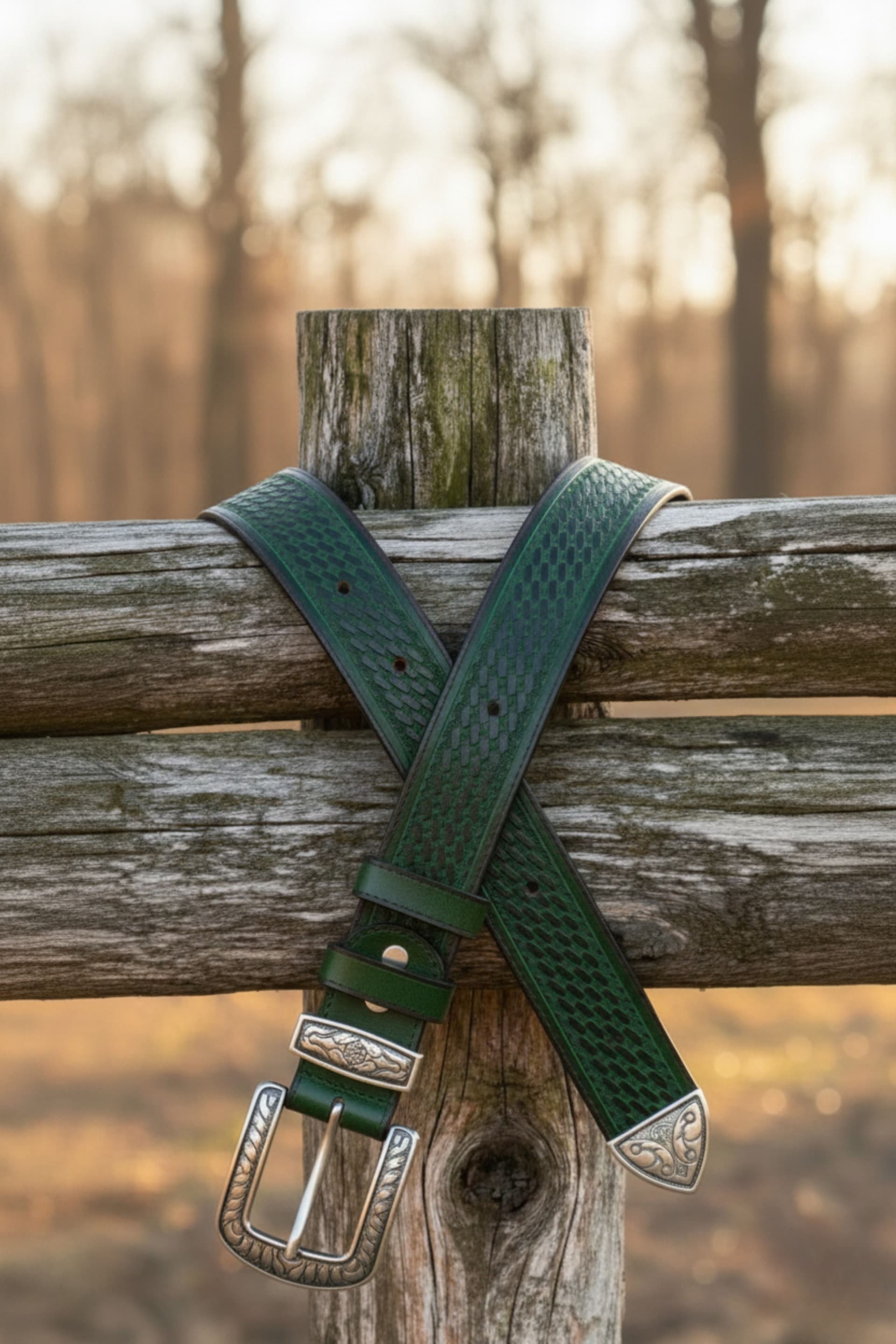
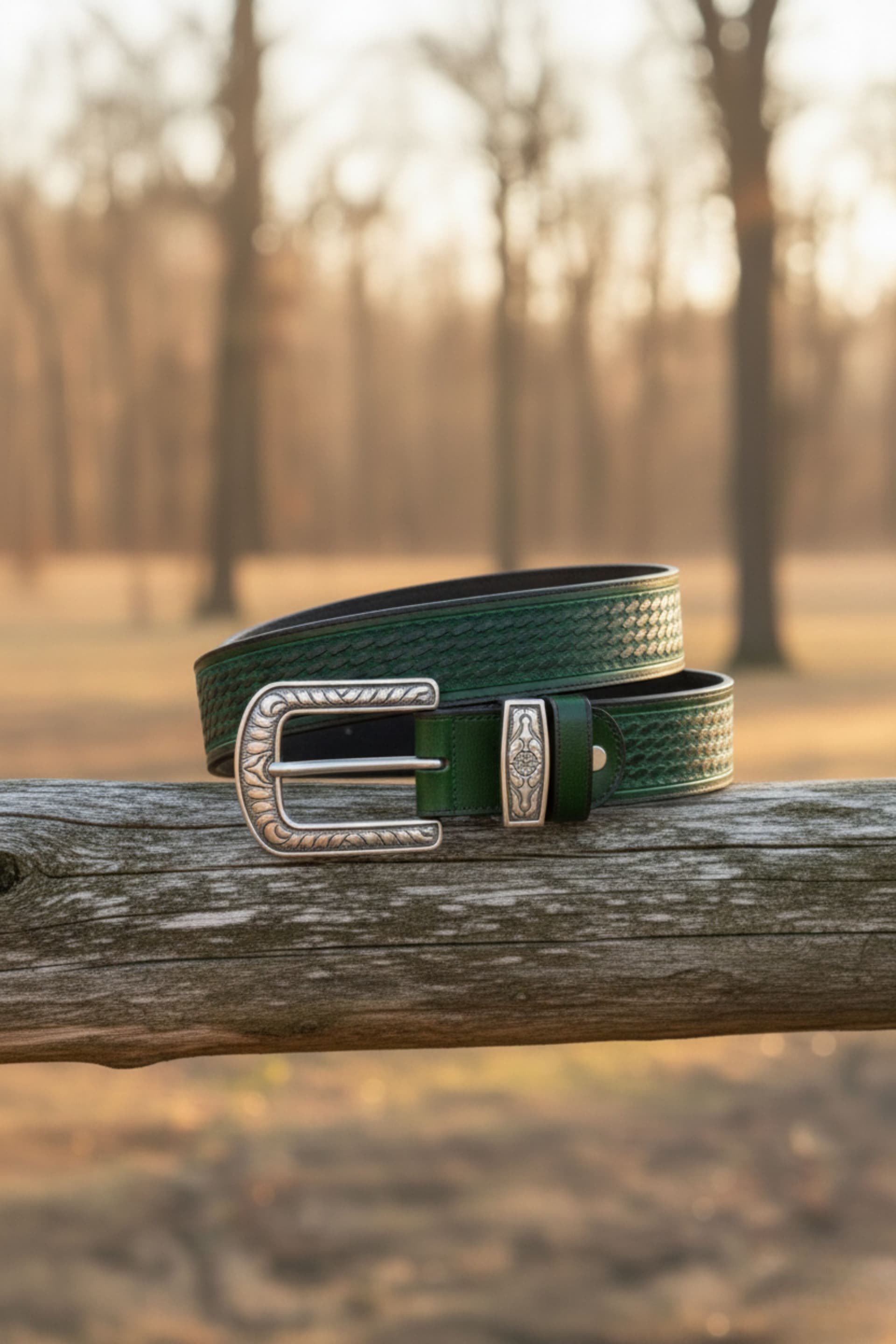
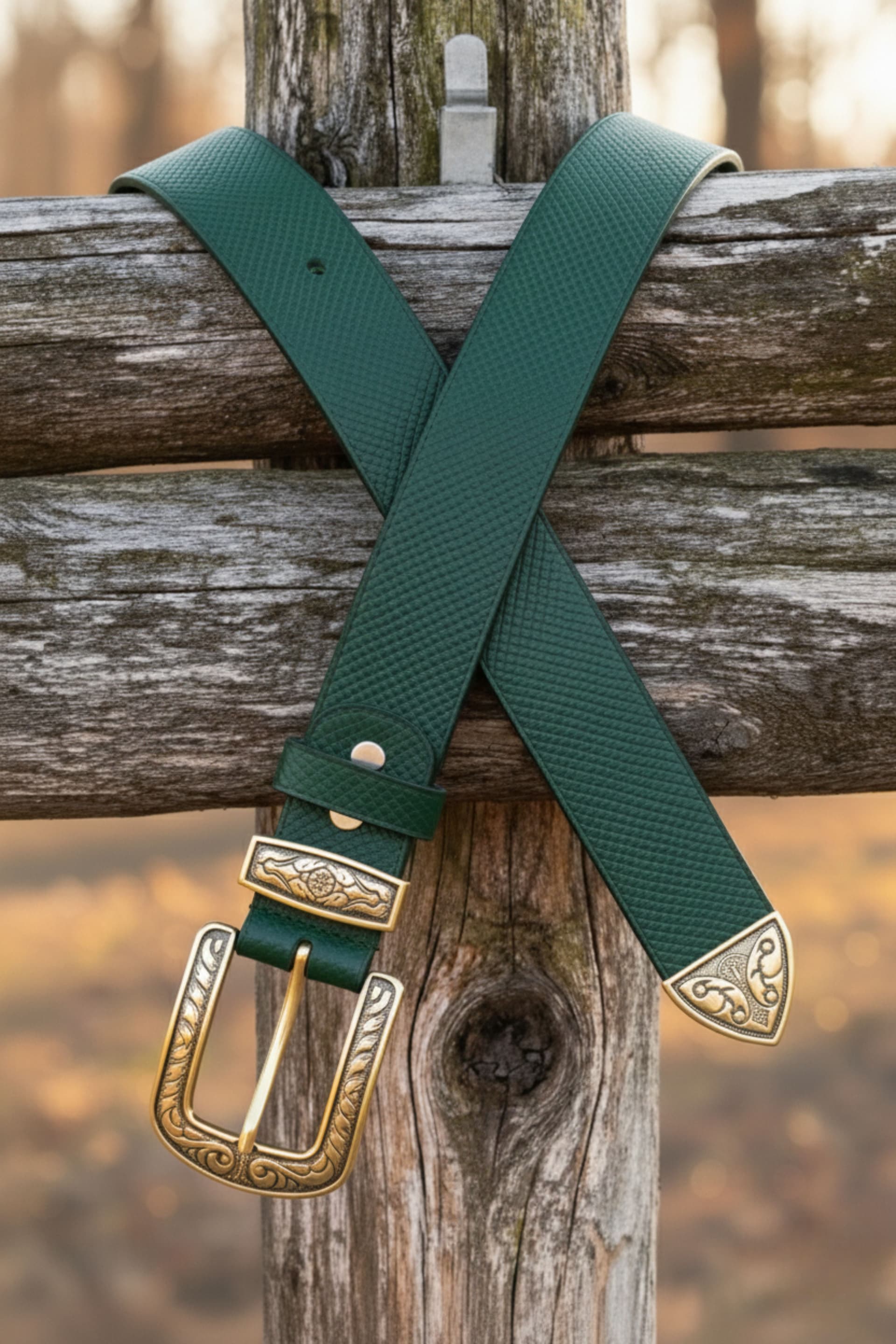
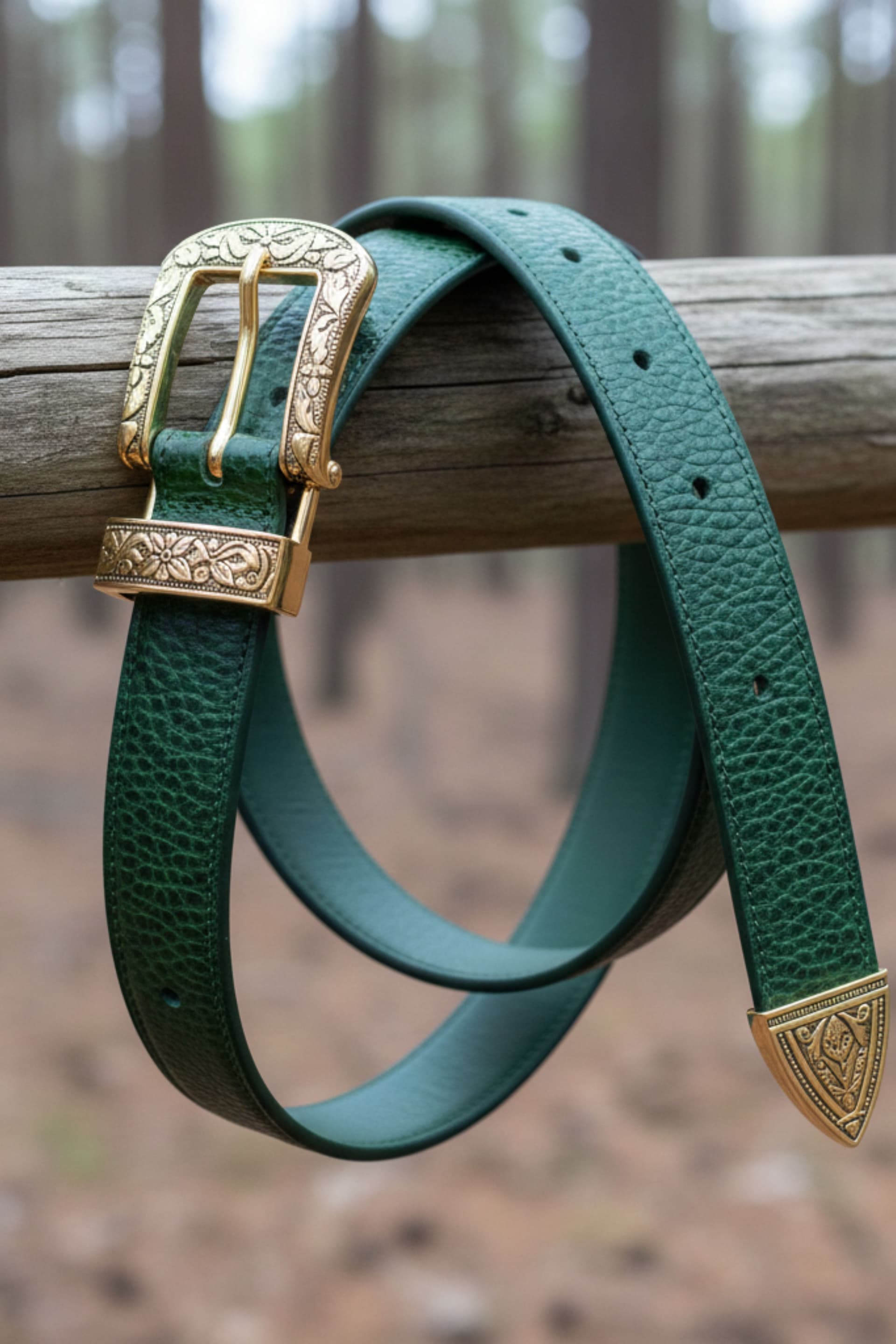
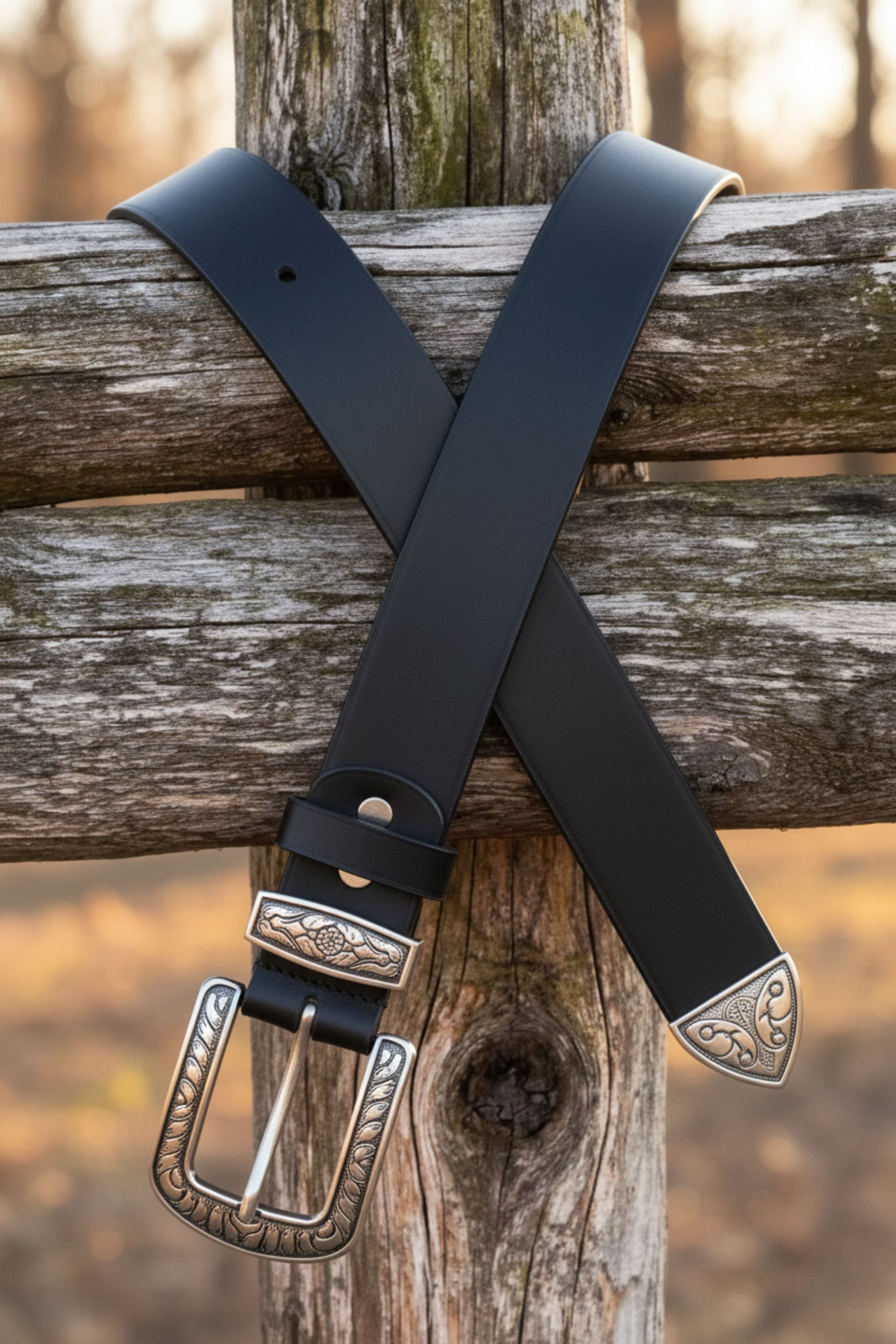
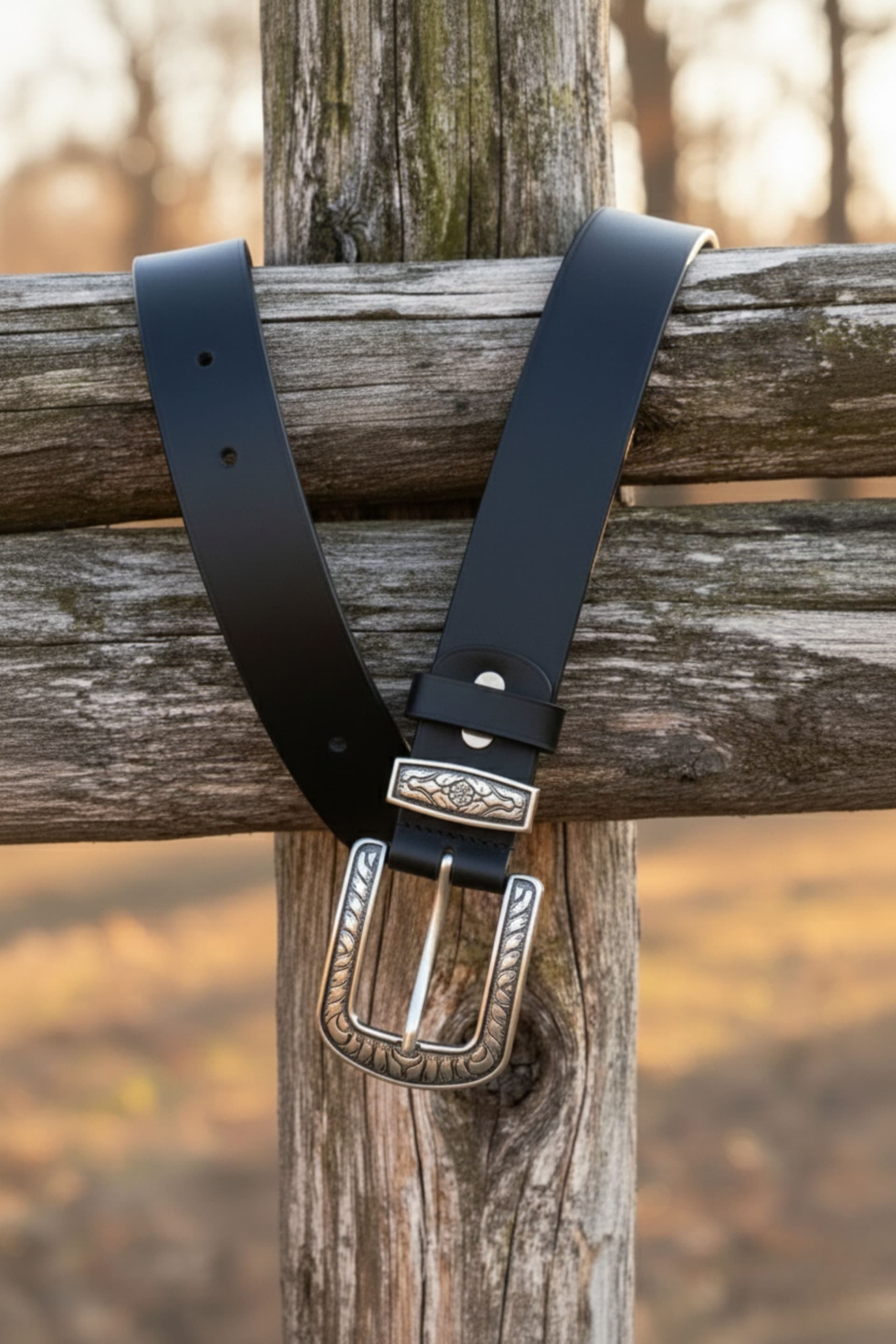
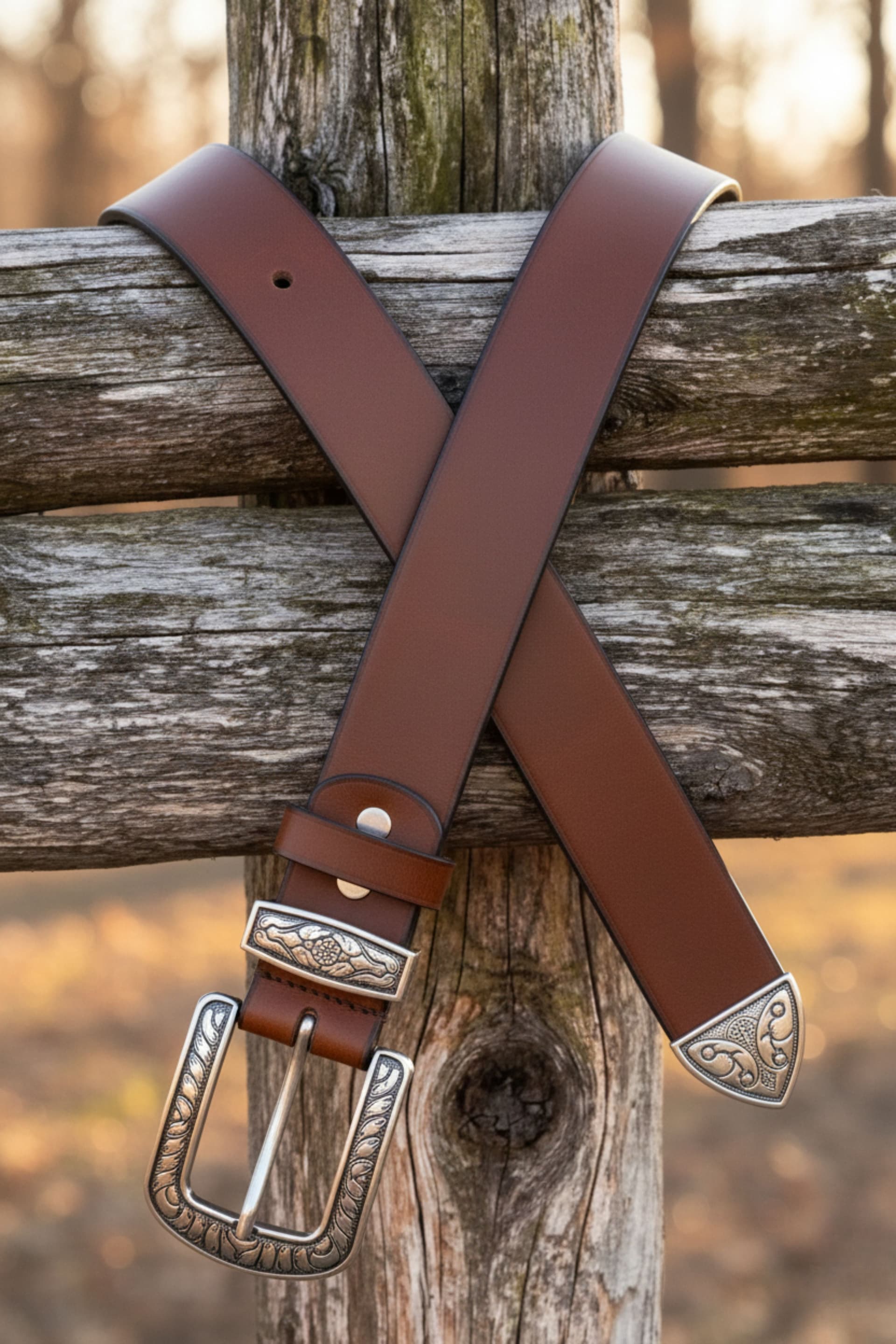
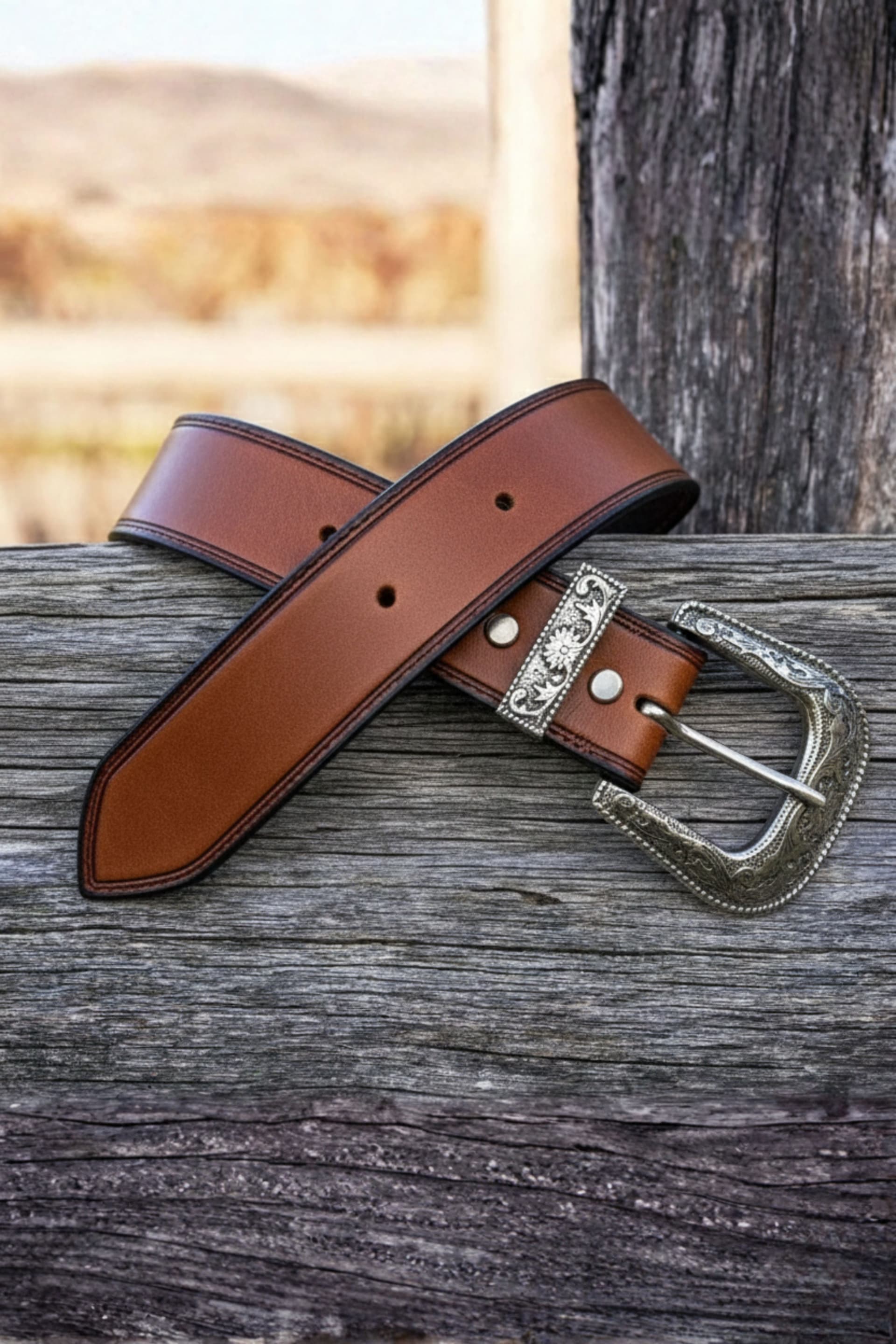
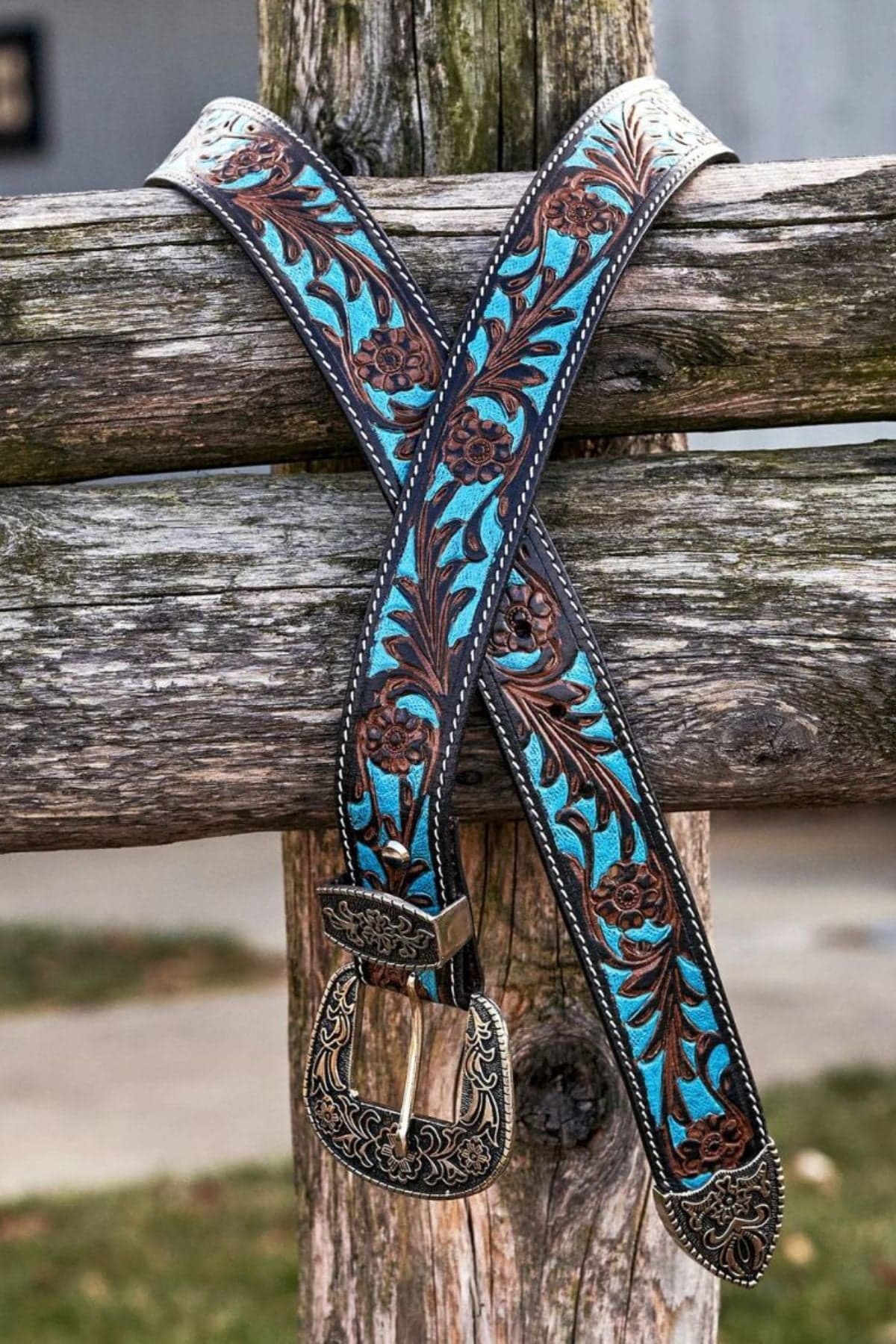
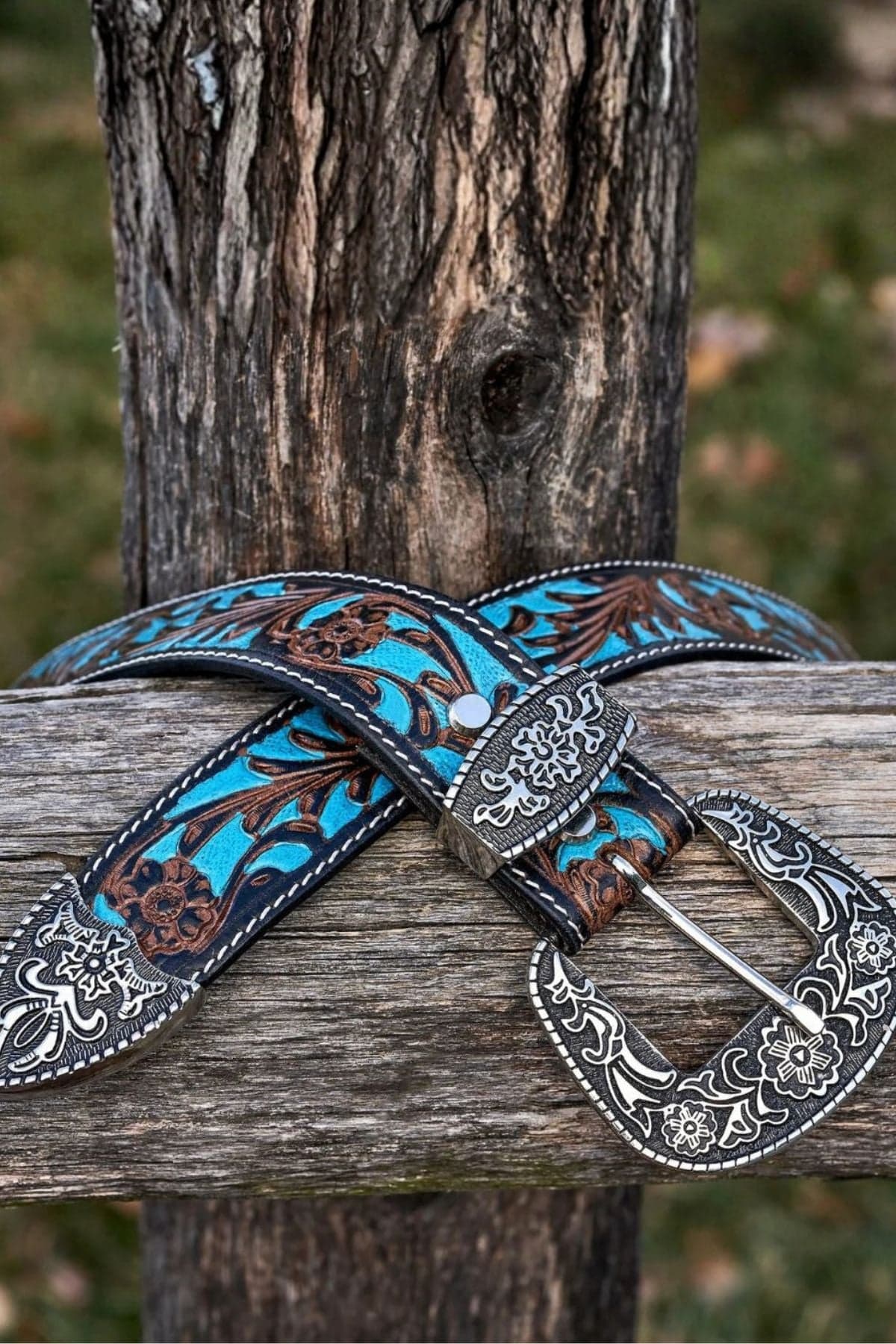
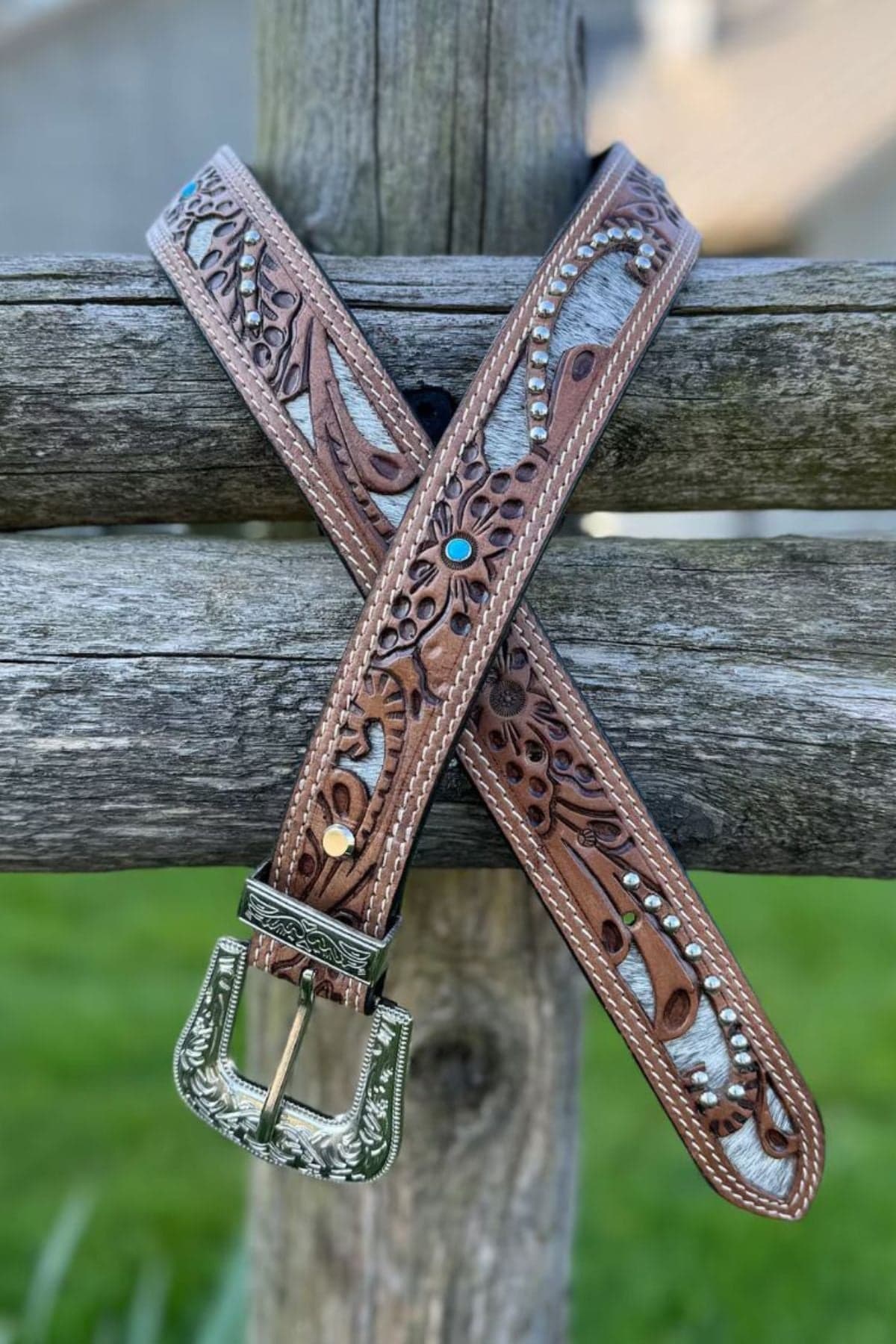
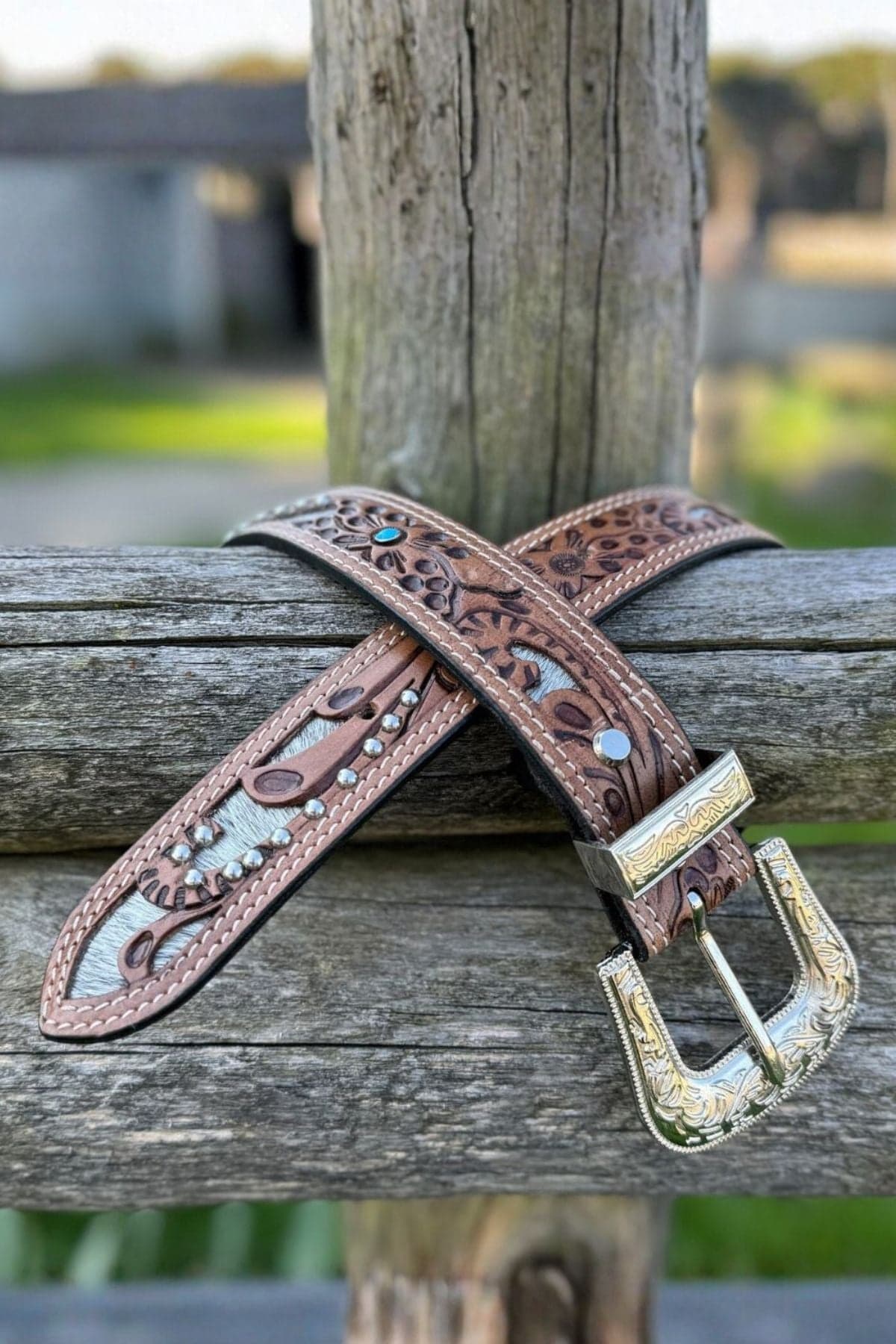
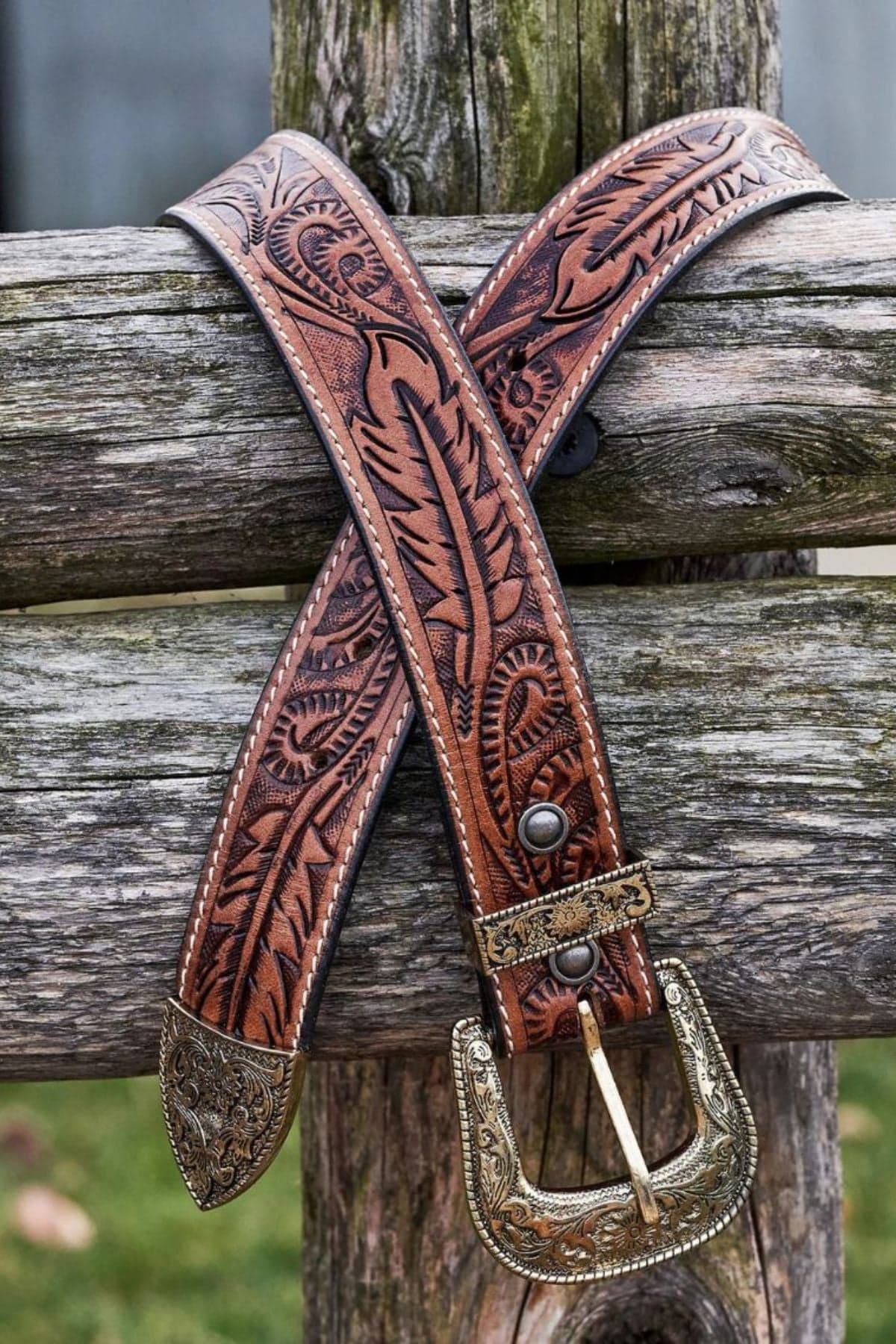
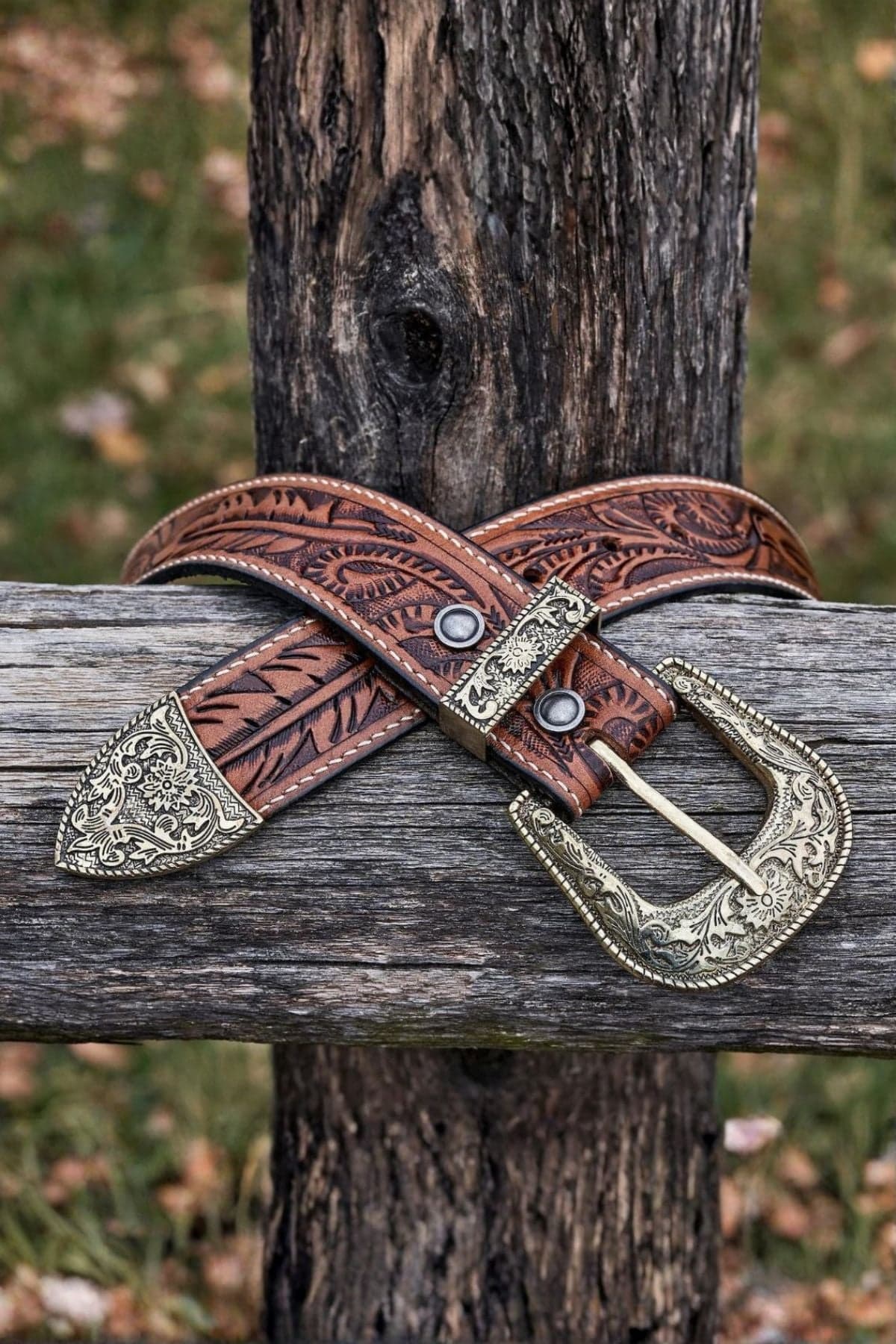
A western belt is the one piece of leather you'll wear every day, with jeans, under a vest, and at the front of your chaps where the buckle shows. Chaps Fit western belts include hand-tooled floral and turquoise designs, engraved and diamond-woven leather, and cleaner embossed and textured styles for dressier outfits, in sizes S to XXL.
[Below the product grid]
Hand-Tooled vs Embossed Leather
These two terms describe different ways of decorating a belt:
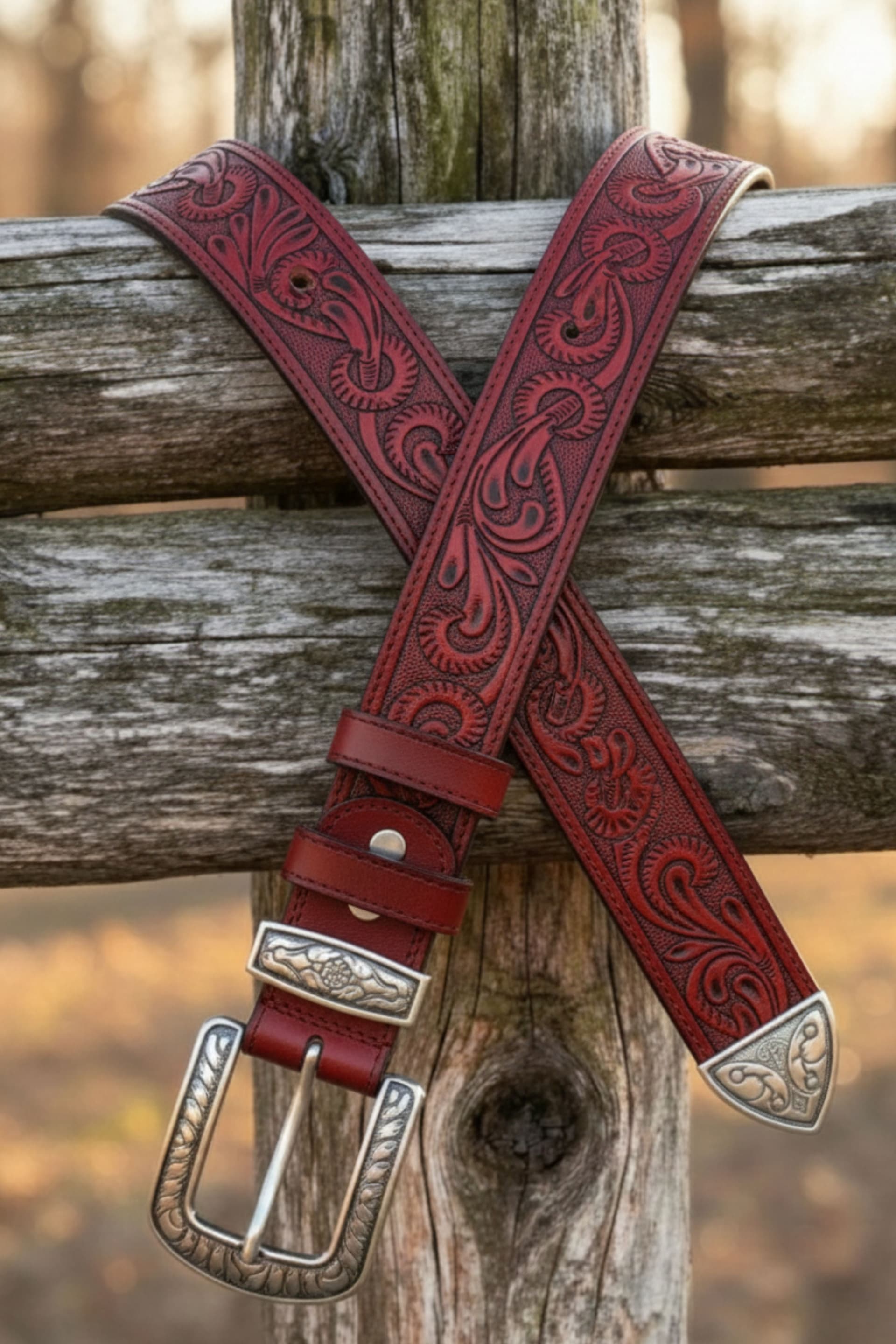
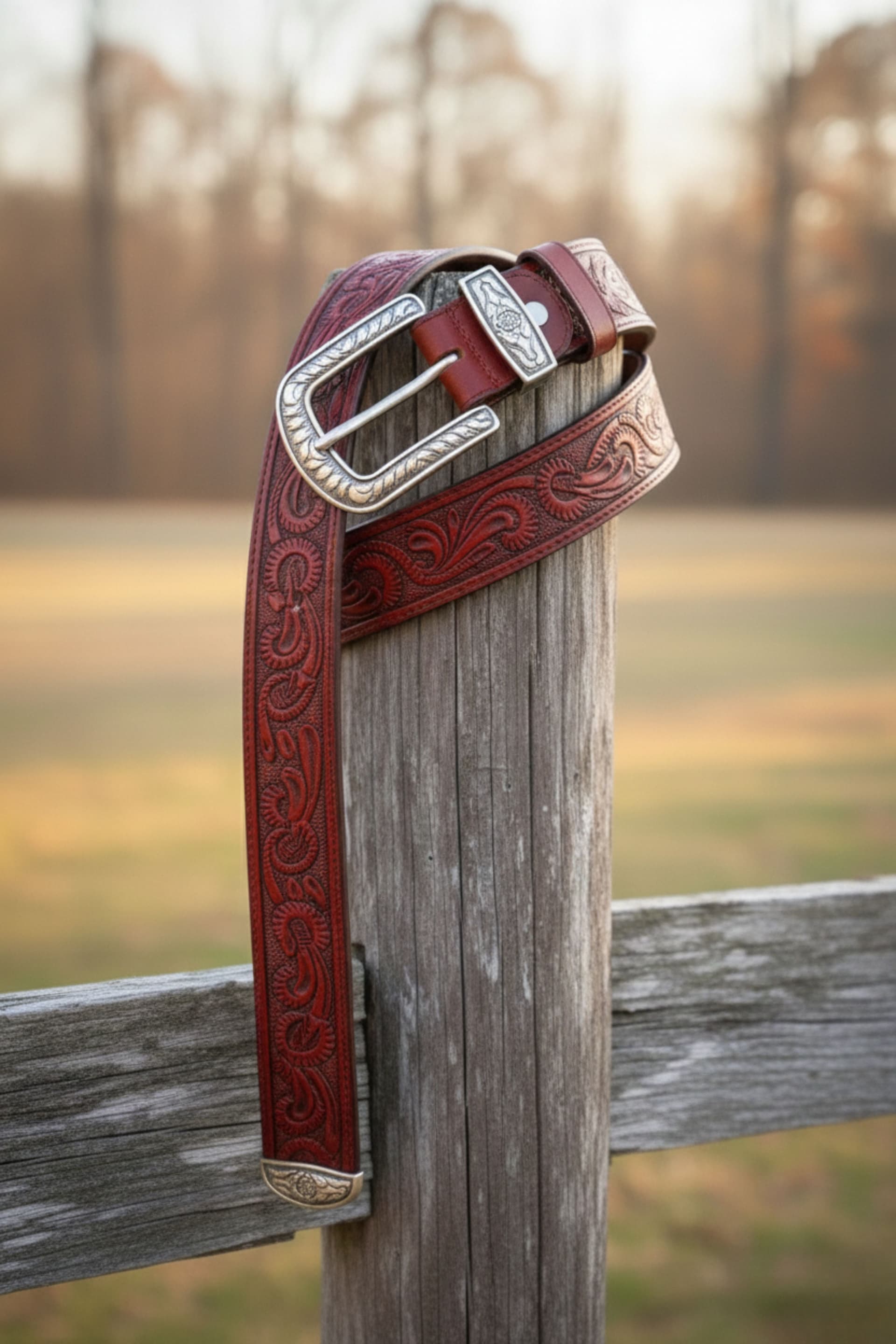
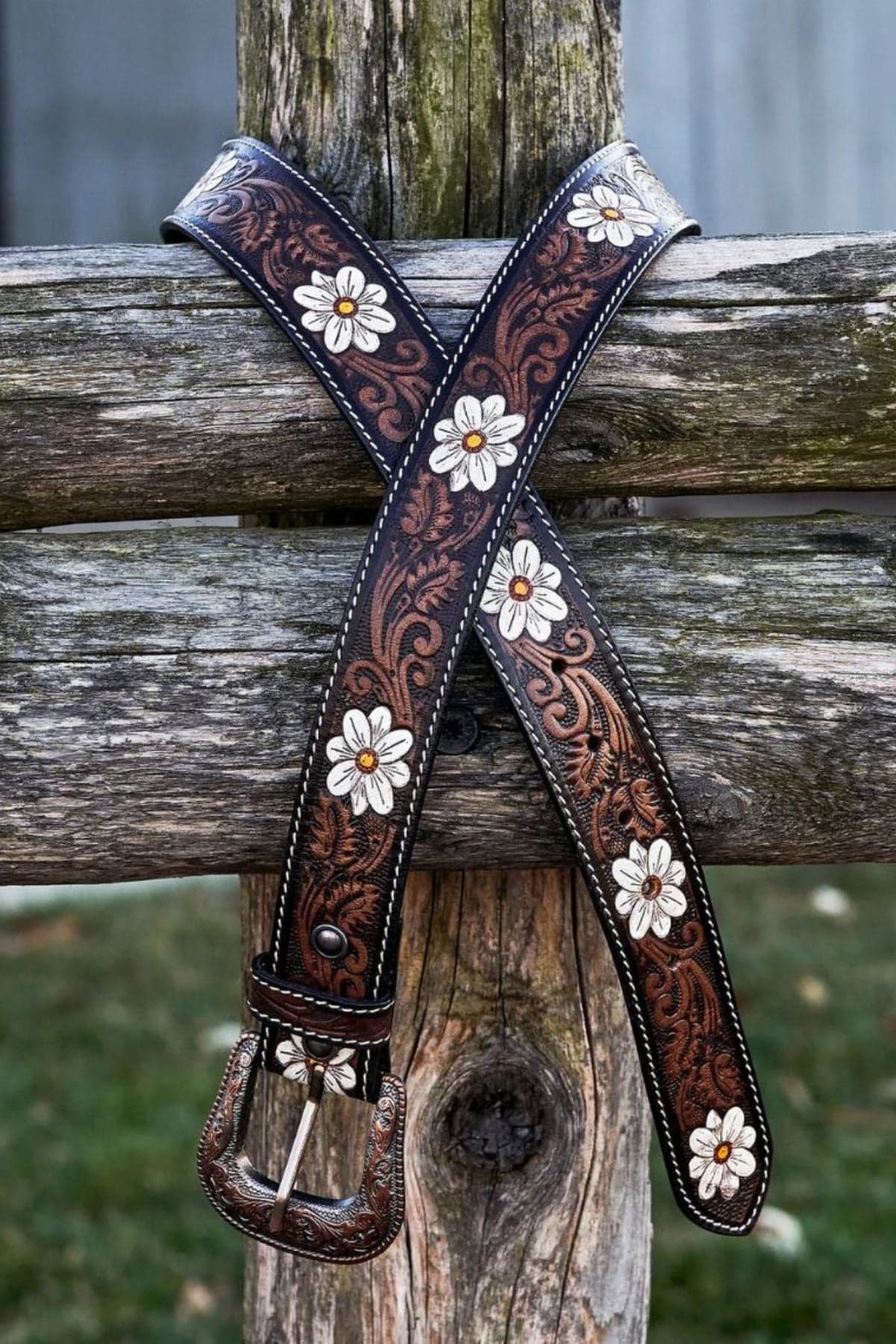
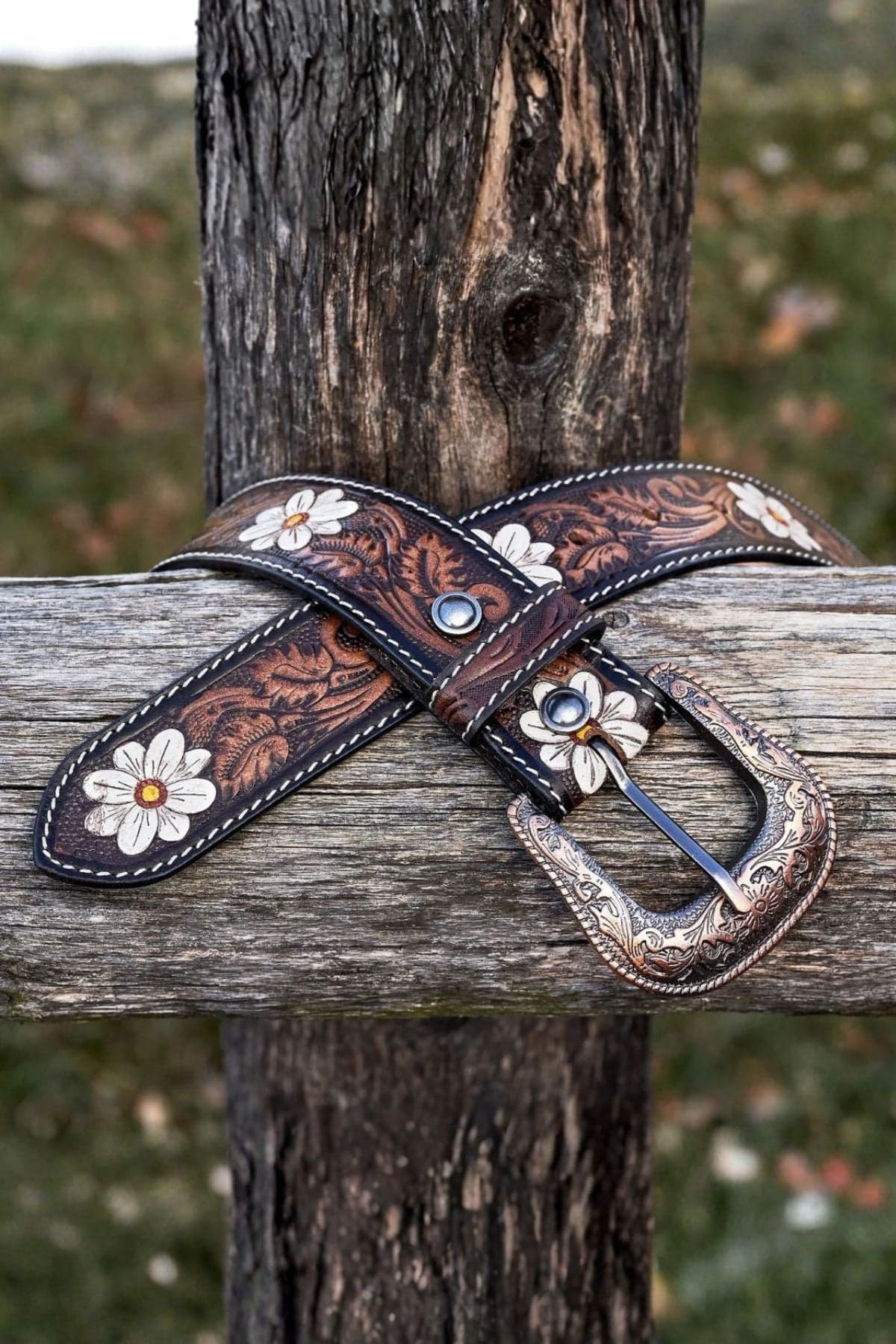
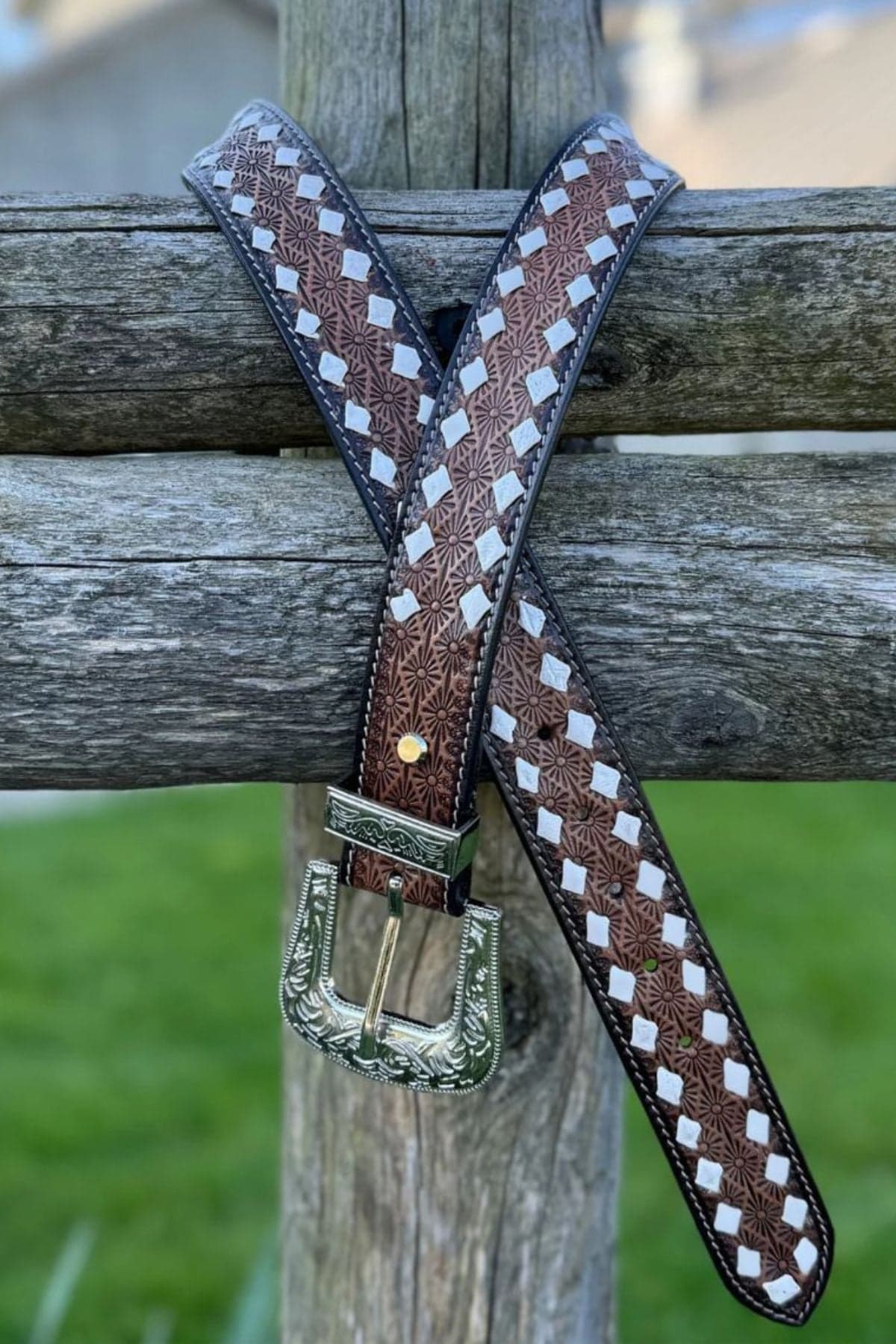
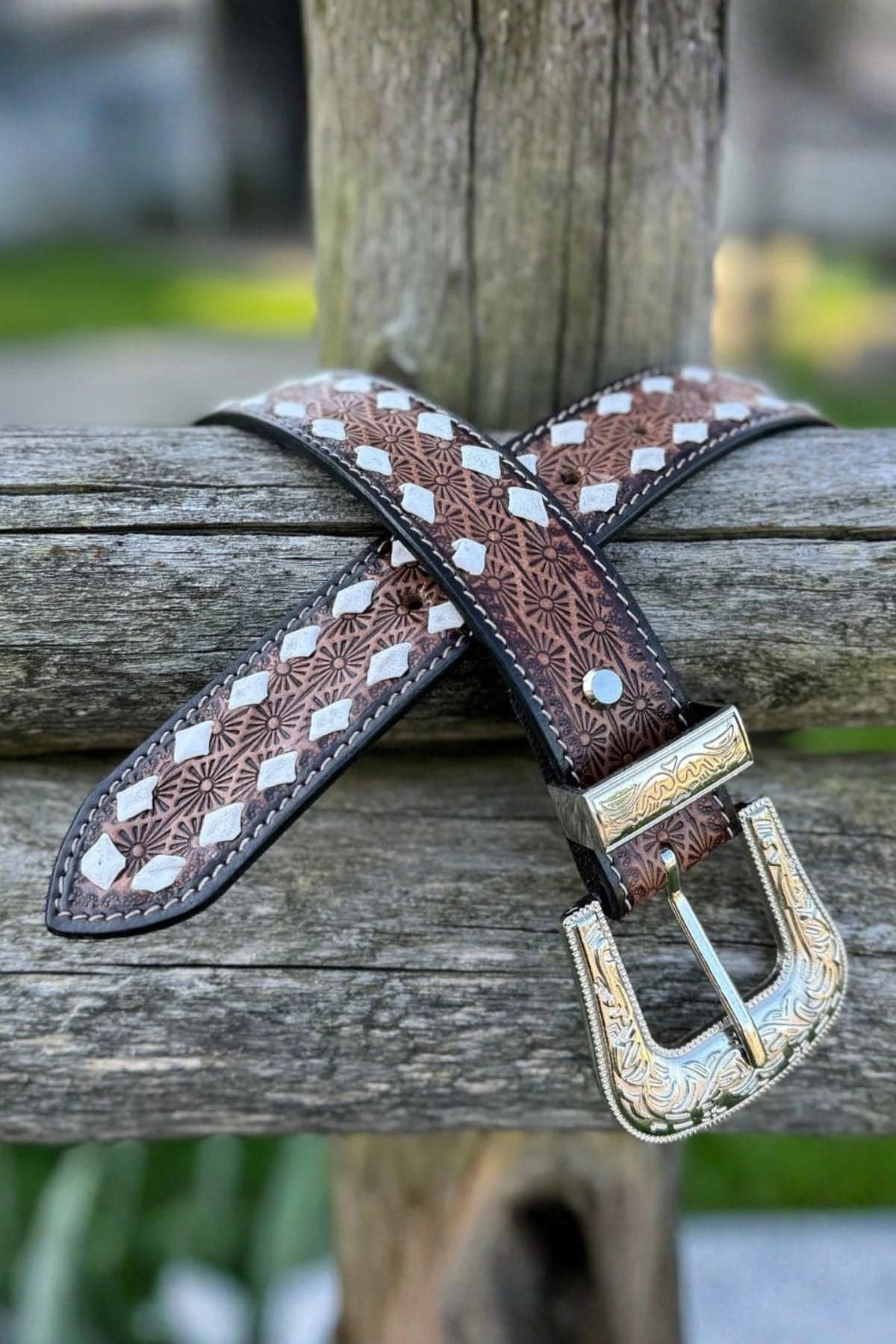
- Hand-tooled: a craftsman cuts and presses the design into damp leather by hand with swivel knives and stamps. Each belt comes out slightly different, and the depth gives the pattern shadow and texture. See the Turquoise Hand Tooled Leather Western Belt, the White Flower Hand Tooled Leather Western Belt and the Harvest Hand Tooled Leather Western Belt.
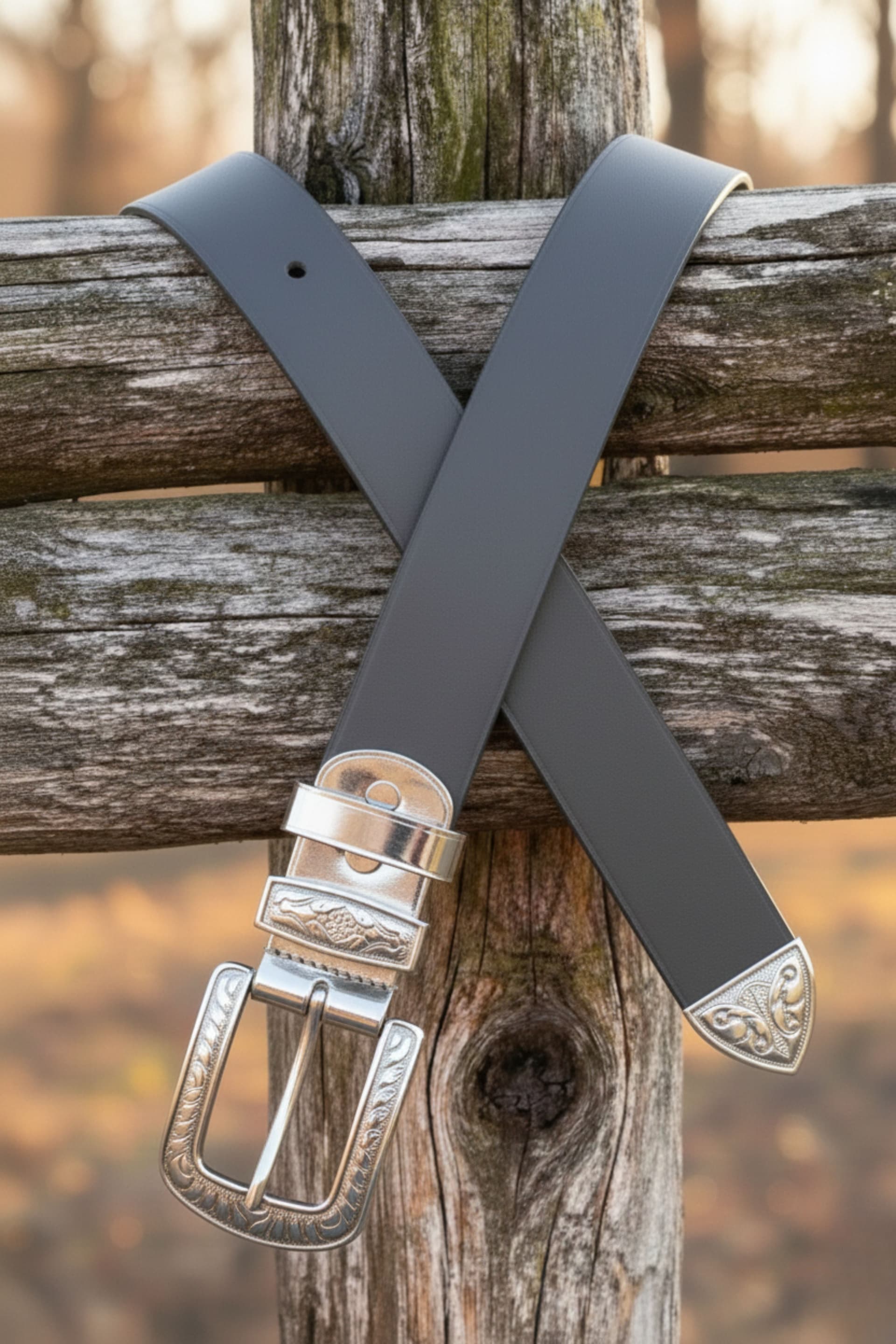
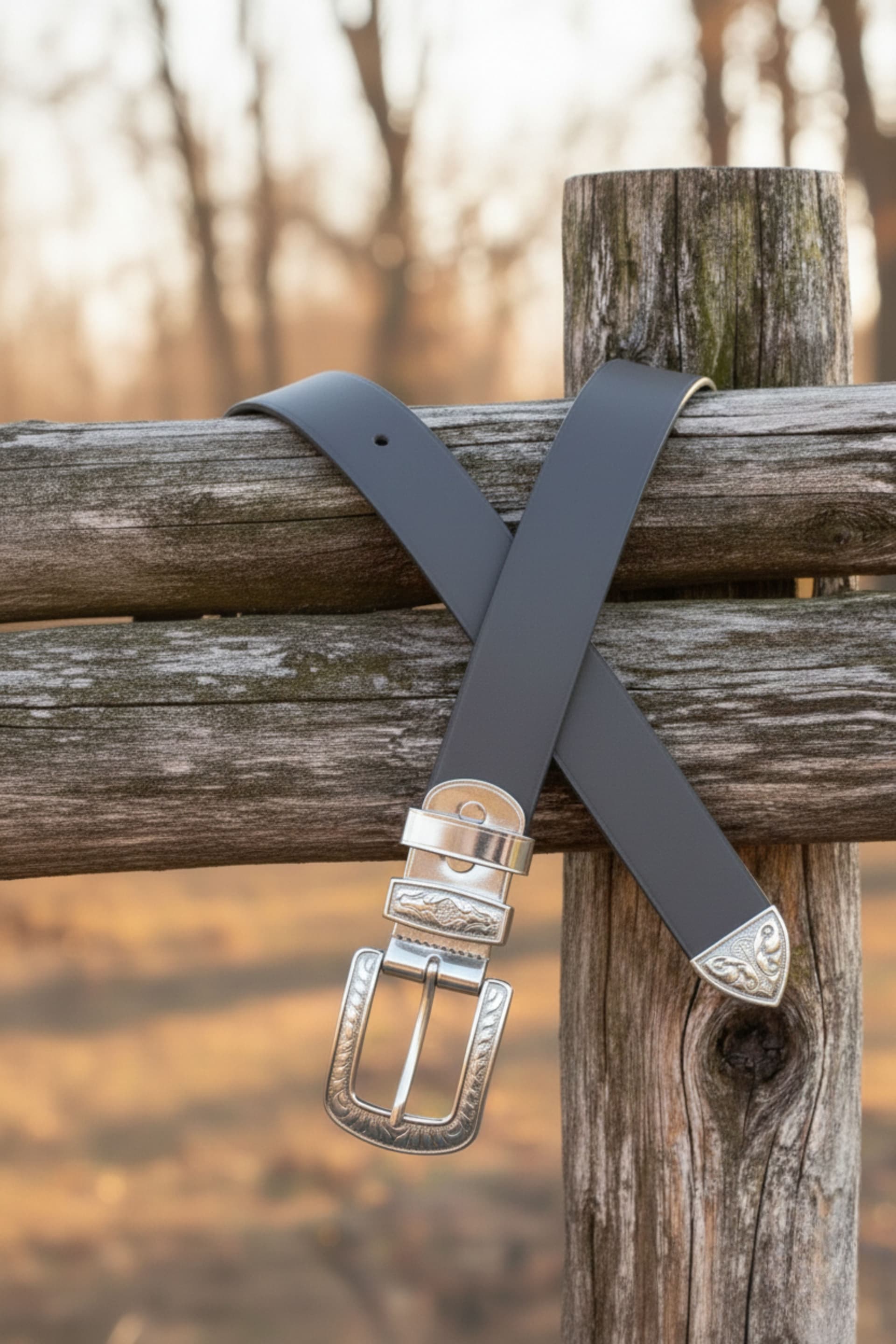
- Embossed: the pattern is pressed in with a plate or roller. It's crisp and consistent from end to end, and usually has a slightly subtler look. See the Signature Embossed Leather Waist Belt.
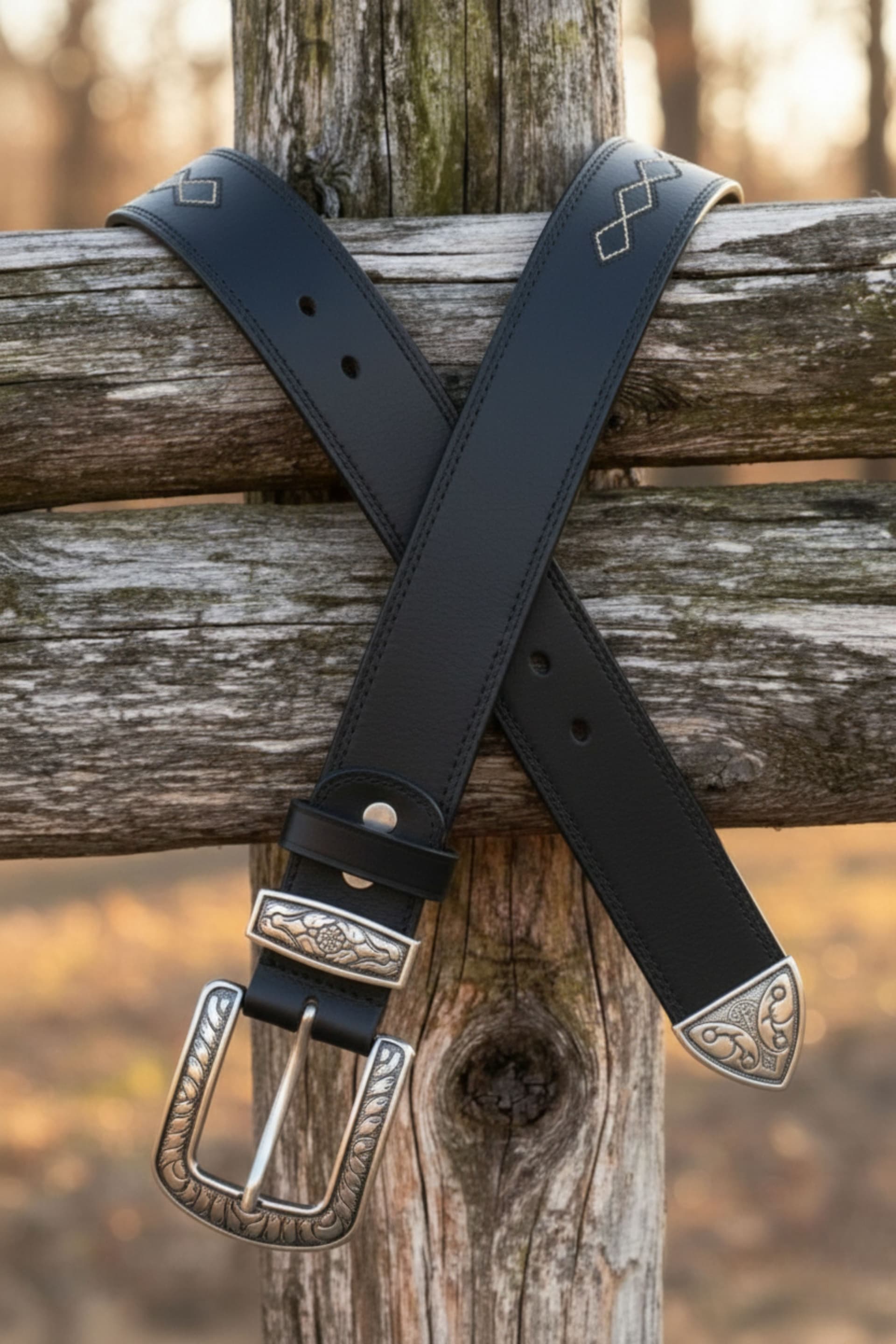
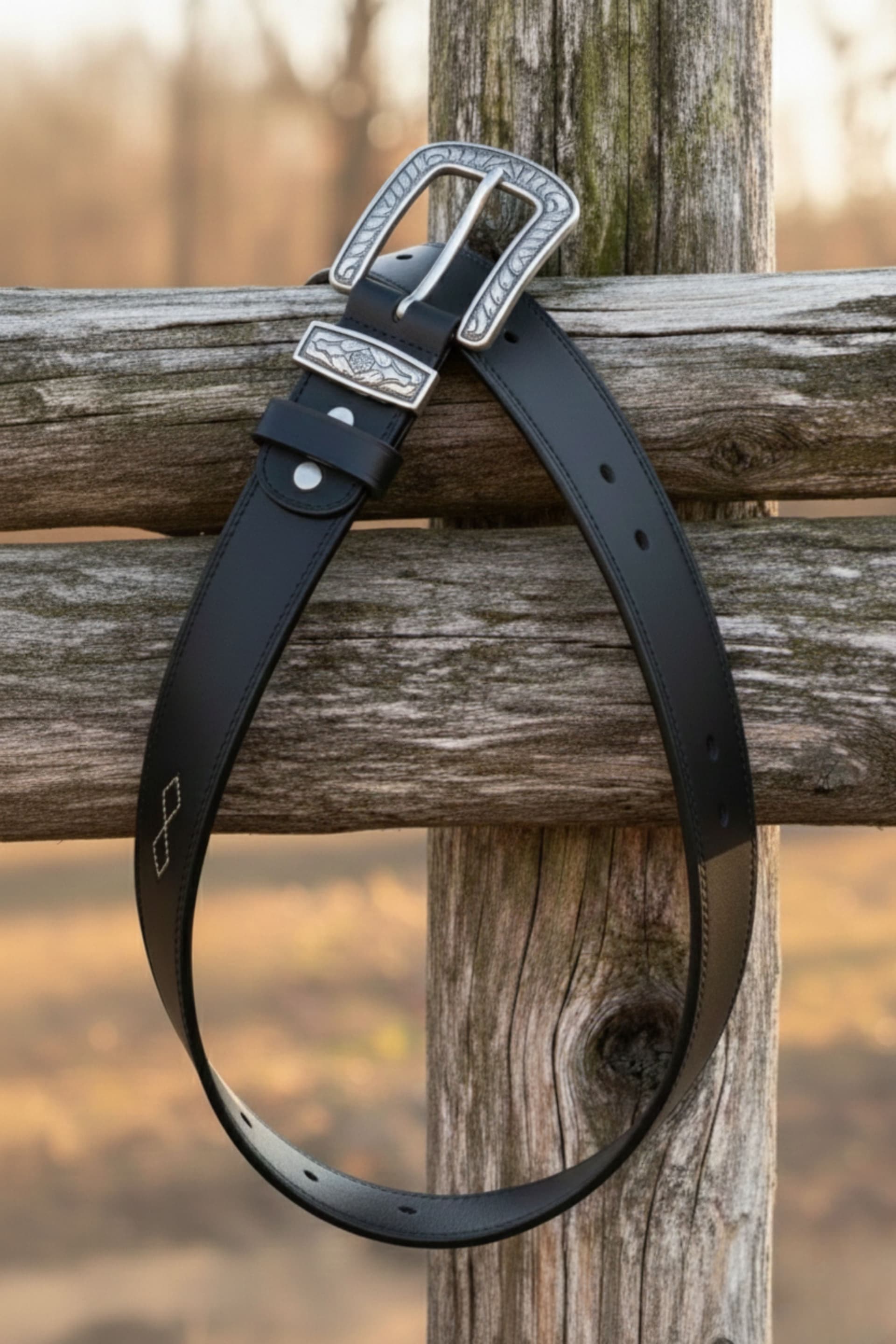
Other detailing in the collection includes engraving, as on the Rustic Rider Engraved Tooled Belt, and contrast weaving, as on the Western Tooled Brown Belt with White Diamond Weaving.
Wearing a Western Belt with Chaps
Leather chaps have their own belt that holds them up. It's part of the chaps and sits low on your hips. Your western belt is a separate belt that goes through your jeans' belt loops. Here's how the two work together:
- The buckle shows. Most chaps open in a V at the front below the chap belt, so your jeans buckle stays visible. That's why riders choose a belt with good tooling or a statement buckle.
- Keep the buckle low-profile for riding. A large, raised buckle digs into your stomach when you lean forward in the saddle and can press against the chap belt.
- Match your leatherwork. A tooled belt looks best alongside a tooled chap yoke. Pick the same leather tone, such as brown with brown, and the same hardware color, such as silver conchos with a silver buckle.
- If you don't want two belts at your waist, leather suspenders can hold up your jeans instead, so the chap belt is the only belt.
Browse chaps to pair with your belt in Western Chaps, Shotgun Chaps and Batwing Chaps.
Choosing a Western Belt
- Width: 1½ inches fits standard jean belt loops and is the traditional western width. Narrower belts suit dress trousers and women's jeans.
- Tooling: floral and turquoise tooling stands out, while diamond weaving and engraving are more subtle. Plain embossed or textured belts work best with dressier clothes.
- Color: brown goes with denim and most western wear. Black suits darker outfits and evening wear.
- Buckle: a simple frame buckle for every day, or a decorative buckle for events.
How to Size a Western Belt
- Start with your pant waist size, or measure an existing belt from the buckle fold to the hole you use most.
- Size up. Belts usually run one size larger than your pants, because the belt wraps around the outside of the waistband.
- Check the size guide on the product page to convert your measurement to S–XXL.
A belt that fits well fastens on the middle hole, which leaves room to loosen or tighten.
Caring for Tooled Leather Belts
- Dust the tooling with a soft, dry brush. Dirt collects in the cuts.
- Condition it sparingly with a leather balm, wiping off the excess so it doesn't build up in the design.
- Keep it away from water and heat. Soaking can soften the tooling, and heat can crack it.
- Store it hanging or loosely coiled, never folded sharply at the tooling.